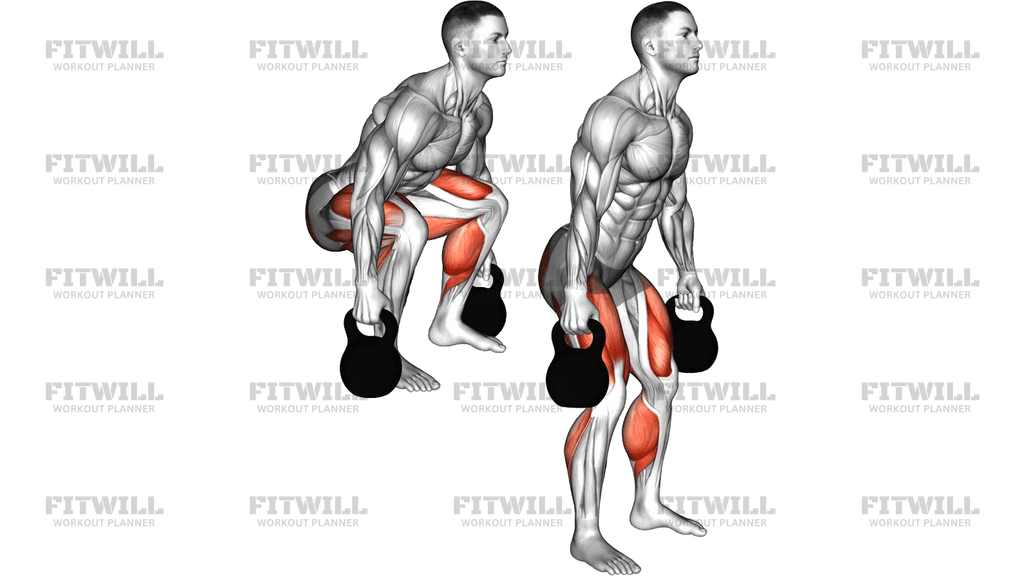
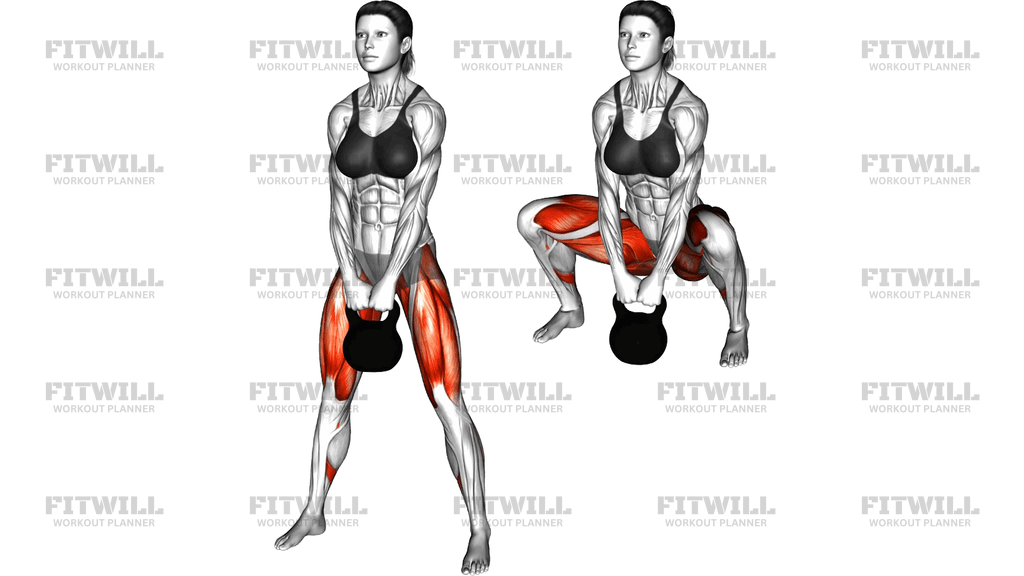
Kettlebell Staggered Stance Deadlift
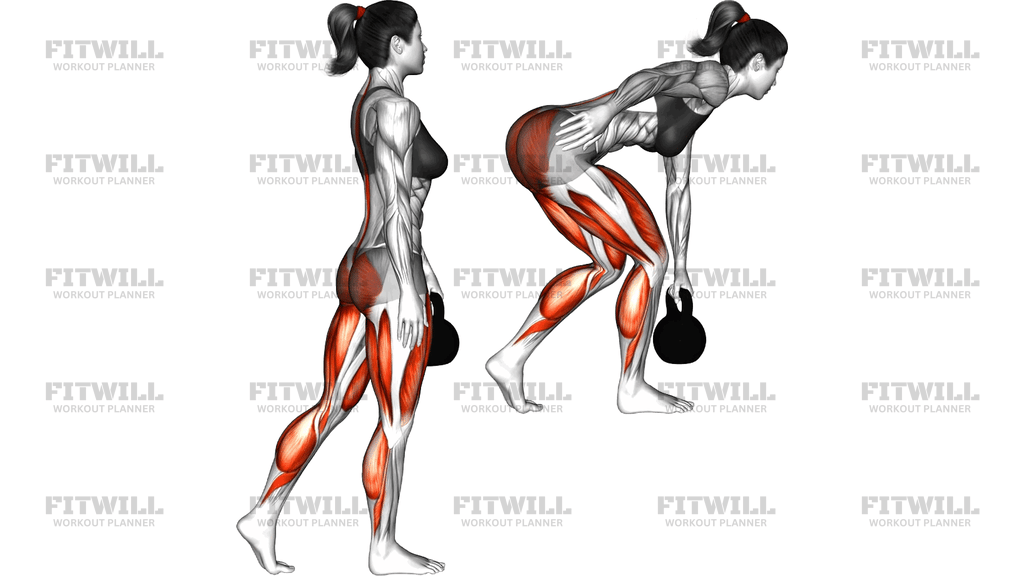
The Kettlebell Staggered Stance Deadlift is a hip hinge performed with one foot split slightly behind the other, usually with the rear heel lifted so most of your weight sits over the front leg. You hold the kettlebell in one hand on the same side as the rear leg, hinge forward until the weight travels down toward the floor, then drive through the front foot to stand tall. It sits between a conventional two-legged deadlift and a full single-leg variation, which makes it one of the most practical hinge progressions you can train.
What makes this setup valuable is how it loads the hamstrings and glutes of the front leg while the rear leg acts as a kickstand for balance. Because the kettlebell is held in one hand, your core and hip stabilizers also work hard to stop your torso from rotating as the weight pulls you toward the loaded side. The rear-foot position makes it noticeably easier to feel the hinge than a true single-leg deadlift, so it is a smart bridge for anyone who wobbles or loses hip alignment on one-legged versions.
This movement suits lifters who want unilateral leg strength without the balance demands of a fully unsupported hinge, as well as anyone dealing with a strength difference between sides. Runners, field-sport athletes, and desk workers all benefit, since the staggered stance trains the glute of the front leg to extend the hip while resisting rotation, a pattern that transfers directly to walking, running, and change of direction.
Setup details matter here more than in a standard deadlift. The feet should be far enough apart that the rear heel can rise naturally, but close enough that your hips stay square to the floor rather than twisting open. Hold the kettlebell in the hand opposite the working front leg or same side depending on your cue preference, keep the shoulder packed down away from the ear, and let the weight hang straight down rather than drifting forward. A rounded lower back or a hinge that turns into a squat are the two most common errors, and both come from rushing the setup.
Execute the rep by pushing your hips back and letting your chest travel toward the floor while the kettlebell lowers along the front of your shin area. Go only as deep as your hamstrings allow while your back stays long and flat, then squeeze the front glute and press the floor away to finish with hips and knees extended. Breathe in and brace before each descent, exhale as you drive up, and reset your stance completely between reps. Because it trains balance alongside strength, start with a lighter kettlebell than you would use for a conventional deadlift and earn range before adding load.
[ Workout Log & Planner ]
Put your next workout in Fitwill
Keep your plan and training log ready when you are.


Instructions
- Stand holding a kettlebell in one hand at your side, then step one foot back into a staggered stance so the rear foot sits roughly heel-to-arch behind the front foot, with most of your weight over the front leg.
- Let the rear heel lift naturally so the ball of that foot stays in contact with the floor, and turn your hips to face straight ahead rather than rotating toward either side.
- Keep a soft bend in the front knee, pull your shoulder down away from your ear, and let the kettlebell hang straight down from your shoulder without your arm reaching forward.
- Breathe in and brace your trunk as if preparing for a light punch to the stomach before you start the descent.
- Push your hips back and hinge forward, lowering the kettlebell in a straight line in front of your front shin while your back stays long and your neck stays neutral.
- Lower until you feel a strong stretch in the hamstring of the front leg or until the kettlebell reaches about mid-shin height, keeping the rear leg behind you for balance rather than pushing off it.
- Drive through the heel and midfoot of the front leg, squeeze the front glute, and exhale as you stand all the way up so hips and knees finish fully extended.
- Complete all reps on one side before switching, setting the kettlebell down between sets rather than swinging it back into position.
- Reset your stance, lift, and brace before every rep instead of rushing straight into the next hinge while off balance.
Tips & Tricks
- Keep your hips square to the floor; if the hip on the kettlebell side rides up or twists open, narrow your stagger slightly and think about pointing both hip bones forward.
- The most common fault is turning this into a squat by bending the front knee too much. Cue yourself to push the hips back first and let the knee bend only as much as needed for the weight to clear the leg.
- If your lower back rounds at the bottom, you have gone deeper than your hamstrings allow. Shorten the range and work on hip mobility before chasing the floor.
- Do not grip the handle so hard that your forearm fatigues before your glutes do; a firm but relaxed hook grip lets you focus on the hinge.
- Keep the kettlebell close to your body throughout. If the weight drifts forward, the load shifts from hamstrings and glutes into your lower back.
- Balance problems usually come from a stance that is too wide or too narrow. Adjust the rear foot until it genuinely acts as a kickstand, not a second working leg.
- Press the ball of the rear foot into the floor lightly for stability, but keep pushing the majority of the work through the front heel so the rear leg does not steal reps.
- Start lighter than you think you need. The single-handed load and offset stance challenge your trunk rotationally, and that coordination takes a few sessions to settle.
- Pause for one second at the top of each rep and squeeze the front glute. This stops you from hyperextending the lower back or leaning backward to finish the lift.
Frequently Asked Questions
What muscles does the Kettlebell Staggered Stance Deadlift work?
The front leg's glutes and hamstrings do most of the work, with the quads assisting as you stand up. Your lower back, core, and hip stabilizers also work to keep your torso long and stop the single-sided kettlebell from pulling you into a twist.
Should I hold the kettlebell in the hand on the same side as the rear leg or the front leg?
Holding it on the rear-leg side, as shown in this setup, keeps the load counterbalanced and makes it easier to sit the hips back over the front leg. It also challenges the front glute more directly through the hinge.
Is the Kettlebell Staggered Stance Deadlift good for beginners?
Yes, it is one of the friendliest ways to learn a unilateral hinge because the rear foot provides balance support. Beginners should use a light kettlebell and prioritize a flat back and square hips over depth.
How is this different from a single-leg kettlebell deadlift?
In the staggered version the rear foot stays on the floor as a kickstand, so you get far more stability and can usually lift heavier with better form. The single-leg version removes that support and demands much more balance and hip control.
How deep should I hinge during the Kettlebell Staggered Stance Deadlift?
Lower the kettlebell until you feel a strong hamstring stretch in the front leg while your back stays flat, typically around mid-shin height. Stop earlier if your torso starts to round; depth without a neutral spine is not worth anything.
Why does my lower back ache after this movement?
That usually means the kettlebell drifted away from your body or your spine rounded at the bottom. Keep the weight tracking close to your front shin and shorten the range until your hamstrings can handle the hinge without your back compensating.
Can I use a dumbbell instead of a kettlebell?
Yes, a dumbbell works fine since the handle hangs in a similar position. The kettlebell's mass sits slightly lower and forward, which some people find easier to keep close to the shin during the hinge.
How many reps and sets should I do?
Start with 2 to 3 sets of 6 to 10 reps per side, finishing one side completely before switching. This is a coordination-heavy lift, so quality reps on a stable stance beat grinding out extra volume.
Is it safe for my knees?
The knee stays at a soft, mostly fixed bend while the hips do the moving, so the load on the knee joint is modest. Keep the front knee tracking over the foot and avoid letting it dive inward as you stand up.