Diagonal Pick And Carry (Woodchop)
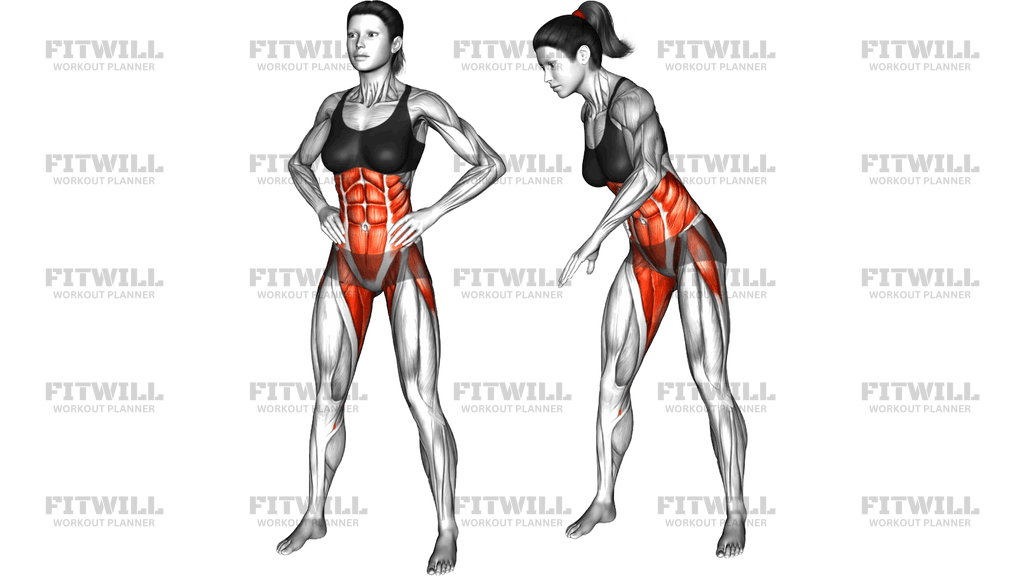
The Diagonal Pick And Carry (Woodchop) is a rotational, full-body pattern that mimics lifting something from one side of your body and carrying it up and across to the opposite side. Performed here without equipment, you sink toward one hip, reach the hands down and across as if picking up a load, then drive through the legs and sweep the arms diagonally overhead to the far side while the torso rotates. It is essentially a woodchop expressed through the whole body rather than through a weighted implement.
This movement is especially useful for anyone whose daily life or sport involves rotation with a transfer of force: carrying groceries, shoveling, swinging a racket or bat, or throwing. Because it links the ground to the hands through one connected chain, it trains the obliques, glutes, and shoulders to work together instead of in isolation. The diagonal path also hits the obliques and hip rotators from angles that straight-plane exercises like planks and crunches never touch.
Setup matters more than it looks. A staggered stance gives your hips room to rotate, and letting the back heel lift naturally prevents you from twisting through the knee. The sequence of effort should travel bottom-up: legs first, then hips, then torso, then arms. If the arms lead, the low back absorbs torque it was never meant to handle.
To execute well, reach down and across with a long spine rather than a rounded one, then accelerate up the diagonal while keeping the ribs stacked over the pelvis. Finish tall with the arms extended overhead to the opposite side and the hips fully rotated toward that direction. The return trip should be just as deliberate, tracing the same diagonal back down under control.
A common use case is as a warm-up primer before loaded chops, throws, or rotational sport work, or as a higher-rep core finisher when you want rotation without equipment. Move with intent rather than speed for its own sake. If you feel the movement in your low back instead of your sides and hips, narrow the range, slow the tempo, and re-establish the hip-driven sequencing before adding range or reps.
[ Workout Log & Planner ]
Put your next workout in Fitwill
Keep your plan and training log ready when you are.


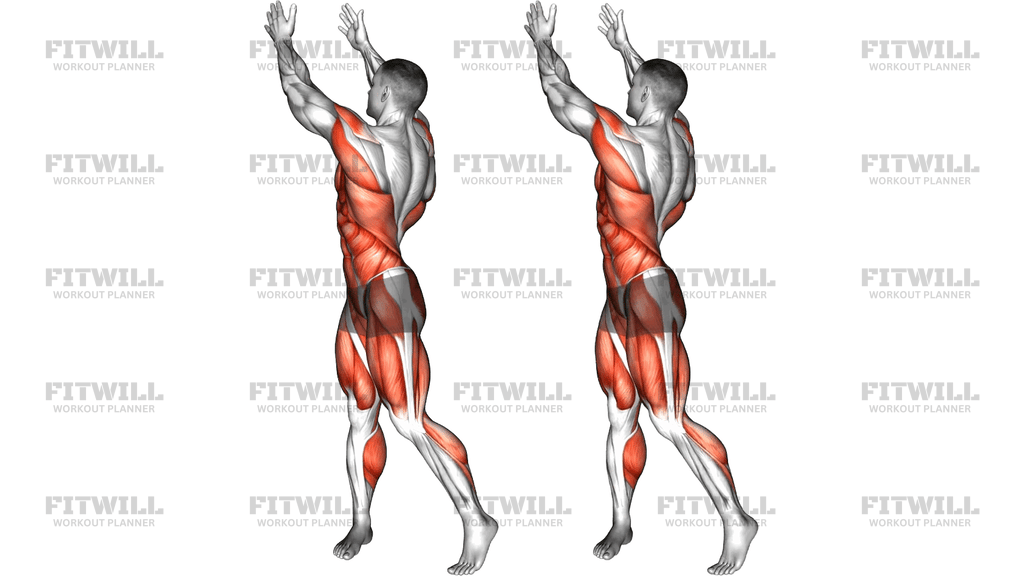
Instructions
- Stand in a staggered stance with your left foot forward and your right foot back, feet roughly hip-width apart so your hips can rotate freely.
- Reach both arms down and across toward the outside of your front (left) hip, letting your torso rotate and your back (right) heel rise slightly as you sink into the legs.
- Brace your midsection by exhaling gently and tightening around your waist before initiating the lift, keeping your spine long rather than rounded.
- Drive through the front foot and push the floor away with both legs to start the movement upward.
- Rotate your hips and torso to the right, sweeping both arms diagonally across your body toward the upper right, finishing with arms extended overhead and your chest facing that direction.
- At the top, stand tall with your weight over the lead leg and your ribs stacked over your pelvis instead of leaning back.
- Reverse the path with control, tracing the same diagonal back down toward the starting hip while the torso rotates and the back heel lowers.
- Exhale as you sweep up the diagonal and inhale as you lower back down.
- Complete all repetitions on one side, then switch your stance so the right foot is forward and chop toward the opposite side.
- Reset your stance and brace briefly between reps if you feel the rotation drifting into your lower back.
Tips & Tricks
- The most common mistake is turning this into an arm swing. Think of your arms as the last link in the chain; if your shoulders fire before your hips, drop to a shorter diagonal and relearn the leg-to-hip-to-torso sequence.
- Let the back heel rise on the upswing. Pinning it flat forces rotation through the knee and blocks the hip turn that makes the chop feel powerful.
- Avoid rounding forward as you reach down and across. Hinge slightly at the hips with a long spine so the load of the movement lands on your legs and obliques, not your lumbar discs.
- If you finish the rep leaning backward with flared ribs, you are substituting lumbar extension for true rotation. Cue yourself to finish tall and squeeze the glute on the side you are rotating toward.
- Keep both hands moving as one unit. Splitting the arms or letting one trail behind turns a clean diagonal into a lopsided twist.
- Speed belongs at the upswing, control on the way down. Catching yourself at the bottom of the reach is where most people lose spine position.
- Warm up the pattern with a smaller arc first, then gradually lengthen the diagonal as your hips loosen. Going straight to a full overhead reach often pulls the movement into the low back.
- Match the reach depth to your hip mobility. If you cannot touch toward the outside of the front hip without rounding, aim for mid-shin height instead and progress over time.
- Do equal volume on both sides. Most people have a dominant diagonal, and the weaker side usually needs one or two extra sets to catch up.
Frequently Asked Questions
Which muscles does the Diagonal Pick And Carry (Woodchop) work most?
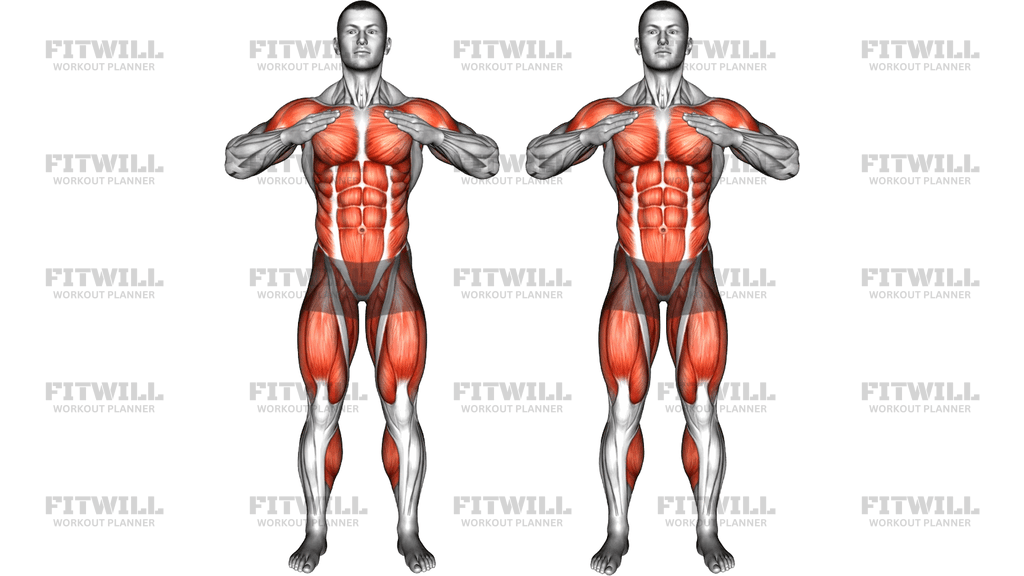
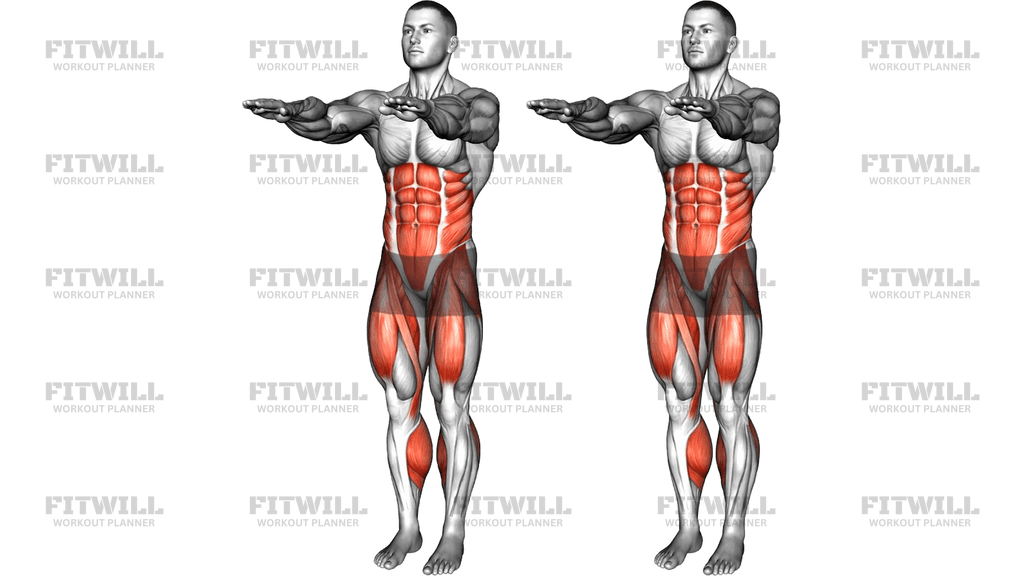
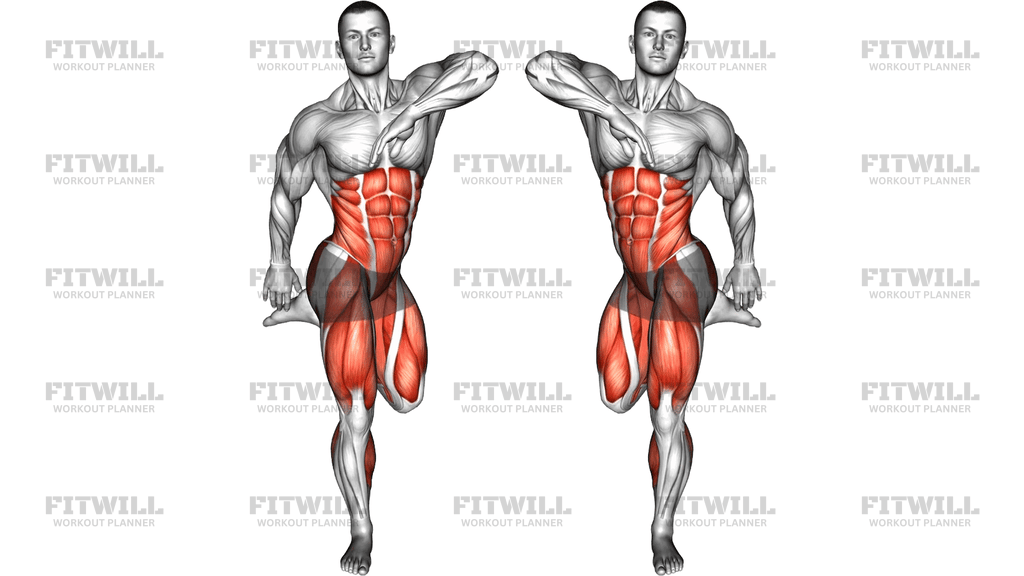
The obliques on the sides of your waist do the rotational work, supported by the glutes and legs driving the movement, the lats and shoulders guiding the arms, and the upper back controlling the finish overhead.
Is the Diagonal Pick And Carry (Woodchop) suitable for beginners?
Yes, because it uses no equipment and the range is entirely self-determined. Beginners should start with a short diagonal, around knee to chest height, and prioritize smooth hip rotation before extending the arms fully overhead.
Why does the movement use a staggered stance instead of a square stance?
A staggered stance gives the hips space to rotate through the diagonal and lets the back heel lift, so the turn comes from the hip joint rather than being forced through the knee or lower back.
Should my back heel stay flat during the chop?
No, letting the back heel rise naturally on the upswing is correct. Pinning it down restricts hip rotation and sends the twisting stress into the knee and lumbar spine.
How is this different from a cable or medicine ball woodchop?
Without external load, the emphasis shifts to movement quality, sequencing, and mobility rather than resisted power. It works well as a teaching progression before loaded chops or as a higher-rep rotational finisher.
I feel the Diagonal Pick And Carry (Woodchop) in my lower back instead of my abs. What should I change?
You are likely rotating from the lumbar spine or arching at the top. Shorten the arc, keep the ribs stacked over the pelvis, and start the rep with a leg drive so the hips initiate the turn.
Can I do this exercise every day?
Since it is unweighted and rhythmical, it can be performed frequently, often as a warm-up. Keep the daily volume moderate and treat higher-effort sets as you would any strength work, with recovery between sessions.
How many reps and sets should I use?
For a warm-up or movement primer, 2 to 3 sets of 8 to 10 chops per side works well. As a core finisher, aim for 3 sets of 10 to 15 controlled reps per side, always matching volume on both sides.
What can I use instead if I want added resistance?
A cable handle set at low or high pulley height, a medicine ball, or a light dumbbell held in both hands all work with the same diagonal path. Learn the bodyweight version first so the loaded version does not pull you into poor positions.
Is it safe for people with knee or back issues?
The movement is low impact, but anyone with a history of back or knee problems should keep the range small, move slowly, and stop if symptoms appear. Checking with a qualified professional before adding rotational work is a sensible precaution.