Twist March
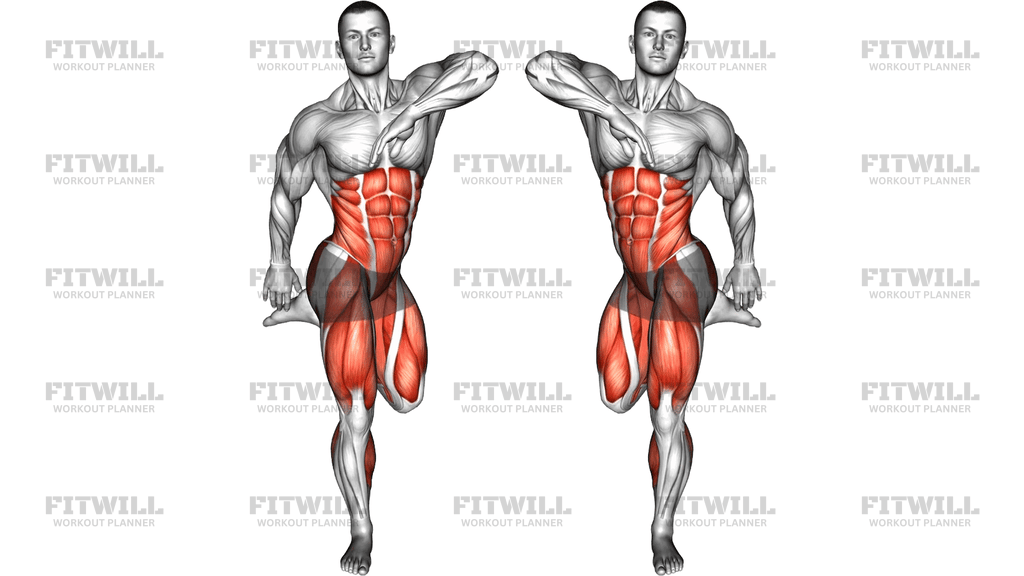
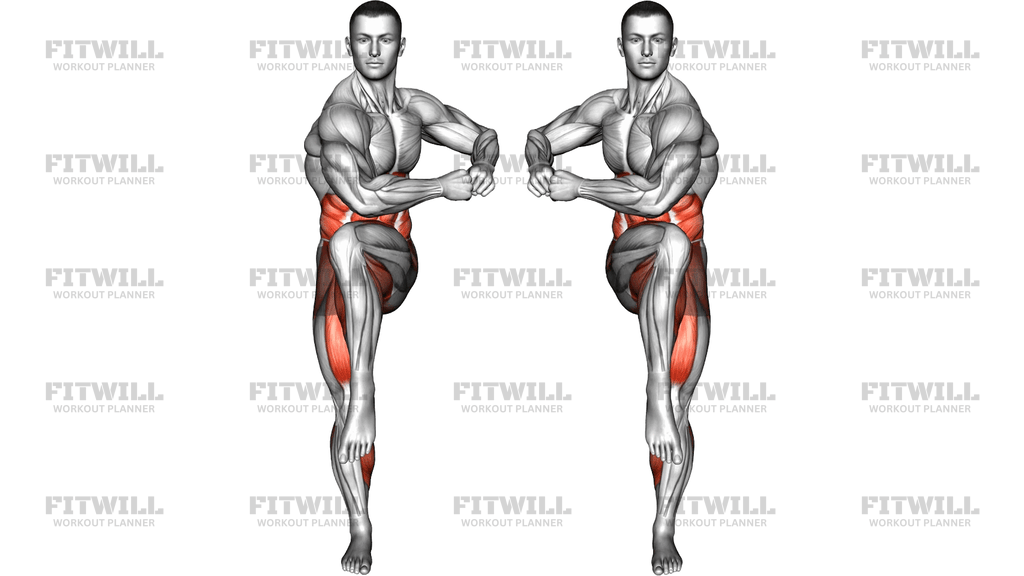
Twist March is a standing, body-weight movement where you march in place while rotating your torso so that the opposite elbow drives down toward each rising knee. Instead of lifting the knee straight up, you bring the knee up and across slightly while the trunk twists to meet it, then switch sides in a steady, rhythmic alternation. The result is a move that combines a knee raise, a trunk rotation, and a marching cadence all in one continuous pattern.
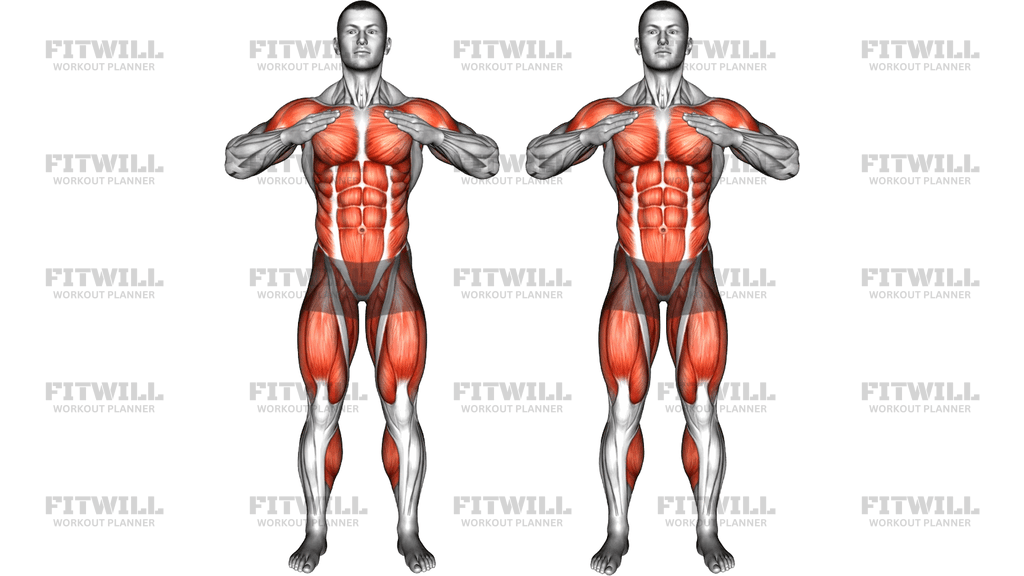
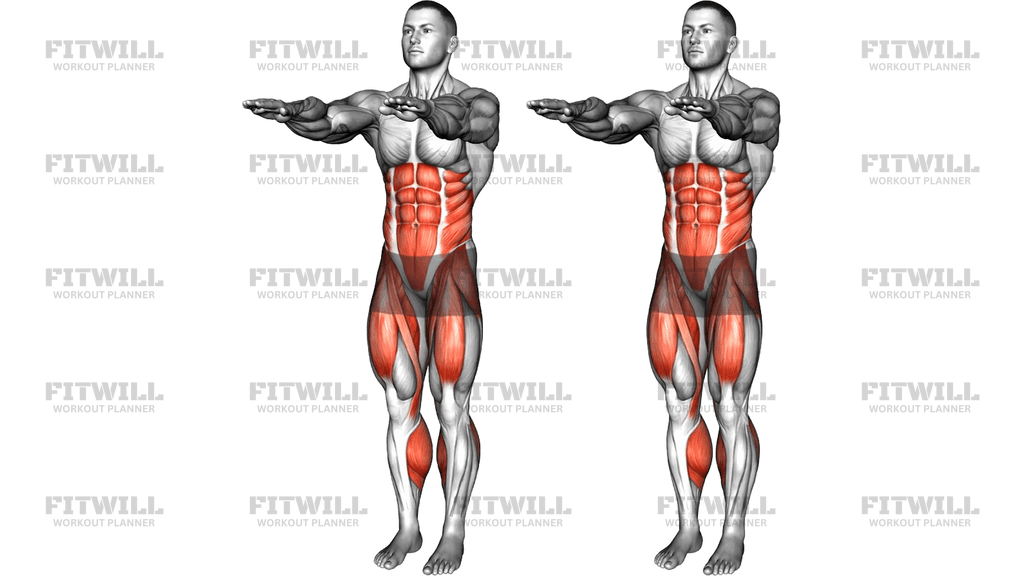
The main work comes from the obliques, which rotate the trunk and pull the ribs toward the hip on each rep. The hip flexors and quads lift the knee, the lower abs help control the pelvis as you stand on one leg, and the calf of the support leg keeps you stable and tall. Because you repeat the elbow-to-knee pattern briskly, your heart rate climbs quickly, which is why this exercise shows up so often in warm-ups, cardio circuits, and fat-loss intervals.
Setup is simple but matters more than people expect. You need enough room to lift your knees without clipping anything, feet about hip-width apart, and hands loosely closed or lightly touching the sides of your head without pulling on your neck. Your weight should stay over the mid-foot of the standing leg, and your posture stays upright rather than slumped forward. When the setup is right, the twist comes from the ribs and waist, not from swinging your arms or collapsing your shoulders.
To execute it well, lift one knee to roughly hip height while rotating so the opposite elbow travels toward that knee, then lower the foot with control and immediately repeat on the other side. Keep the movement crisp and coordinated rather than rushed, and think about rotating through the waist while your chest stays lifted. A common error is bending the standing leg deeper and deeper as fatigue builds; a soft knee is fine, but you should not sink into a squat. Another is yanking the head forward with the hands, which strains the neck and shortens the rotation.
Twist March suits beginners building core control, anyone warming up for training or sport, and people doing low-equipment home workouts where standing cardio is needed. It also works well between strength sets as an active recovery drill. Because it is performed on one leg at a time, it quietly challenges balance and ankle stability, which carries over to walking, running, and change-of-direction activities.
From a safety standpoint, keep the rotation moderate at first and let the range grow as your waist warms up. If you have sensitive knees, reduce the knee height rather than forcing the thigh parallel to the floor. Move on a firm, non-slip surface, wear supportive footwear or work barefoot on a stable floor, and stop if you feel sharp pain in the knees, hips, or lower back rather than ordinary muscular effort.
[ Workout Log & Planner ]
Put your next workout in Fitwill
Keep your plan and training log ready when you are.


Instructions
- Stand tall with your feet hip-width apart and your weight balanced over both feet on a firm, non-slip surface.
- Bend your elbows to about 90 degrees and bring your fists up near chest height, keeping your shoulders relaxed and down.
- Brace your core lightly so your ribs stay stacked over your pelvis before you start moving.
- Lift your right knee up and slightly across toward hip height while rotating your torso to the left so your left elbow drives down toward the raised knee.
- Squeeze the rotation at the top briefly so the twist comes from your waist rather than your arm swing.
- Lower your right foot back to the floor under control and shift your weight evenly before the next rep.
- Immediately repeat on the other side, lifting the left knee while the right elbow rotates toward it, and keep alternating in a steady marching rhythm.
- Exhale sharply as each elbow and knee come together, and inhale as the leg lowers and you reset.
- Keep the standing knee soft but tall in the hip; avoid sinking lower into a squat as the set continues.
- Finish the set by stepping both feet together, standing still for a breath, and letting your arms hang before moving on.
Tips & Tricks
- Rotate from the ribs and waist, not from the shoulders — swinging the arms side to side without turning the trunk removes most of the oblique work.
- Do not pull on your head or neck with your hands; keep the fists near your chest or the fingertips light at your temples so the neck stays neutral.
- If your rotation feels blocked at the top, the knee is usually too high too early — reduce the knee height until the elbow and knee can meet cleanly, then progress.
- Keep the pelvis square and only twist above it; letting the hips rotate with the torso turns this into a hip swing and cuts the core demand.
- Watch for the torso folding forward as fatigue sets in; think of lifting the chest to meet the knee rather than dropping the chest toward it.
- Land the marching foot softly, ball of the foot first, so each rep is quiet — heavy, flat-footed stomping means you are losing control of the tempo.
- Start at a marching pace for 20-30 seconds before speeding up; coordination breaks down long before the muscles do.
- If your balance wobbles on the standing leg, widen your feet slightly between reps and keep your gaze fixed forward on one spot.
Frequently Asked Questions
What muscles does the Twist March work?
The obliques do the trunk rotation, while the hip flexors and quads lift each knee and the lower abs stabilize the pelvis. The calves and ankle stabilizers of the standing leg also work to keep you balanced.
Is Twist March a cardio exercise or a core exercise?
It is genuinely both. Done briskly it raises your heart rate like marching or light jogging, and because every rep rotates the trunk, the obliques and hip flexors are working the whole time.
How high should I lift my knee in the Twist March?
Aim for roughly hip height, but only as high as you can go while the opposite elbow still meets the rotation cleanly. If the twist shortens as the knee rises, lower the knee slightly until your coordination matches your range.
Should my elbow actually touch my knee?
Touching is not required and often means collapsing the chest. Drive the elbow toward the knee and rotate until they come close; a near-contact with a tall spine is better than forcing contact by rounding your back.
Is Twist March good for beginners?
Yes, it needs no equipment and the range is easy to scale. Beginners should start at a slow marching tempo with a moderate twist for 20-30 seconds, then build speed and knee height as balance improves.
Why do I keep losing my balance on the standing leg?
Single-leg balance is part of the exercise, so some wobble is normal at first. Fix your gaze on one spot ahead, keep a soft bend in the standing knee, and slow the tempo down until each foot lands under control.
What can I use instead of the Twist March?
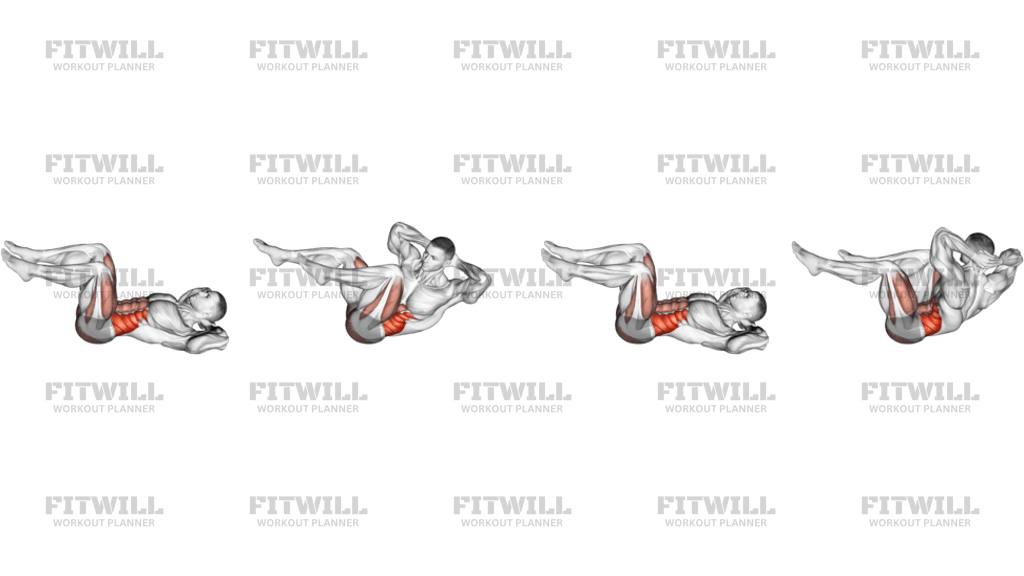
Standing cross-body mountain climbers, slow standing elbow-to-knee crunches without the march, or alternating high knees with a smaller twist all train similar patterns. Lying bicycle crunches cover the rotation if you need a floor-based option.
Is it safe for my lower back and knees?
For most people yes, as long as the rotation stays smooth and the knee height is comfortable. If you have a history of back or knee issues, keep the twist modest, avoid twisting with the hips instead of the waist, and stop if you feel sharp pain rather than muscle effort.
How long should I perform the Twist March?
Twenty to sixty seconds works well as a warm-up drill or a cardio interval inside a circuit. Rest briefly between rounds, or pair it with a slower drill if you are using it as active recovery between strength sets.