Alternate Obliques Pulse Twist Side Reach
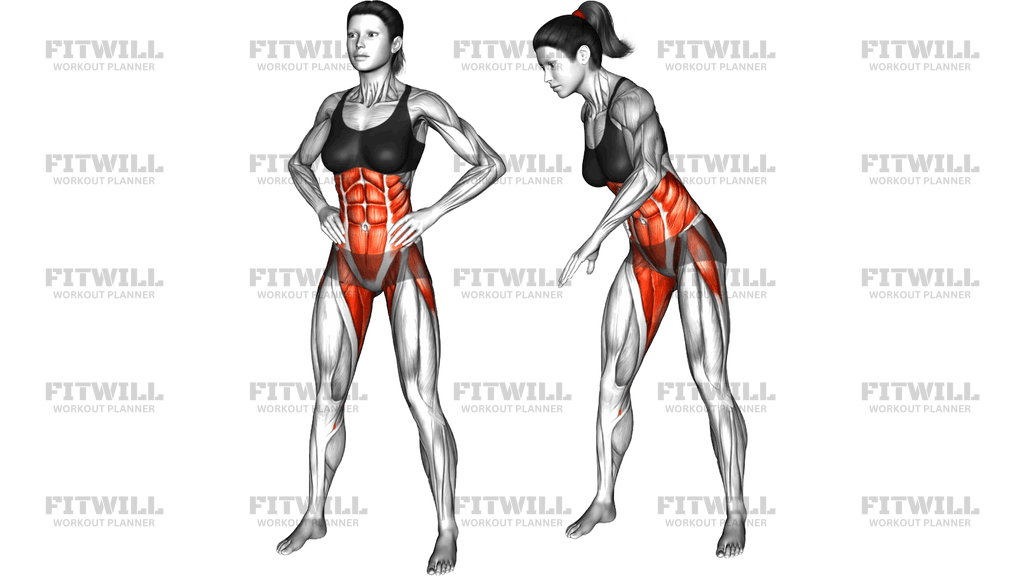
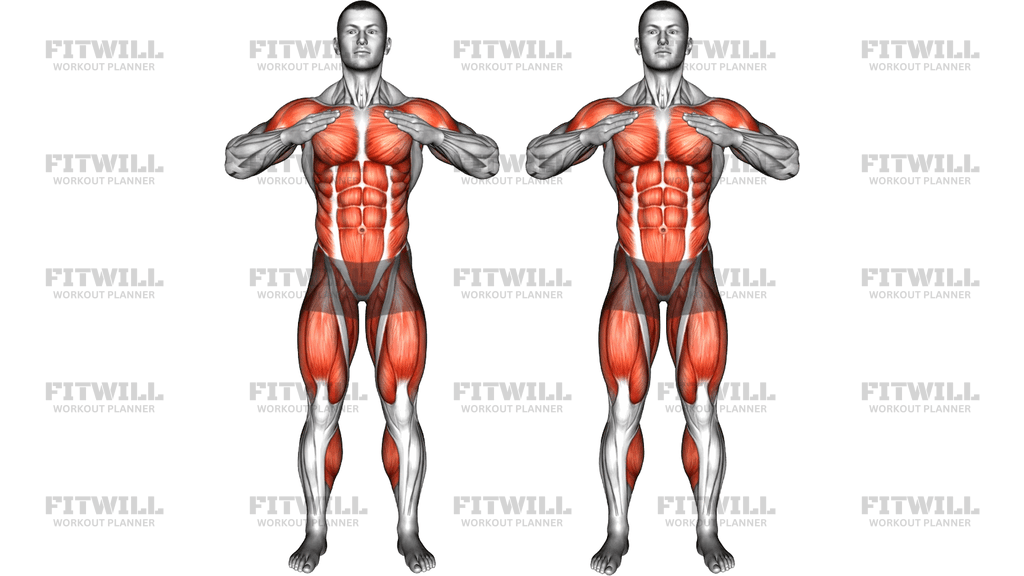
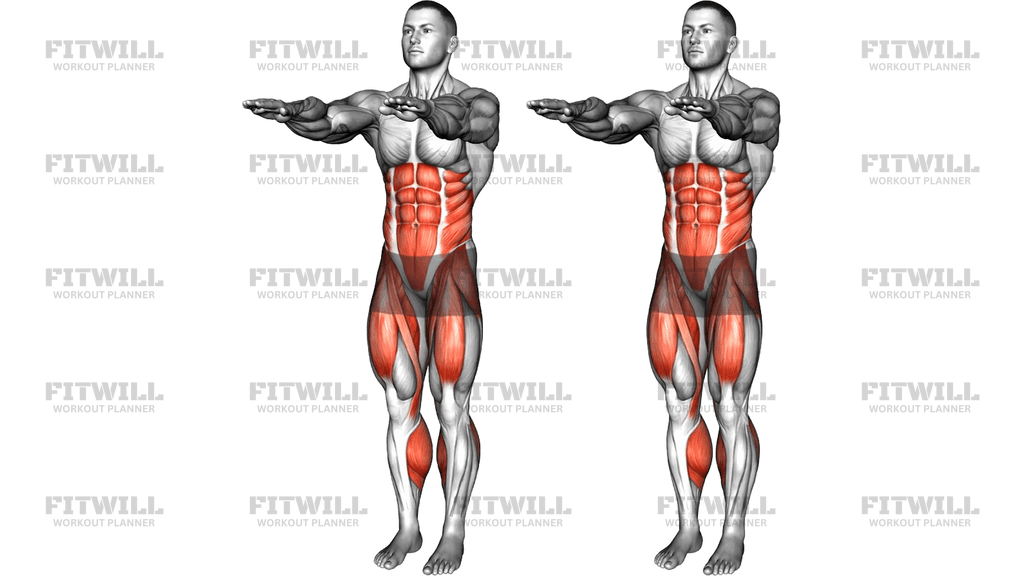
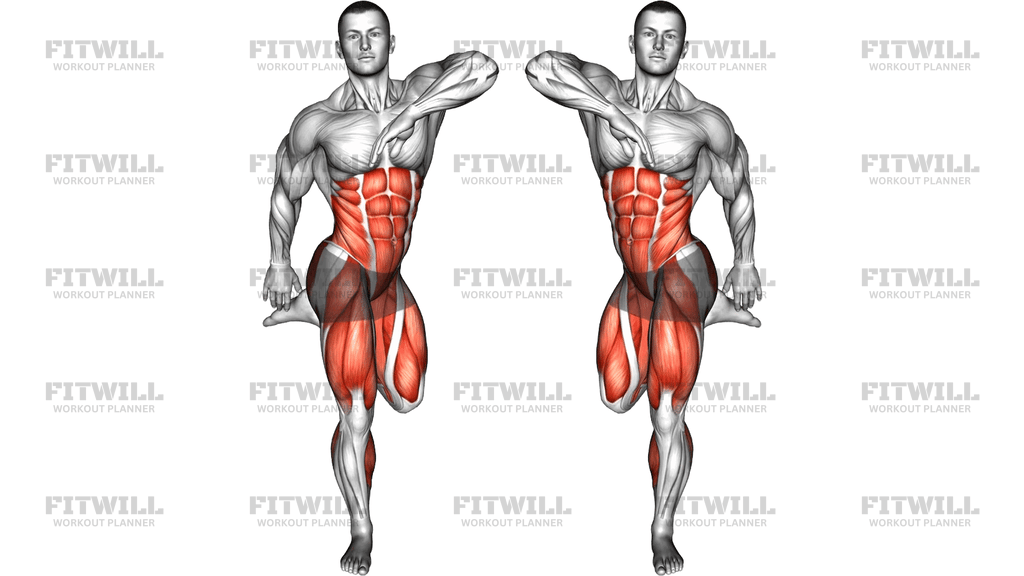
The Alternate Obliques Pulse Twist Side Reach is a standing body weight exercise that combines rotation and lateral flexion of the trunk in one continuous, pulsing rhythm. From a shoulder-width stance with your hands resting on your hips, you twist the torso to one side, add a small pulse or two at the end of the rotation, reach the opposite arm up and across, then switch sides without stopping. The highlighted musculature in the movement makes the emphasis clear: the side walls of the waist, the internal and external obliques, do the bulk of the work while the deep core stabilizes the spine through every change of direction.
This drill suits a wide range of trainees because it needs no equipment and no floor work. Beginners can use it to learn what oblique contraction actually feels like, while more experienced lifters use it as a warm-up before squats or loaded carries, or as a high-rep finisher that leaves the waist burning without stressing the lower back the way heavy loaded rotations can. It is also a practical choice for home workouts, hotel rooms, or group classes where space and equipment are limited.
The setup matters more than it looks. Because the exercise is unloaded, the only resistance is your own control, so a firm stance, a braced midsection, and a tall chest are what turn a casual sway into genuine training. Feet planted and knees softly bent stop the hips from swinging, which forces the obliques to produce the twist instead of letting momentum do the job.
To execute well, think of rotating around a vertical axis running through the center of your body. Twist from the ribs and waist rather than yanking with the shoulders, pulse twice at the rotated position with small, crisp side-bends or reaches, then flow straight into the opposite side. Keep the pulses short and rhythmic rather than deep and jerky, and keep breathing steadily throughout so you never hold your breath.
The most common use cases are warm-up rotation work, core circuits, and active recovery days. Common form faults include letting the knees collapse inward during the twist, craning the neck to follow the reaching hand, and turning the drill into a speed contest where the pulses become wild swinging. Move with intent, keep the range moderate, and the Alternate Obliques Pulse Twist Side Reach delivers focused oblique work that is easy on the joints and easy to scale by adding reps, slowing the tempo, or holding the rotated position longer.
[ Workout Log & Planner ]
Put your next workout in Fitwill
Keep your plan and training log ready when you are.


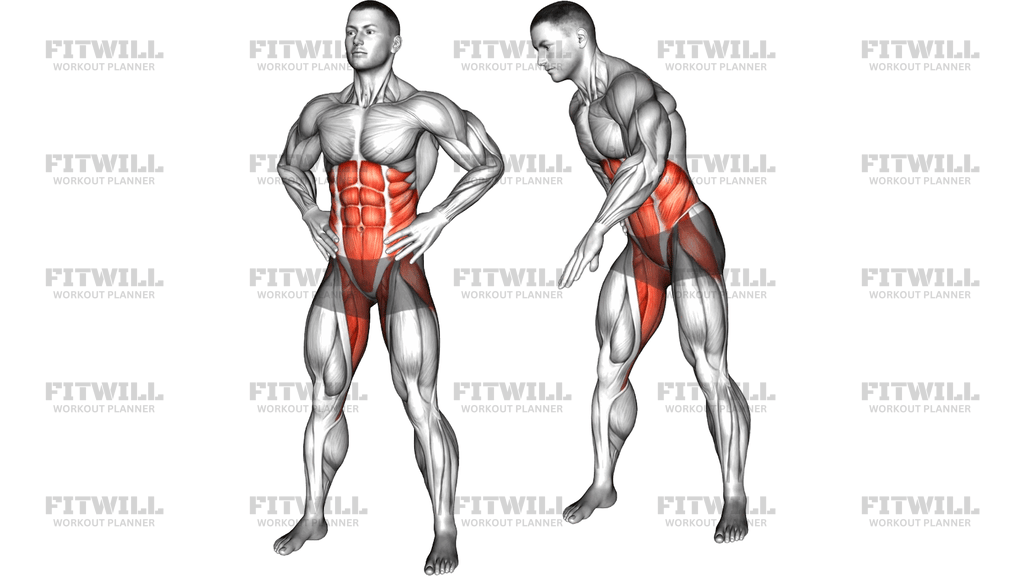
Instructions
- Stand with your feet about shoulder-width apart, toes pointing forward, and soften your knees slightly so your legs can absorb the rotation.
- Place both hands lightly on your hips with your elbows out to the sides, and draw your shoulder blades back so your chest stays tall.
- Brace your abdominal wall as if preparing for a light push, and set your weight evenly across both feet.
- Exhale and twist your torso to the right, rotating from the waist and ribcage while your hips and feet stay pointing forward.
- At the end of the twist, perform two short pulses, adding a small side-bend or a gentle reach of the left arm up and across your body.
- Keep the pulses crisp and controlled, staying within a range where your lower back stays comfortable.
- Without pausing, rotate back through center and continue into a twist to the left, then pulse twice on that side.
- Breathe out on each twist and pulse, and breathe in as you return through the center.
- Alternate sides for your target number of repetitions, keeping the rhythm smooth from start to finish.
- To reset, stop at center, release the brace, shake out your waist and hips, and check that your stance is still shoulder-width before the next set.
Tips & Tricks
- If your feet start pivoting with the twist, imagine standing on a pair of pressure plates and keep even weight on both big toes; the rotation should come from the waist, not the ankles.
- A frequent mistake is throwing the elbows forward and turning it into a shoulder movement. Keep your hands resting on your hips and let the ribcage rotate around your spine.
- Keep the pulses small. If you find yourself lunging sideways or collapsing one hip to reach further, shorten the range until the side-bend comes only from the trunk.
- Speed is the enemy of this drill. If you cannot stop instantly at any point of the twist, you are using momentum instead of muscle, so cut the tempo in half.
- Look straight ahead rather than following your reaching hand; chasing the hand with your eyes adds neck rotation you do not need.
- If your lower back feels compressed at the end of the pulse, reduce the side-bend component and keep the emphasis on pure rotation.
- To increase difficulty without equipment, slow each twist to a three-second count or pause two full seconds at the rotated position before pulsing.
- Place a mirror at your side occasionally to confirm your hips stay square; most people discover one direction drifts more than the other and can correct the imbalance.
- Use this movement before barbell work as a warm-up, but keep the reps low and controlled there; save high-rep burnout sets for the end of the session.
Frequently Asked Questions
Which muscles does the Alternate Obliques Pulse Twist Side Reach work?
The internal and external obliques along the sides of your waist do the primary work during the twist and pulses. The rectus abdominis, deep core, and lower back muscles stabilize the trunk, and the hips help control the rotation.
Is this exercise suitable for complete beginners?
Yes. It is body weight only and the range is easy to adjust, so a beginner can start with small twists and shallow pulses. Focus on feeling the sides of the waist contract rather than on reaching far.
Why do I need to keep my hips facing forward during the twist?
If the hips rotate with you, momentum and leg movement take over and the obliques stop doing the work. A fixed, forward-facing pelvis forces the rotation to come from the waist, which is the point of the exercise.
How many reps should I do of the Alternate Obliques Pulse Twist Side Reach?
One twist plus two pulses to each side counts as one rep. For warm-ups, 8 to 10 reps per side at a controlled pace works well; for a core finisher, build up to 15 to 20 per side.
My lower back aches when I pulse to the side. What should I change?
You are likely over-bending or arching back as you reach. Reduce the side-bend to a small, controlled tilt, keep your ribcage stacked over your pelvis, and stop the pulse before your back starts to compress.
Can I add weight to the Alternate Obliques Pulse Twist Side Reach?
Yes, once your control is solid you can hold a light medicine ball or plate at your chest during the twist, or hold a dumbbell in the reaching hand. Add load gradually because rotation under load stresses the spine more than the body weight version.
What can I substitute if standing rotation bothers my back?
Try slow standing side bends with hands on hips, or seated torso rotations on a bench with your feet planted. Both train the obliques through similar ranges with less rotational demand on the lower back.
Should I move quickly to raise my heart rate, or slowly for control?
Control comes first. Once you can stop the twist instantly at any angle, a moderately faster rhythm can add a light conditioning effect, but never let speed make the pulses sloppy or bouncy.
How is this different from a regular standing twist?
A plain standing twist is one continuous rotation, while this version adds pulses and a side reach at the end of each twist. The pulses keep the obliques under tension longer and add lateral flexion, so the sides of the waist work harder.
When is the best time to include this in my workout?
It works well as a warm-up drill before squats, deadlifts, or any rotational sport practice, using modest reps to wake up the trunk. For muscle-focused work, place it at the end of a core circuit when fatigue is acceptable.