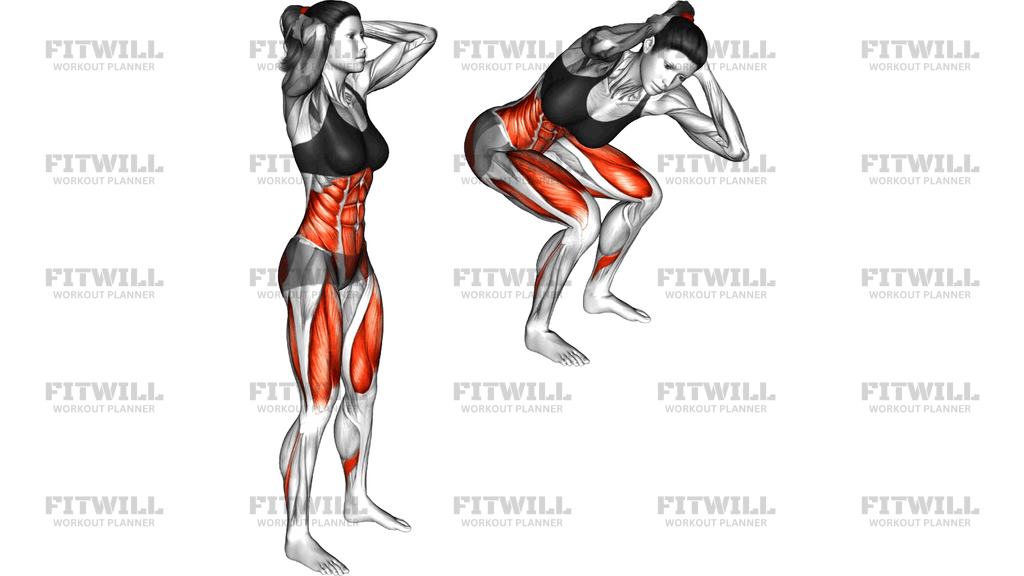
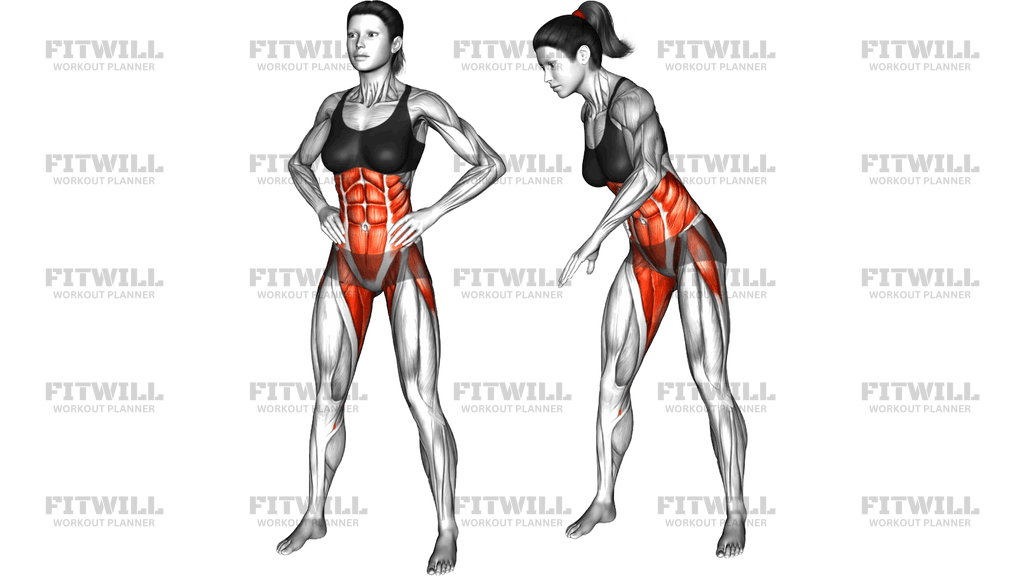
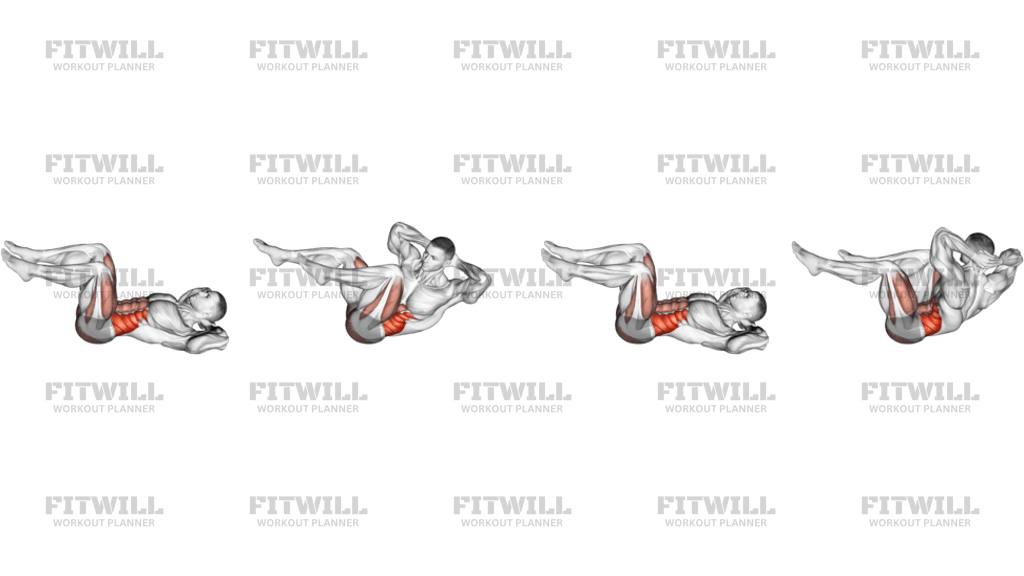
Standing Alternate Side Crunch And Raise
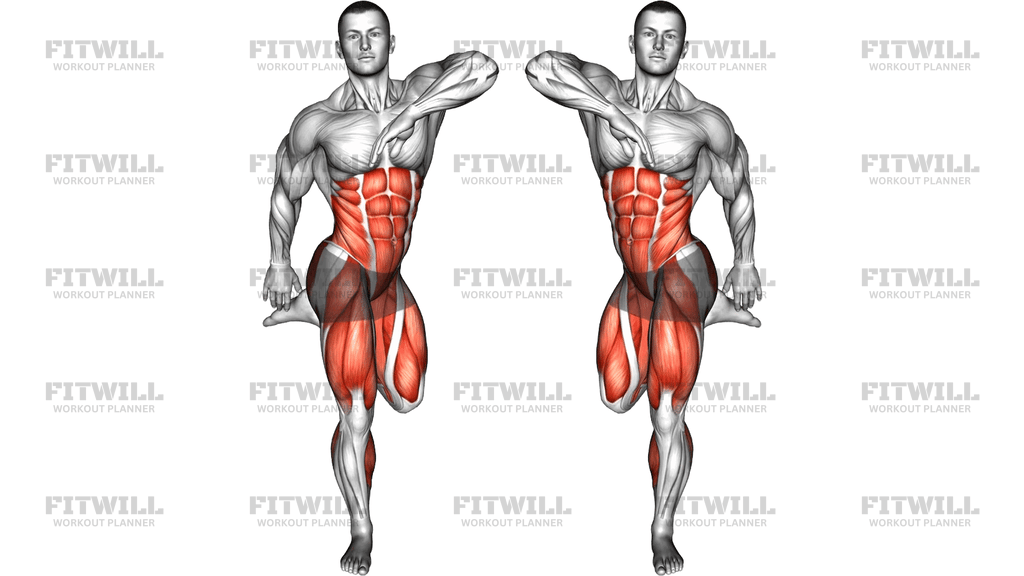
The Standing Alternate Side Crunch And Raise is a body weight core exercise that combines a lateral torso crunch with a simultaneous side knee raise, performed alternately on each side from a wide, stable stance. With your hands placed lightly behind your head, you crunch one elbow down and out toward the same-side knee while lifting that knee up and out to the side, then switch sides. The movement trains your obliques through both spinal side-bending and rotation control, while the leg raise adds hip abduction and forces your standing leg to stabilize the whole time.
This exercise is useful for anyone who wants to train the sides of the waist without getting down on the floor. Because you stay upright, it fits well into warm-ups, circuit training, and home workouts where no equipment is available. It is especially practical for people who find floor side crunches awkward on the neck or lower back, since the standing position lets you control the range with your whole body rather than pulling on your cervical spine.
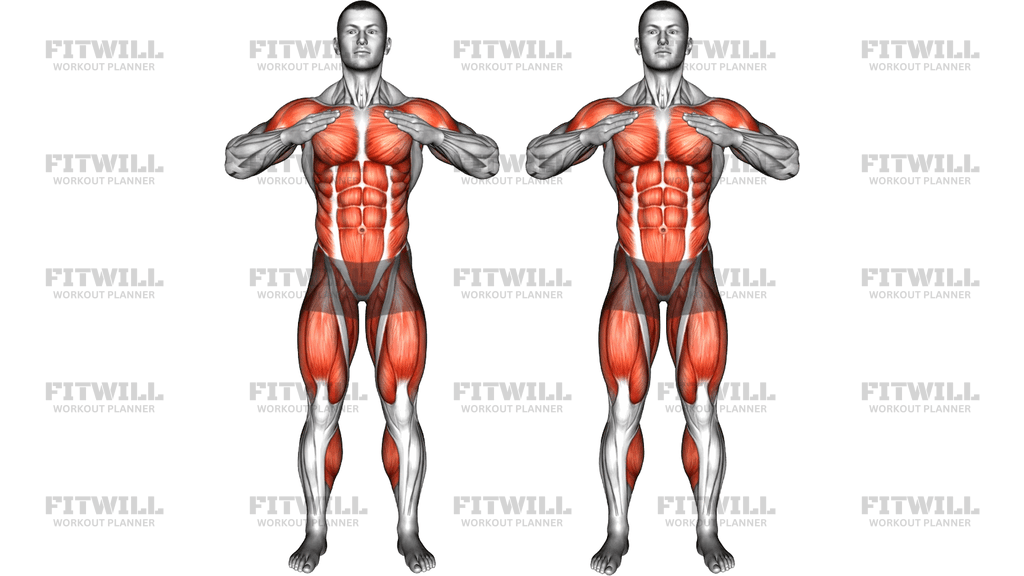
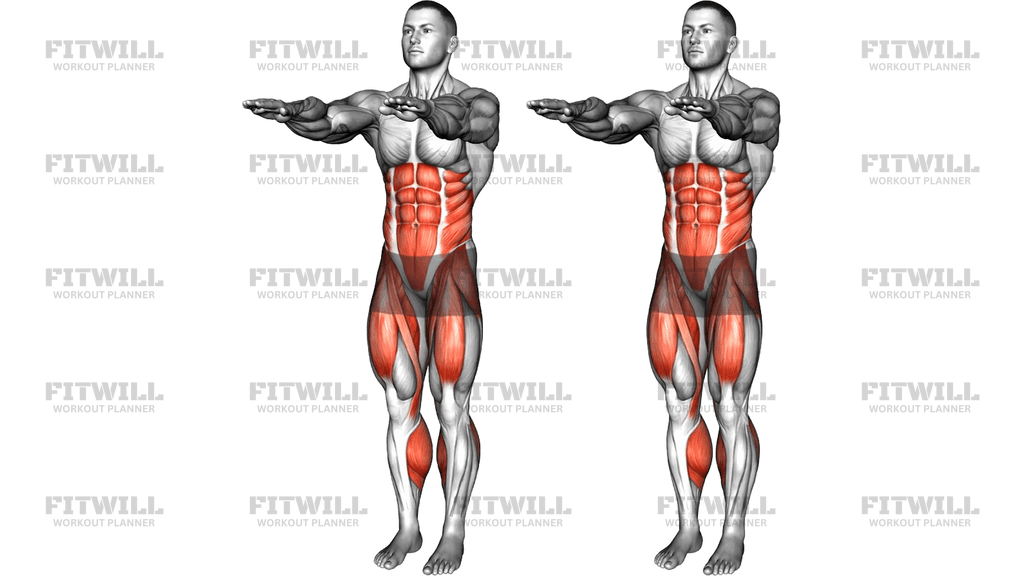
The main muscles working are the external and internal obliques on the side you are crunching, supported by the rectus abdominis as it resists leaning backward. The raised leg brings the hip abductors — mainly the gluteus medius and tensor fasciae latae — into play, and the stance-side hip, glute, and foot work isometrically to keep you balanced. That combination of moving and stabilizing at the same time is what makes this more demanding than it looks.
Setup matters here because a wide, planted base is what allows you to crunch sideways without losing balance. Stand with your feet roughly twice shoulder-width apart, toes turned out slightly, knees softly bent, and your weight spread evenly across both feet. Your hands support the back of your head with elbows wide — they are there for position, not for pulling your neck. If your stance is too narrow, you will wobble and cut the crunch short; too upright a torso and you end up just lifting your knee without real spinal side-bend.
To execute well, think of collapsing your rib cage down toward your hip rather than simply swinging your elbow. Lift the knee up and out to the side as the same-side elbow travels down toward it, squeezing the side of your waist hard at the top, then lower the leg and untwist back to tall posture with control before repeating on the other side. Alternating sides keeps the tension balanced and turns the exercise into a continuous, rhythmic core movement.
A few practical points will keep this safe and effective: keep the crunch in your waist rather than your lower back, avoid yanking your head forward with your hands, and stay on a non-slip surface since you are balancing on one leg at the top of each rep. Start with slower reps to learn the coordination of elbow and knee meeting, then build speed and volume once the pattern feels automatic.
[ Workout Log & Planner ]
Put your next workout in Fitwill
Keep your plan and training log ready when you are.


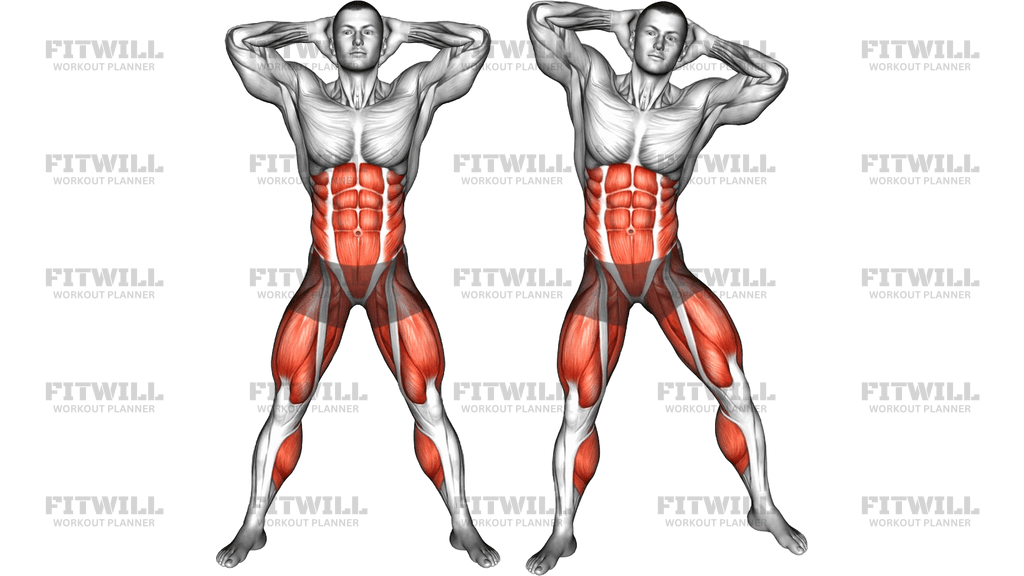
Instructions
- Stand with your feet about twice shoulder-width apart, toes turned out slightly, knees soft, and your weight balanced evenly across both feet.
- Place your hands lightly behind the sides of your head with elbows flared wide, and brace your core as if preparing for a light poke to the stomach.
- Shift your weight slightly onto one leg and begin lifting the opposite-side knee up and out to the side, turning that thigh open.
- As the knee rises, crunch the same-side elbow down and out toward that knee, bending your spine sideways and letting your rib cage drop toward your hip.
- Squeeze the side of your waist hard at the top, with your elbow and knee as close together as your range allows while your torso stays leaning, not rounded forward.
- Lower the knee back to the floor under control and return your torso to tall, upright posture before starting the next rep.
- Repeat the crunch-and-raise immediately on the other side, keeping the tempo even between left and right.
- Exhale as you crunch the elbow and knee together, and inhale as you lower back to the standing position.
- Keep your standing knee softly bent and your foot fully planted throughout; reset your balance and brace between reps if you start to wobble.
Tips & Tricks
- The most common mistake is swinging the elbow across the body toward the opposite knee — this turns it into a twisting motion and shifts work away from the obliques. Match each elbow to the knee on the same side and think side-bend, not rotation.
- If you find yourself pulling your head forward with your hands, interlace your fingers more loosely and keep your elbows wide; the hands should only support the head's weight.
- A narrow stance is the usual cause of losing balance at the top of the raise. Widen your feet until you can lift one knee fully without your torso drifting.
- Do not let the working foot just dangle — actively drive the knee up and out. The higher and more deliberate the knee lift, the more the hip abductors and lower abs contribute.
- Keep a slight bend in the standing knee the whole time. Locking it out makes the balance harder and loads the joint instead of the stabilizing muscles.
- If your lower back takes over, reduce the crunch depth so the side of your waist, not your lumbar spine, is doing the bending.
- Slow the lowering phase of the knee to a deliberate two counts; most people rush this part and lose the tension that makes the exercise worthwhile.
- Once the body weight version feels easy, hold a light dumbbell in the hand opposite the working side or pause for a full second at the top of each crunch to increase the challenge.
Frequently Asked Questions
What muscles does the Standing Alternate Side Crunch And Raise work?
The primary movers are the external and internal obliques on the side you crunch. The rectus abdominis assists, the gluteus medius and tensor fasciae latae lift the knee out to the side, and the standing-leg hips and stabilizers work to keep you balanced.
Is the Standing Alternate Side Crunch And Raise good for beginners?
Yes, because it requires no equipment and the range is easy to scale. Beginners should start with a narrower crunch and lower knee lift, focusing on matching the same-side elbow and knee before adding speed or volume.
Why does the Standing Alternate Side Crunch And Raise use a wide stance?
The wide base lowers your center of gravity and gives you room to lean sideways while one leg is off the floor. With a narrow stance you will wobble and shorten the side-crunch range.
Should my elbow touch the opposite knee or the same knee?
In this exercise the elbow travels toward the knee on the same side as you crunch sideways and the leg lifts out. Crossing the elbow to the opposite knee changes the movement into a rotation-based crunch, which is a different exercise.
Can the Standing Alternate Side Crunch And Raise reduce waist fat?
No exercise can target fat loss in one area. This movement strengthens and builds endurance in the obliques and hip stabilizers, while visible changes around the waist depend on overall nutrition and training.
How many reps should I do of the Standing Alternate Side Crunch And Raise?
Start with 10 to 15 controlled reps per side, or 30 to 40 seconds of continuous alternating reps. Since it is a body weight movement, moderate reps with a strong squeeze beat fast, sloppy ones.
My neck hurts when I do this exercise — what should I change?
You are likely pulling on your head with your hands. Keep the fingers relaxed at the sides and back of your head, elbows wide, and let the side of your waist — not your arms — drive the crunch.
What can I substitute if balancing is too difficult?
Hold onto a sturdy chair back or wall with the hand on the non-working side for light support, or perform the crunch and knee raise in a slow, deliberate tempo without alternating until your balance improves.
Is it safe to do the Standing Alternate Side Crunch And Raise every day?
For most people, light-to-moderate daily use is fine since the load is your body weight, but treat it like any muscle training: two to four focused sessions per week with rest days will produce better strength results than daily fatigue.