Standing Side Leg Lift Twist
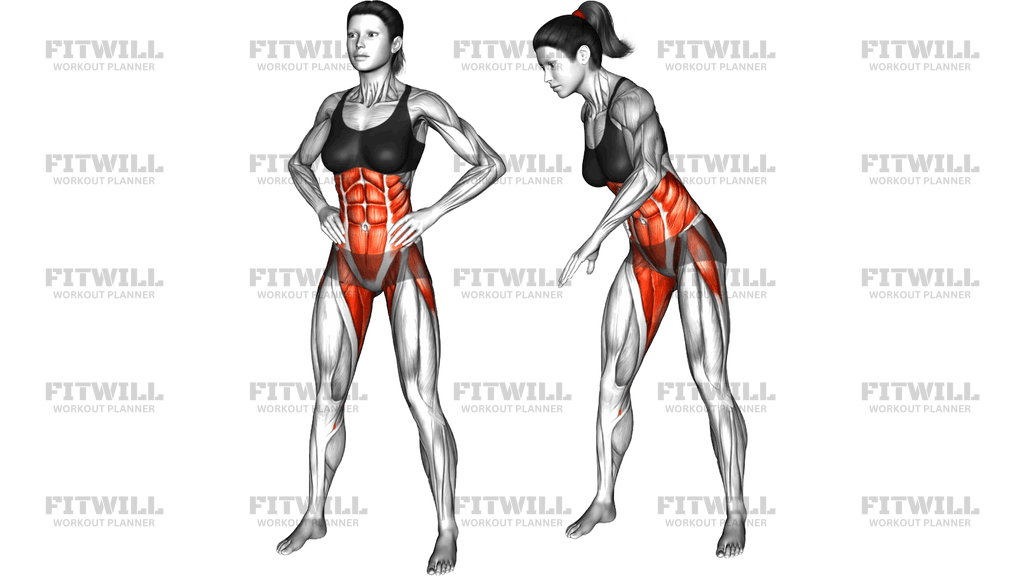
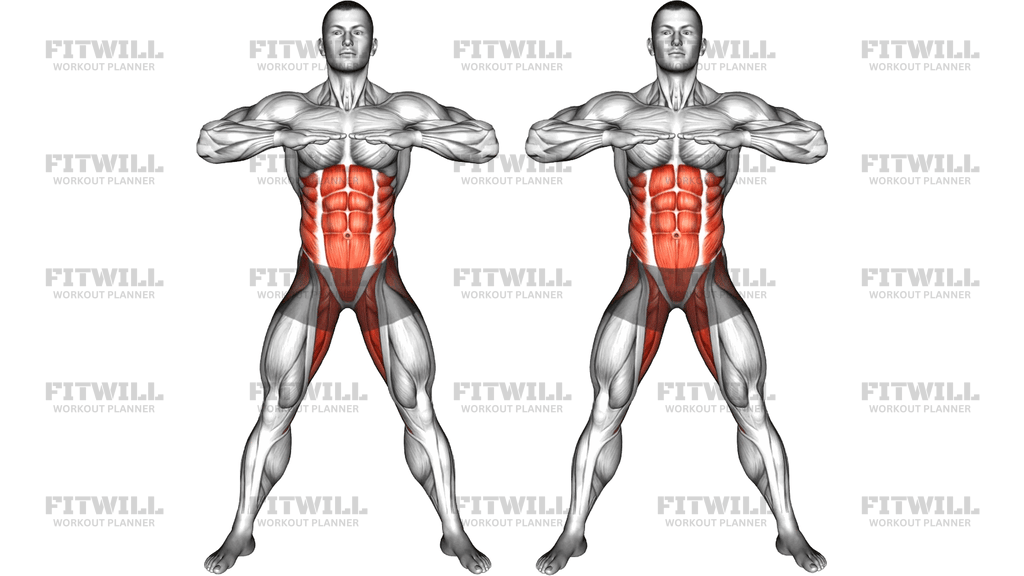
The Standing Side Leg Lift Twist is a body weight core exercise that combines a lateral leg lift with a rotational torso movement. You start from a wide stance with both arms extended straight ahead at chest height, shift your weight onto one leg, then lift the other leg out to the side while twisting your upper body in the same direction. The two motions happen together, which forces your midsection to control rotation while your hip stabilizes on the standing leg.
This movement is especially useful because it trains the obliques and deep core in an upright, weight-bearing position. Most abdominal work happens lying on the floor, but sports and daily life demand that you resist and produce rotation while standing on one leg. The Standing Side Leg Lift Twist bridges that gap: the rotating torso loads the obliques, the lifted leg challenges the outer hip and glute of the working side, and the stance leg's adductors and hip stabilizers work overtime to keep you from wobbling.
The setup matters more than it looks. A genuinely wide stance gives you a stable base for the weight shift, and holding the arms straight out in front at shoulder height acts as a counterbalance and a reference point — if your arms drift or drop, your torso is usually compensating. Keep the ribs stacked over the pelvis before you start each rep; if you begin with an arched lower back or a flared ribcage, the twist will come from spinal side-bending instead of controlled rotation.
To execute it well, think of the leg and the torso moving as one unit. As the foot leaves the floor and swings out to the side, rotate your chest toward the same side, exhaling as you reach the top. Pause briefly, then bring the leg and torso back to center under control before repeating on the other side. The tempo should be slow enough that you could stop the leg at any point — if momentum is swinging you around, the range is too fast or too big.
This exercise fits well into warm-ups, core circuits, and lower-body activation days. It requires no equipment and very little space, which makes it a practical option for home training or travel workouts. Beginners can start with a smaller leg height and a modest twist, while more advanced trainees can slow the tempo, add a pause at the top, or increase reps. Anyone with balance limitations can stand near a wall for light fingertip support without changing the movement itself.
The main safety point is control of the standing knee and lower back. Let the standing knee track over the toes rather than collapsing inward, and stop the twist at whatever range lets you keep your hips square-ish and your spine long. A small, clean rotation with a stable pelvis trains the obliques far better than a big swing that yanks the lower back around.
[ Workout Log & Planner ]
Put your next workout in Fitwill
Keep your plan and training log ready when you are.


Instructions
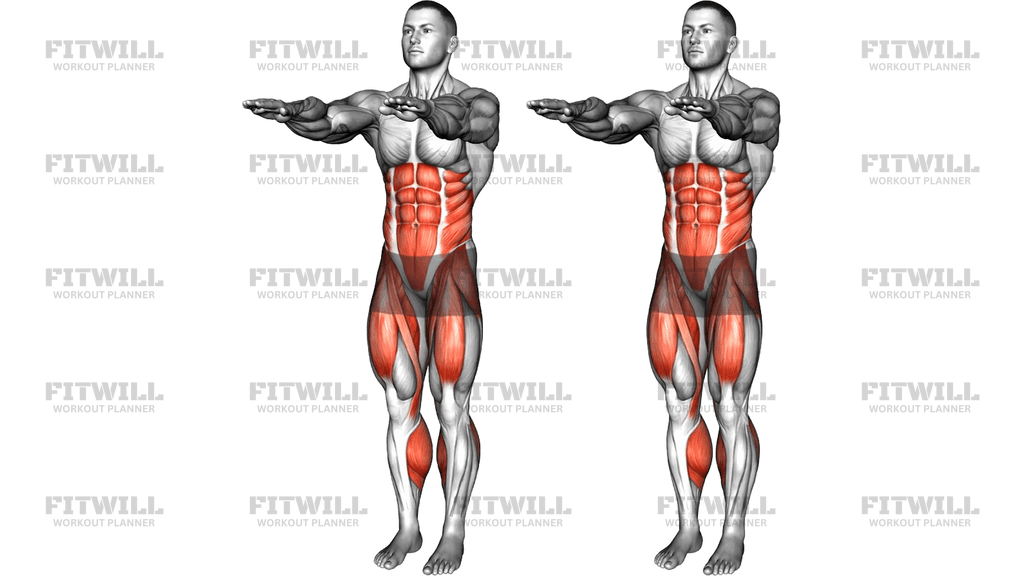
- Stand with your feet roughly two to three feet apart in a wide stance, toes pointing slightly outward, and let your weight settle evenly between both legs.
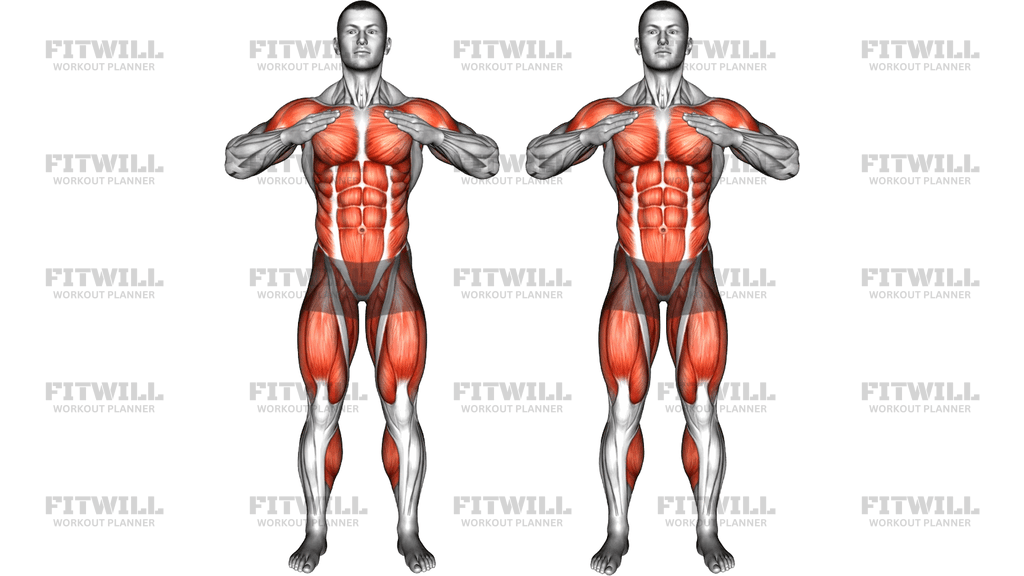
- Raise both arms straight out in front of your chest, hands parallel and facing down, so your arms sit at shoulder height as a counterbalance.
- Brace your abs lightly, pull your ribs down over your pelvis, and keep your shoulders relaxed away from your ears.
- Shift your weight onto your left leg with a soft bend in the standing knee, keeping the knee tracked over your toes.
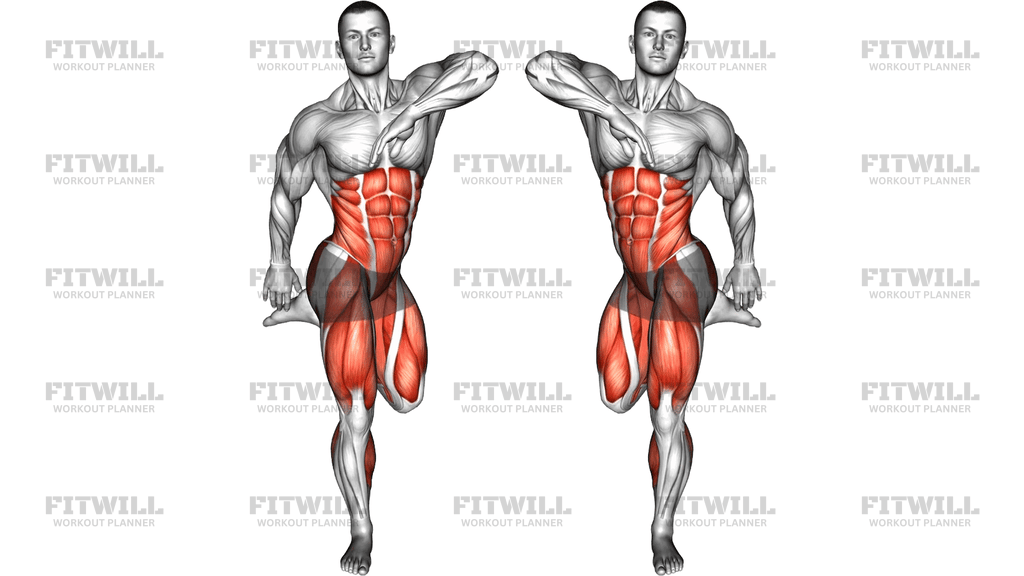
- Lift your right leg out to the side, leading with the outer thigh and keeping the foot flexed and the leg relatively straight.
- As the leg rises, rotate your torso to the right so your chest and arms turn toward the lifted leg, exhaling through the lift.
- Pause for one to two seconds at the top, when the leg is as high as you can hold without leaning your torso away from it.
- Lower the leg and rotate the torso back to face forward at the same slow speed, inhaling on the way down.
- Complete all reps on one side or alternate sides, then repeat the movement lifting the left leg and twisting to the left.
- Reset your stance and brace between reps if your balance drifts, rather than rushing the next lift from an unstable position.
Tips & Tricks
- If you find yourself falling toward the standing side, shorten the leg height first — a lower lift keeps the hip stabilizers engaged instead of dumping weight sideways.
- The most common mistake is twisting from the shoulder and letting the arms swing; think of the arms as a fixed frame that rotates together with your ribcage.
- Do not let the lifted hip hike up toward the ribs. If your waist scrunches on the lifting side, you are side-bending the spine instead of rotating it.
- Check the standing foot: if the arch collapses or the knee dives inward during the weight shift, press through the big toe and re-set before the next rep.
- Keep the movement in a slow two-second-up, two-second-down tempo. Momentum from a fast swing is the usual reason people feel this in their lower back instead of their obliques.
- Exhale on the lift-and-twist, inhale on the return. Holding your breath through the rotation tends to spike tension in the neck and shoulders.
- If your hamstrings or inner thighs feel tight in the wide stance, narrow it slightly. A stance you can control beats one that matches a picture.
- Turn the toes of both feet slightly outward to give the hip more room on the lift and reduce pinching at the front of the hip joint.
- For a harder version, hold the top position for three seconds or perform the exercise barefoot to challenge ankle and foot stability.
Frequently Asked Questions
What muscles does the Standing Side Leg Lift Twist work?
The primary muscles are the obliques on the side of the torso, which control the rotation. The glutes and outer hip of the lifted leg, plus the adductors and hip stabilizers of the standing leg, do most of the supporting work.
Why do the arms stay extended in front during the Standing Side Leg Lift Twist?
The extended arms act as a counterweight that makes the rotation harder to fake and gives you a clear feedback line. If your hands drift apart or drop, your torso has lost its stable rotation axis.
Is the Standing Side Leg Lift Twist suitable for beginners?
Yes, as long as the range is scaled down. Beginners should lift the leg only a foot or so off the floor and rotate a modest amount, focusing on staying tall and balanced rather than reaching a big range.
Should I twist toward the lifting leg or away from it?
In this exercise the torso rotates toward the lifting leg, so the obliques on that side contract as the leg rises. Rotating away would turn it into a different stretch-focused drill.
Why do I feel the Standing Side Leg Lift Twist in my standing leg?
That is expected. Shifting all your weight onto one leg loads the glutes, adductors, and ankle stabilizers of the stance leg, which is one of the main benefits of doing this drill standing instead of lying down.
My lower back aches after this movement — what should I change?
Slow down and reduce the twist until you can keep your hips facing mostly forward and your ribs stacked over your pelvis. The ache usually comes from swinging the leg fast or cranking the rotation from the lumbar spine.
Can I substitute the Standing Side Leg Lift Twist if my balance is poor?
Stand within fingertip reach of a wall and touch it lightly with one or two fingers during the lift, or start with a standing side leg lift without the twist and add rotation once the balance feels solid.
How many reps and sets should I do?
Two to three sets of eight to twelve controlled reps per side works well as core accessory work or as part of a warm-up. If form breaks down before eight reps, the range or tempo is too aggressive.
How is this different from a regular standing side leg raise?
A plain side leg raise isolates the outer hip, while the added twist makes the torso rotate with the leg, turning it into a combined oblique and hip stability exercise. The rotation also raises the demand on balance.
Do I need any equipment or a mat for the Standing Side Leg Lift Twist?
No equipment is needed — it is entirely body weight and can be done on any firm surface. A mat is optional if you are training on hard flooring and want more grip under your feet.