Arm Extension Torso Twist
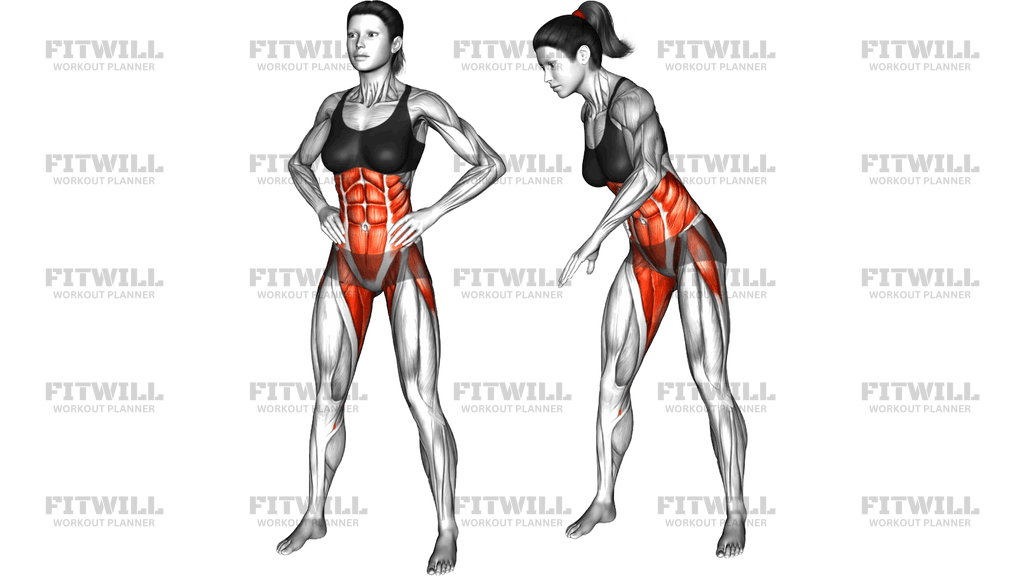
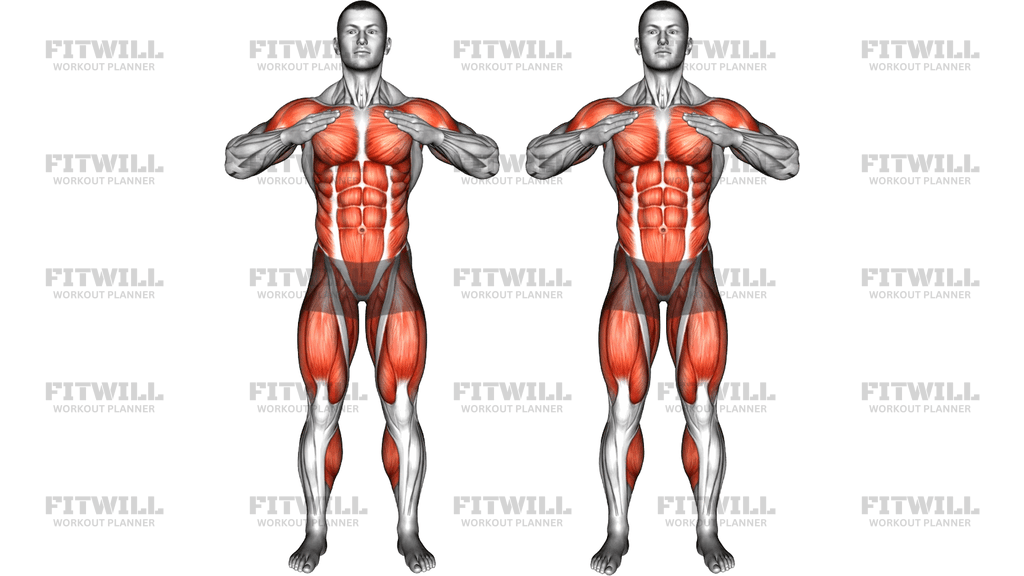
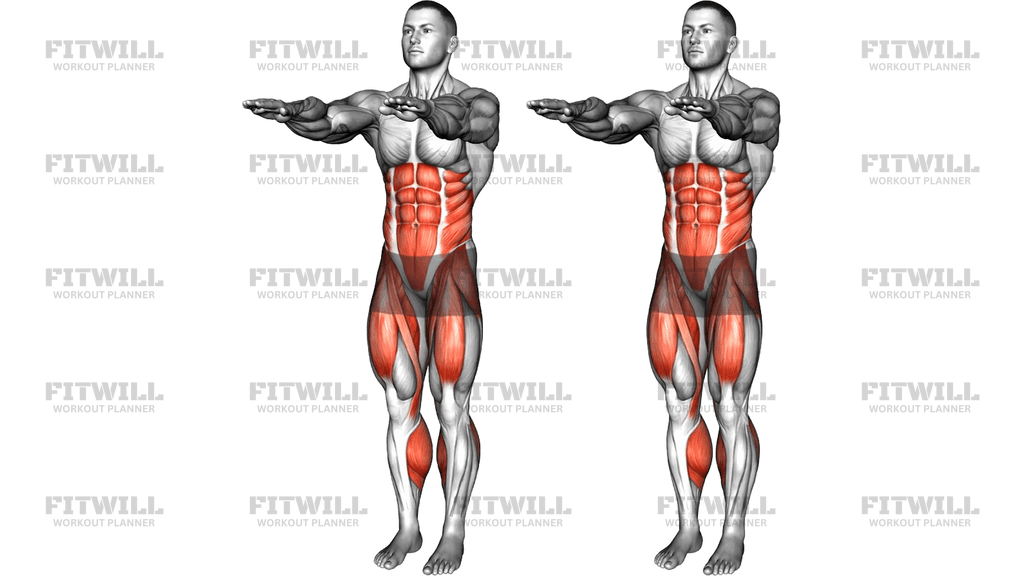
The Arm Extension Torso Twist is a standing, bodyweight rotation drill that pairs a wide, stable leg stance with a deliberate turn of the ribcage and an arm that reaches out in the direction of the twist. One arm swings across and extends forward as the torso rotates, then travels back as you rotate the other way. It looks simple, but that combination of rotation, reach, and a grounded lower body makes it one of the most practical ways to wake up the muscles that control spinal rotation.
The main work comes from the obliques on both sides of your waist, which drive the twist and then control the return. The rectus abdominis helps brace the trunk, the shoulders and arms carry the extended reach, and the wide stance keeps the quads, inner thighs, and hips actively engaged to hold your base steady. Because the feet stay planted, the rotation has to come from the waist and ribcage rather than from shifting your legs, which is exactly what makes the drill effective.
This movement fits well at the start of a workout as a dynamic warm-up, especially before exercises like wood chops, cable rotations, throwing, batting, golf swings, or any sport that demands rotational power. It is also useful on its own for people who spend long hours sitting, since seated postures tend to stiffen the mid-back and waist. No equipment is needed, so it works in a living room, gym, or hotel room with only a few feet of space.
Setup matters more than speed here. Plant your feet wider than shoulder width with toes turned slightly out, and keep your weight balanced across both feet. If your stance is too narrow, you will cheat the twist by swiveling your hips; if it is too wide, your inner thighs will fight to hold position. Aim for a stance that lets your knees stay soft and your hips stay facing forward while your upper body turns.
To execute it well, extend one arm forward at shoulder height and let the other arm travel behind you as your torso rotates, then reverse the motion smoothly. Your eyes should follow the moving hand, and your hips should stay as square to the front as possible while the ribs and shoulders do the turning. Move with control through the full comfortable range rather than whipping through the middle.
Keep the movement pain-free and moderate. The goal is smooth, repeatable rotations, not forcing maximum range on the first few reps. If you feel pinching in the lower back or shoulders, reduce the range and slow down.
[ Workout Log & Planner ]
Put your next workout in Fitwill
Keep your plan and training log ready when you are.


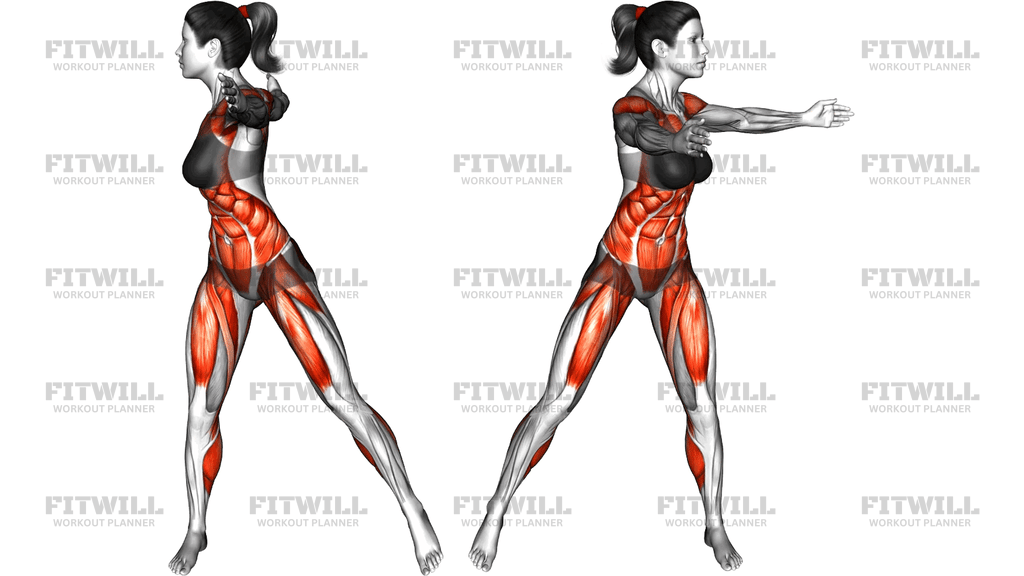
Instructions
- Stand with your feet wider than shoulder width, toes turned slightly out, and let your arms hang relaxed at your sides.
- Soften your knees slightly and shift your weight evenly across both feet so your lower body feels planted and stable.
- Extend your right arm straight forward at shoulder height and reach your left arm back behind you to set the starting split-arm position.
- Brace your abdominals lightly and keep your hips facing forward as the anchor for the twist.
- Rotate your torso to the right, letting the extended arm lead and your head and eyes follow the hand until you reach a comfortable end range.
- Smoothly reverse the rotation, passing through center and continuing to twist to the left as the opposite arm swings forward into extension.
- Keep both feet flat on the floor the entire time; the twist should come from your waist and ribcage, not from pivoting your hips.
- Exhale as you rotate into each twist and inhale as you return through center.
- Continue alternating sides in a controlled rhythm for your target number of repetitions, then step your feet back together to finish.
Tips & Tricks
- A common mistake is letting the back heel lift or the whole body swivel like a revolving door. Press both feet flat and let only the upper body rotate.
- Do not lock your knees. Locked legs make the lower back absorb the twist, while soft knees let the hips cushion the rotation.
- If your shoulders shrug toward your ears during the arm extension, reset by relaxing the reaching arm down a couple of inches before continuing.
- Start with a smaller arc for the first few reps and gradually increase the range as your waist warms up; going full range immediately often causes lower-back tightness.
- Keep the twist coming from the ribs and waist rather than yanking with the arm. The extended hand should trace the arc, not force it.
- Avoid holding your breath through the rotation. Syncing an exhale with each twist keeps the trunk muscles working instead of bracing rigidly.
- If balance feels shaky in the wide stance, narrow your feet slightly and bring your reaching arm to chest height until your base feels secure.
- Stop short of any pinching sensation at the spine. A stretch across the waist is the target feeling; sharp twisting pain means reduce the range or range of speed.
Frequently Asked Questions
Which muscles does the Arm Extension Torso Twist work?
The obliques on the sides of your waist are the primary drivers, with support from the rectus abdominis, shoulders, and the leg muscles holding the wide stance. The quads and inner thighs work isometrically to keep you planted.
Is the Arm Extension Torso Twist a strength exercise or a warm-up?
It serves both roles. Without added load it functions mainly as a dynamic warm-up or active mobility drill, and performing it for higher reps with focused control gives the obliques a light muscular endurance stimulus.
How wide should my stance be for the Arm Extension Torso Twist?
Go wider than shoulder width so your hips stay square while your torso rotates, but not so wide that your inner thighs strain to hold the position. Your knees should stay soft and both feet flat throughout.
Should my hips rotate with my torso during the twist?
Keep your hips facing forward as much as comfortable and let the rotation come from your waist and ribcage. A small amount of hip give is fine, but if your whole lower body is pivoting, the drill loses its rotational focus.
Can beginners do the Arm Extension Torso Twist safely?
Yes, it is very beginner-friendly since it uses no load. Beginners should use a smaller arc, move slowly, and keep the reaching arm at chest height to stay in control.
Why does my lower back feel tight instead of my waist?
This usually means your knees are locked, your feet are pivoting, or you are forcing more range than your mid-back allows. Soften the knees, keep the feet planted, and shorten the arc until the stretch returns to your waist.
What can I substitute for the Arm Extension Torso Twist?
Standing torso twists without the arm reach, seal jacks, or slow standing rotation stretches cover similar ground. For loaded work, cable or band wood chops progress the same rotational pattern.
How many reps should I do?
For a warm-up, 10 to 15 smooth rotations per side work well. For a standalone core circuit, go up to 20 per side while keeping the tempo controlled.
Where should my eyes be during the movement?
Follow the extended hand with your eyes as it travels through the arc. Tracking the hand encourages the head, neck, and upper spine to rotate together instead of leaving the neck stiff.