Seated Thumbs Up Pulse
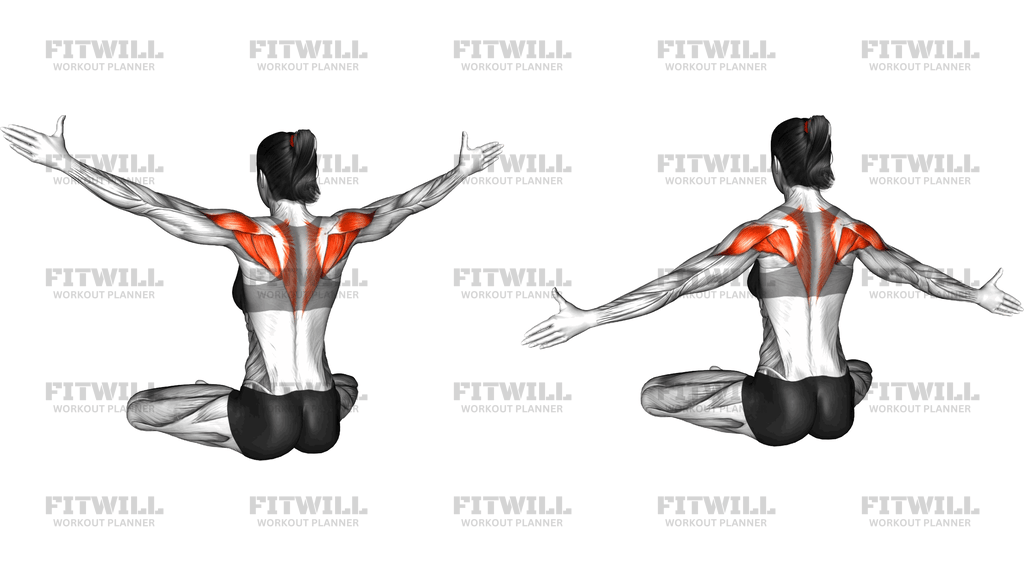
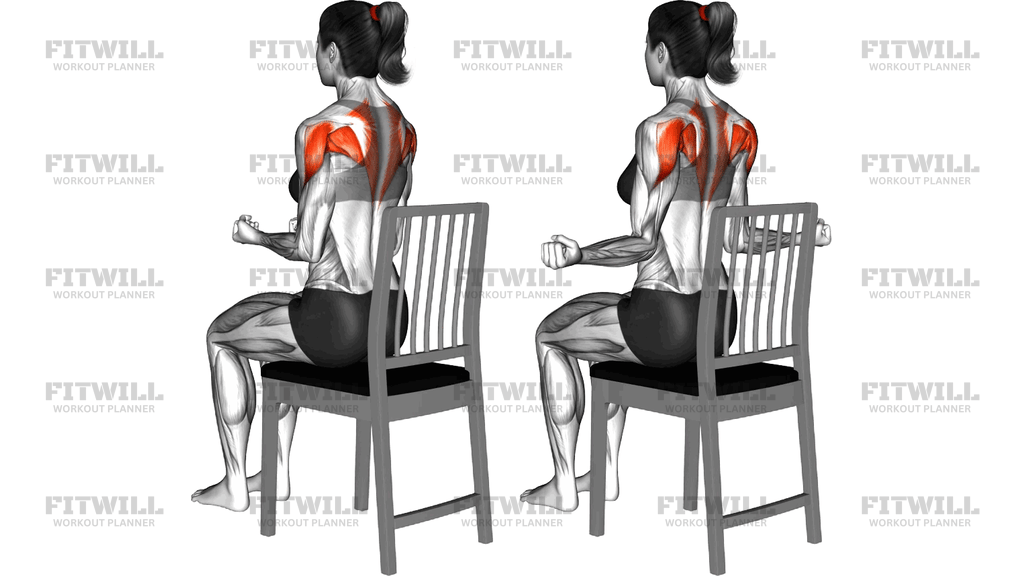
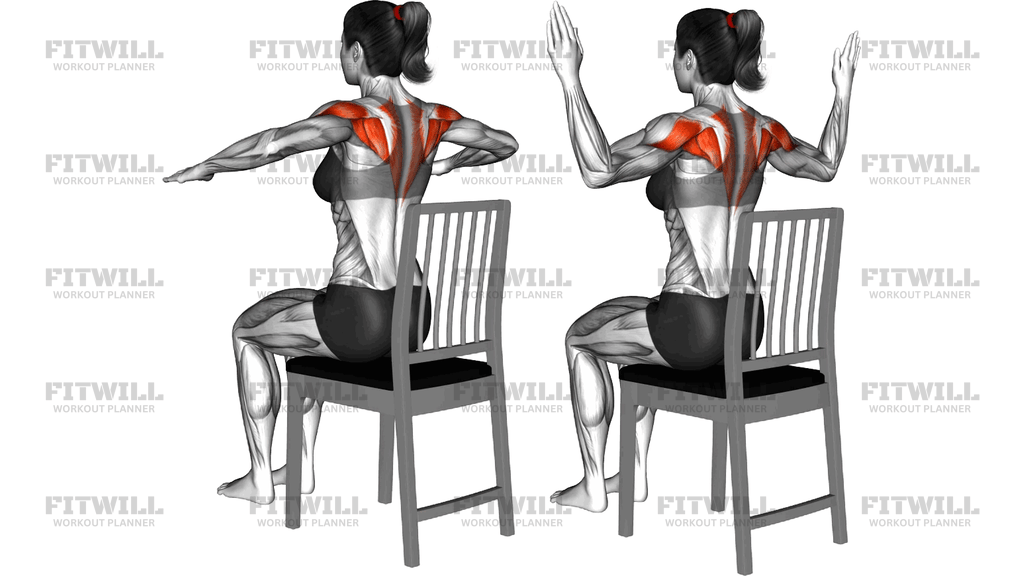
The Seated Thumbs Up Pulse is a low-equipment endurance exercise for the back of the shoulders and upper back. You sit upright — typically on a bench or seated on your heels on the floor — extend both arms out wide to the sides in a Y or T shape, turn your thumbs toward the ceiling, and perform small, controlled up-and-down pulses with the arms held at or just above shoulder height. That thumbs-up rotation is what makes the movement special: it biases the rear delts and the external rotators of the shoulder instead of letting the front of the shoulder take over.
This is a great pick for anyone who spends long hours at a desk, because the rounded-forward posture most people fall into weakens exactly the muscles this drill targets. It also suits lifters who bench or press frequently and need direct, low-load work for the rear delts and mid-back, as well as beginners who want to learn what it feels like to engage the shoulder blades without hanging weight on the movement.
The main muscles working are the posterior deltoids, supported by the middle and lower trapezius, the rhomboids, and the rotator cuff muscles that hold the arm in external rotation. Because the pulses are small and continuous, the demand is muscular endurance rather than maximal strength — expect a burning sensation across the upper back and the backs of the shoulders within twenty to forty seconds rather than a heavy, single-effort challenge.
Setup matters more than it looks. Sit tall with the ribs stacked over the pelvis, and reach the arms out wide and slightly forward of the shoulder line rather than straight out behind you. If the torso leans back, the shoulders shrug, or the elbows bend to keep the arms up, the target muscles hand the job off to the upper traps and the arms stop working where you want them.
Execution is deliberately modest: the pulse is only a few inches up and down, driven from the shoulder blade and the deltoid, with the thumb staying pointed at the ceiling the whole time. Keep the neck relaxed and breathe steadily — holding your breath during high-rep pulses is one of the fastest ways to fatigue early.
Practically, this exercise slots in well as a warm-up activation before upper-body pulling days, as a finisher after rows or presses, or as a standalone posture drill done a few times a week. Since the only load is the weight of your own arms, the risk is low, but stop if you feel pinching at the front of the shoulder and reduce the height of the arm position.
[ Workout Log & Planner ]
Put your next workout in Fitwill
Keep your plan and training log ready when you are.


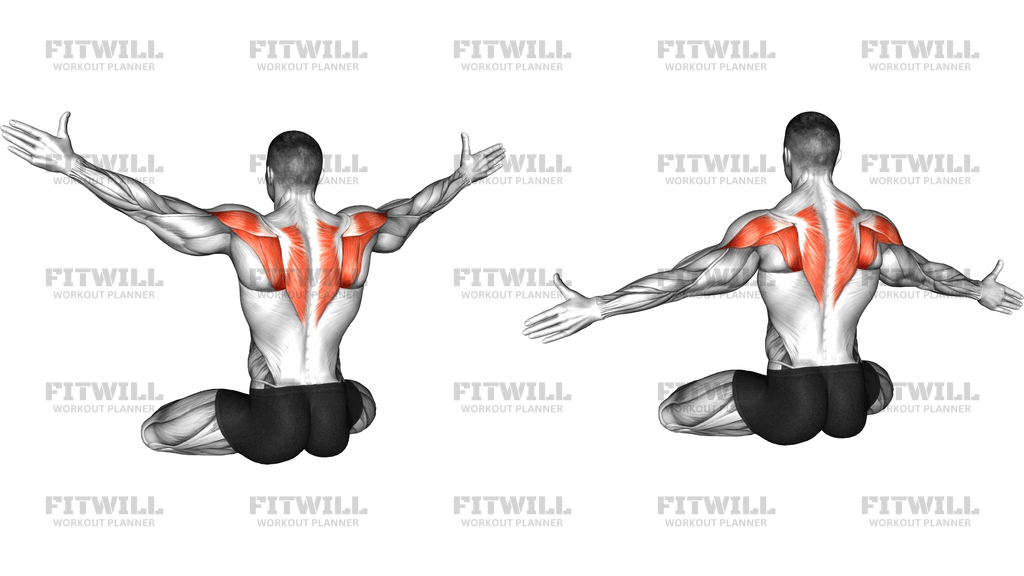
Instructions
- Sit upright on a bench or on your heels on the floor, with your spine tall and your shoulders relaxed away from your ears.
- Extend both arms out wide to the sides and slightly above shoulder height, forming a wide Y shape with your body.
- Rotate your arms so both thumbs point up toward the ceiling and your palms face forward.
- Brace your core lightly and draw your shoulder blades gently down and together before starting the pulses.
- Pulse both arms upward a few inches using the backs of the shoulders, then lower them the same short distance under control.
- Keep the elbows nearly straight throughout — no bending, no swinging, and no bouncing from the torso.
- Maintain the thumbs-up rotation on every pulse so the palms never roll inward or face the floor.
- Exhale on the upward pulse and inhale on the way down, keeping the breathing rhythm steady.
- Continue for the desired number of reps or time, then lower the arms fully and let the shoulders rest before the next set.
- If form breaks down, shorten the set rather than letting the arms drop below shoulder height and shrugging to compensate.
Tips & Tricks
- If your upper traps start burning instead of the backs of your shoulders, you are shrugging — consciously press the shoulder blades down before the next pulse.
- A common error is letting the palms roll forward so the thumbs no longer point up; this shifts work to the front of the shoulder, so reset the rotation the moment you feel it slip.
- Think of the pulse as coming from the shoulder blade gliding on the ribcage, not from flicking the hands at the wrists.
- Sitting on your heels can tip the pelvis backward; place a folded mat or cushion under the hips if your lower back rounds and makes tall sitting hard.
- Keep the arms a touch in front of the shoulder line rather than stretched far behind you — going too far back can pinch the front of the shoulder in some people.
- Small and honest beats big and sloppy: pulses of three to four inches with a tall torso work the rear delts far better than large swings that use momentum.
- If the shoulders fatigue in seconds, lower the arms slightly below shoulder height for the first sets and raise them as endurance improves.
- Do not hold your breath through a long set; continuous pulses make it easy to forget breathing until you are halfway to lightheaded.
Frequently Asked Questions
Which muscles do the Seated Thumbs Up Pulse mainly work?
The primary movers are the posterior deltoids at the back of the shoulders. The middle trapezius, rhomboids, and rotator cuff muscles assist by holding the shoulder blades stable and the thumbs rotated upward.
Why do the thumbs have to point up during this exercise?
The thumbs-up position externally rotates the shoulder, which favors the rear delts and rotator cuff. If the palms roll down or inward, the front of the shoulder and upper traps take over the work.
Is the Seated Thumbs Up Pulse suitable for beginners?
Yes. Because the only load is the weight of your own arms, beginners can learn rear-delt and shoulder-blade control safely. Start with shorter sets of 15-20 seconds and build up as the burning becomes tolerable.
Can I do this exercise standing instead of seated?
You can, but sitting removes momentum from the legs and hips, forcing the shoulders and upper back to do all the work. Standing versions tend to turn into body swings once fatigue sets in.
How high should my arms be during the pulses?
Start with the arms in a wide Y just above shoulder height. If you feel pinching at the front of the shoulder or cannot keep the thumbs up, lower the arms slightly — the position should be challenging but never painful.
What is the most common mistake in this movement?
Shrugging the shoulders toward the ears as fatigue builds. This shifts the work to the upper traps and takes tension off the rear delts, so reset the shoulder blades down before continuing.
How many reps or how long should I pulse for?
Aim for 20-40 seconds per set, or 20-30 pulses, and complete 2-4 sets. Since the goal is endurance in the rear delts and upper back, stop the set when you can no longer hold the thumbs-up position cleanly.
Where should I place the Seated Thumbs Up Pulse in my workout?
It works well as an activation drill before rows or presses, or as a burnout finisher at the end of an upper-body session. It also stands alone as a short daily posture exercise.
What can I substitute if seated pulsing bothers my shoulders?
Try the same thumbs-up pulse with the arms lowered to just below shoulder height, or lie chest-down on an incline bench and pulse the arms there for more support. Both keep the rear delts working with less stress on the shoulder joint.
Is it safe to do this exercise every day?
For most people, yes — the load is light and the demand is endurance-based. If the shoulders feel sore rather than merely fatigued, take a day off and resume with shorter sets.