Sphinx Pose Opening
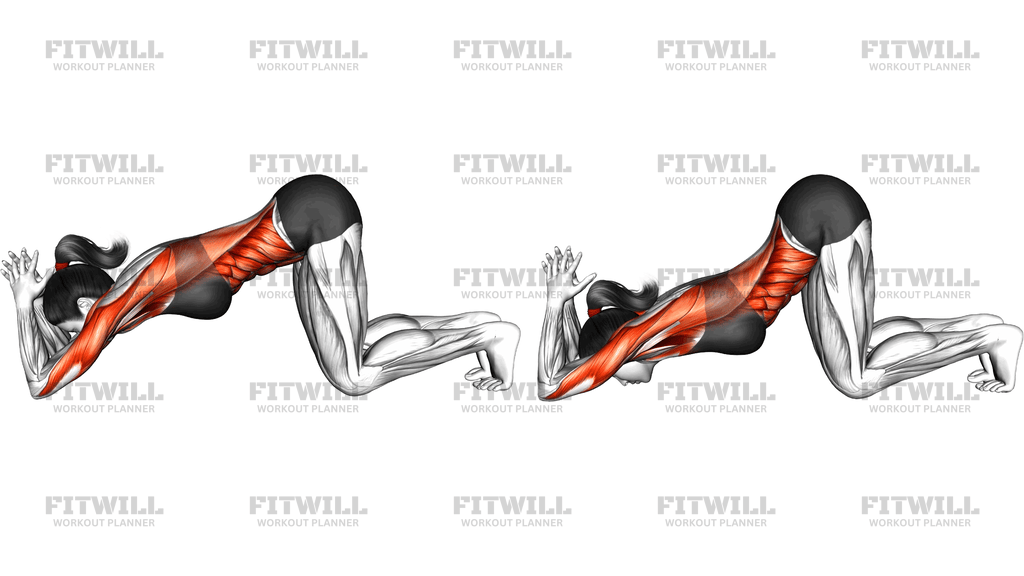
Sphinx Pose Opening is a prone mobility drill that starts from the classic sphinx position — lying face down with your forearms flat on the floor and your chest lifted — and adds an opening rotation through the upper back. From the sphinx setup, you place one hand behind your head and slowly rotate that side of the torso open, letting your shoulder and chest sweep toward the ceiling before returning with control. The result is a combined lumbar extension and thoracic rotation that few floor stretches deliver in one position.
This movement is especially useful for people who spend long hours sitting. Prolonged sitting tends to lock the thoracic spine into a rounded posture while the lower back and hip flexors stiffen, and Sphinx Pose Opening addresses both at once. The forearm support gives your lumbar spine a gentle, passive extension while the rotation targets the mid-back, rear shoulder, and the muscles along the side of the ribcage.
The main work happens in the erector spinae along the lower back, which hold the extension, while the lats, rear delts, and chest lengthen on the rotating side. Because your hips and legs stay anchored to the floor, the stretch is steered entirely by how far you rotate — you control the intensity second by second without any equipment beyond a mat.
Setup matters more than it looks. Your elbows need to sit under or slightly ahead of your shoulders, and your hips should stay heavy on the mat. If the elbows drift too far forward, the lower back compresses into the extension; if the hips lift during the rotation, you lose the stretch through the spine and dump the movement into the shoulder joint. A stable base is what lets the rotation come from the thoracic spine rather than from cranking the neck or shoulder.
You will see this drill used in yoga sequences, warm-ups for pressing or overhead lifting days, and cooldowns after heavy lower-back work. Move slowly, breathe steadily, and stay well short of any pinching sensation in the spine or shoulder — the goal is a broad opening across the back, not maximum range.
As with any extension-based stretch, keep the sensations spread across the back rather than concentrated at one spinal segment. If your lower back feels compressed instead of lengthened, lower your chest slightly and re-set the elbows before continuing.
Fitwill
Log Workouts, Track Progress & Build Strength.
Achieve more with Fitwill: explore over 9600 exercises with images and videos, access built-in and custom workouts, perfect for both gym and home sessions, and see real results.
Start your journey. Download today!




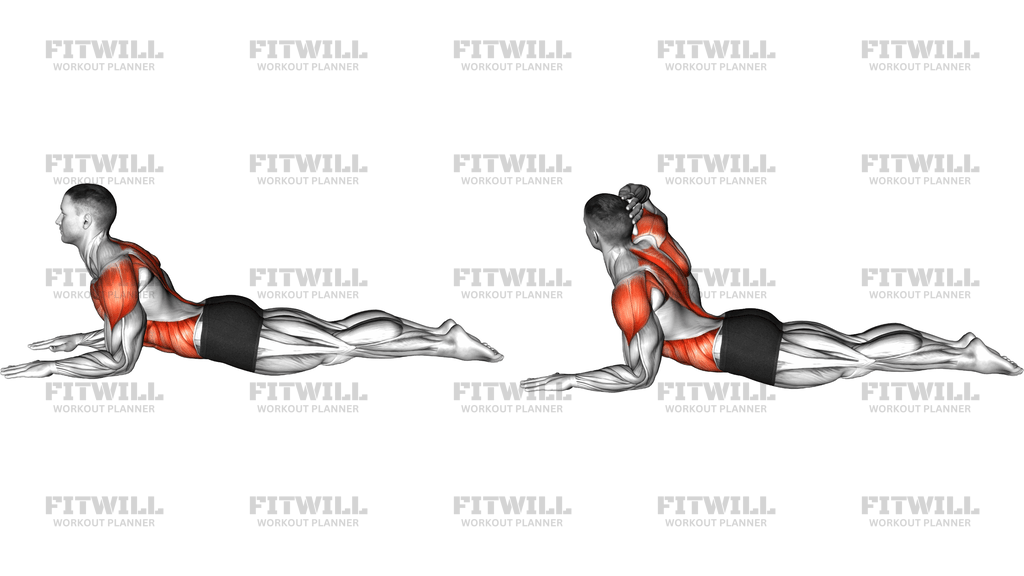
Instructions
- Lie face down on an exercise mat with your legs extended straight behind you and the tops of your feet resting on the floor.
- Prop yourself up onto both forearms with your elbows under your shoulders and your forearms parallel, forming the sphinx position with your chest lifted and hips in contact with the mat.
- Draw your shoulder blades gently down and keep your neck long, gazing at the floor a short distance ahead of you.
- Place one hand behind your head with the elbow pointing forward, keeping the other forearm planted for support.
- Exhale and slowly rotate the hand-behind-head side open, sweeping that elbow up and back toward the ceiling while your hips and legs stay anchored to the floor.
- Hold the open position for two to three breaths, letting the rotation deepen slightly with each exhale without forcing it.
- Inhale and rotate back down with control until your elbow returns toward the floor and your torso squares up over both forearms.
- Switch the hand behind your head and repeat the opening on the other side.
- Complete your desired repetitions per side, then lower your chest to the mat and press back to a resting position such as child's pose to reset.
- Breathe continuously throughout — exhale as you open, inhale as you return — and never hold your breath at the top of the rotation.
Tips & Tricks
- Keep your hips glued to the mat during the rotation. When the hips lift to gain extra range, the movement shifts from thoracic rotation into a sideways tilt, and you lose the opening you are chasing.
- Do not pull on your head with the hand behind it. The hand is a spacer for the elbow, not a lever — pulling the neck only creates strain at the cervical spine.
- If your lower back feels pinched instead of stretched, walk your elbows slightly forward and lower your chest a few inches; too much lumbar extension combined with rotation is the usual culprit.
- Rotate from the ribcage, not the arm. Think about turning your sternum toward the ceiling and letting the elbow follow, rather than swinging the elbow as far as it will go.
- Keep both legs relaxed and heavy. Tensing the glutes or legs during the open position anchors the pelvis unevenly and reduces the stretch through the spine.
- Let the rotating shoulder blade travel with the ribs instead of holding it tight; a stiff shoulder blade blocks the rotation and concentrates stress in the shoulder joint itself.
- Move at half the speed you think you need. Rushing the return is the most common mistake — the lowering phase is where you maintain control of the segment-by-segment opening.
- If your shoulders sit tight and the rotation feels blocked early, shorten the range and simply hold the partial open position; range usually improves over weeks without forcing it.
Frequently Asked Questions
Which muscles does Sphinx Pose Opening stretch?
It primarily lengthens the lats, chest, and rear shoulder on the rotating side while the erector spinae of the lower back work to hold the extension. The deep muscles of the thoracic spine that handle rotation also get loaded gently.
Why keep the hand behind the head during Sphinx Pose Opening instead of reaching the arm out?
The hand behind the head acts as a spacer that keeps your neck neutral and lets the elbow drive the rotation. Reaching the arm out instead tends to turn the movement into a shoulder stretch and reduces the opening through the thoracic spine.
Is Sphinx Pose Opening suitable for beginners?
Yes. The floor supports your body and you control the range entirely with how far you rotate. Beginners should simply use a smaller rotation and keep the chest lower by easing the elbows slightly forward.
My lower back feels compressed when I prop up onto my forearms. What should I change?
Lower your chest by moving your elbows a little ahead of your shoulders, and consciously engage your abdominals to keep the ribs from flaring. If compression persists, spend time building basic extension tolerance with a smaller lift like a prone press-up first.
Can Sphinx Pose Opening replace a foam roller for thoracic mobility?
It complements rather than replaces one. The sphinx setup adds extension while rotating, which a foam roller cannot do, but it does not provide the segment-by-segment pressure of roller work. Using both covers more ground.
How long should I hold the open position in Sphinx Pose Opening?
Two to three slow breaths per side works well for a warm-up or cooldown. For a longer flexibility session, you can hold each side for 20 to 30 seconds, letting the rotation deepen slightly with each exhale.
When is the best time to use Sphinx Pose Opening?
It fits well as a warm-up before pressing or overhead lifting, and as a cooldown after deadlifts or long sitting sessions. Avoid doing it right after a heavy set of back extensions when the spinal muscles are fatigued.
Is it normal for one side to rotate further than the other in Sphinx Pose Opening?
Yes, side-to-side differences in thoracic rotation are very common, especially in people with one-sided desk habits or sports. Work each side to its own comfortable range rather than matching the looser side.
Can I do Sphinx Pose Opening with a back injury?
If you have a current or recent back injury, check with a qualified professional before adding any extension-and-rotation drill. The combination of the two movements is exactly what makes it effective — and what makes it inappropriate for some conditions.