Sitting Rest Pose
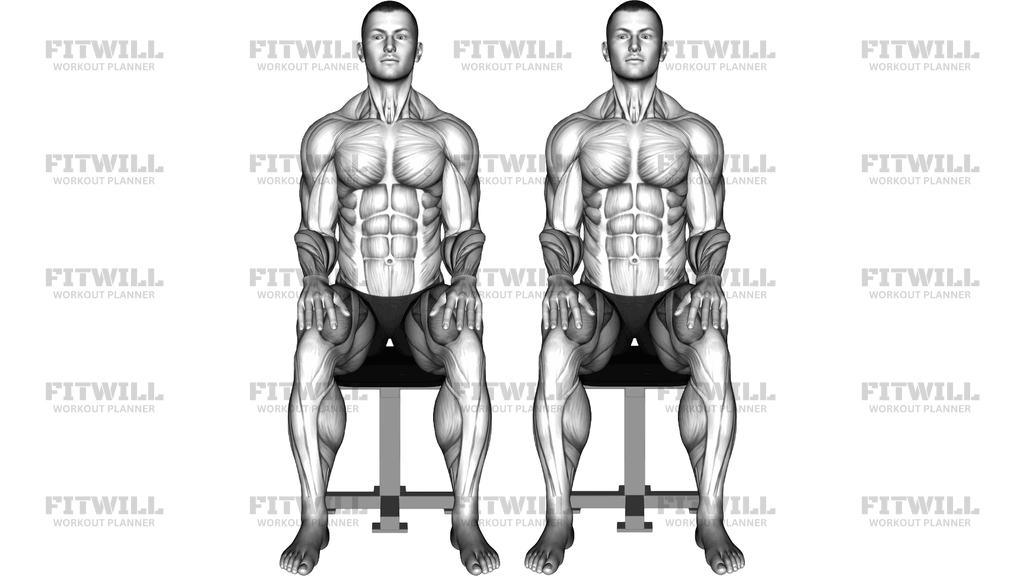
The Sitting Rest Pose is a deliberate seated recovery position used between sets, exercises, or rounds of training. You sit upright on a flat bench with your feet planted flat on the floor about hip-width apart, your hands resting on your thighs, and your spine held tall without slumping. It looks like simply sitting down, but done with intent it keeps your posture organized and your breathing steady while your body recovers.
This position is useful for anyone who trains with benches in the workout area: lifters resting between heavy sets, circuit participants transitioning between stations, or beginners who need a defined place to pause without collapsing onto the floor. Because you stay seated and upright, your heart rate comes down gradually rather than abruptly, and you avoid lying on a shared floor surface mid-session.
Even as a rest position, the Sitting Rest Pose asks something of your body. Sitting tall on a bench engages the deep core and the muscles along the spine to keep the torso from rounding, while the hips and thighs stabilize you on the seat. The feet pressing into the floor keep the legs active rather than dangling, which supports circulation during recovery. It is not a strength builder in itself, but it trains the habit of maintaining good seated posture under fatigue, which carries over to every seated exercise you perform.
Setup matters more than it appears to. Sitting toward the middle or front edge of the bench with both sit bones evenly placed gives you a stable base; perching too far back against a backrest or sliding toward the edge changes how you breathe and encourages slouching. Feet flat and knees bent roughly at right angles keep the lower back in a neutral position, while hands resting lightly on the thighs give the shoulders a place to relax without rounding forward.
To execute it well, lower yourself onto the bench with control, sit tall through the crown of your head, and let your shoulders drop away from your ears. Breathe slowly through the nose, letting the belly and lower ribs expand, and use the time purposefully, counting your rest period or taking a set number of breaths before the next effort. When you are ready to continue, stand up by driving through your feet rather than pushing off your knees.
The main practical points are consistency and honesty about what rest is for. Do not let the rest pose turn into collapsed sitting with a rounded lower back and a forward-craned neck, especially when tired, because that pattern repeated between every set can reinforce poor posture. Keep the position active and quiet at the same time: tall spine, relaxed shoulders, steady breath, and feet grounded until it is time to move again.
[ Workout Log & Planner ]
Put your next workout in Fitwill
Keep your plan and training log ready when you are.


Instructions
- Approach a flat bench and lower yourself down with control, placing your sit bones evenly on the middle or front third of the seat.
- Set your feet flat on the floor about hip-width apart, with knees bent roughly at a right angle and pointing in the same direction as your toes.
- Sit tall through the crown of your head and stack your ribs over your pelvis so your lower back stays neutral rather than rounded.
- Rest your hands lightly on the middle of your thighs with palms down, letting your shoulders drop away from your ears.
- Soften your face, jaw, and grip, keeping contact with the bench and floor but removing unnecessary tension from the arms and neck.
- Breathe slowly through the nose, allowing the belly and lower ribs to expand on each inhale and fully emptying on each exhale.
- Hold the position for your planned rest period, counting breaths or seconds so the recovery has a defined end point.
- Before standing, shift your weight slightly forward, press through both feet, and rise with a tall torso rather than pushing off your knees.
- Reset your posture the same way each time you sit back down, so every rest between sets starts from the same organized position.
Tips & Tricks
- The most common breakdown is slumping once fatigue sets in; if you catch your lower back rounding, re-stack your ribs over your hips instead of arching hard to compensate.
- Avoid perching on the very edge of the bench, which forces your hip flexors and thighs to overwork just to keep you balanced; sit far enough back that the seat, not muscle effort, holds you up.
- Keep your feet flat and quiet. Tapping toes or bouncing legs during the Sitting Rest Pose wastes the nervous system recovery you are trying to get.
- Do not let your chin drift forward as you relax your shoulders; think of the back of your neck staying long while the shoulders sink.
- Hands should rest on the thighs, not grip the knees or press down hard, since pressing loads the shoulders and defeats the purpose of a rest position.
- If your knees ride higher than your hips because the bench is tall, choose a lower bench or box so the pelvis can stay neutral without straining the hip flexors.
- Use the pose to time recovery objectively, for example five slow nasal breaths, instead of guessing when you feel ready, which usually means returning too soon.
- On hard training days, take one or two extra breaths in the seated position before standing to avoid standing up quickly with a elevated heart rate and getting lightheaded.
Frequently Asked Questions
What does the Sitting Rest Pose actually train?
It is primarily a recovery position, not a strength exercise. Its training value comes from maintaining a tall seated posture and controlled breathing while fatigued, which reinforces good habits for every seated exercise.
Which muscles are working during the Sitting Rest Pose?
The deep core and spinal muscles work lightly to keep the torso upright, while the hips and thighs stabilize you on the bench. The demand is low, which is exactly what makes it suitable for rest between sets.
Why do my hands rest on my thighs instead of my knees?
Resting the hands on the middle of the thighs lets the shoulders hang naturally and keeps the arms relaxed. Pressing down on the knees loads the shoulders and upper body, turning a rest position back into work.
Can beginners use the Sitting Rest Pose between exercises?
Yes, it is one of the safest positions for beginners to recover in because it is stable, low to the ground, and requires no load. It also teaches them how to time rest periods with slow, counted breaths.
How long should I hold the Sitting Rest Pose?
Match it to your training goal: one to two minutes between heavy strength sets, thirty to sixty seconds in circuits, or simply five to ten slow breaths when you need a short reset. Counting breaths keeps the rest consistent.
What is the most common mistake in this position?
Slumping into a rounded lower back with the head drifting forward, especially late in a workout when tired. The fix is to re-stack the ribs over the pelvis and lift through the crown of the head rather than forcing an arch.
Can I do the Sitting Rest Pose on a chair or box instead of a bench?
Yes, any stable seat that lets you sit with feet flat and knees around a right angle works. Avoid soft couches or chairs with deep padding, which tilt the pelvis and encourage slouching.
Is it safe to sit down between every set instead of standing?
For most people, yes, and seated rest keeps the heart rate from dropping too abruptly. If you feel dizzy or lightheaded when standing back up, take an extra breath seated and rise more slowly by pressing through both feet.
How is the Sitting Rest Pose different from just sitting down normally?
The difference is intent and structure: feet planted, spine tall, shoulders relaxed, hands placed on the thighs, and breathing controlled for a set period. Ordinary sitting usually involves slumping and no defined endpoint.