Standing Rest Pose
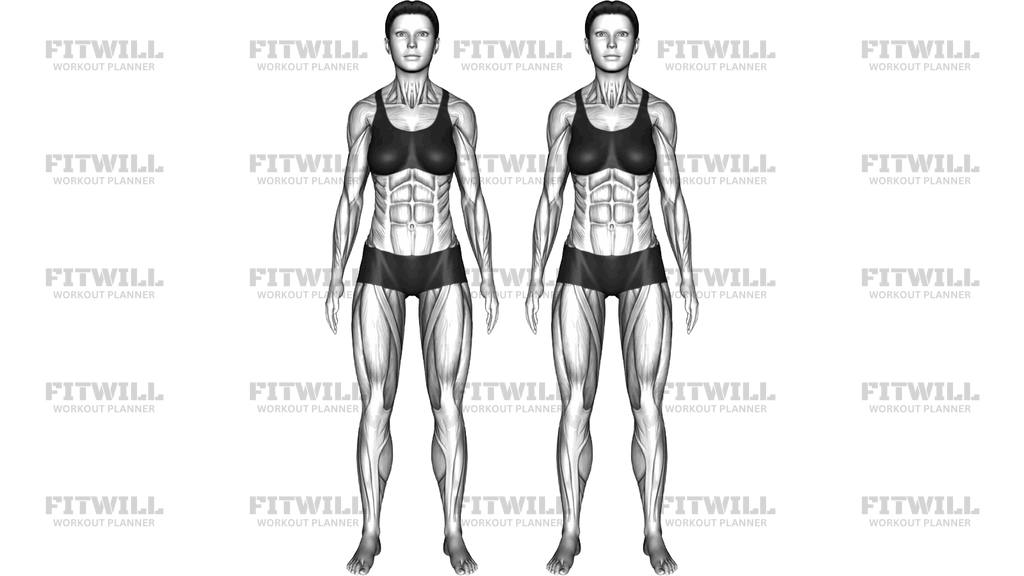
Standing Rest Pose is an upright, unloaded standing position used to reset between exercises, settle your breathing, and re-establish good posture. Your feet stay about hip-width apart, your arms hang relaxed at your sides, and your weight is distributed evenly across both feet. It looks like simply standing still, but done deliberately it serves a real training purpose: it gives your heart rate a chance to come down while keeping your body organized and ready for the next effort.
This pose is useful for almost anyone who trains with body weight, dumbbells, or machines, because nearly every workout has gaps between sets where people tend to slump, lean on equipment, or wander off. Holding a clean standing position during those gaps keeps you mentally engaged, prevents stiffness from creeping in, and reinforces the neutral alignment you want when you step back under the bar or into your next movement.
What Standing Rest Pose trains is subtle but meaningful. Balancing on both feet with relaxed shoulders quietly works your ankle stabilizers, the small muscles of the feet, and your deep core, which has to hold you upright without you consciously bracing. It also gives your postural muscles a low-grade rehearsal of good standing alignment, which carries over to squats, presses, and everyday posture. You will not build strength here, and it should not be described as a conditioning tool, but it keeps your body switched on between harder work.
Setup matters more than people expect. If your weight drifts to your heels or the balls of your feet, your hips and calves compensate, and a rest position quietly becomes a slouch. Feet parallel and hip-width apart, soft knees, tall spine, and shoulders dropped away from the ears create the base the pose depends on. Because there is no equipment involved, the only thing you can get wrong is your own alignment, which is exactly why it is worth practicing deliberately.
To execute it well, stand tall and let your arms hang naturally without locking your elbows or knees. Breathe slowly through the nose, letting your ribcage stay quiet rather than flaring upward, and let each exhale settle your shoulders a little lower. There is no movement path to follow and no repetition count; the pose lasts as long as your rest period does, typically thirty seconds to two minutes between sets.
Common use cases include active rest between strength sets, recovery pauses in circuit training, the opening or closing position of a yoga-style session, and a reset point for beginners who are learning what neutral standing actually feels like. The main safety note is simple: if you feel lightheaded during a rest, bend your knees slightly, keep moving your feet gently, and sit down if the sensation does not pass quickly.
[ Workout Log & Planner ]
Put your next workout in Fitwill
Keep your plan and training log ready when you are.


Instructions
- Stand with your feet parallel and about hip-width apart, toes pointing forward.
- Distribute your weight evenly across both feet, with pressure spread through the heel, the ball, and the outer edge of each foot.
- Let your knees stay soft rather than locked back, and let your arms hang naturally at your sides with the palms facing your thighs.
- Lengthen through the crown of your head, keep your gaze level, and drop your shoulders away from your ears.
- Gently engage your lower abdominals so your ribs stack over your pelvis instead of flaring forward.
- Breathe slowly and evenly through the nose, using each exhale to release tension from the shoulders, jaw, and hands.
- Hold the position for the length of your rest period, typically thirty seconds to two minutes, checking that your weight has not drifted to your heels.
- To finish, roll your shoulders once or twice, shift your weight gently foot to foot, and step into your next exercise from this aligned position.
Tips & Tricks
- If you catch yourself leaning on a rack or bench during rest, step away from the equipment and stand on your own two feet instead, since leaning lets your postural muscles switch off.
- Locking the knees is the most common fault in this pose; a slight softening at the knee keeps blood moving and stops you from feeling lightheaded on longer rests.
- Watch for weight creeping into the heels as you tire; shift slightly toward the balls of the feet so your calves and ankle stabilizers stay quietly engaged.
- Let your arms hang heavy rather than crossing them or putting hands on your hips, since hanging encourages the shoulders to settle down and back.
- Keep your chin level instead of looking down at the floor or your phone, because a dropped head rounds the upper back and undoes the alignment the pose builds.
- Use the pose to rehearse your breathing pattern for the next set, for example a long exhale on the effort, so the rest actually prepares you rather than just passing time.
- On longer rests over a minute, gently wiggle your toes or shift your weight foot to foot rather than standing rigidly still.
- If you feel dizzy or unsteady, widen your stance slightly, soften the knees more, and move to a seated rest rather than pushing through the sensation.
Frequently Asked Questions
What does Standing Rest Pose actually train if no weight is involved?
It trains low-level postural endurance in the ankle stabilizers, the small muscles of the feet, and the deep core, all of which quietly work to keep you upright. It is a recovery and alignment tool rather than a strength or conditioning exercise.
Is Standing Rest Pose suitable for complete beginners?
Yes, it is one of the most accessible positions in training because it requires no equipment and no mobility beyond normal standing. It is especially valuable for beginners who are still learning what neutral, balanced standing feels like.
How long should I hold Standing Rest Pose between sets?
Match it to your rest needs: roughly thirty to sixty seconds for lighter work and one to two minutes or more after heavy compound sets. The pose simply replaces slouching or leaning during whatever rest period your program calls for.
Should my knees be straight or bent in Standing Rest Pose?
Keep them soft, meaning neither locked back nor noticeably bent. Locked knees reduce circulation and can make you feel faint on longer rests, while excessively bent knees turn the pose into a squat hold.
What is the most common mistake in Standing Rest Pose?
Letting the weight drift back into the heels while the shoulders round forward, which turns a rest into a slouch. Fix it by spreading your weight across the whole foot and lifting through the crown of the head.
Can I use Standing Rest Pose instead of sitting down between exercises?
Yes, and for most gym training it is the better choice, because standing keeps your hips and ankles from stiffening up and makes the transition into your next set smoother. Sit only if you are very fatigued or feel lightheaded.
How is Standing Rest Pose different from Mountain Pose in yoga?
They are nearly identical in body position, with feet together or hip-width, arms at the sides, and a tall spine. Standing Rest Pose is used primarily as a recovery position between exercises rather than as a dedicated yoga posture with breath and gaze work.
Where should my arms be during Standing Rest Pose?
Let them hang relaxed at your sides with palms facing your thighs and elbows unlocked. Avoid crossing the arms or resting hands on hips, since both habits tighten the shoulders and upper back.
Is it safe to hold Standing Rest Pose after heavy squats or deadlifts?
Generally yes, and standing recovery is often preferable to sitting immediately after heavy lower body work. If you feel dizzy or your legs are shaking, widen your stance, soften the knees, and move to a seated or supported rest as needed.