Lying Rest Pose
The Lying Rest Pose is a supine recovery position: you lie flat on your back on the floor with the legs extended, arms relaxed alongside the body, and the palms turned down or up. There is no load, no range of motion, and no effort to hold a shape beyond letting the whole body settle toward the floor. It is the simplest position in any training library, and precisely because of that, it is easy to do carelessly and worth doing deliberately.
This pose fits into a session in two main ways. Between hard sets or exercises, a short stay on the floor lets your breathing settle and your heart rate drop without the stiffness that comes from standing around or sitting on a bench. At the end of a workout, a longer hold of two to five minutes works as a cooldown, giving the nervous system a clear signal that the work is finished. It is also a common position for guided breathing, body scans, and the final relaxation segment of yoga and pilates-style classes.
Because the floor supports the entire back of the body, the Lying Rest Pose removes most of the postural work the spine, hips, and shoulders normally do. That makes it useful for anyone who spends a session bracing under load, holding a plank position, or staying on their feet. You are not trying to build muscle here; the benefit is recovery, a slower breath, and a chance to notice where you are still holding tension, often in the jaw, neck, shoulders, or feet.
Setup matters more than it looks. If the lower back feels strained with the legs straight, bending the knees and placing the feet flat on the floor takes the hip flexors off stretch and lets the lumbar spine rest in a more neutral curve. A thin fold under the head can help if the chin tilts toward the ceiling, which usually means the head support is too low or the chest is lifted. Small adjustments like these are the difference between a pose that lets you relax and one you quietly fight.
To execute it well, lie down, take one conscious exhale, and let the weight of the head, shoulders, arms, hips, and heels sink. Keep the arms slightly away from the torso rather than pinned to the sides so the chest can stay open. Then simply breathe at a steady pace and return your attention to the breath whenever the mind wanders. To finish, roll to one side, pause for a breath, and press yourself up with the arms rather than sitting straight up from the hips.
There are no special strength or flexibility requirements, which makes the Lying Rest Pose accessible to complete beginners, older trainees, and advanced lifters alike. The only real safety point is comfort: if lying flat causes dizziness, breathing difficulty, or lower back pain, bend the knees, elevate the legs on a support, or choose a seated rest position instead.
[ Workout Log & Planner ]
Put your next workout in Fitwill
Keep your plan and training log ready when you are.


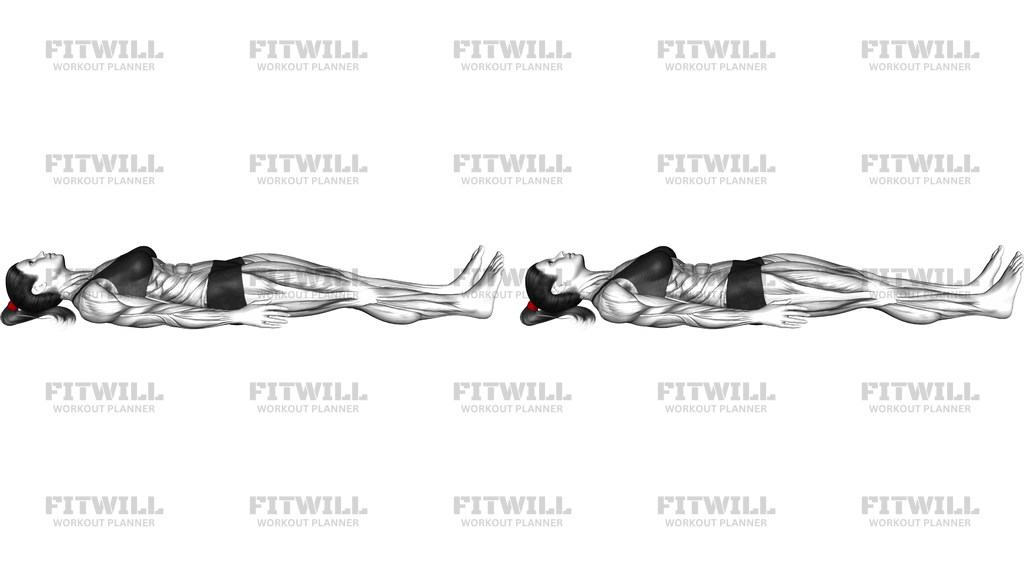
Instructions
- Find a clear spot on the floor or an exercise mat and sit down on it first, so you lower onto your back with control instead of dropping backward.
- Lie flat on your back and extend both legs along the floor, letting the feet fall open naturally to the sides.
- Place the arms alongside the body, slightly away from the ribs, with the palms facing down or up, whichever lets the shoulders relax.
- Lengthen the back of the neck by gently tucking the chin a small amount, and let the full weight of the head rest on the floor.
- If the lower back feels tight or arched, bend the knees and place the feet flat on the floor hip-width apart, or slide a cushion under the knees.
- Take one long exhale through the mouth, then settle into slow, steady nasal breathing, letting the belly rise on each inhale and fall on each exhale.
- Scan from the face down to the feet and release any leftover tension, especially in the jaw, shoulders, hands, and hips.
- Hold the position for one to three minutes between exercises, or three to five minutes as a finisher, keeping the breath even the whole time.
- To come out, roll onto your right or left side, rest there for a breath or two, then press up to sitting with the arms and stand when ready.
Tips & Tricks
- If your chin points at the ceiling while lying flat, your head is undersupported; place a thin towel or folded edge of the mat under the head rather than straining the neck downward.
- Hands pressed firmly into the floor is a common tell that you have not actually relaxed; turn the palms up and let the fingers curl naturally to check that the arms have let go.
- Feet pointing straight at the ceiling usually means the legs are still active; let the heels rest and the toes drift outward so the hips can open.
- Do not chase a perfectly flat lower back by tucking the pelvis hard; a small natural curve is fine, and bent knees are a better fix than constant muscular effort.
- If you notice your breath becoming short or held, deliberately lengthen the exhale to be slightly longer than the inhale for a few cycles.
- For a rest between sets, keep the hold short and the legs bent so blood does not pool and standing back up feels lightheaded.
- Falling asleep is the most common outcome of a long hold; if you are mid-session, keep the eyes open and the hold shorter so you stay ready to train.
- Lie down on the mat rather than lowering from standing in stages; a controlled sit-and-recline protects the neck and keeps the transition calm.
Frequently Asked Questions
What does the Lying Rest Pose actually train?
It does not train a muscle in the usual sense. It promotes recovery by removing postural load from the spine, hips, and shoulders and by slowing the breath and heart rate.
Is the Lying Rest Pose suitable for complete beginners?
Yes, it requires no strength, mobility, or equipment. A beginner only needs a clear floor spot or a mat and a minute or two of quiet breathing.
How long should I stay in the Lying Rest Pose?
Between exercises, one to three minutes is usually enough to settle your breathing. As a cooldown finisher, three to five minutes works well.
Why do my knees feel better bent in this pose?
Straight legs put the hip flexors on a mild stretch, which can pull the lower back into an arch. Bending the knees with feet flat shortens the hip flexors and lets the lumbar spine rest neutral.
Should my palms face up or down in the Lying Rest Pose?
Either is fine; palms up generally encourages the shoulders to drop back and the chest to open, while palms down feels more grounded. Choose whichever lets the arms go limp.
Is it a problem if I fall asleep during the pose?
For an end-of-session cooldown, no, though it means you may have needed the rest. If you are using it between sets, shorten the hold and keep your eyes open so you stay sharp for the next exercise.
What is the most common mistake in the Lying Rest Pose?
Treating it as passive time while still holding tension: a jutting chin, shrugged shoulders, gripped hands, or pressed feet. A quick scan from head to toe usually reveals and releases these.
Can I use the Lying Rest Pose as a substitute for stretching?
It complements stretching but does not replace it, since it does not lengthen tissue. Use it after your stretches to let the body settle before you finish.
How do I get up from the Lying Rest Pose safely?
Roll onto one side, pause for a breath, then press up to sitting with your arms and stand slowly. Sitting straight up from flat on your back can feel abrupt and dizzying.
Is lying flat on my back safe if I feel lower back discomfort?
If the flat position bothers your lower back, bend the knees, put a cushion under them, or elevate the calves on a support. Persistent discomfort is a reason to adjust the setup or choose a seated rest instead.