Sprint Against Wall
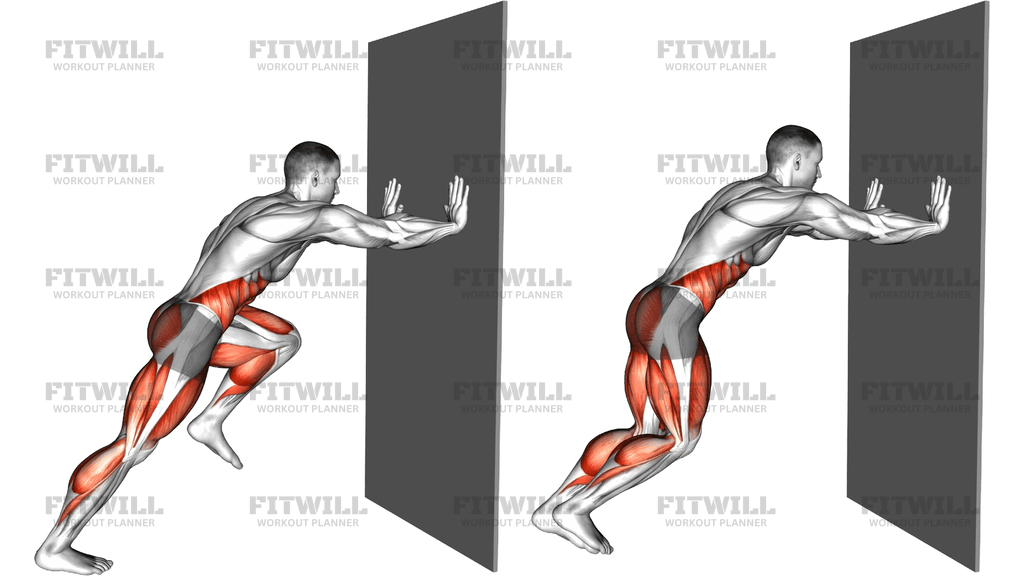
Sprint Against Wall is a sprint mechanics drill where you lean into a wall at a running angle and drive your knees up in rapid alternation, mimicking the acceleration phase of a sprint without actually traveling anywhere. Your hands press into the wall, your body forms a straight line from head to heel, and your legs cycle underneath you as fast as you can control. It is one of the simplest ways to rehearse sprint posture and knee drive with zero equipment beyond a sturdy wall and some floor space.
This drill is especially useful for sprinters and field-sport athletes who want to groove the forward body lean and aggressive knee drive that characterize good acceleration. It is also a solid option for general trainees who want a low-impact conditioning burst, since the wall absorbs your forward force and there is no hard landing the way there is in running or jumping. Beginners can use it to learn what a proper sprint lean feels like before they ever take off at full speed.
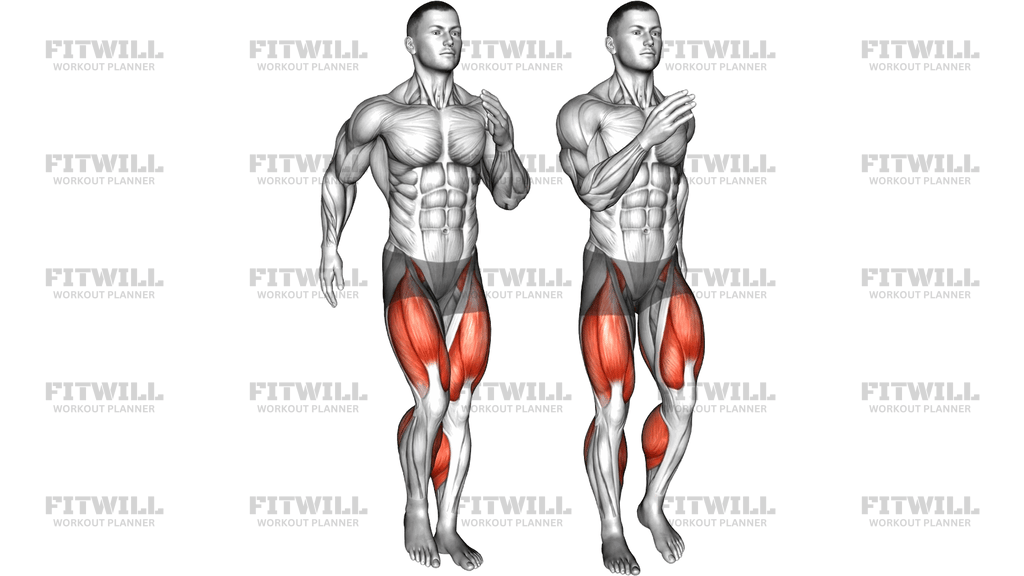
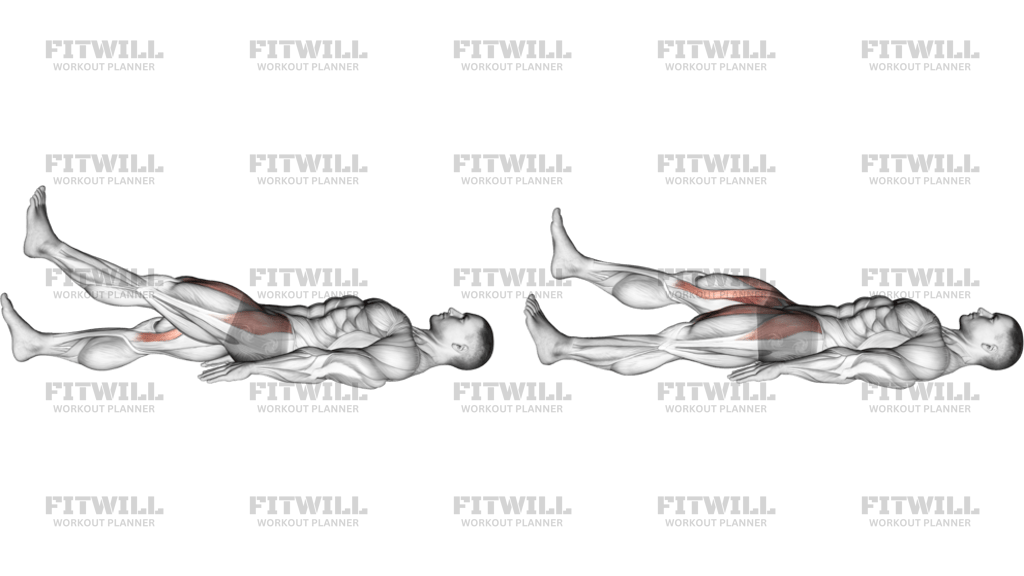
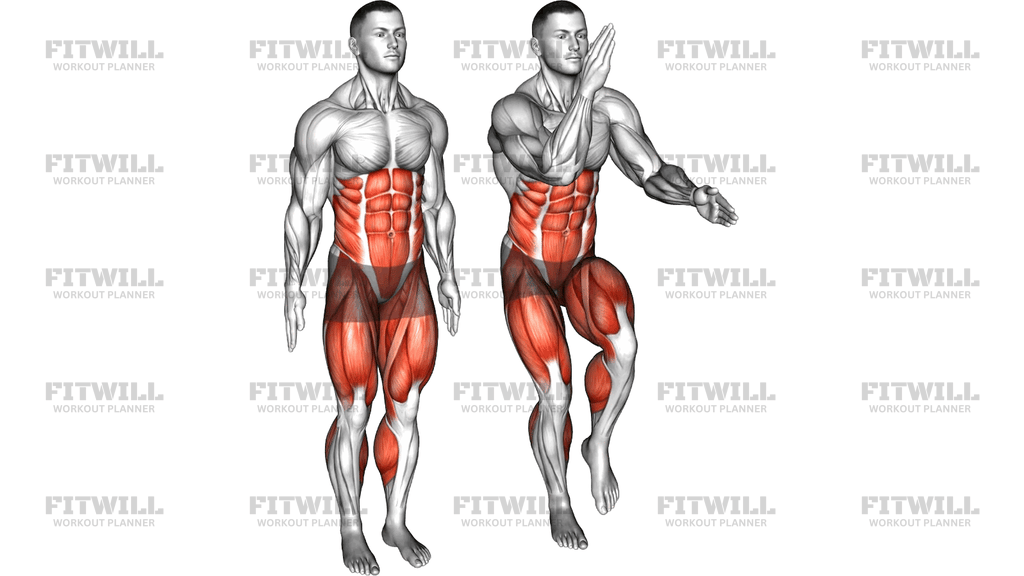
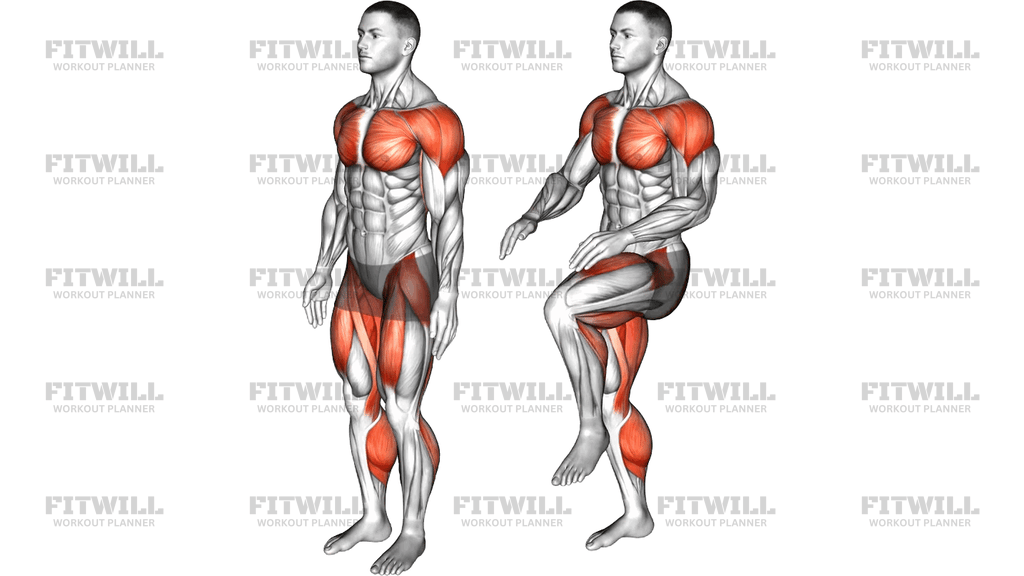
The main work comes from the hip flexors, which rip the knees up one at a time, supported by the quads, hamstrings, glutes, and calves as the support leg stays long and stiff behind you. Your core works hard the entire time to hold the lean without your hips sagging or your lower back collapsing. Because you are braced against the wall, you can focus entirely on leg mechanics and torso position rather than balance.
Setup matters more than it looks. Stand roughly an arm's length from the wall, place your hands flat at about chest to forehead height, and walk your feet back until your body is angled at forty-five to sixty degrees. If you stand too close, the drill turns into a slow marching exercise with no sprint character; if you stand too far out, your hands will slip and your shoulders will take over. The angle should feel like you are about to fall forward and the wall is catching you.
To execute it well, press firmly through your palms, brace your abs, and keep one line from head through hips to the heel of your support foot. Drive one knee up toward the wall or chest, snap it back down, and immediately drive the other knee, letting your arms stay locked out as your legs do the cycling. Start with short bursts of five to ten seconds and build up as your coordination improves. The movement should be snappy, not sloppy; the moment your form breaks down, the drill stops teaching you anything useful.
Common use cases include pre-sprint warm-ups, acceleration technique sessions, and as a conditioning finisher for the legs. Keep the reps short and sharp if you are training speed, or stretch the intervals slightly if you are chasing a conditioning effect. Because the impact is low, it is generally easier on the knees and ankles than actual sprinting, but you should still warm up your hips and ankles first, and never drill against a slick or unstable surface.
[ Workout Log & Planner ]
Put your next workout in Fitwill
Keep your plan and training log ready when you are.


Instructions
- Find a sturdy, flat wall with clear floor space in front of it and stand facing it about an arm's length away.
- Place both palms flat against the wall at chest to forehead height, fingers spread, arms fully extended and locked out.
- Walk your feet back until your body forms a straight, angled line from head to heels, leaning into the wall at roughly forty-five to sixty degrees.
- Set your feet in a split stagger so one leg is back and loaded, then brace your abdominal muscles so your hips do not sag toward the wall.
- Keep your head in line with your spine and your eyes slightly ahead of your hands rather than craning upward.
- Drive one knee explosively up toward your chest or the wall while the support leg stays long and firm behind you.
- Snap that foot back down under your hips and immediately drive the opposite knee, cycling your legs as fast as you can control.
- Breathe steadily and rhythmically throughout the interval rather than holding your breath as the pace rises.
- Continue for five to ten seconds at speed, then step both feet back, stand upright, and shake out your legs before the next set.
- Reset your lean and brace between every interval so each rep starts from the same strong position.
Tips & Tricks
- The most common mistake is standing too close to the wall, which uprights your torso and turns the drill into marching. Walk your feet back until you genuinely feel your weight pressing into your hands.
- If your shoulders burn before your legs do, you are sinking into your arms. Lock your elbows out completely and push the wall away actively instead of hanging on it.
- Watch for hips drifting back and the lower back arching as you fatigue. Squeeze your glutes and brace your abs to keep one straight line from head to heel.
- Drive the knee toward the wall, not just up in place. The forward direction is what makes this drill transfer to real sprint acceleration.
- Keep the support foot flat and firm on the floor. Rolling onto the outside of the foot or hopping on the back leg steals force from every drive.
- Short and sharp beats long and sloppy. If your knee drive gets visibly lower after a few seconds, end the set and rest rather than grinding on.
- If your hands slip, dry them or chalk up before starting. A surprise slide forward into the wall is the main safety risk in this drill.
- Match your foot contacts to a fast tempo on purpose. Slow, high marching knees build mobility, but only fast cycling builds sprint rhythm.
Frequently Asked Questions
What muscles does Sprint Against Wall work?
The hip flexors do the main work of driving each knee up, with the quads, hamstrings, glutes, and calves supporting the cycling and the support leg. Your core stays under constant tension to hold the angled lean against the wall.
How far should I stand from the wall for Sprint Against Wall?
Start about an arm's length away with your hands at chest to forehead height, then walk your feet back until your body is angled at roughly forty-five to sixty degrees. The lean should feel like the wall is catching a forward fall, not like you are standing upright touching it.
Is Sprint Against Wall good for beginners?
Yes, because the wall removes the balance and impact demands of real sprinting. Beginners should start with slower, deliberate knee drives to learn the lean and brace, then gradually speed up as coordination improves.
How long should each Sprint Against Wall interval last?
Five to ten seconds is enough for speed and mechanics work, since the goal is fast, high-quality knee drives. Longer intervals of fifteen to twenty seconds can be used for conditioning, but expect the form to break down sooner.
Why do my shoulders get tired during Sprint Against Wall?
Your arms and shoulders are bearing part of your body weight against the wall the entire time. If they fatigue first, you are probably leaning too upright or letting your elbows bend, so lock the arms out and move your feet slightly farther back to shift load into your legs.
Can Sprint Against Wall replace actual sprinting?
No. It is a drill for posture, knee drive, and hip flexor conditioning, but it does not reproduce the ground contact forces and horizontal sprinting of running. Use it alongside sprints as a teaching tool and warm-up, not as a full substitute.
Should my feet touch the wall during the knee drive?
Not necessarily. Driving the knee toward the wall or chest is the intent, but the foot does not need to make contact. Focus on a fast, high drive and a quick return to the floor under your hips.
What surface do I need for Sprint Against Wall?
A flat, solid wall with a non-slip floor is all you need. Avoid slick floors where your support foot could slide backward, and never drill against a door, partition, or anything that can move.
How does Sprint Against Wall fit into a warm-up?
It works well right before sprint or agility work because it rehearses the acceleration lean and fires up the hip flexors without heavy impact. Do two or three short sets at increasing speed after your general warm-up.