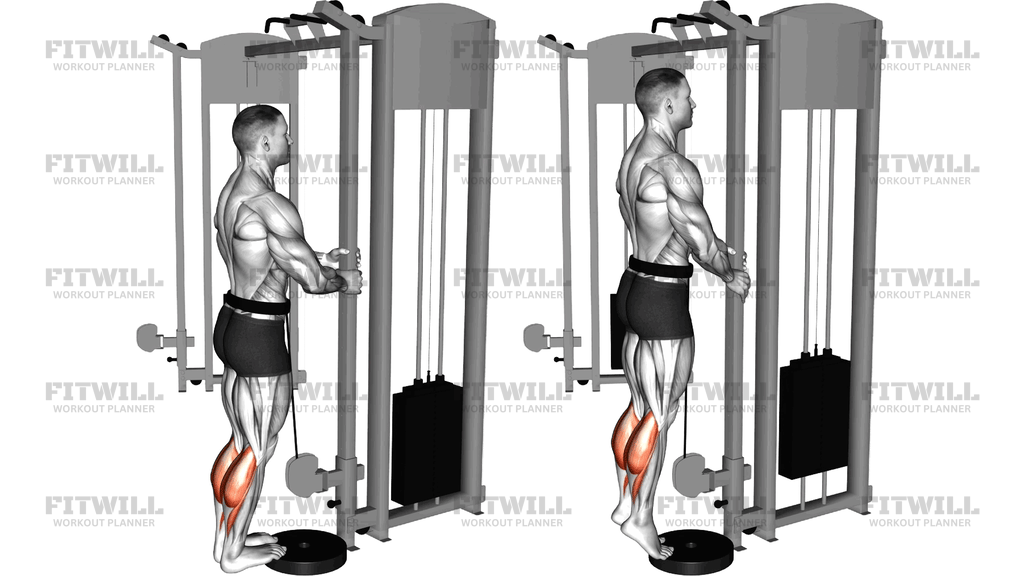
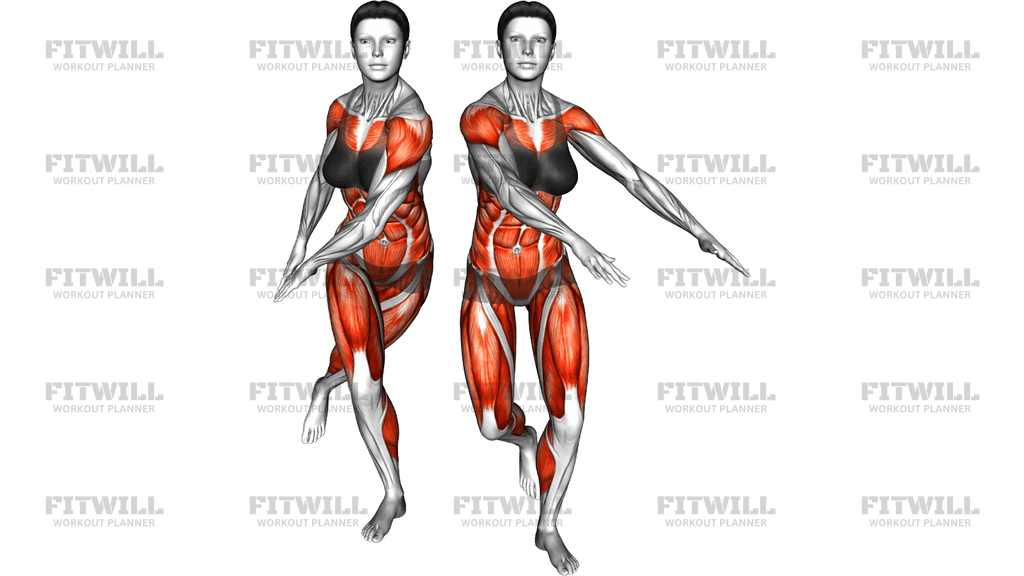
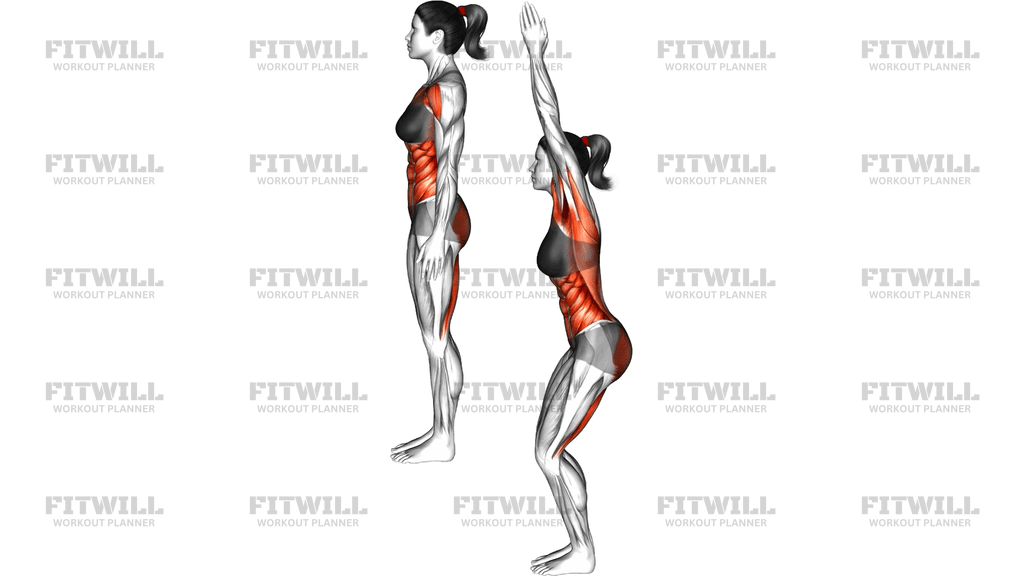
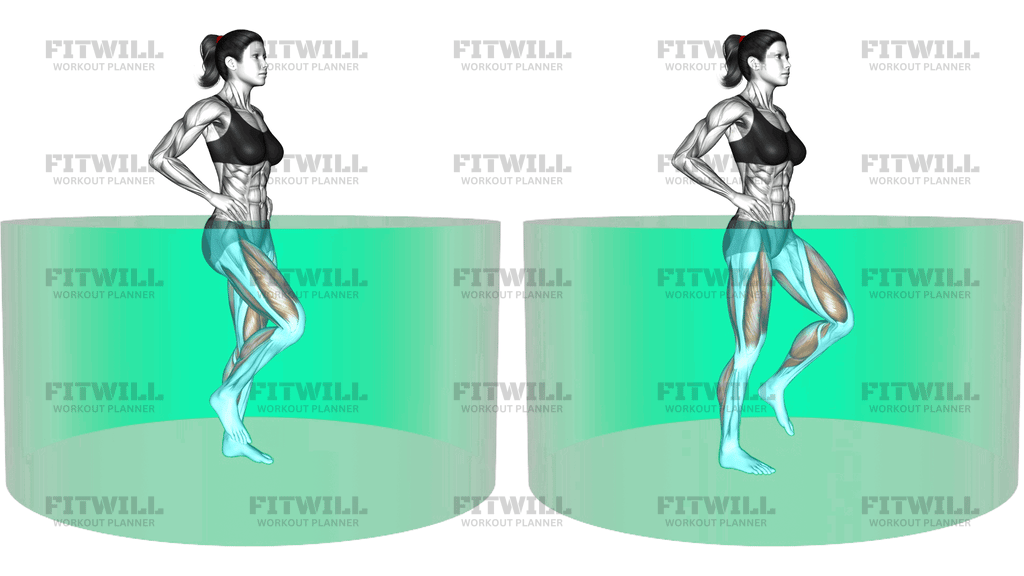
Pogo Jump 2 Foot
The Pogo Jump 2 Foot is a two-footed rebound drill where you hop repeatedly off the ground using quick, springy bounces from your ankles, much like your feet are pogo sticks. Unlike a box jump or standing broad jump, the goal is not height or distance but ground contact time: you want to touch down and leave the floor as fast as possible, staying tall and letting the stretch reflex in your calves and Achilles tendons do most of the work. Hands rest at your sides or on your hips, and the knees stay nearly straight so the bounce comes from the lower leg rather than a deep squat.
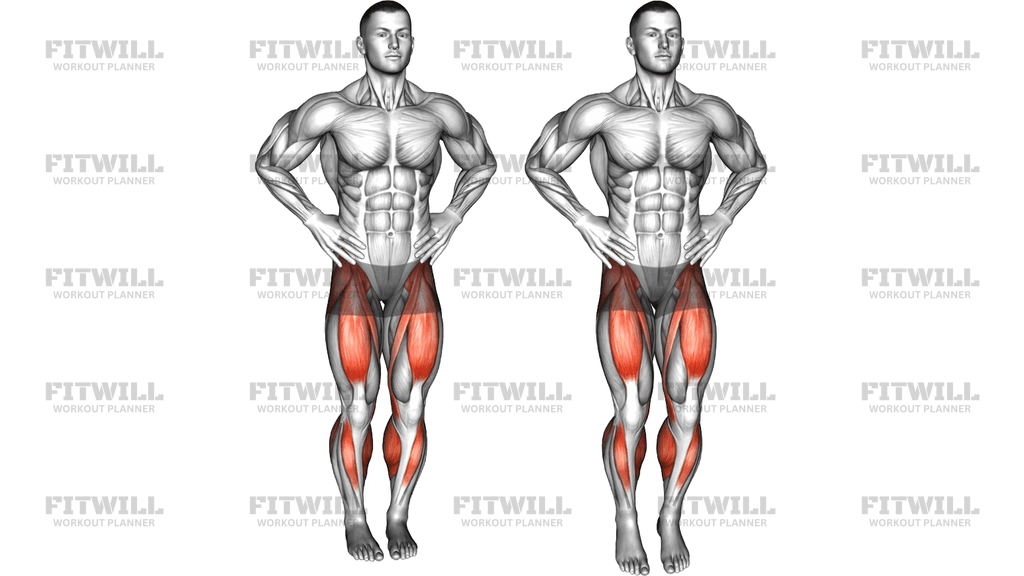
This drill is a staple in speed, jump, and sprint training because it builds ankle stiffness and reactive strength. Sprinters, jumpers, and team-sport athletes use pogo hops to improve how quickly their feet can strike and leave the ground, which carries over to faster acceleration and change of direction. It also works well as a low-level plyometric warm-up before heavier lifting or sprinting, and as a conditioning tool when done for longer sets. The muscles doing the majority of the work are the calves, with the quadriceps, glutes, and the small stabilizing muscles around the ankles supporting each landing.
Setup matters more than it looks. Because the knees stay soft but nearly straight, every landing is absorbed through the ankle joint, so you need a firm, non-slippery surface and a full-foot awareness of where your weight sits. Land on the balls of your feet with your heels just barely kissing the floor, and keep your weight stacked over the middle of each foot. If your weight drifts back onto your heels or forward onto your toes, the bounce turns sloppy and the ankles have to absorb force unevenly.
To execute the drill well, think tall rather than explosive. Stand with feet about hip-width apart, brace your trunk lightly, and begin bouncing with small hops of only a few centimeters. Push actively through the ball of each foot the instant you touch down, keeping contact time as short as you can while still landing quietly. Your shoulders should stay relaxed and your head still; if your upper body starts bobbing or your arms swing to generate height, the bounce has become a jump instead of a pogo.
Start with short sets of 10 to 20 seconds or 15 to 25 contacts, resting fully between sets so quality stays high. Beginners should keep the hops small and stop the set the moment the contacts get loud or the heels start slamming down. Because the Achilles tendon handles repeated loading, progress volume gradually over weeks rather than jumping straight into long sets, and skip the drill entirely if your calves or Achilles feel sore on the day.
[ Workout Log & Planner ]
Put your next workout in Fitwill
Keep your plan and training log ready when you are.


Instructions
- Stand tall with your feet about hip-width apart and your arms relaxed at your sides or your hands resting on your hips.
- Shift your weight slightly onto the balls of your feet so your heels hover just above the floor, and brace your trunk gently without rounding your lower back.
- Keep your knees soft but nearly straight; your legs should act like springs rather than squatting down between hops.
- Begin with small, quick hops, pushing off the balls of both feet at the same time and leaving the floor only a few centimeters.
- On landing, strike with both balls of the feet at once and rebound upward immediately, keeping ground contact as short and quiet as possible.
- Keep your head still and shoulders relaxed; avoid swinging your arms or using your hips to drive the hop higher.
- Breathe in a steady rhythm throughout the set rather than holding your breath during the bounces.
- Continue for the planned number of contacts or seconds, then step out of the rhythm and stand still to reset before the next set.
- Reset by bringing your heels down fully, taking two or three slow breaths, and rechecking your foot position before starting again.
Tips & Tricks
- Treat quiet landings as your quality check: if your feet are slapping the floor, your contact time is too long or your calves are fatiguing.
- Keep your heels close to the floor but not locked down; letting them tap lightly lets the Achilles store and return energy each contact.
- If your knees start bending deeper with each hop, cue yourself to think of a pencil standing upright rather than a jack-in-the-box springing down.
- Count contacts instead of watching the clock at first, because fatigue shows up as slower rebounds before you notice it in time.
- Avoid pointing your toes in the air on landing; keep the forefoot contacting the ground so the calf does the rebounding, not the toes.
- Do these on a firm surface such as a gym floor or pavement rather than a very soft mattress-like surface, which absorbs the bounce you are trying to train.
- If your calves cramp early, shorten the set and stay lower; cramping usually means the hops are too big or the sets are too long for your current level.
- Warm up your ankles first with ankle circles or a few slow heel raises, since cold Achilles tissue does not respond well to fast rebounding.
Frequently Asked Questions
What muscles does the Pogo Jump 2 Foot work?
The calves, especially the gastrocnemius and soleus, do most of the pushing on every contact. The quadriceps, glutes, hamstrings, and the ankle stabilizers around the foot assist with landing and rebounding.
Is the Pogo Jump 2 Foot suitable for beginners?
Yes, as long as the hops stay small and the sets are short. Beginners should aim for 10 to 15 quiet, quick contacts per set and stop when the rhythm or landing quality breaks down.
How high should I jump during Pogo Jumps?
Barely off the ground. The drill trains short ground contact and ankle stiffness, so hops of a few centimeters with fast rebounds are more effective than tall jumps with long landings.
Why do my calves burn so quickly during this exercise?
Each contact is a fast, repeated contraction of the calf muscles, so they fatigue faster than in slower strength exercises. Shorten your sets and rest fully between them rather than grinding through the burn with poor rebounds.
Should my knees stay straight during Pogo Jumps?
Keep them soft but nearly straight. If your knees bend deeply on each landing, the drill turns into a squat jump and your calves and ankles stop doing the work the exercise is designed for.
Can I do the Pogo Jump 2 Foot every day?
Small doses can be done frequently, but the Achilles tendon and calves need recovery from repeated bouncing. Two to four sessions per week with rest days in between is a sensible starting point, and you should skip the drill if you feel soreness in your calves or Achilles.
What surface is best for this exercise?
A firm, non-slippery surface such as a gym floor, rubber flooring, or pavement works best. Extremely soft surfaces absorb the rebound energy you are trying to train and can make landings less stable.
What can I substitute if jumping is uncomfortable for me?
Fast body-weight calf raises or heel raises with a quick tempo train a similar calf action without the impact. Skipping with a jump rope is another option once your ankles tolerate light landing work.
How do Pogo Jumps carry over to sports performance?
They teach your feet to strike and leave the ground quickly, which supports faster sprint steps, quicker direction changes, and more reactive jumping. That is why they appear in warm-ups and speed sessions across many sports.