Sitting Stepjack Front Raise On A Chair
The Sitting Stepjack Front Raise On A Chair is a seated, low-impact combination movement that pairs a front arm raise with a step-out jack pattern of the legs. You sit upright on the edge of a sturdy chair with your feet together, then raise both arms straight out in front of you to about shoulder height while stepping one or both feet outward and back in, mimicking the opening and closing action of a jumping jack without ever leaving the seat. Because the chair removes the balance and landing demands of a standing jack, you can focus entirely on moving your arms and legs with control.
This movement is especially useful for people who want a cardio-style drill but cannot jump or stand for long periods: beginners building basic coordination, older adults, people returning from a layoff, office workers breaking up long sitting stretches, and anyone rehabbing general fitness in a joint-friendly way. It also works well as a warm-up before upper or lower body training, since it raises your heart rate while taking the shoulders and hips through a wide, comfortable range.
The front raise portion mainly challenges the front shoulders, with the upper chest and traps assisting as the arms reach shoulder height. The stepjack portion works the hip flexors and quads as the legs lift and step outward, while the abdominals stay busy holding your torso tall on the chair. Because you are seated, your core has to stabilize continuously to stop you from slumping or rocking as the arms and legs move together.
The setup matters more than it looks. Sitting too deep into the chair turns the leg action into a shuffle; sitting at the front edge with tall posture lets the thighs move freely and keeps your spine neutral. Your feet should start flat on the floor about hip-width or closer, with your arms hanging straight down at your sides so the front raise starts from a true dead stop each rep.
To execute it well, coordinate the two halves of the movement: arms rise as the feet step out wide, arms lower as the feet step back in. Move at a steady rhythm you could hold for 30 to 60 seconds, and keep the raise controlled rather than swinging. Height, not speed, is the quality marker here.
A few practical points keep this safe. Choose a chair that will not tip or slide, ideally one with a backrest you can hover near but not lean on, and keep your weight spread through both sit bones rather than perched on the very edge. If raising both arms at once bothers your shoulders, alternate arms or shorten the range to whatever height feels smooth and pain-free.
[ Workout Log & Planner ]
Put your next workout in Fitwill
Keep your plan and training log ready when you are.


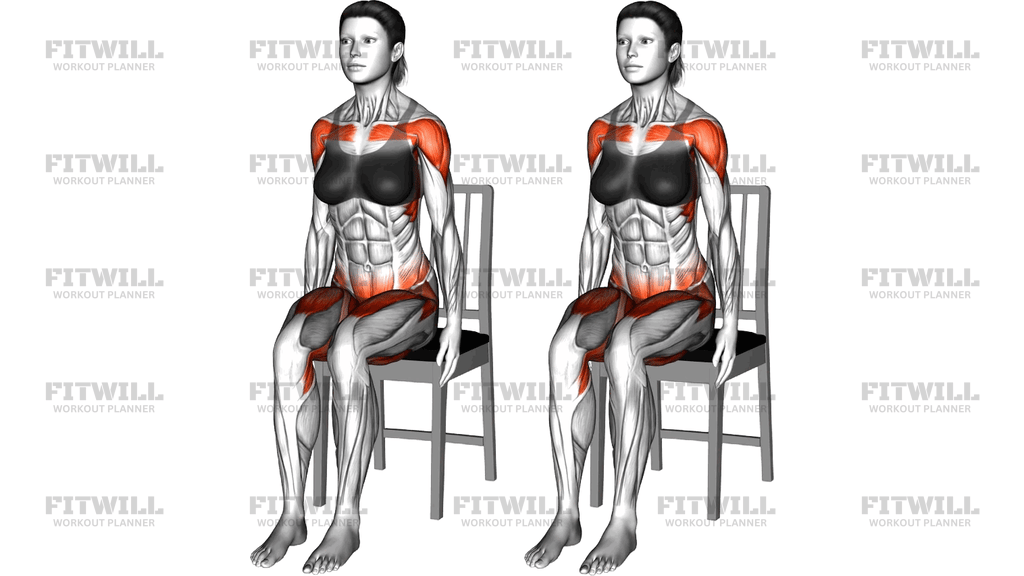
Instructions
- Sit on the front half of a sturdy, non-slip chair with your back tall, chest open, and both sit bones evenly planted on the seat.
- Place your feet flat on the floor, close together, with knees bent at roughly 90 degrees, and let your arms hang straight down at your sides with palms facing your thighs.
- Brace your abs lightly and draw your shoulder blades down so your shoulders are not shrugged up toward your ears.
- As you exhale, raise both straight arms forward and up to about shoulder height while simultaneously stepping one foot out wide, or both feet outward, keeping the motion smooth.
- At the top, your arms should be roughly parallel to the floor, wrists in line with the shoulders, and your torso should still be upright with no backward lean.
- Inhale as you lower your arms back down to your sides while stepping the feet back in to the narrow starting stance.
- Keep the rhythm even: one full stepjack-and-raise cycle per two to three seconds, with no pausing or dropping the arms.
- Maintain contact through both sit bones the whole time; if you feel yourself sliding forward or rocking, slow the tempo and reset your posture.
- Complete your target number of reps or work for a timed interval, then sit still for a breath or two before starting the next set.
Tips & Tricks
- If your lower back rounds as the arms come up, stop the raise at chest height instead of shoulder height and build the range gradually.
- A common mistake is shrugging the shoulders to force the arms higher; keep the space between your ears and shoulders wide throughout the raise.
- Do not lean back as the arms rise. If you catch yourself bracing against the chair back, sit slightly forward and lighten the effort.
- Keep the step-out on the floor. Lifting the feet high turns this into a knee drive and changes the emphasis away from the controlled jack pattern.
- If your chair slides on a hard floor, place it against a wall or use a chair on a mat so the base stays fixed while your legs move.
- Alternate which foot steps out first each set so both sides of the hips get the same amount of work.
- The arms should travel in the plane of your body, straight out in front, not drifting outward to the sides like a lateral raise.
- For a slightly harder version, add light hand weights or wrist weights, but only once you can keep the tempo steady without swinging.
- Breathe on the movement instead of holding your breath; many people instinctively hold at the top of the raise, which fatigues you faster.
Frequently Asked Questions
What muscles does the Sitting Stepjack Front Raise On A Chair work?
The front shoulders do most of the arm work, supported by the upper chest and traps. The stepjack part of the movement targets the hip flexors and quads, while the abs stabilize your upright torso throughout.
Is this exercise suitable for complete beginners?
Yes. The chair eliminates balance and landing demands, so beginners only need to coordinate raising the arms with stepping the feet. Start with a slower tempo and a smaller step-out before speeding up.
Why should I sit on the front edge of the chair instead of leaning back?
Sitting at the front edge with tall posture lets your thighs move freely and keeps your spine neutral. Leaning back against the chair shortens the leg movement, reduces core involvement, and encourages slouching.
How high should I raise my arms during the Sitting Stepjack Front Raise On A Chair?
Aim for roughly shoulder height with the arms straight and wrists in line with the shoulders. If you feel pinching or your shoulders shrug, stop at chest height and progress the range over time.
Should both feet step out at the same time, or one at a time?
Either works. Alternating one foot at a time is easier to coordinate and less fatiguing, while stepping both feet out together more closely mimics a true jumping jack pattern.
What kind of chair should I use?
Use a stable chair without wheels, on a non-slip surface, with a seat high enough that your knees bend around 90 degrees. Push it against a wall if the floor is slick.
Can I add weight to this movement?
Yes, once your form is consistent. Small dumbbells or wrist weights make the front raise more demanding, but only add load if you can keep the arms from swinging and the torso from leaning back.
How many reps or how long should I perform the Sitting Stepjack Front Raise On A Chair?
A practical starting point is 20 to 30 seconds of continuous, steady repetitions or 15 to 20 full cycles, resting briefly between sets. Increase the duration or tempo gradually as the coordination feels automatic.
What can I substitute if I do not have a suitable chair?
Any firm, stable seat such as a bench or sturdy stool works. Without any seat, you could do a standing stepjack with alternating front raises, though that adds a balance demand the seated version removes.
Is this movement safe for people with knee or shoulder discomfort?
It is generally gentle because there is no jumping or impact, but you should keep the step-out shallow and the arm raise within a comfortable, pain-free range. Stop and adjust the height or range if either joint complains.