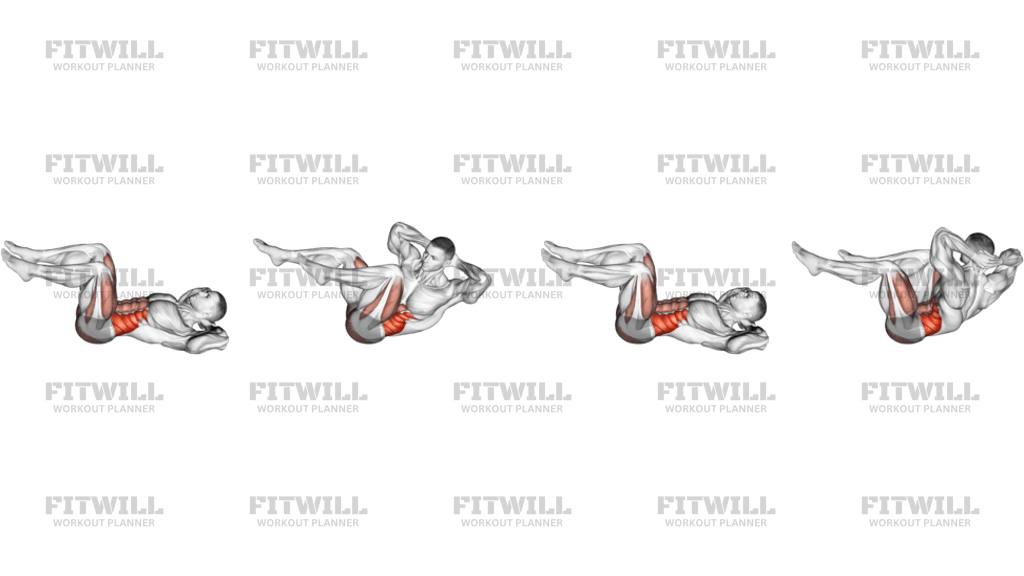
Single Russian Twist
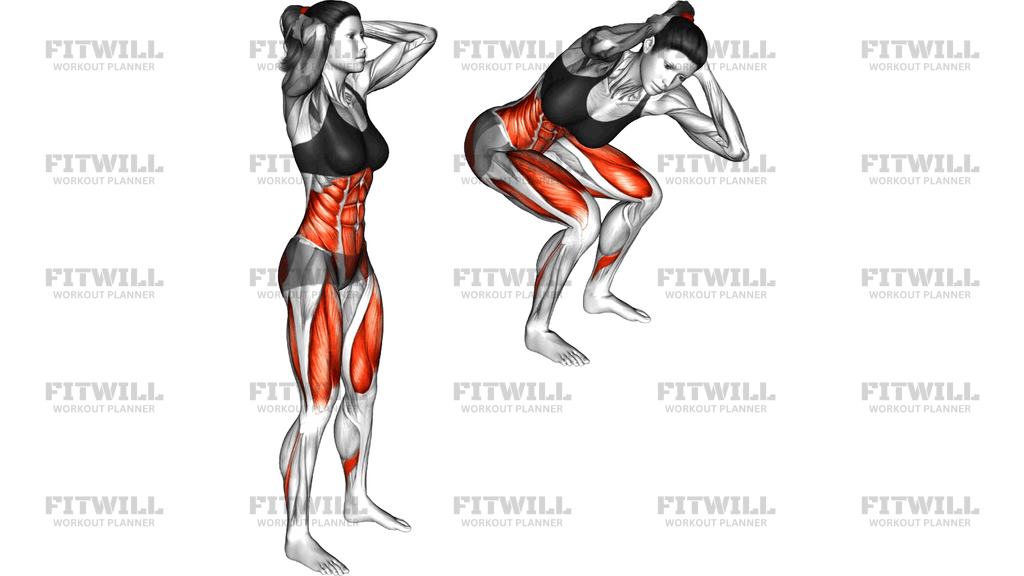
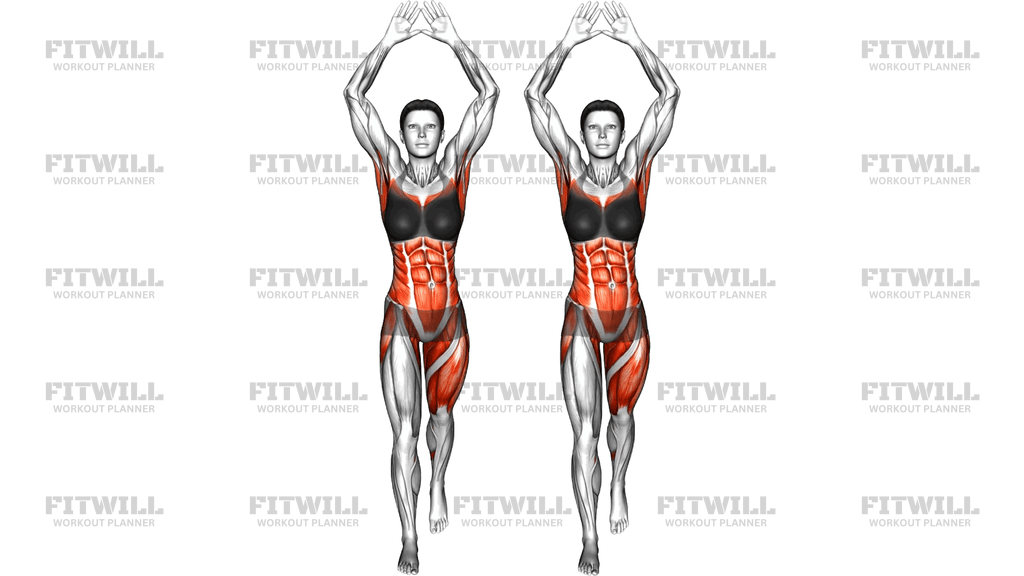
The Single Russian Twist takes the familiar rotational work of a seated Russian twist and moves it onto your feet. Instead of leaning back on the floor with a weight in your hands, you stand tall, press your arms overhead until your fingertips meet in a diamond shape above your head, and rotate your torso to one side at a time. With your legs doing the stabilizing and your arms extended overhead, every degree of rotation has to come from your waist rather than from momentum or a swinging weight.
This standing setup makes the exercise a solid choice for anyone who finds floor-based twisting uncomfortable, for warm-ups before sports that involve rotation, and for trainees who want core work that also challenges balance. Because your feet stay planted, the muscles of the legs and hips are constantly working to keep your pelvis steady while your ribcage turns. That combination of rotation and anti-rotation is exactly what most daily and athletic movements demand.
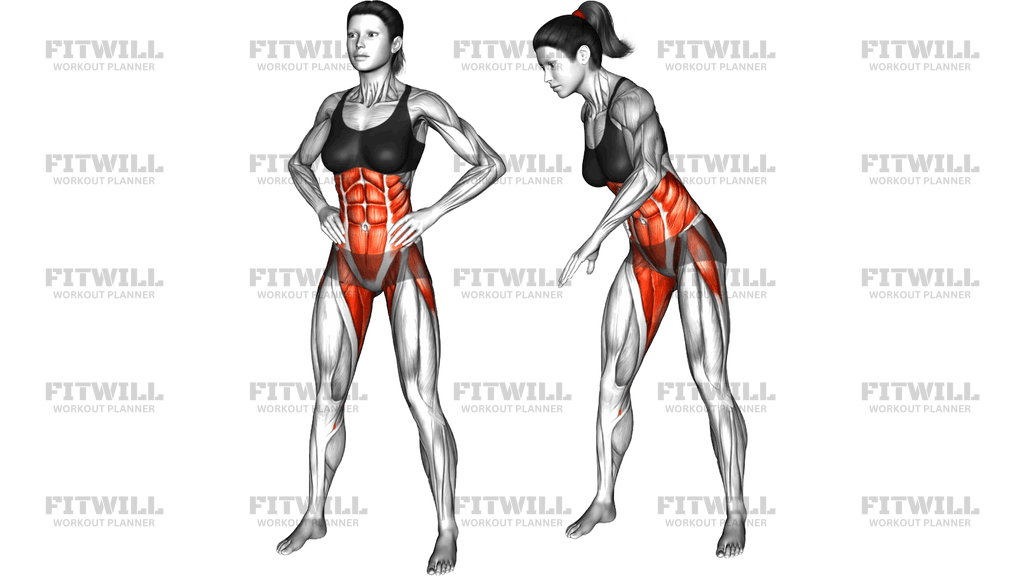
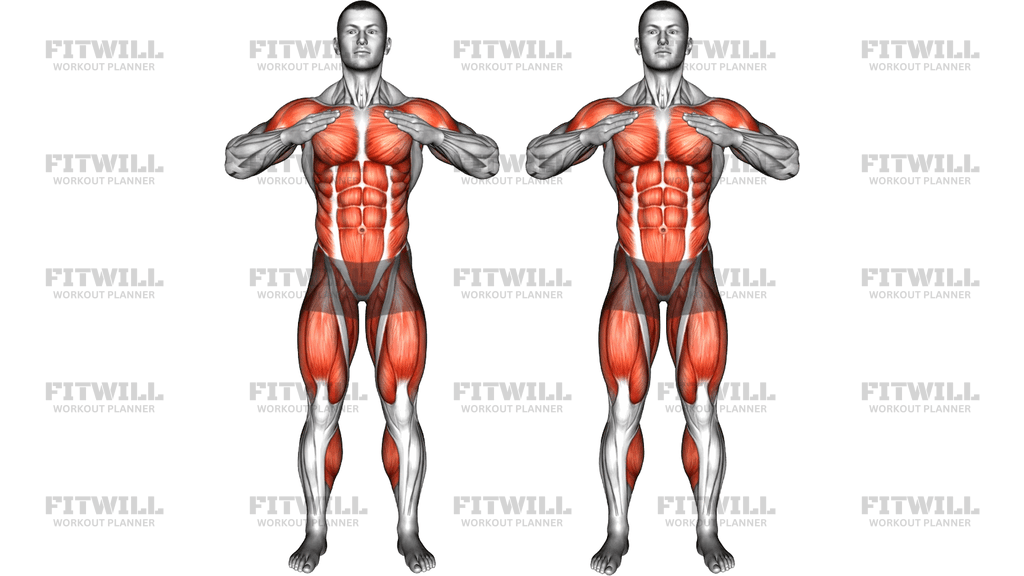
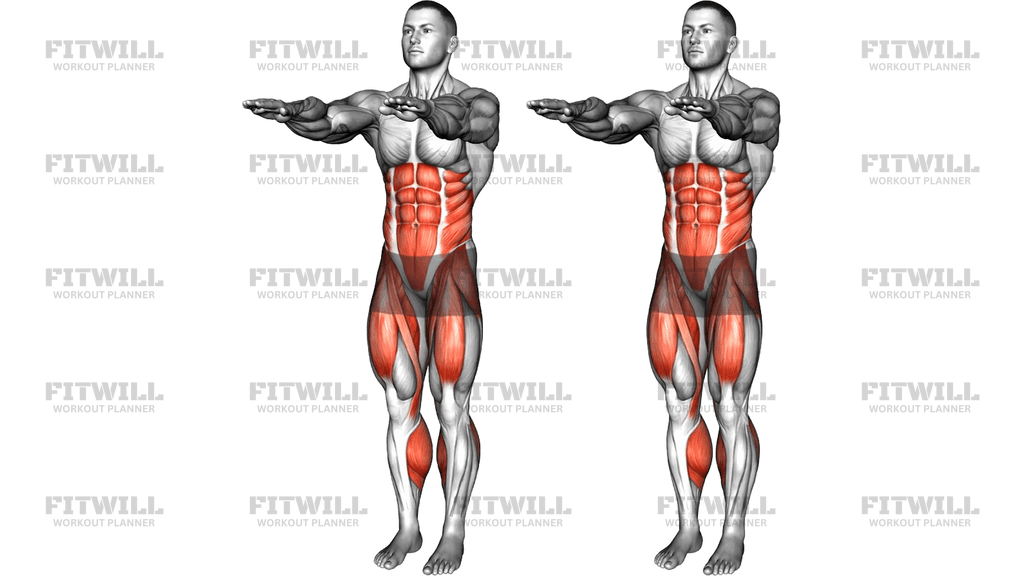
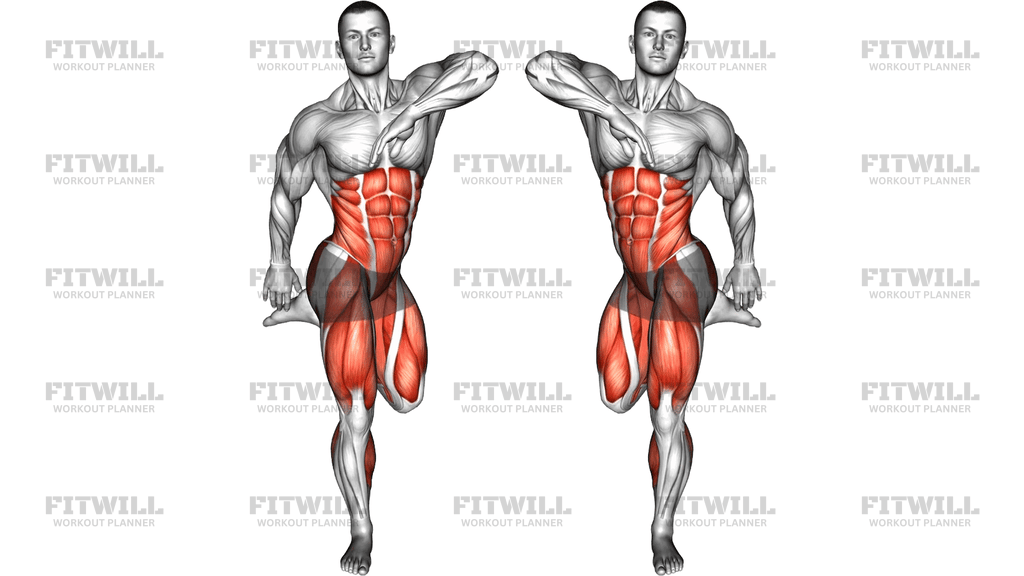
The main muscles at work are the obliques on the side you are twisting toward and away from, supported by the rectus abdominis running down the front of your torso. Raising the arms overhead lengthens the entire trunk, which makes the abdominals work through a longer range and also brings the hip flexors and front of the thighs into play as they hold your stance. Do not be surprised if your shoulders and upper back feel some isometric work from holding the arms up as well.
Execution comes down to separating two jobs: the waist rotates, everything else stays quiet. Keep your knees soft but your lower body still, and let the turn happen from your ribcage so your arms travel as one block with your torso. When you let the hips swing wildly or the arms drift independently, the twist loses its tension and the benefit drops off quickly.
You can complete all repetitions on one side before switching, which is where the single-side emphasis in the name comes from, or move side to side through the center. A slow, deliberate tempo with a short pause at the end of each turn beats fast reps every time. Start with ten to fifteen controlled twists per side and build from there.
[ Workout Log & Planner ]
Put your next workout in Fitwill
Keep your plan and training log ready when you are.


Instructions
- Stand with your feet about hip-width apart, toes pointing forward, and your weight spread evenly across both feet.
- Raise both arms straight overhead and bring your fingertips or palms together so your hands form a diamond above your head, elbows only slightly bent.
- Soften your knees, lift your chest, and gently draw your belly button in to brace your core before you start moving.
- Rotate your torso to the right by turning your ribcage, keeping your arms locked in the overhead diamond so they travel with your body.
- Let the heel of your left foot rise slightly as you turn, but keep your hips and legs otherwise facing forward.
- Pause for a beat at the end of the rotation and squeeze the obliques along the working side.
- Rotate back through the center under control, then continue into the left-side twist, or complete all reps on one side before switching if you are working single-sided.
- Exhale as you rotate into the twist and inhale as you return through the middle.
- Reset your stance and re-brace your core whenever you feel yourself starting to swing or rush the reps.
Tips & Tricks
- The most common fault is swinging the arms side to side while the torso barely moves. Your hands should stay glued together in the overhead diamond and follow your ribcage, not lead it.
- If your lower back feels pinched, you are likely rotating from your hips or arching as you turn. Squeeze your glutes lightly and think of twisting around a vertical pole running through your spine.
- Keep the range honest: a controlled three-quarter turn with tension beats a violent full rotation that yanks on your spine.
- Do not let your knees buckle inward as you rotate. Press the feet into the floor and keep the kneecaps tracking over your toes to protect the stance.
- If your shoulders burn before your core does, lower your elbows slightly. The arms should be extended but not shrugged up toward your ears.
- Slowing the tempo is the simplest progression. A two-second turn with a one-second pause will light up the obliques more than doubling the rep count.
- Keep your gaze forward rather than whipping your head around with the twist; the neck should stay relaxed and neutral.
- Once body weight feels easy, you can hold a light medicine ball or single dumbbell between your hands, but only after you can keep the hips quiet through every rep.
Frequently Asked Questions
What muscles does the Single Russian Twist work?
The obliques are the prime movers, with the rectus abdominis assisting through the rotation. Your hip flexors, quads, and the stabilizers of the standing leg work isometrically to keep your stance still.
Why are the arms overhead instead of held in front like a regular Russian twist?
Raising the arms lengthens the torso, which increases the range the obliques work through and removes the option of swinging a weight for momentum. It also forces the core and shoulders to hold position together.
Should I alternate sides or do all reps on one side?
Both work. Completing all reps on one side before switching emphasizes the working obliques harder, while alternating keeps the movement symmetric and is easier to pace.
Is the Single Russian Twist suitable for beginners?
Yes, because it uses no equipment and the load is light. Beginners should start with a smaller rotation and focus on keeping the hips facing forward, which is the hardest part to control.
How is this different from a seated Russian twist?
The seated version removes your legs from the job and usually uses a weight for load, while this standing version makes your legs and hips stabilize you and relies on range and control instead of added resistance.
Why do my thighs feel this exercise if it is a core movement?
With your feet planted and hips resisting the rotation, the quads and hip flexors hold your stance isometrically. Mild thigh work is normal and actually part of the point of doing the twist standing.
Can I add weight to the Single Russian Twist?
You can hold a light medicine ball or dumbbell between your hands once your form is consistent. Add load gradually, because the arms-overhead position puts any extra weight far from your center, which challenges your lower back.
How fast should the twists be performed?
Slow enough that each rep starts from your ribcage and finishes with a deliberate squeeze. Fast, bouncy twists let momentum do the work and increase stress on the spine.
Is this exercise safe for people with lower back issues?
Anyone with a history of back problems should check with a healthcare professional first. If cleared, keep the rotation modest, move slowly, and stop any version that produces sharp or radiating discomfort.