Wide Stance Thoracic Rotation
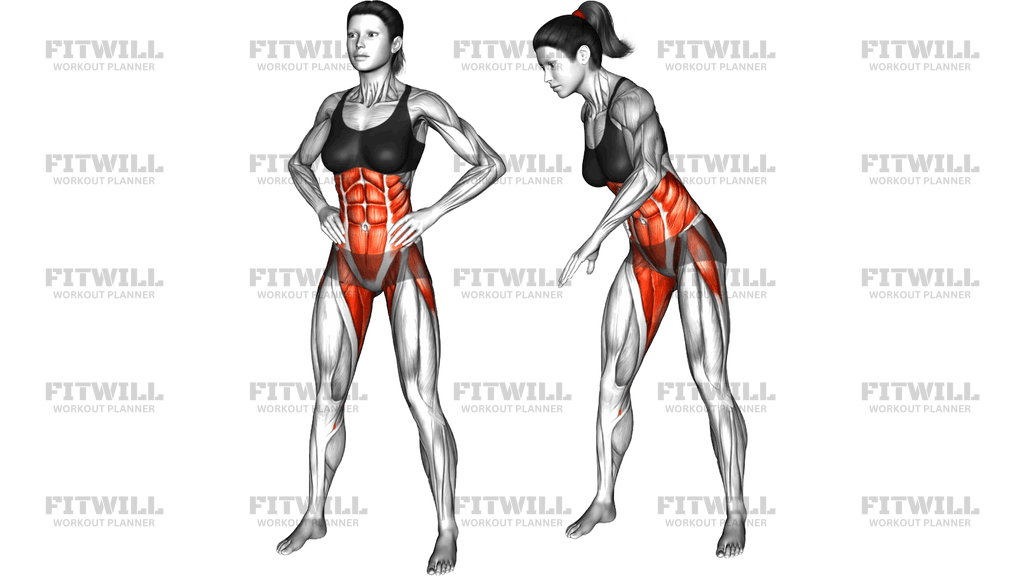
The Wide Stance Thoracic Rotation is a body weight mobility drill that combines a wide-legged hip hinge with a rotating reach of the arms. You set your feet much wider than shoulder width, hinge forward at the hips until your torso is angled toward the floor, and then sweep one arm up and across your body toward the ceiling while the opposite hand stays anchored down toward your foot or the ground. The result is a rotation that travels through the mid-back rather than the lower spine, which is exactly what makes it valuable.
Most people lose rotational range in the thoracic spine because daily sitting locks the ribcage and shoulders into a fixed, forward position. This drill targets that stiffness directly. As you rotate, the obliques and deep trunk rotators control the turn, the muscles between the shoulder blades drive the arm's path, and the rear shoulder and rotator cuff handle the reach overhead. The wide stance and forward hinge lengthen the hamstrings, inner thighs, and glutes at the same time, so the lower body gets a useful stretch while the upper back rotates.
The setup is not optional decoration. A genuinely wide base lowers your center of gravity and lets the hips sit back into the hinge, which locks the pelvis in place. With the pelvis fixed, rotation has to come from the ribcage and mid-back, which is the intent of the exercise. If your stance is narrow or your knees drift forward, the pelvis turns with you and the movement becomes a lower-back twist instead of a thoracic rotation.
To execute it well, think of the anchored hand as a post. It presses lightly toward the floor and keeps the shoulders square to the legs while the free arm draws a long, sweeping arc up toward the ceiling. Let your head and eyes follow the moving hand, exhale as you rotate, and pause for a breath at the top before reversing the arc with control. Complete the repetitions on one side, then switch so the opposite arm does the reaching.
This drill fits well in a warm-up before lifting, throwing, golf, tennis, or any sport that demands rotational power, and it works equally well as a standalone mobility break during the day. Because it requires no equipment, you can do it anywhere you have room to spread your feet. People with tight hamstrings may find the hinge uncomfortable at first; a slight knee bend solves that without changing the rotation. Move within a range where you can keep the spine long, and treat any pinching or sharp sensation as a signal to shorten the arc rather than push through it.
[ Workout Log & Planner ]
Put your next workout in Fitwill
Keep your plan and training log ready when you are.


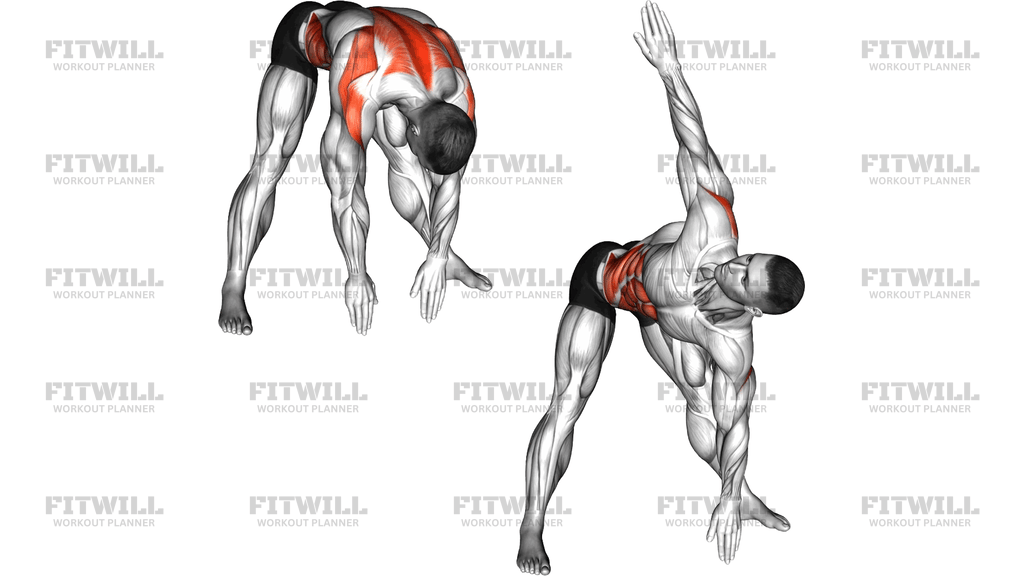
Instructions
- Stand with your feet roughly two shoulder-widths apart, toes angled slightly outward, and shift your weight so you feel stable and planted.
- Push your hips back and hinge forward until your torso is angled well toward the floor, letting a slight bend in the knees if your hamstrings demand it.
- Reach one hand down to rest on your lower leg, foot, or the floor beside your foot, keeping that arm straight and firm like a support post.
- Brace your trunk lightly and set your gaze on the floor beneath you so your neck stays neutral before the rotation begins.
- Sweep your free arm up and across your body in a wide arc toward the ceiling, rotating from the ribcage and mid-back while the pelvis and legs stay completely still.
- Follow the moving hand with your eyes so your head turns with the ribcage instead of lagging behind or craning up.
- At the top of the arc, pause for one full breath and let the chest and shoulder open toward the ceiling.
- Reverse the same arc slowly until your hand returns near the floor, keeping the movement smooth rather than letting gravity drop the arm.
- Exhale as you rotate open and inhale as you return to center, matching breath to the sweep of the arm.
- Complete all repetitions on one side, then reset your hinge and repeat with the other arm reaching while the opposite hand anchors down.
Tips & Tricks
- The most common fault is letting the back foot lift or the hips swing as the arm rotates. Press both soles evenly into the floor and imagine your pelvis glued in place, because once it turns, the rotation leaks out of the mid-back.
- If your hamstrings pull you out of the hinge, bend your knees more instead of rounding your lower back to reach lower. The rotation quality matters far more than how close your hand gets to the floor.
- Avoid yanking the arm to the ceiling for extra range. A fast swing uses momentum and skips the very segment of the spine you are trying to mobilize.
- Keep the anchored arm genuinely straight. A soft, bent supporting arm lets the shoulder blade collapse and shortens the arc on the rotating side.
- Think of turning your ribcage, not your hand. If your arm crosses your face but your chest still faces the floor, you are rotating at the shoulder only.
- Let the head travel with the spine. Craning the chin up before the ribcage turns compresses the neck and usually means the rotation has stalled in the mid-back.
- Breathe out fully at the top of each rotation. The ribcage settles a degree or two further as the air leaves, and forcing range on a held breath does the opposite.
- Start with a smaller arc and grow it set by set. Chasing your maximum rotation on the first rep is how people strain the lower back or a shoulder in a warm-up drill.
- If balance wobbles in the wide hinge, widen your base further or place the supporting hand on your shin rather than the floor until your hip mobility catches up.
Frequently Asked Questions
Which muscles does the Wide Stance Thoracic Rotation work?
The obliques and deep trunk rotators control the turning motion, while the muscles of the upper back, rear shoulders, and rotator cuff handle the reaching arm. The hamstrings, inner thighs, and glutes also work statically to hold the wide hinge position.
Is the Wide Stance Thoracic Rotation a stretch or a strength exercise?
It sits in both worlds, but it functions primarily as a mobility drill. The rotation stretches the chest, side trunk, and hips on the reaching side while the trunk and upper-back muscles actively control the arc, which trains usable rotational range rather than passive flexibility.
Why does the stance need to be so wide?
A wide base lets you hinge deeply while keeping the pelvis stable, and a stable pelvis forces the rotation to come from the thoracic spine. With a narrow stance the hips tend to turn with the arm and the movement becomes a lower-back twist.
My lower back feels this instead of my mid-back. What am I doing wrong?
Your pelvis is most likely rotating with your arm, or your hinge has collapsed into a rounded spine. Re-set the hinge with your hips pushed back, keep both feet planted, and rotate only as far as you can while your belt line stays facing forward.
Can beginners do the Wide Stance Thoracic Rotation?
Yes, and it is actually a good early drill because it teaches the difference between thoracic and lumbar rotation. Beginners should bend the knees generously, use a smaller arc, and rest the supporting hand on the shin instead of forcing it to the floor.
How close should my hand get to the floor in the hinged position?
Only as close as your hamstring flexibility allows without rounding your back. Resting the hand on the shin or on a low block works just as well, since the supporting arm's job is stability, not depth.
What can I use instead if the wide hinge is too hard on my hamstrings?
Try the same rotation in a half-kneeling position or seated on a bench with one hand braced beside your hip. Both versions remove the hamstring demand while keeping the ribcage rotation intact.
How many reps should I do per side?
Around 5 to 8 slow, controlled rotations per side works well as a warm-up. If you are using it as a standalone mobility break, you can do two or three sets, pausing for a breath at the top of each arc.
Is it safe for people with shoulder problems?
The reaching arm can be kept closer to the body to reduce the overhead demand, and the range should stop well short of any pinching. Anyone with a diagnosed shoulder or spinal condition should get clearance from a qualified professional before adding rotational drills.
When is the best time to use the Wide Stance Thoracic Rotation?
It works best before rotational sports or upper-body lifting, when the tissues are warm and you want the mid-back moving freely. It also serves well as a mid-day reset if you spend long hours sitting.