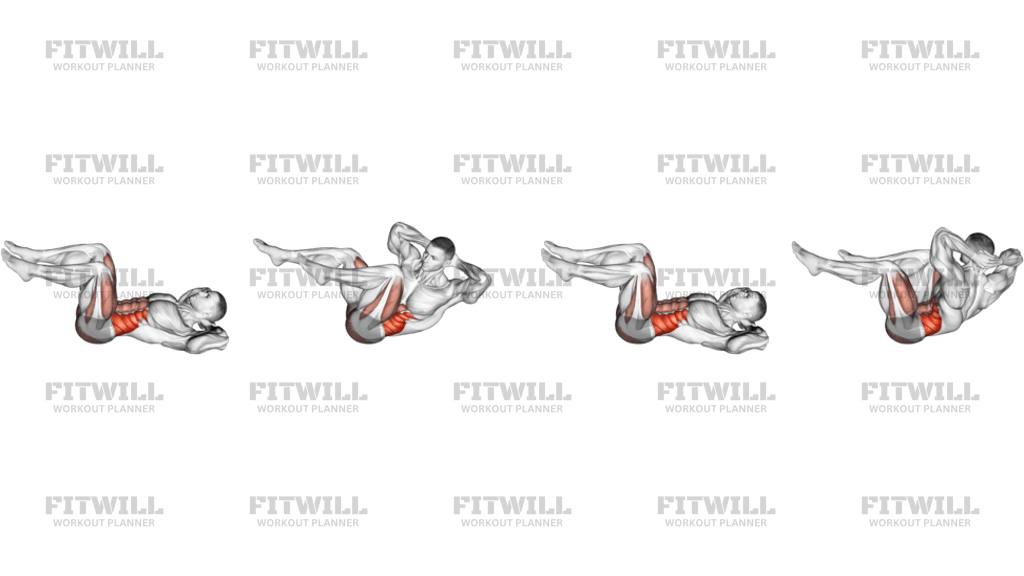
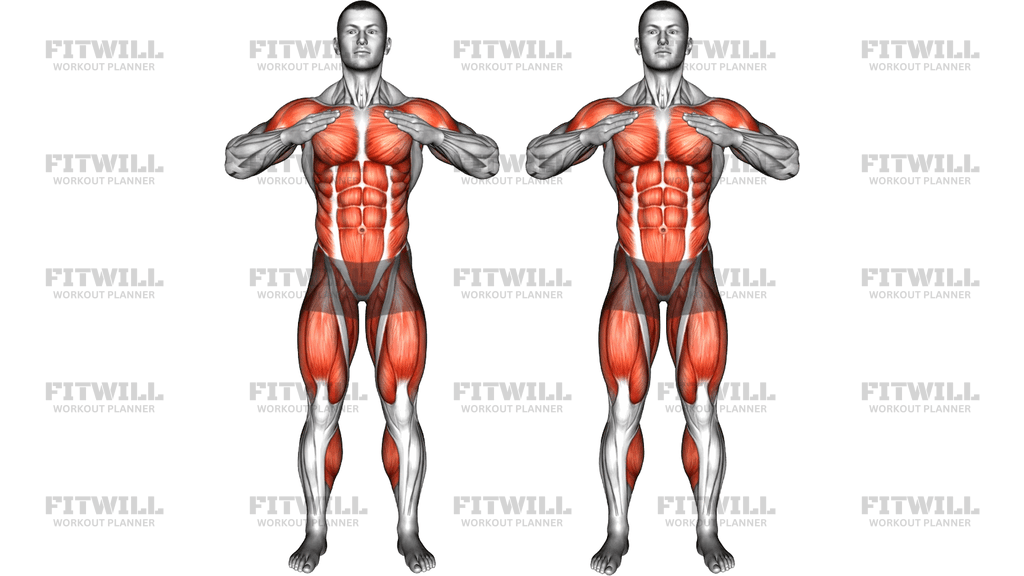
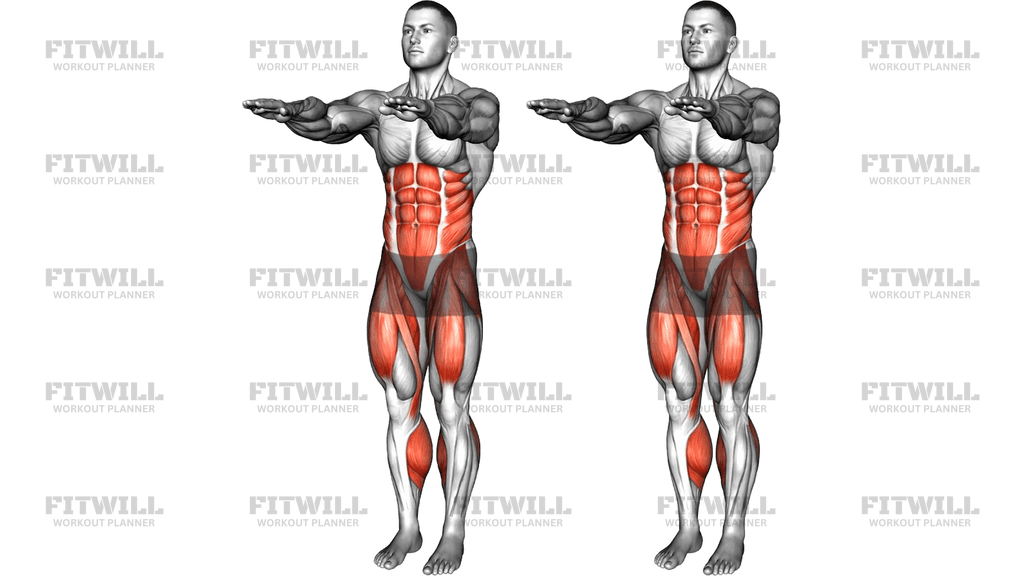
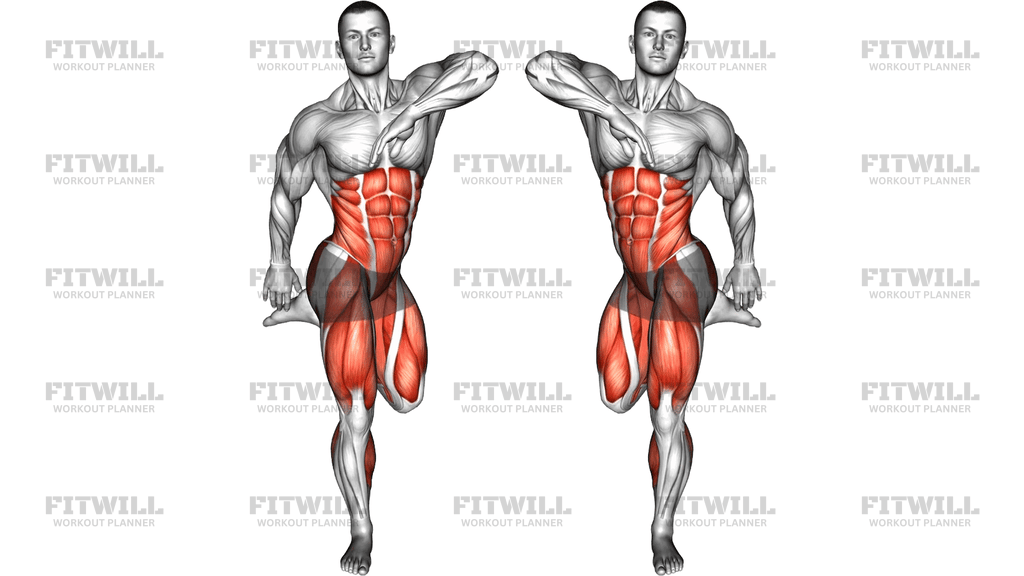
Upper Body Rotation In Squat Position
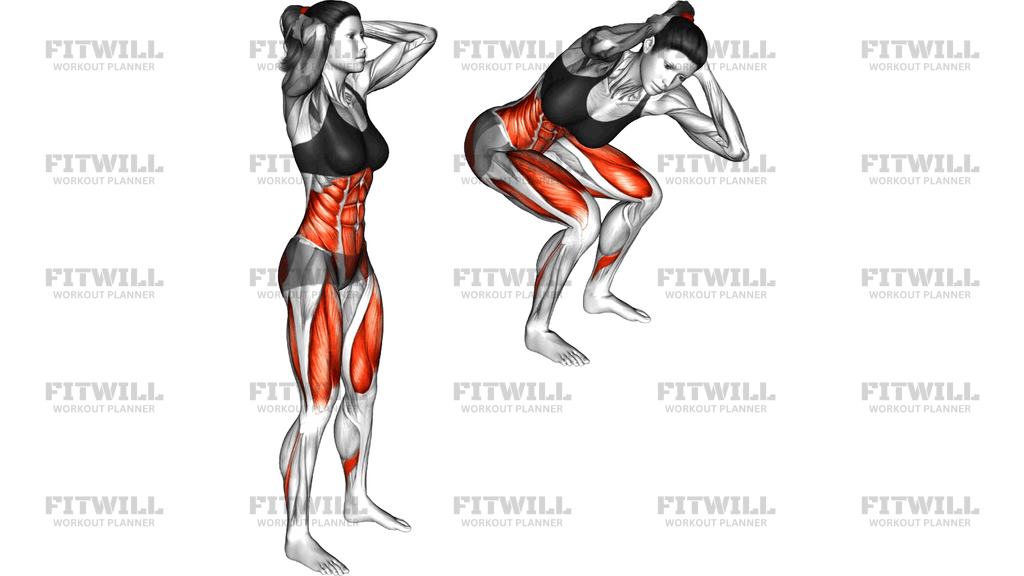
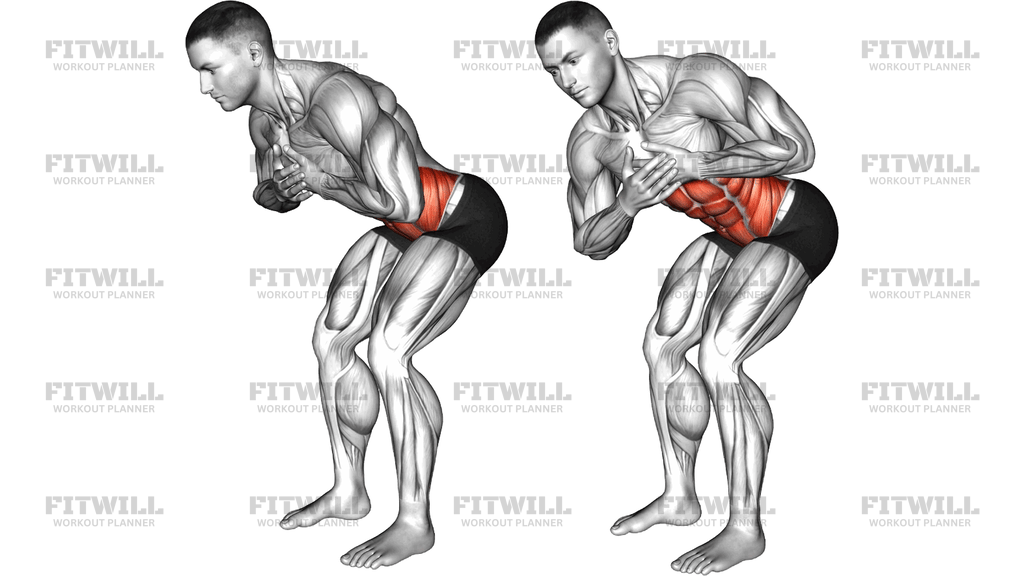
Upper Body Rotation In Squat Position is a body weight core exercise that combines a bent-knee athletic stance with a deliberate rotation of the ribcage and shoulders. You hold a partial squat with your hands drawn in toward your chest, then sweep your upper body from one rotated position through to the other while your hips and legs stay planted. The abdominal wall, especially the obliques, does the work of turning the torso against the stability demands of the squat position.
The bent-knee setup is what makes this movement valuable. Standing rotations are easy to cheat with because the hips can swing and the legs can absorb the turn. In a squat position, your lower body is locked in place, so the rotation has to come from the thoracic spine and the muscles of the midsection rather than momentum. That makes the exercise a clean way to isolate rotational control without any equipment.
This movement suits lifters who want to train twisting strength for sports like baseball, tennis, golf, or combat sports, where power is transferred through a rotated torso over a bent-knee base. It is also useful as a warm-up drill before heavier lower body or rotational work, and as a low-load option for people rebuilding core control who are not ready for loaded rotations.
To perform it well, keep the emphasis on rotating the upper body while everything below the waist stays quiet. Let your head and shoulders travel together, avoid dragging the hips around with you, and keep your weight balanced across both feet. The tempo should be smooth and controlled; this is a precision drill, not a speed exercise.
Because the position loads the knees, hips, and lower back simultaneously, quality matters more than volume. Start with a shallow squat and a modest range of motion, and only deepen the stance or extend the rotation as your control improves. If you feel the movement in your knees or low back rather than your waist and midsection, reduce the depth and reset your posture before continuing.
[ Workout Log & Planner ]
Put your next workout in Fitwill
Keep your plan and training log ready when you are.


Instructions
- Stand with your feet roughly shoulder-width apart, toes turned out slightly, and sit your hips back and down into a partial squat with your knees tracking over your toes.
- Draw both hands in toward your chest with your elbows bent and tucked, and lean your torso slightly forward from the hips while keeping your chest lifted.
- Brace your abdominal wall as if preparing for a light push, and set your weight evenly across both feet.
- Rotate your upper body to one side, letting your shoulders and chest turn while your hips and knees stay facing forward.
- Pause briefly at the end of the rotation, feeling the muscles along your waist and midsection working to hold the position.
- Sweep your upper body in a controlled arc across the front to the opposite side, keeping the movement in your ribcage and shoulders rather than your hips.
- Exhale as you rotate through the turn and inhale as you settle into each end position.
- Continue alternating rotations for the desired number of repetitions, then stand up fully out of the squat to reset before your next set.
Tips & Tricks
- The most common fault is letting the hips rotate with the shoulders. Press your knees slightly outward and think of your pelvis as fixed in cement while only the ribcage turns.
- If your lower back takes over, you are likely rounding instead of rotating. Hinge slightly more from the hips and keep a long, neutral spine so the turn comes from the waist.
- Keep the squat shallow at first. A deep squat shifts the challenge to your legs and makes it harder to feel the obliques doing the rotational work.
- Your hands belong near your chest, not swinging wide. Wide arms invite momentum, and momentum is exactly what this exercise is designed to remove.
- If your heels lift during the turn, widen your stance a few inches and shift your weight back into the mid-foot.
- Move slower than feels necessary. The pause at each end of the rotation is where the control is built, and rushing through it turns the drill into a sloppy torso swing.
- Breathe steadily instead of holding your breath through the set; holding tension in the abs is fine, but a locked-out breath makes the rotation jerky.
- Do this drill early in a session as a warm-up for rotational work, or as a standalone core set near the end when your legs are not fatigued.
Frequently Asked Questions
What muscles does the Upper Body Rotation In Squat Position work?
The obliques on the sides of your waist are the primary movers, supported by the deeper abdominal muscles that stabilize the trunk. The quads, glutes, and lower back work isometrically to hold the squat position while you rotate.
Why is this rotation done in a squat instead of standing?
The bent-knee position locks your hips and legs in place, so the rotation must come from your torso rather than from hip swing and momentum. That makes it easier to feel and load the obliques directly.
Is the Upper Body Rotation In Squat Position suitable for beginners?
Yes, provided you can hold a comfortable partial squat without knee or back discomfort. Beginners should use a shallower squat and a smaller rotation range, focusing on keeping the hips square while the shoulders turn.
Should my knees move when I rotate?
No, your knees should stay pointed in the same direction throughout the set. If your knees twist inward or sideways as you rotate, reduce the range of motion and re-brace your legs before continuing.
How many repetitions should I do?
Because this is a control exercise, moderate volumes work well — around 8 to 12 rotations per side for 2 to 3 sets. Prioritize smooth, hip-stable turns over reaching high rep counts.
Can I add weight to the Upper Body Rotation In Squat Position?
You can hold a light medicine ball or plate at your chest once your hip position stays solid, but master the body weight version first. Added load amplifies any tendency to round your lower back or drag the hips into the turn.
What can I use as a substitute if squatting is uncomfortable?
A standing plate or band rotation, or a seated torso rotation on a bench, trains a similar twisting pattern with less knee and hip demand. Both still let you practice turning the ribcage while keeping the pelvis still.
Is this a warm-up or a strength exercise?
It works well as both. Light, higher-rep sets before training prepare the trunk for rotation, while slower sets with deliberate pauses at the end range serve as a focused core exercise on their own.
How do I know if I am doing it correctly?
You should feel tension along the sides of your waist during each rotation while your knees, hips, and feet stay unmoved. If you feel it in your knees or low back instead, your squat depth or spinal position needs adjusting.