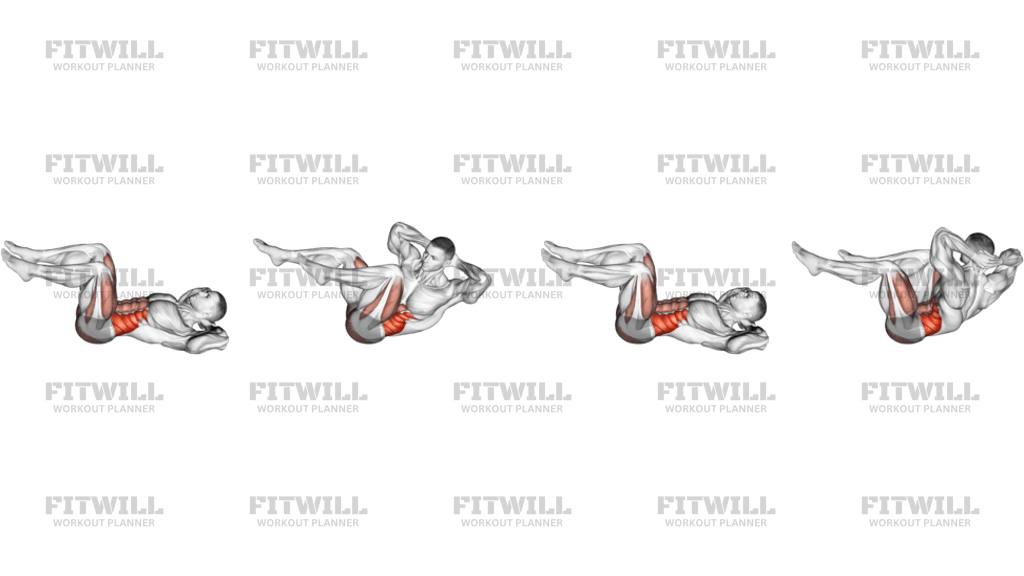
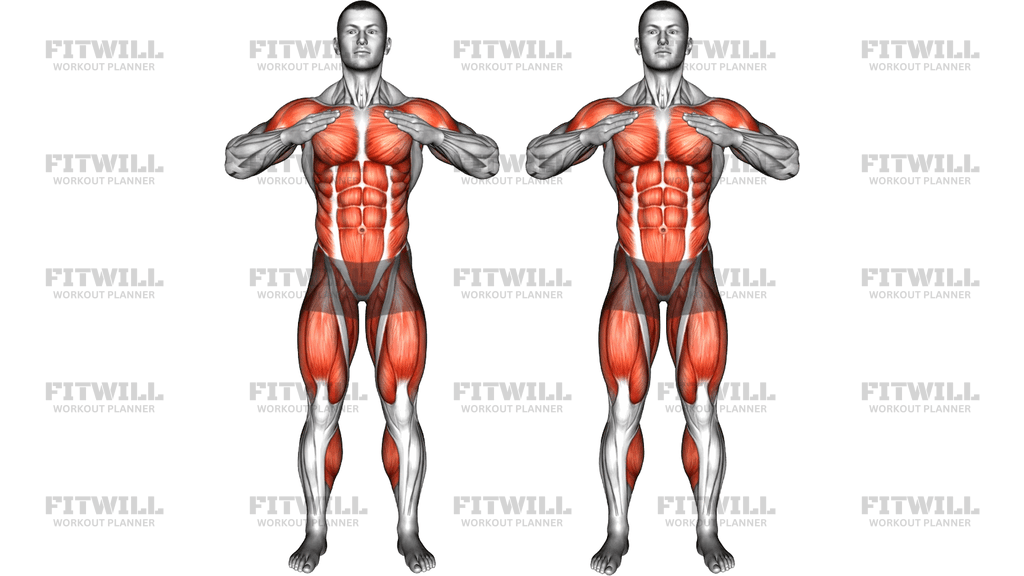
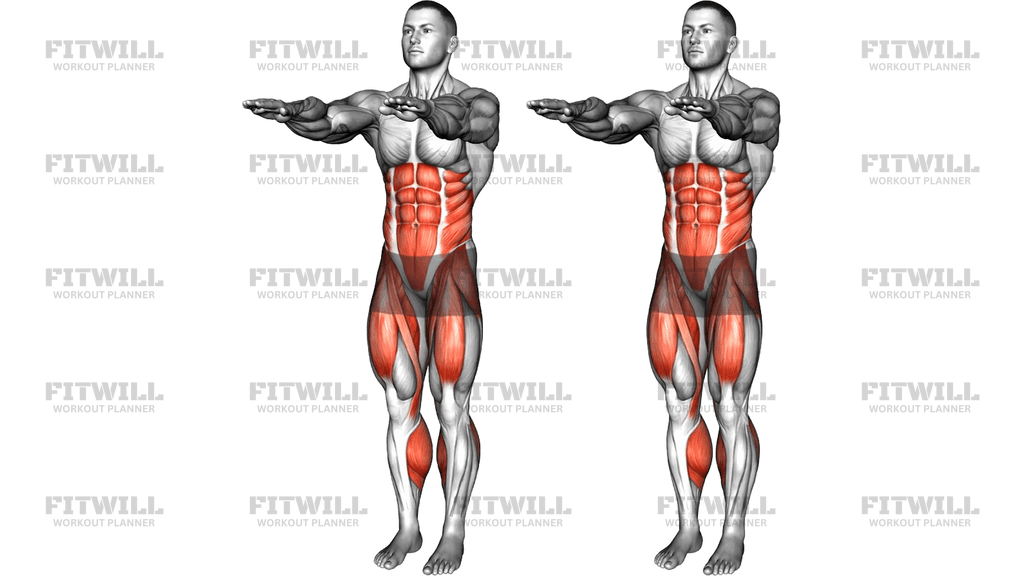
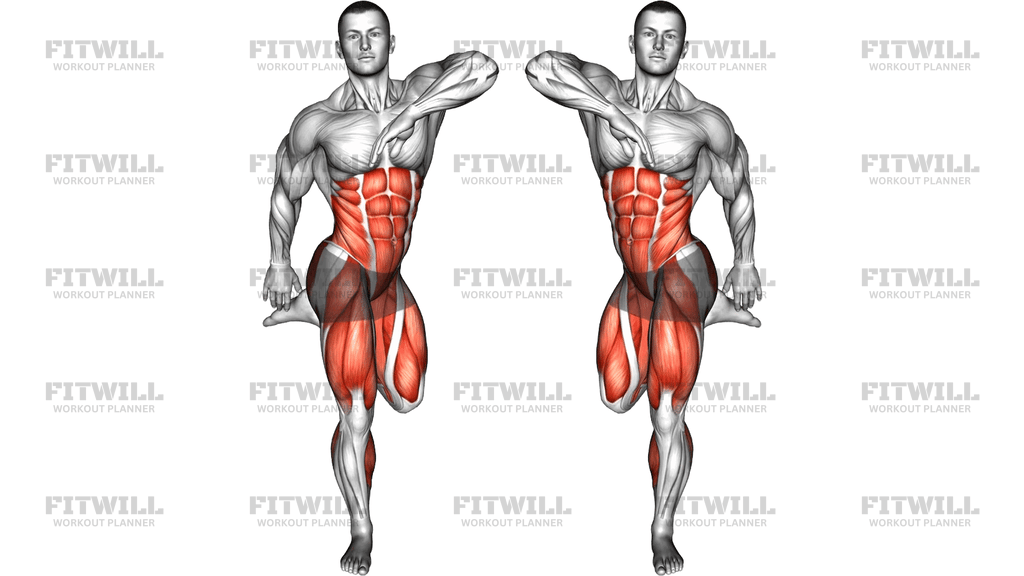
Kneeling Side Plank Raise
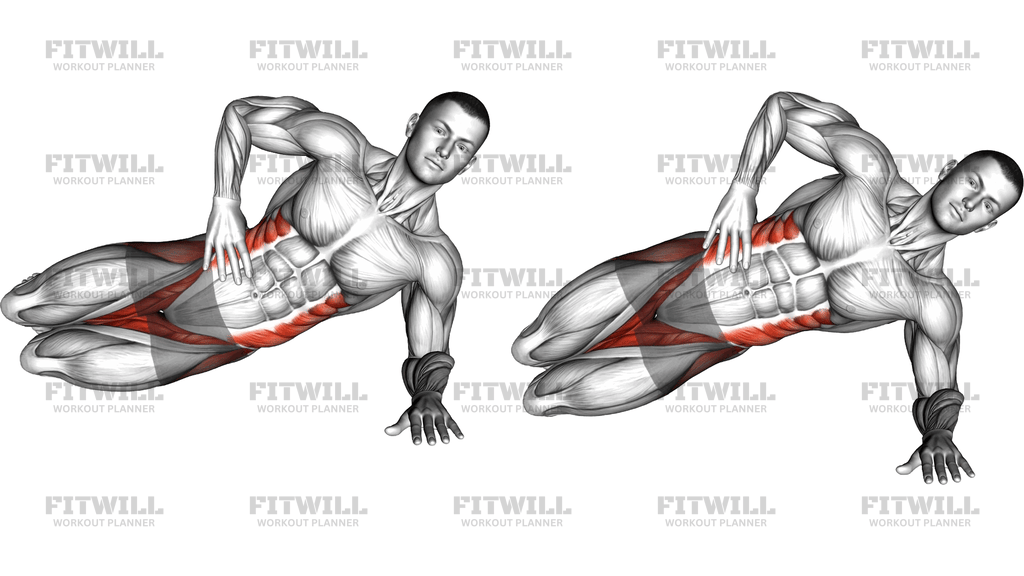
The Kneeling Side Plank Raise is a lateral core exercise that takes the standard side plank and adds a controlled hip-lifting motion, while the kneeling position shortens the lever to make the movement more manageable. Instead of holding a static position, you support yourself on one arm with both knees stacked on the floor, then repeatedly lower your hip toward the mat and drive it back up toward the ceiling. This turns an isometric hold into a dynamic movement, training the side of your waist through a real range of motion.
The primary work is done by the obliques on the underside of your torso, supported by the deep core muscles that brace your trunk, the glute on your top side, and the shoulder stabilizing your supporting arm. Because you are kneeling rather than balancing on your feet, the demand on the lateral chain is reduced, which makes this version a smart starting point if a full side plank raise feels shaky or strains your shoulder.
This exercise is useful for anyone building lateral core strength: beginners working up to full side planks, people returning from time off who need a gentler re-entry, and lifters who want extra oblique volume without heavy loading. It also carries over to everyday needs like keeping your torso level when walking, carrying groceries on one side, or changing direction in sport, all of which rely on the same hip-and-trunk control this movement trains.
Setup matters more than most people expect. Your supporting elbow or hand should sit directly under your shoulder, and both knees should stay stacked with your body in one straight line from head to knees. If your shoulder drifts behind or ahead of your arm, or your hips fall back, the obliques stop doing the work and the joints pick up the slack. A mat under your knees makes the position comfortable enough to focus on the movement rather than the pressure on your joints.
To execute it well, think of your pelvis as the moving part: lower it with control until it hovers just above the mat, then lift it deliberately until your side is fully contracted. Avoid rushing or bouncing off the bottom. The lifting portion should feel like your underside obliques are pulling your hip up, not like you are shoving off your arm. Breathe steadily throughout, exhaling as you raise the hip.
Common use cases include core finishers after strength training, warm-up activation before squats or deadlifts, and rehabilitation-style progressions toward full side planks. Keep the reps controlled on both sides, and stop the set when your hips start sagging or your supporting shoulder starts complaining rather than pushing through poor positions.
[ Workout Log & Planner ]
Put your next workout in Fitwill
Keep your plan and training log ready when you are.


Instructions
- Lie on your side on an exercise mat with both knees bent and stacked on top of each other, so your body forms a straight line from head to knees.
- Place your supporting hand flat on the mat directly under your shoulder with the arm straight, or rest on your forearm if the straight-arm version bothers your wrist, and put your top hand on your hip.
- Lift your hips off the mat and brace your trunk so your spine, hips, and knees all line up in one plane; this is your starting position.
- Take a breath in, then slowly lower your hip toward the mat until it hovers just above the floor without touching down.
- Exhale and drive your hip back up toward the ceiling, squeezing the obliques on your underside until your side feels fully shortened.
- Keep both knees in contact with the mat and your top shoulder stacked over your bottom shoulder throughout the rep.
- Pause for a moment at the top before starting the next lowering phase, keeping the tempo slow and even.
- Complete your target repetitions on one side, then lower your hips to the mat, shake out your shoulder, and reset before switching to the other side.
Tips & Tricks
- If your supporting shoulder shrugs up toward your ear, actively press the mat away and lengthen your neck; the shoulder should stay packed, not hiked.
- A common mistake is letting the hip crash down and rebound off the mat. If it touches the floor, your lowering phase is too fast or too deep; cut the range slightly and slow down.
- Check that your knees have not drifted backward. If your shins angle behind your torso, your hip will hang back and the obliques lose tension; shift your knees slightly forward.
- Keep your top hand on your hip rather than reaching for the floor. Reaching down tempts you to push off the hand and cheat the lift.
- If your wrist aches in the straight-arm version, drop to your forearm. The kneeling setup already shortens the lever, so you can change the support without losing much challenge.
- Squeeze the glutes of your top leg as you lift. This helps keep the pelvis level and stops your legs from twisting during the raise.
- Count tempo instead of reps at first, aiming for about two seconds down and one second up, so the obliques rather than momentum do the work.
- If you feel the work mostly in your supporting shoulder, you are likely sagging into the arm; lift slightly higher and re-brace your trunk before continuing.
- Do your weaker side first and match the repetitions on the stronger side rather than the other way around.
Frequently Asked Questions
Which muscles does the Kneeling Side Plank Raise work the most?
The obliques on your underside do the main work of lifting and lowering the hip, while the deep core bracing muscles, the top-side glutes, and the supporting shoulder stabilize throughout. The kneeling position shifts the emphasis toward the waist and away from the legs compared with a full side plank raise.
Why kneel instead of doing the raise from a full side plank on the feet?
Kneeling shortens the body lever, which lowers the load on the obliques and shoulder. This lets you own the hip-lifting range with clean form before progressing to the longer, harder version from the feet.
Should I support myself on my hand or my forearm?
Either works. The straight-arm version shown with the palm on the mat under the shoulder is fine if your wrist and shoulder are comfortable, but the forearm version is easier on both joints and is the better choice for most beginners.
How low should I lower my hip during the Kneeling Side Plank Raise?
Lower it until it hovers just above the mat without actually touching down. Touching the floor unloads the obliques and turns the rep into a rest, while hovering keeps constant tension through the full range.
My supporting shoulder hurts when I do this exercise. What should I change?
Make sure your hand or elbow sits directly under your shoulder and that you are pressing the mat away instead of sagging into the arm. If discomfort continues, switch to the forearm support or shorten your sets until the position improves.
Can beginners do the Kneeling Side Plank Raise?
Yes, it is one of the most beginner-friendly lateral core exercises because the knees limit the load while still training the same oblique pattern. Start with short sets of six to eight controlled reps per side and build from there.
How does this exercise differ from a regular Kneeling Side Plank hold?
A regular hold is isometric, keeping the hips at one height, while the raise adds a repeated lowering and lifting motion. The dynamic version trains the obliques through a range of motion and makes it easier to judge whether you are actually contracting them on each rep.
How many sets and reps should I do?
Two to three sets of eight to twelve controlled raises per side is a solid starting point. Prioritize even tempo and matching reps on both sides over chasing higher numbers.
What can I use if I do not have an exercise mat?
Any padded but stable surface, such as a folded towel or carpeted floor, works to cushion your knees. Avoid soft, uneven surfaces like a bed, which can throw off your balance and body line.
How do I progress from the Kneeling Side Plank Raise?
Once you can complete your target reps with steady hips and a quiet, controlled lowering phase, extend your legs and perform the raise from a full side plank on your feet. The same cues about shoulder position and hip height carry over directly.