Bodyweight Standing Scapular External Rotation
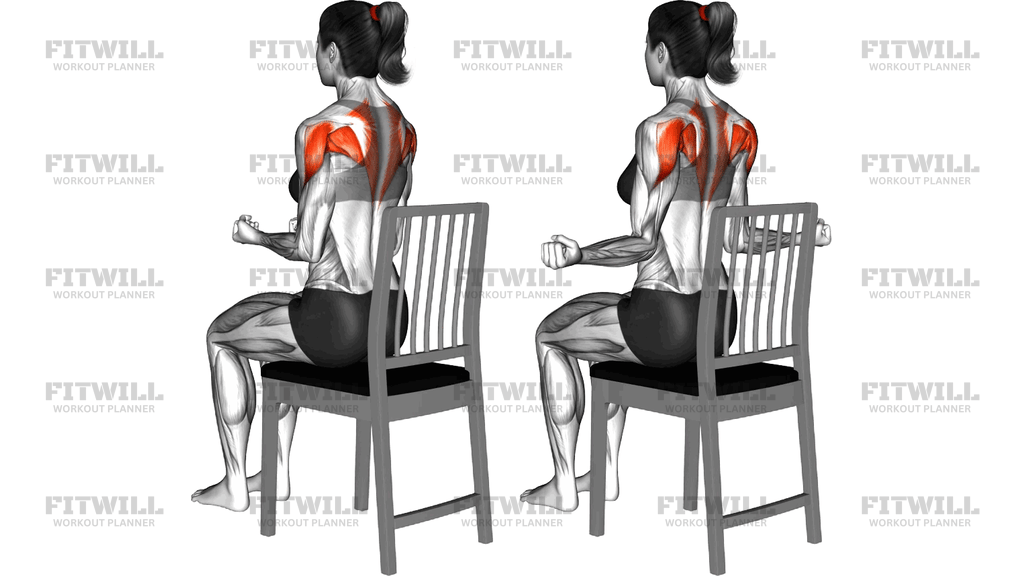
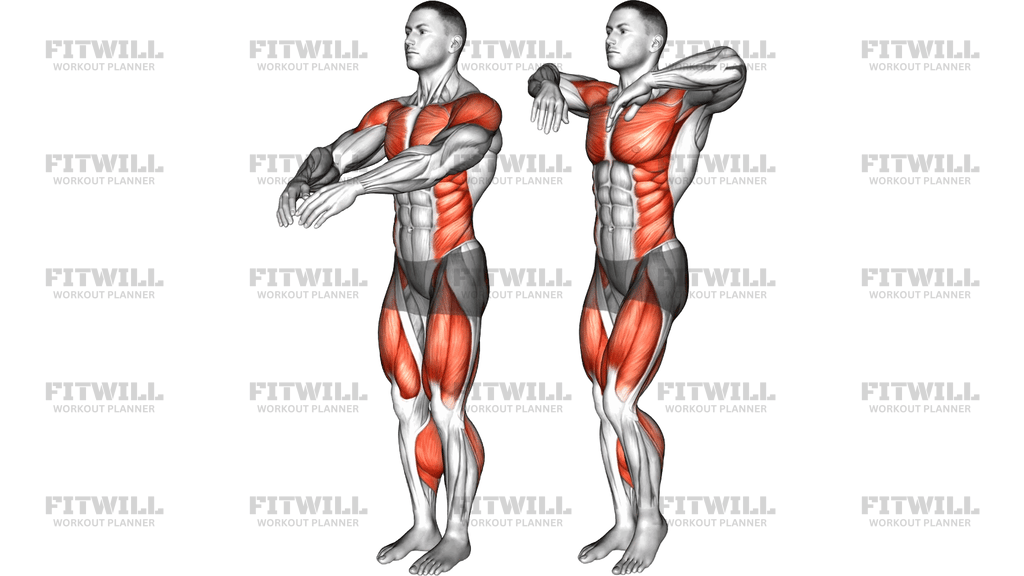
The Bodyweight Standing Scapular External Rotation is a shoulder health drill performed standing with nothing but your own arms as resistance. You keep your elbows bent to about 90 degrees at your sides, start with your forearms pointing forward and palms facing up, then rotate your upper arms outward so your forearms swing away from each other until they point out to the sides. The emphasis is on driving the rotation from the shoulder blade itself, not just spinning the forearm, which is what separates this from a plain arm circle or rotator cuff isolation.
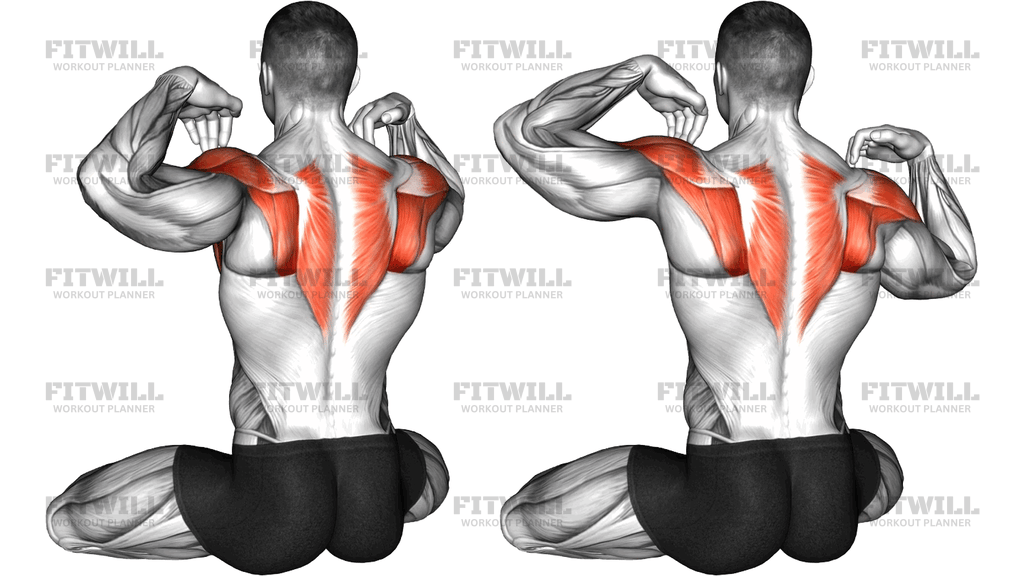
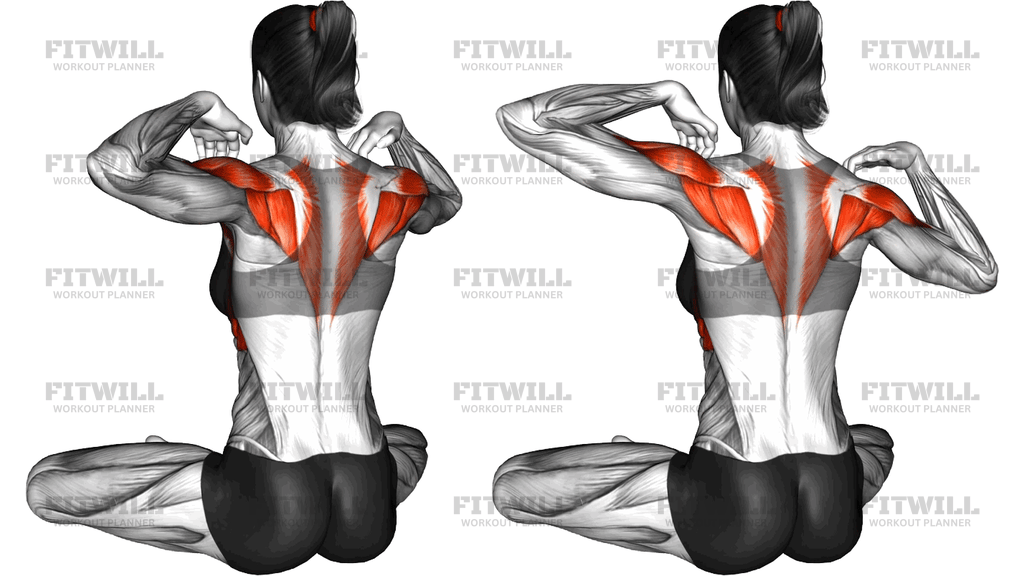
Because there is no external load, the exercise trains precision rather than raw strength. The muscles doing the work are the rotator cuff muscles on the back of the shoulder, mainly the infraspinatus and teres minor, along with the rhomboids and mid-trapezius that pull the shoulder blade back and down as you rotate. The rear delts assist, and your trunk has to stay quiet so the movement does not turn into a torso twist.
This is a go-to drill for anyone who sits at a desk with rounded shoulders, for lifters who press or bench heavily and never train the external rotators, and for people rebuilding shoulder control after a layoff. Swimmers, throwers, and racket sport players also benefit, since their sports demand repeated rotation under speed. Done before upper body training, it wakes up the cuff and sets the shoulder blade in a better position for pressing or pulling.
The standing setup matters more than it looks. With no bench or wall to stabilize the elbow, your body has to organize itself: feet about hip width, ribs stacked over the pelvis, shoulders relaxed away from the ears. If you lean back, shrug, or flare your ribs to fake extra range, you are borrowing motion from joints that should stay still. The value of the drill comes from keeping the elbow pinned at your side while the shoulder does the rotating.
Execute it slowly. Rotate out only as far as you can keep the elbow glued to your ribs and the shoulder blade squeezed gently back, pause for a beat at the end range, then return under control. A set of 8 to 12 smooth repetitions per side is plenty. If one side rotates noticeably further than the other, match the stiffer side's range on both arms until the difference closes.
There is minimal safety risk with this movement, but the common error is chasing range. Rotating further by lifting the elbow off the ribs or shrugging the shoulder turns a precise cuff drill into a sloppy shrug. Stay within an honest range, keep the neck relaxed, and stop if you feel pinching at the front of the shoulder rather than muscular work at the back.
[ Workout Log & Planner ]
Put your next workout in Fitwill
Keep your plan and training log ready when you are.


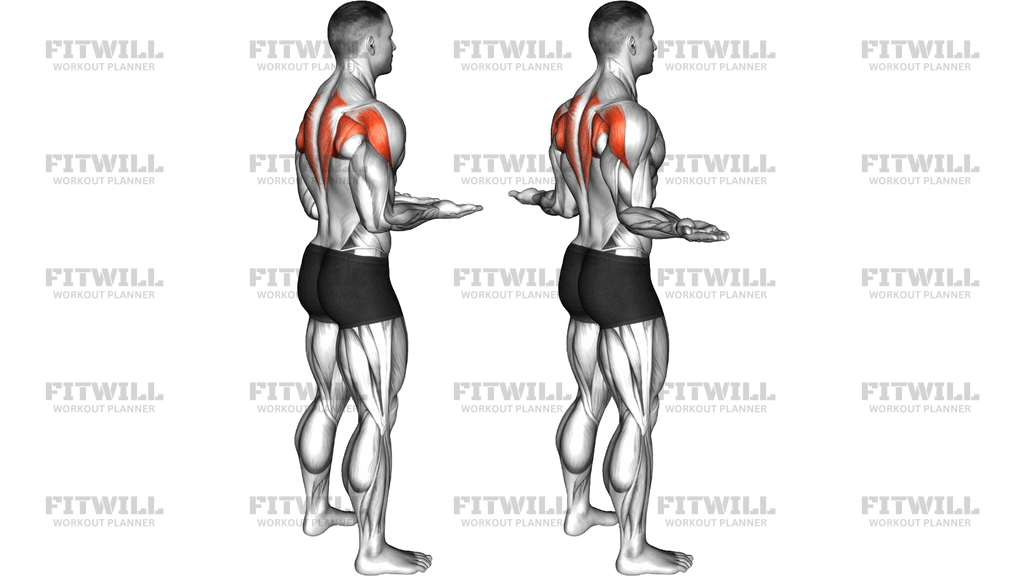
Instructions
- Stand upright with your feet about hip width apart, weight evenly distributed, and your arms relaxed at your sides.
- Bend both elbows to 90 degrees and pin your upper arms against your ribs, with your forearms pointing straight ahead and palms facing up.
- Draw your shoulder blades gently back and down, lift your chest without flaring your ribs, and brace your trunk lightly so your torso stays facing forward.
- From this position, rotate both upper arms outward at the same time so your forearms swing away from your body toward the sides, keeping your elbows glued to your ribs the whole way.
- Continue until your forearms point out to the sides or you reach the furthest point where your elbows and shoulder blades stay in place, and pause there for one to two seconds.
- Reverse the rotation slowly, bringing your forearms back to the forward position with your palms up, resisting the urge to let gravity swing your arms.
- Breathe out as you rotate outward and breathe in as you return to the start.
- Reset your posture between reps if you feel your shoulders creeping up toward your ears, letting your arms hang and shaking them out if needed.
- Perform 8 to 12 controlled repetitions, matching the range of your tighter arm on both sides.
Tips & Tricks
- If your elbows drift away from your ribs as you rotate, imagine holding a rolled towel lightly between each upper arm and your side to keep them pinned.
- Shrugging is the most common fault here; check your upper traps in a mirror and consciously drop your shoulders before each rep.
- Your palms should stay facing up throughout, like you are carrying two small plates; flipping the palms inward means the forearm is doing the rotation instead of the shoulder.
- Do not twist your trunk to gain range. If your chest turns with your arms, slow the tempo down and shorten the range until the torso stays square.
- A one to two second pause at the end range does more for scapular control than adding reps, so prioritize the hold over volume.
- If you feel pinching at the front of the shoulder, reduce how far you rotate rather than pushing through; the work should be felt at the back of the shoulder and between the shoulder blades.
- Warm shoulders rotate better, so slot this drill after a few minutes of general arm swings rather than using it stone cold first thing in the morning.
- Sitting or leaning back turns this into a trunk exercise. If you cannot stay tall, practice the drill seated on a bench until the standing version feels controlled.
- To make the drill harder without equipment, add a three to five second eccentric on the way back in, or hold the end range for five seconds per rep.
Frequently Asked Questions
Which muscles does the Bodyweight Standing Scapular External Rotation work?
The primary work comes from the rotator cuff muscles on the back of the shoulder, especially the infraspinatus, with help from the rear delts. The rhomboids and mid-traps stabilize the shoulder blade as the arm rotates.
Why should my elbows stay pinned to my ribs during this exercise?
Keeping the elbows at your sides forces the rotation to happen at the shoulder and shoulder blade instead of the elbow or trunk. Once the elbow drifts away, the cuff drill loses its specificity.
Is the Bodyweight Standing Scapular External Rotation suitable for beginners?
Yes, the lack of load makes it a very learnable drill. Beginners should focus on a short, clean range with the elbows fixed rather than trying to rotate as far as possible.
How is this different from a regular external rotation with a band or cable?
With no band or weight, the challenge is motor control and end-range hold rather than strength against resistance. Many people use this bodyweight version first to learn the path before adding band tension.
My palms keep turning inward as I rotate. What am I doing wrong?
That usually means the forearm and elbow are rotating instead of the upper arm. Slow down, reduce the range, and think about turning the whole arm from the shoulder socket while the wrist stays passive.
When is the best time to do this drill?
It works well as a warm-up before pressing, benching, pulling, or any overhead work. It can also be done as a standalone daily mobility habit for desk workers with rounded shoulders.
How many reps and sets should I do?
Two to three sets of 8 to 12 controlled reps per side is a solid dose. For warm-up purposes, one lighter set of 8 to 10 reps is usually enough.
One of my shoulders rotates further than the other. Should I be worried?
Small side-to-side differences are common and usually respond to practice. Match the stiffer side's range on both arms and reassess after a few weeks of consistent work.
I feel this in my neck and upper traps instead of my shoulders. How do I fix it?
You are likely shrugging as you rotate. Drop your shoulders away from your ears before starting, shorten the range, and keep the reps slow so the cuff, not the traps, does the moving.
Is the Bodyweight Standing Scapular External Rotation safe if I have a history of shoulder pain?
The drill is low load, but any history of shoulder pain deserves caution. Stay within a pain-free range, avoid forcing end-range rotation, and check with a qualified professional if sharp or pinching sensations occur.