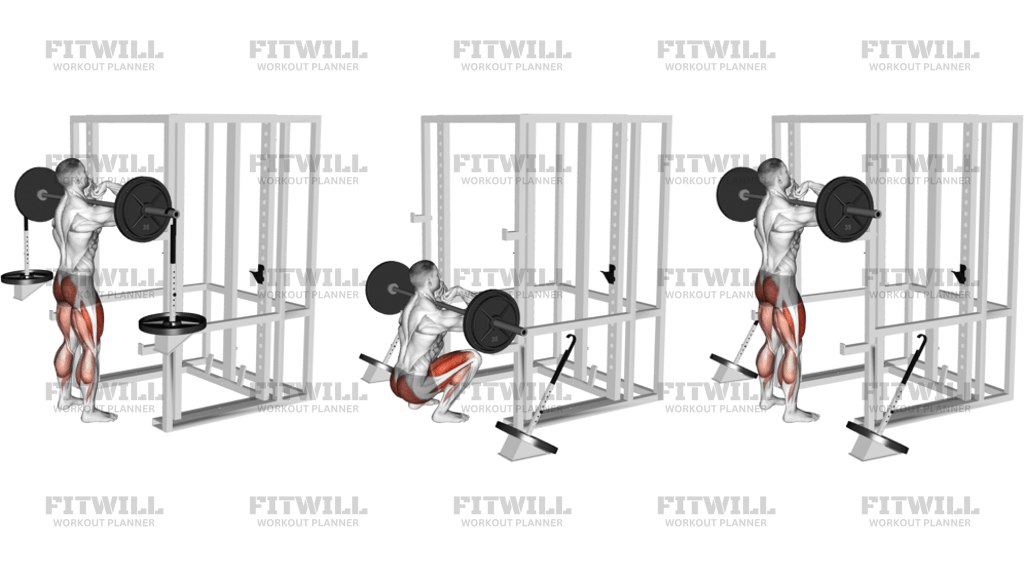
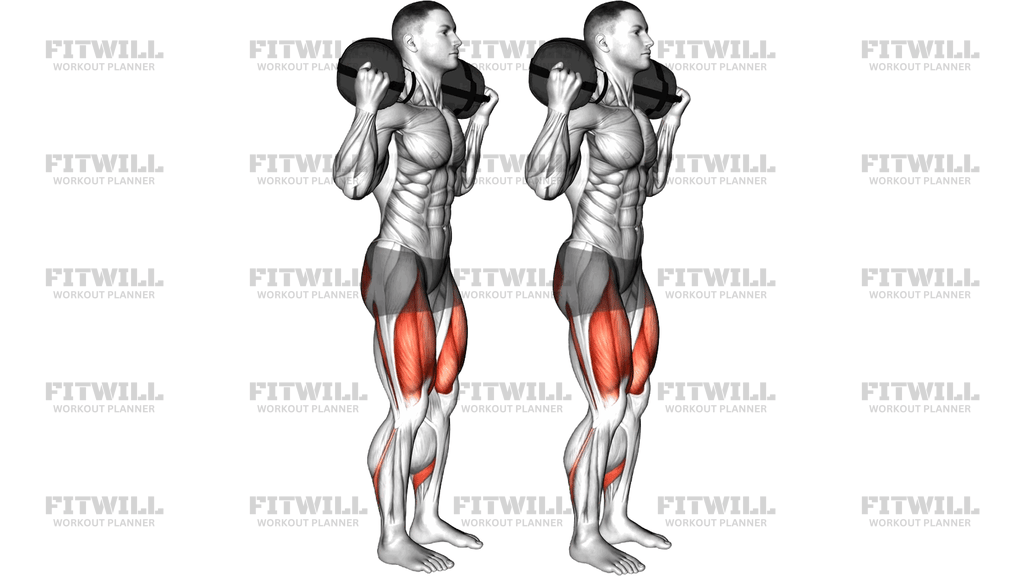
Barbell Reverse Grip Overhead Press
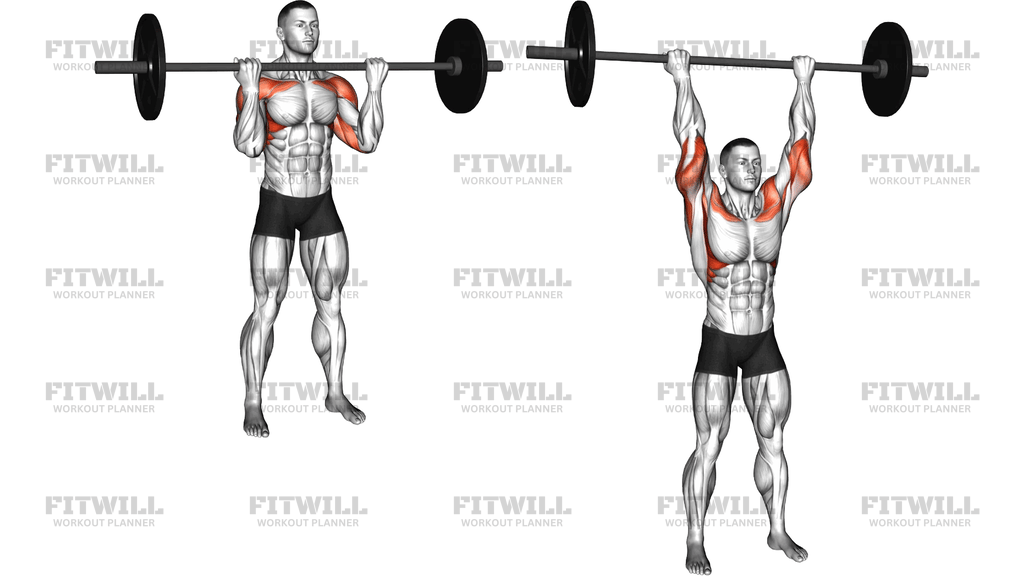
The Barbell Reverse Grip Overhead Press is a standing press variation where you hold the barbell with an underhand, palms-facing-you grip instead of the usual overhand hold. From shoulder height, you press the bar straight up until your arms are locked out overhead, then lower it back down under control. The reversal of the grip changes how your shoulders and arms cooperate: with your palms turned forward toward your body, the front delts still do most of the pressing, but the elbows travel slightly more forward and the upper chest and biceps tendons take on a different role than in a standard press.
This version suits lifters who already own a comfortable overhand press and want a new stimulus for the front delts, or those who find the supinated wrist position lets them keep the bar stacked over the forearm line more naturally. It is also used by people rehabbing or managing cranky shoulders who want to experiment with a different humerus rotation, as long as the movement stays pain-free. Because it is performed standing, your core, glutes, and legs work isometrically the entire time to keep your ribcage stacked over your pelvis.
The grip is what makes or breaks this exercise. With palms facing you, the bar rests in the heel of your hand at your upper chest, elbows down and slightly in front of the torso. As you press, your wrists rotate naturally so the bar finishes overhead in a nearly neutral alignment rather than a fully supinated one. That rotation is smooth and controlled; fighting it or locking your wrists in place shifts stress into the elbow and wrist joints. Use a shoulder-width or slightly narrower grip so the bar path stays vertical and close to your face on the way up.
Load conservatively the first several sessions. A reverse grip press typically handles less weight than your standard overhead press, mostly because the wrist and forearm position is unfamiliar and the lockout feels different. Start at roughly half of your regular pressing weight, keep your feet about hip-width apart with weight spread across the whole foot, and treat the first few weeks as practice rather than training. Squeeze your glutes and brace your abdominals before every rep so your lower back does not arch to help the bar up.
The main safety point is honesty about your mobility. If your wrists or shoulders cannot get into the starting position without forcing it, stick with the overhand press or use a cambered bar or dumbbells, which allow more freedom at the wrist. Never bounce reps off the chest, never let the bar drift forward of the mid-foot, and bail by stepping back and letting the plates hit the floor if a rep stalls mid-press rather than wrestling the bar down with fatigued arms.
[ Workout Log & Planner ]
Put your next workout in Fitwill
Keep your plan and training log ready when you are.


Instructions
- Set a barbell in a rack at roughly upper-chest height and step under it so the bar sits across the top of your chest and front delts, not your neck.
- Grip the bar with an underhand, palms-facing-you hold, hands about shoulder-width apart, and unwrap the bar to stand up with it.
- Place your feet hip-width apart, weight spread evenly across your whole foot, and stand tall with your ribs stacked over your pelvis.
- Squeeze your glutes and brace your abdominals as if about to absorb a light push to the stomach.
- Press the bar straight up, letting your forearms rotate naturally as the elbows move from in front of the torso out toward the ears.
- Finish with the bar directly over the middle of your head, in line with your mid-foot, arms extended and biceps near your ears.
- Pause briefly at lockout without shrugging the bar toward your neck.
- Lower the bar under control back to the top of your chest, reversing the forearm rotation so the bar arrives level at the shoulders.
- Exhale as you press, inhale at the top or before the next rep, and re-brace between reps.
- After your final rep, walk the bar back into the rack with the same underhand grip and set it down before releasing.
Tips & Tricks
- Keep your elbows slightly in front of the bar at the start rather than flared straight out to the sides; this lets the underhand grip press through a stronger shoulder position.
- Do not force your wrists to stay fully supinated through the whole press. Letting them rotate as the bar rises is normal and reduces strain at the elbow.
- If your wrists ache in the rack position, move your grip a touch wider or shift the bar lower onto the chest instead of pressing from the collarbone.
- Common mistake: leaning the torso back to turn the press into a standing incline press. Fix it by squeezing the glutes harder and imagining the ribs glued down over the hips.
- Chalk or a firm grip helps here. The bar resting on open fingers underhand is easier to lose than an overhand hold, especially as your hands tire.
- Keep the bar path within an inch of your face on the way up. Letting it swing forward puts the load in front of your base and pulls your shoulders into a weaker position.
- Use lighter plates or start from the rack every set; cleaning the bar into an underhand position from the floor is awkward and wastes energy.
- Film yourself from the side. A straight vertical bar path from chest to overhead is the quickest way to spot backward lean or a drifting bar.
- Expect your lockout to feel different than a normal press. If the top position feels unstable, add a two-second pause there with a light weight to build confidence before adding load.
Frequently Asked Questions
Which muscles does the Barbell Reverse Grip Overhead Press work?
The front delts do the bulk of the pressing, with the triceps finishing the lockout. The side delts, upper chest, upper traps, and the stabilizing muscles of the core and legs contribute throughout the standing press.
How is the reverse grip different from a normal overhand overhead press?
The underhand grip changes the angle of the forearm and the rotation of the upper arm, which slightly increases the involvement of the upper chest and feels different at the shoulder joint. Most lifters also find the lockout less stable, so the reverse grip is usually trained with lighter loads.
Is the Barbell Reverse Grip Overhead Press safe for beginners?
It can be, but beginners usually benefit from mastering the standard overhand press first. If you are new to pressing, learn the movement pattern with light weight or dumbbells and only add the reverse grip once your standing press form is consistent.
Why do my wrists hurt when I hold the bar palms facing me?
The supinated rack position demands decent wrist extension, and limited mobility or a too-narrow grip can pinch the joint. Try a slightly wider hand position, let the bar sit in the heel of the palm rather than the fingers, or switch to a cambered bar or dumbbells that free up the wrist angle.
Should my wrists rotate during the press?
Yes, a small natural rotation as the bar travels overhead is expected and keeps the bar stacked over the forearm. Locking the wrists rigid in the supinated position forces the elbows to absorb stress they are not positioned to handle.
How much weight should I use compared to my regular overhead press?
Start with roughly half of your normal pressing weight and build from there. The unfamiliar wrist position and less stable lockout mean the reverse grip version rarely matches your standard press numbers, and chasing your overhand max is a common cause of sloppy form.
What should I do if the bar drifts forward during the press?
A forward-drifting bar usually means the torso is leaning back or the elbows start too wide. Re-brace your abdominals, squeeze the glutes, and cue the bar to travel straight up past your face to finish over the crown of your head.
Can I do this exercise seated instead of standing?
You can perform it seated with a backrest for support, which removes some core demand and makes it easier to focus on the shoulders. Just be aware the seated version changes the feel of the press and requires a rack or a reliable way to get the bar into position with an underhand grip.
What is a good substitution if the reverse grip bothers my shoulders?
Dumbbell overhead presses with a neutral or slightly angled palm give you freedom at the wrist and shoulder while training the same pressing muscles. A standard overhand barbell press or a landmine press are also solid alternatives.
How do I bail safely if a rep stalls overhead?
Stop pressing, keep the bar moving away from your head, and step back so the bar falls in front of you onto the floor, ideally with bumper plates. Do not try to lower a failed rep with an underhand grip, since the wrist position makes controlling a heavy bar difficult when your arms fatigue.