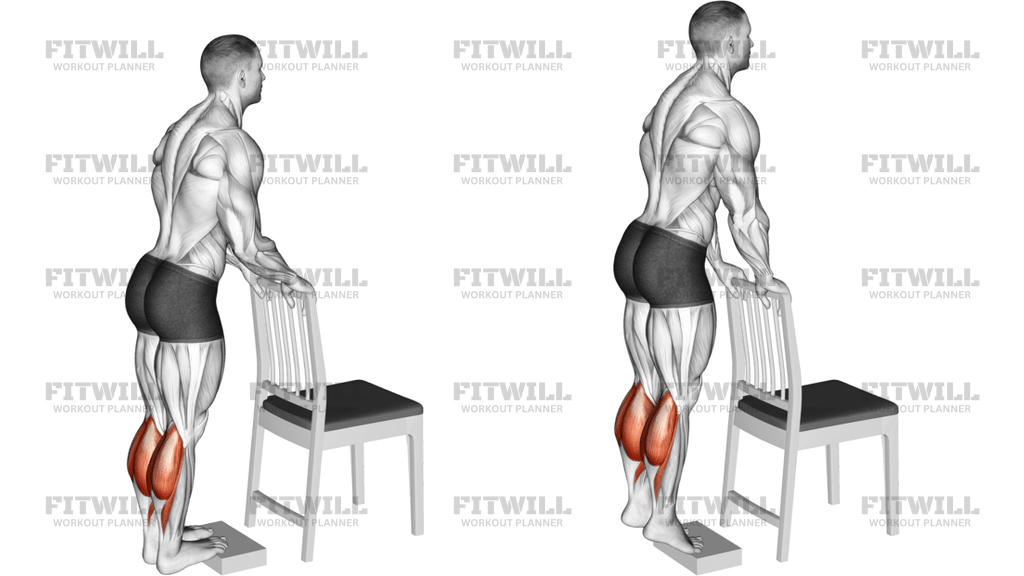
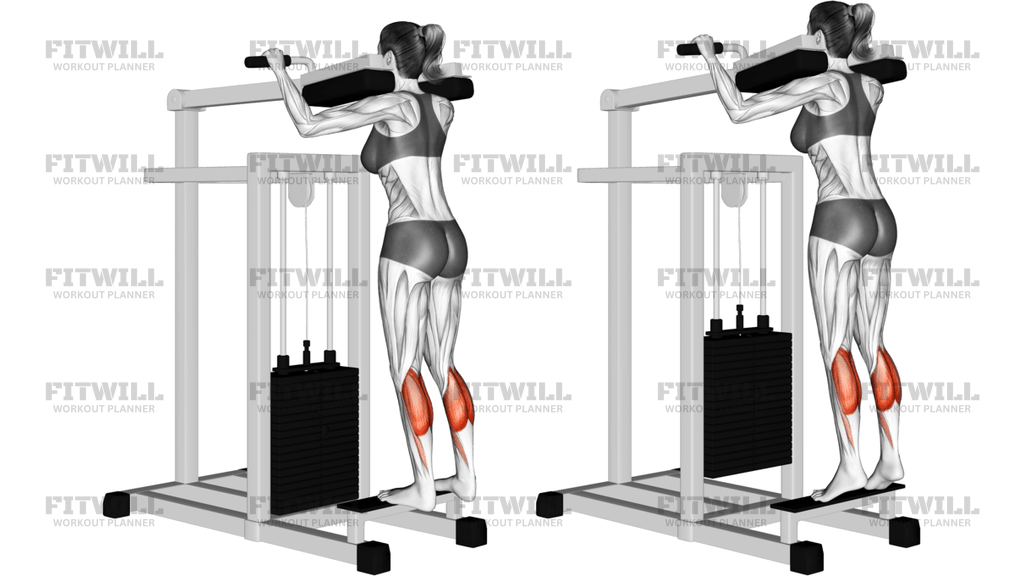
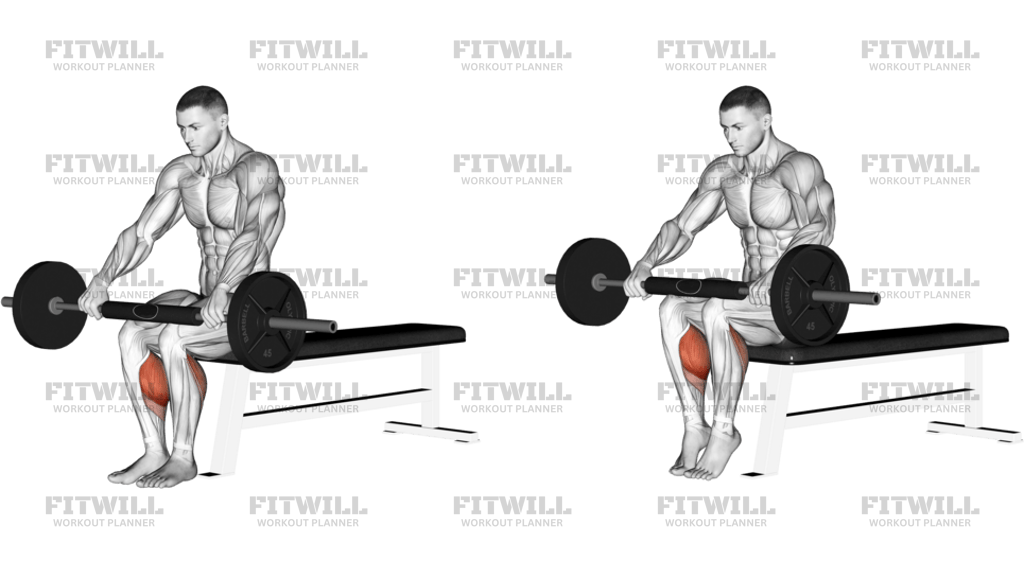
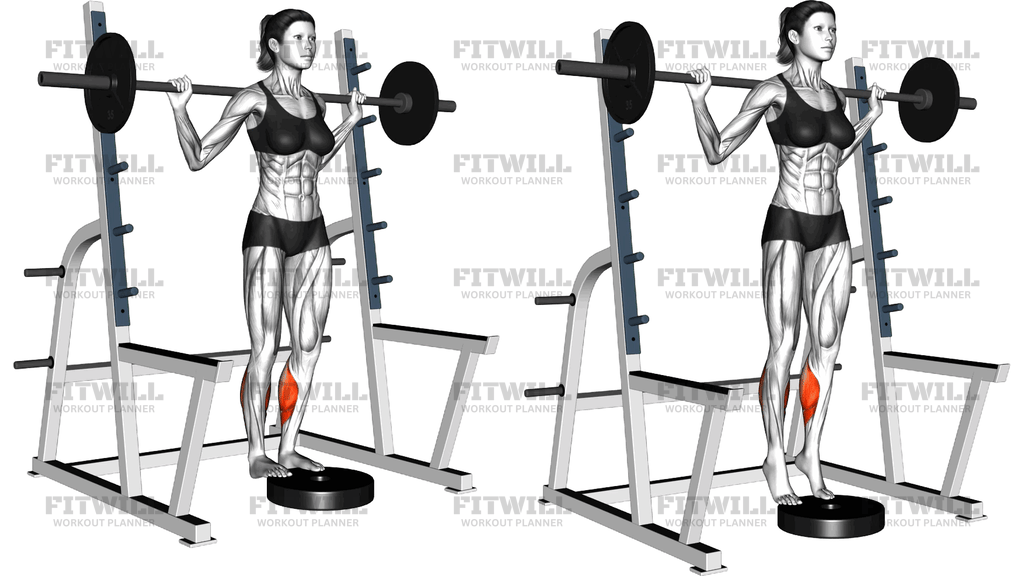
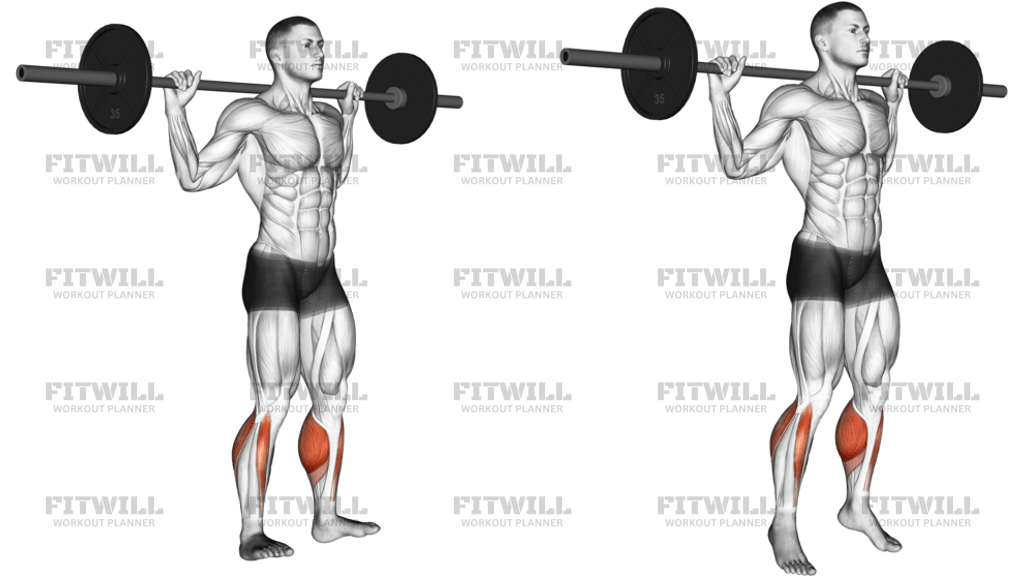
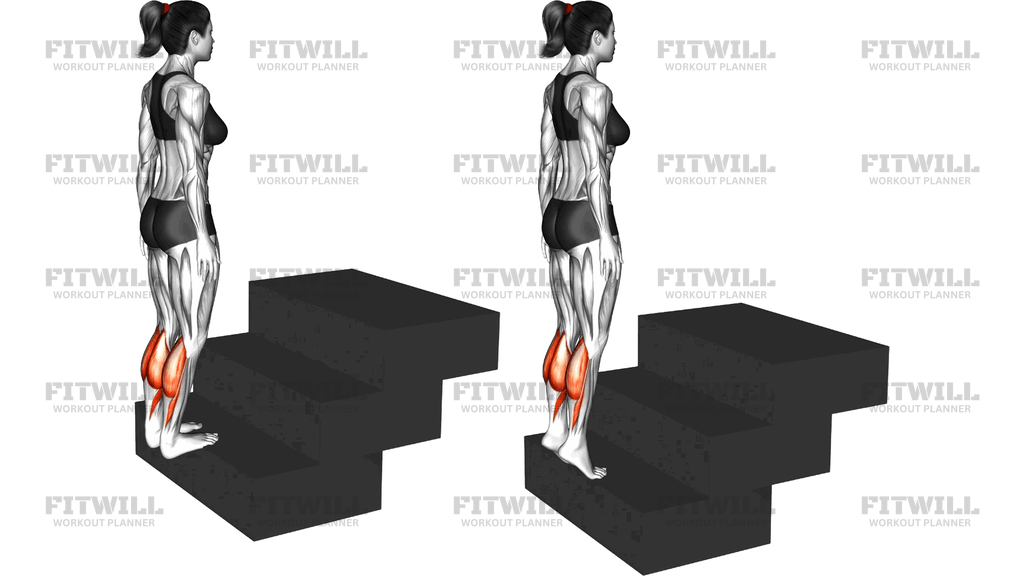
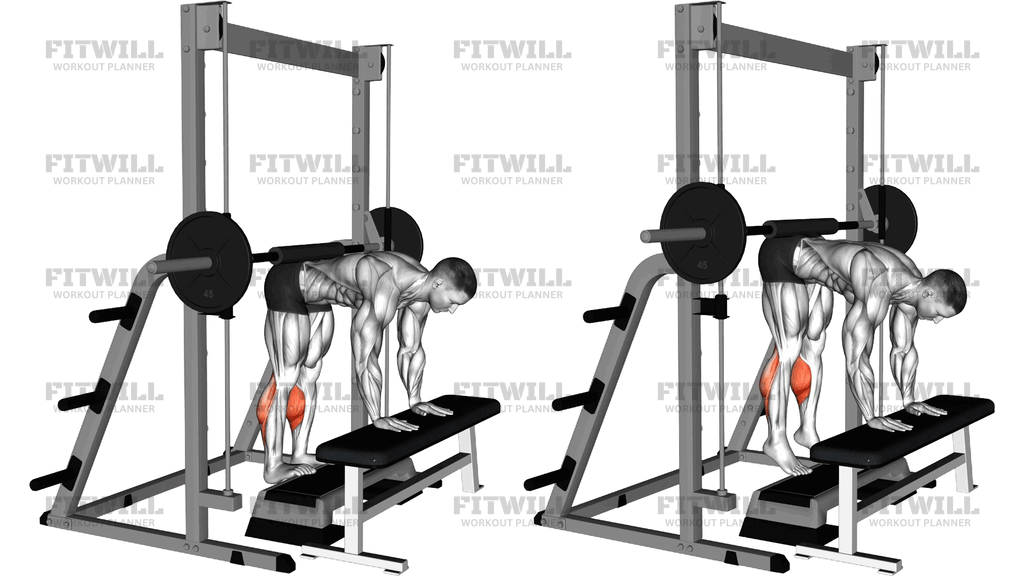
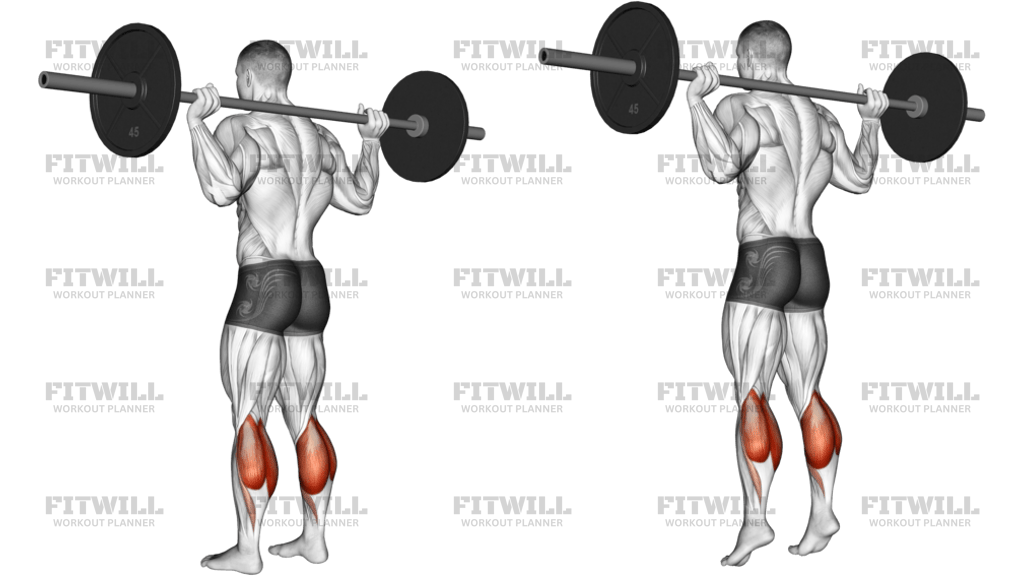
Barbell Standing Bent Knee Calf Raise From Deficit
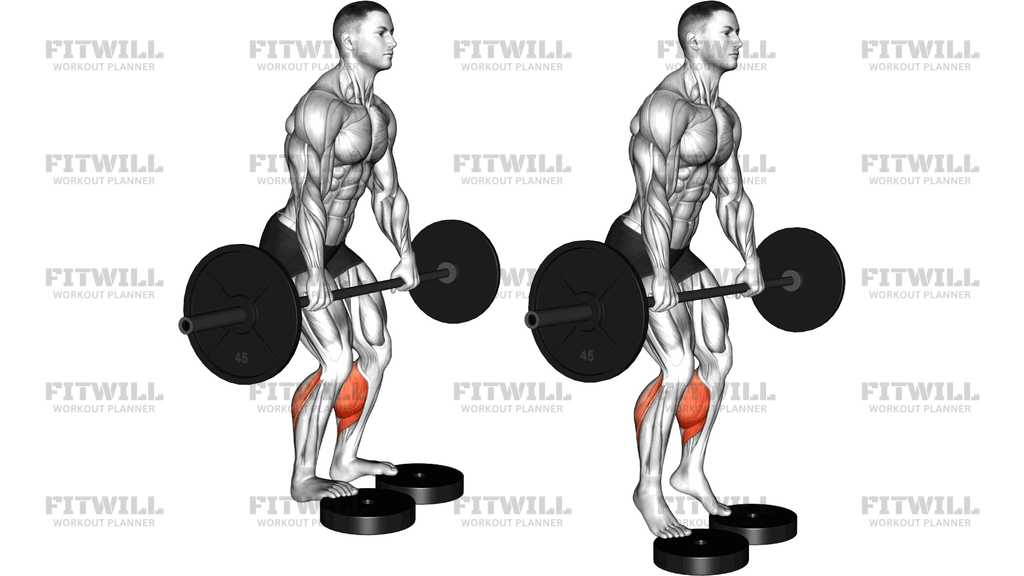
The Barbell Standing Bent Knee Calf Raise From Deficit is a loaded calf exercise performed with a barbell held at the thighs while you stand on an elevated surface, such as flat weight plates or a low platform. The deficit lets your heels drop well below the level of your toes at the bottom, giving you a deeper stretch through the calf than a floor-based raise. Keeping the knees softly bent throughout shifts some emphasis toward the deeper soleus muscle while the visible calf complex still works hard through the full range.
This movement suits lifters who want to load the calves heavily without a machine. Because you hold the bar with a deadlift-style grip and stand on plates, you need only a barbell, a couple of bumper or iron plates, and enough floor space to lift safely. It is a practical choice in busy gyms where the standing calf machine is taken, or in home setups where machines are not an option.
The setup matters more here than in most calf work. Standing on plates raises you off the ground, so losing balance at the top means stepping off a small elevation with a loaded bar in your hands. The bent-knee position also changes the stretch on the calf: with the knees slightly flexed, the gastrocnemius is not placed under maximal lengthening, so the soleus takes on a larger share of the work while the calf as a whole still gets a full, controlled contraction.
Execution is simple but demands discipline. Rise onto the balls of your feet by driving the toes into the plates, pause briefly at the top with the calf fully shortened, then lower the heels slowly until they sink below the plates for a deep, loaded stretch. Avoid bouncing out of the bottom, since the stretch reflex can hide weak points in the range and place sudden stress on the Achilles tendon.
This exercise fits well as a primary calf builder on leg days, or as a higher-repetition finisher after squats and deadlifts. Because the grip is holding the bar rather than supporting your full pulling effort, heavier sets can tax the forearms and traps, so use straps if your grip gives out before your calves do. Start with a moderate load and master the balance on the plates before chasing weight.
[ Workout Log & Planner ]
Put your next workout in Fitwill
Keep your plan and training log ready when you are.


Instructions
- Place two flat 45-pound plates (or a similarly low, stable platform) on the floor about hip-width apart, and set a loaded barbell in front of you or across a rack at roughly hip height.
- Stand with the balls of both feet centered on the plates and your heels on the floor, feet about hip-width apart, toes pointing straight ahead or slightly out.
- Hinge down and grip the bar just outside your thighs with a shoulder-width, overhand grip, then stand tall so the bar hangs at arm's length against the front of your thighs.
- Set your knees to a slight, constant bend — around 15 to 20 degrees — and hold that angle for the entire set instead of straightening the legs as you press up.
- Brace your core, pull your shoulders back, and keep your chest up so the bar does not drift forward away from your body.
- Exhale and press through your big toes and balls of the feet, lifting your heels as high as they will go while keeping the knees bent and the bar steady.
- Pause for one to two seconds at the top with the calves fully contracted and your ankles locked out.
- Inhale and lower your heels in a slow, controlled manner until they sink below the level of the plates, feeling a full stretch through the calves.
- Without resting or bouncing at the bottom, begin the next repetition and keep the rhythm smooth from stretch to contraction.
- After the final rep, step your heels back to the floor first, then set the bar down on the ground or return it to the rack.
Tips & Tricks
- Balance is the first thing to fail on plates, so look at a fixed point ahead of you rather than down at your feet, and keep the bar pressed lightly against your thighs as a reference.
- If you feel the knees straightening as you rise — a common compensation that turns this into a regular standing calf raise — reset the bend before each rep or have a training partner cue you.
- Do not let the bar roll toward your fingers mid-set; re-chalk your hands or use lifting straps, because a slipping grip shifts your balance and shortens the range at the bottom.
- The heels should descend below the plate level, but stop if the stretch pulls you onto the very edge of the plates — use a thinner plate or a second plate under the heels' landing zone to stay stable.
- Count a deliberate three-second lowering phase; dropping fast off a deficit is the main way lifters aggravate their Achilles with this variation.
- Wear flat shoes or go barefoot like a deadlift setup, since thick, cushioned soles wobble on the plates and mute your foot's connection to the surface.
- Spread the plates slightly wider than you think you need — cramped plates force the feet into a narrow, unstable stance and make the big toes do the balancing.
- If your calves give out before your grip, use a mixed approach: lighter weight with a top-and-bottom pause, which increases difficulty without adding load.
- Keep your weight distributed across the whole forefoot rather than rocking onto the outer edge of the foot, which is a frequent habit when the load gets heavy.
Frequently Asked Questions
Which muscles does the Barbell Standing Bent Knee Calf Raise From Deficit work?
It targets the calf complex, with the gastrocnemius visible as the prime mover and the soleus contributing strongly because the knees stay bent. The ankle stabilizers and small muscles of the feet also work to keep you balanced on the plates.
Why keep the knees bent instead of doing a straight-leg standing raise?
Bending the knees shortens the gastrocnemius slightly, which shifts more demand onto the soleus while still training the whole calf through a long range. It also tends to feel easier on the back of the knee for lifters with tight calves.
Is the Barbell Standing Bent Knee Calf Raise From Deficit suitable for beginners?
Yes, but start with a light barbell or an empty bar and practice balance on the plates first. Beginners who wobble on the deficit can build the pattern on the floor for a few weeks before adding the elevation.
What can I use for the deficit if I don't have spare plates?
Any solid, low, stable surface works — a step platform, a low box, or a stack of flat mats. Avoid anything that rocks or compresses, since an unstable surface under a loaded bar is the main risk in this exercise.
Why do my forearms and traps fatigue before my calves?
The bar hangs from your grip for the entire set, so heavy loads tax the forearms and upper traps first. Use lifting straps or perform the set inside a power rack with the bar resting on the safety pins' supports, or switch to a higher-repetition protocol.
How deep should I lower my heels at the bottom?
Lower until the heels pass below the level of the plates and you feel a complete stretch through the calf, but keep the ball of the foot fully planted. If your heels slide off the back of the plates or your balance breaks, reduce the depth or the range.
Is bouncing at the bottom a good way to get more reps?
No. Rebounding off a deficit loads the Achilles tendon suddenly and lets momentum replace muscle work. Pause briefly at the stretch, then drive up under control — you will use less weight, but the calves will do more of it.
How does this compare to a machine standing calf raise?
The muscle work is similar, but the barbell version demands more balance and grip, and the bent-knee position biases the soleus more than a straight-leg machine raise. Machines are easier to load and safer to push near failure; the barbell version is more accessible and builds foot stability.
Is it safe to do this exercise barefoot?
Many lifters prefer it barefoot because they can feel the plates and grip with their toes, and it is generally fine with moderate loads. If you have any foot discomfort or are lifting very heavy, a flat, thin-soled shoe offers more protection without losing much feedback.