Standing Double Arm Crossover And Double Prayer Pu
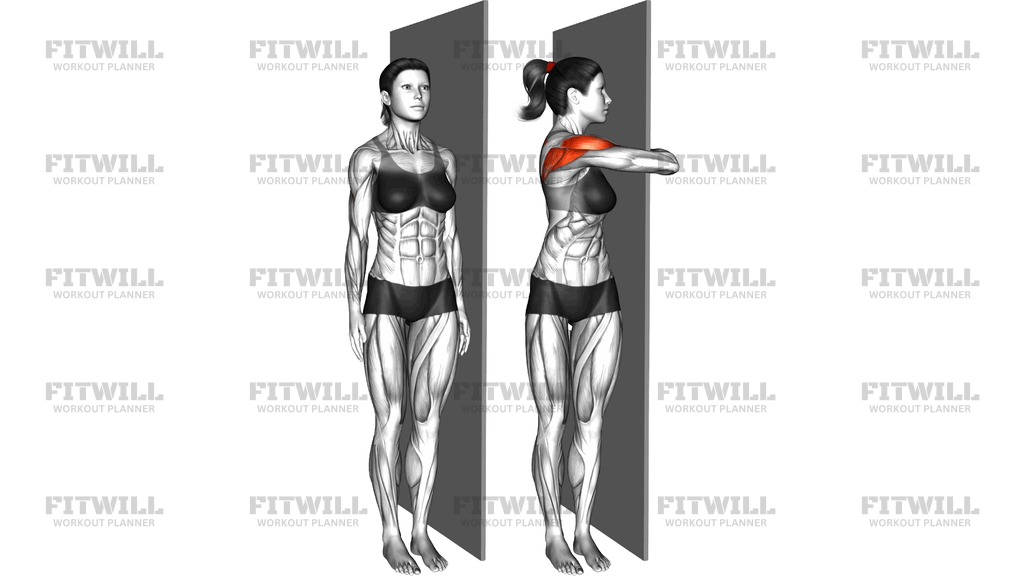
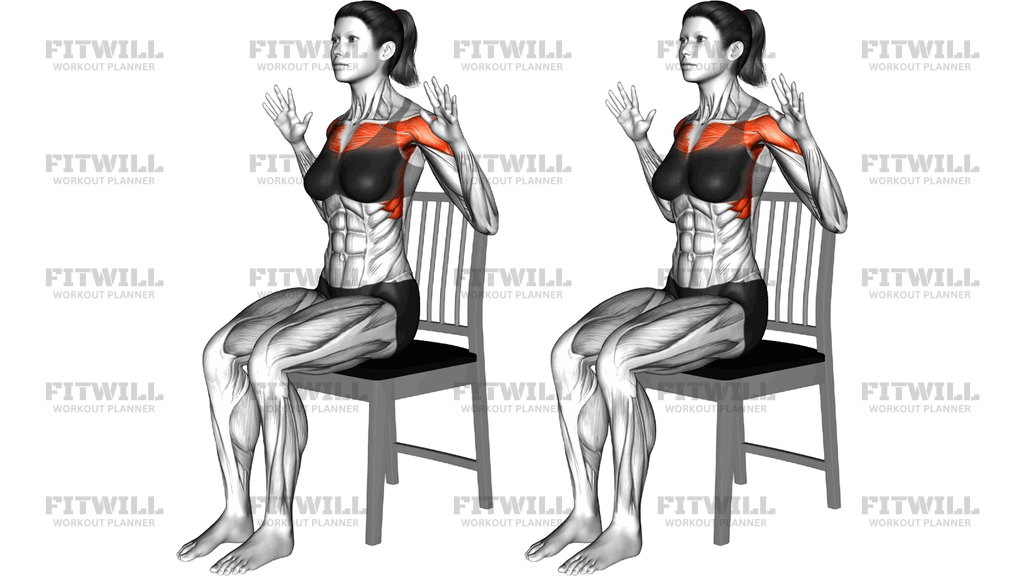
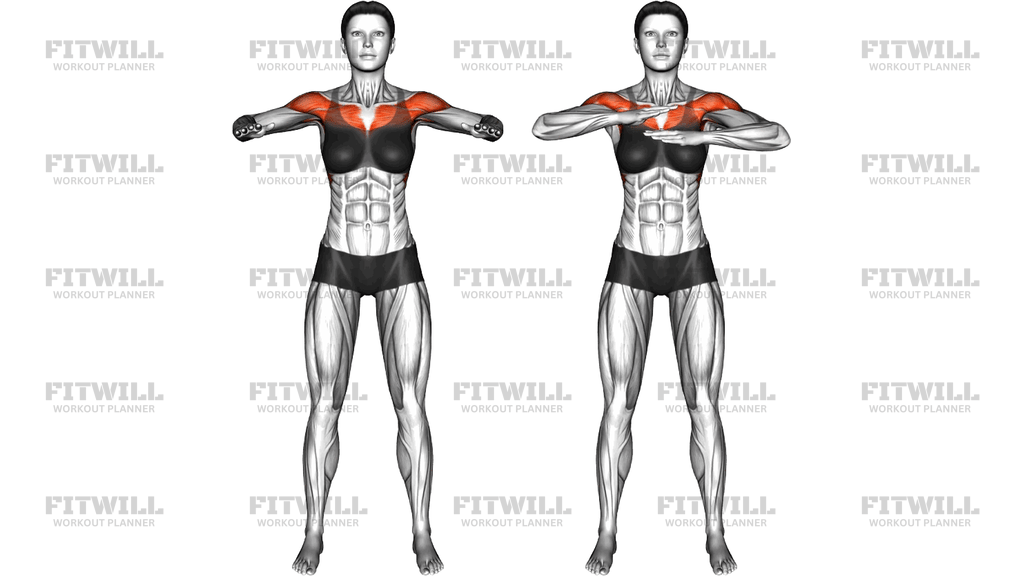
The Standing Double Arm Crossover And Double Prayer Push is a bodyweight chest exercise performed entirely with your own arms as resistance. From a standing position, you raise both arms out to shoulder height, sweep them across your chest in a double crossover, then press your palms together in front of your sternum in a prayer position. Because there is no external load, the tension comes from deliberately squeezing the chest muscles through each phase rather than from weight, making this a control-focused movement rather than a heavy lifting one.
This exercise places the emphasis on the upper portion of the chest — the clavicular head of the pectoralis major — along with the front delts, which assist every time the arms travel forward and inward across the body. The crossover phase mimics the top half of a cable fly or a pec deck squeeze, while the prayer push adds a hard isometric contraction at the midline. Together they teach you what a maximal chest squeeze should actually feel like, which carries over directly to pressing and flye work with equipment.
Setup matters more than it looks. Standing tall with feet about hip-width apart, a braced core, and shoulders pulled down away from your ears keeps the arms traveling at chest height instead of drifting up toward the neck or down toward the waist. Since the resistance is self-generated, sloppy positioning quietly removes the very tension the exercise exists to create. Keep the elbows roughly level with the shoulders as the arms open out, and bring the hands across at nipple-to-collarbone height on the way in.
This movement suits a wide range of situations: warming up the chest before pressing day, adding finishing volume when muscles are already fatigued, training while traveling with no equipment, or rehabbing around shoulder issues where loaded pressing is temporarily off the menu. Beginners benefit especially, because learning to contract the chest without a barbell in hand builds the mind-muscle connection that makes later weighted work far more effective.
Execution quality comes from intent. Sweep the arms across with purpose, press the palms together hard for a full second or two at the prayer position, and open back out under control rather than letting the arms fall. Move at a moderate tempo and keep breathing steadily — exhale as you cross and press, inhale as the arms return. If you feel the work in your neck or the fronts of your shoulders instead of across your upper chest, reduce the squeeze intensity and reset your shoulder position.
From a safety standpoint this is a low-risk exercise, but two habits are worth avoiding: shrugging the shoulders toward the ears during the crossover, and whipping the arms back open at speed. Both shift stress onto the neck and shoulder joints while reducing chest involvement. Move smoothly, stay within a comfortable shoulder range, and stop if you feel any pinching at the front of the shoulder.
[ Workout Log & Planner ]
Put your next workout in Fitwill
Keep your plan and training log ready when you are.


Instructions
- Stand upright with your feet about hip-width apart, weight evenly distributed, and let your arms hang relaxed at your sides.
- Brace your core lightly, pull your shoulders down and back, and lift both arms straight out to the sides until they are level with your shoulders.
- With elbows slightly soft and palms facing forward or down, sweep both arms forward and across your chest at the same time so each hand crosses toward the opposite shoulder.
- Bring your palms together in front of your sternum in a prayer position, fingers pointing forward, elbows roughly level with your shoulders.
- Press your palms firmly against each other and squeeze your upper chest hard for one to two seconds at the midline.
- Reverse the path in a controlled manner, uncrossing the arms and opening them back out to shoulder height without letting them drop or snap back.
- Exhale as you sweep the arms across and press the palms together; inhale as you return to the open position.
- Keep your torso still throughout — avoid leaning back, rotating the trunk, or shrugging the shoulders as the arms move.
- Complete your target repetitions with a steady tempo, and reset your standing posture between sets if you notice tension creeping into your neck.
Tips & Tricks
- Think about pulling your hands toward each other with your chest rather than just swinging your arms — the arms are the levers, the pecs do the pulling.
- The most common mistake is letting the hands travel too low, turning it into a waist-level clap; keep the crossover path at chest or collarbone height to bias the upper chest.
- If you shrug during the prayer push, consciously reach the crown of your head toward the ceiling and drop the shoulder blades before pressing again.
- Make the isometric count: a lazy palm press produces almost no stimulus, so push as if trying to crush a sheet of paper between your hands.
- Keep a small bend in the elbows through the whole sweep; fully locked arms make the crossover feel jerky and strain the elbow joints.
- Slow the opening phase down deliberately — most people rush the return, which is exactly where you lose the second half of the repetition.
- Pre-activate the chest before pressing day with two light sets of this exercise; you will often feel better shoulder positioning under the bar afterward.
- If the front of your shoulder pinches as the arms open wide, don't open quite so far — stop a few degrees short of full extension and keep the squeeze as the focus.
- Because the resistance is self-generated, fatigue shows up as sloppiness rather than failing weight; end the set when the squeeze quality drops, not at an arbitrary rep count.
Frequently Asked Questions
What muscles does the Standing Double Arm Crossover And Double Prayer Push work?
The primary target is the upper chest, specifically the clavicular head of the pectoralis major, with the front delts assisting as the arms sweep forward and press together. The forearm and grip muscles work isometrically during the palm press.
Is this exercise effective without any weights or equipment?
Yes, but only if you generate real tension yourself. The prayer push is essentially a hard isometric squeeze, so pressing the palms together forcefully and squeezing the chest on every crossover is what makes it worthwhile.
How is the prayer push different from the crossover part of the movement?
The crossover is a dynamic sweeping motion across the chest, while the prayer push is a static, maximum-effort palm press at the midline. Combining them gives you both movement through range and a peak contraction at the end.
How many reps should I do?
Because the load is self-applied, higher volumes work well — anywhere from 12 to 20 controlled reps per set, holding each prayer squeeze for one to two seconds. Stop when the squeeze quality fades rather than chasing a fixed number.
Can beginners do the Standing Double Arm Crossover And Double Prayer Push?
It is an excellent beginner exercise precisely because there is no external load and the risk is low. It teaches the feeling of a chest squeeze before progressing to dumbbell flyes, cable crossovers, or pressing movements.
Why do I feel this in the front of my shoulders instead of my chest?
That usually means the arms are opening too wide, the hands are crossing too low, or the shoulders are riding up toward the ears. Shorten the opening range, raise the crossing path to chest height, and reset the shoulder blades down before continuing.
What can I substitute if this feels too easy?
Slide your hands a few inches apart at the prayer position and squeeze them together, or add a light resistance band looped around your wrists to create outward tension you must fight during the crossover.
Is this a good warm-up before bench pressing?
Yes, it works well as a low-fatigue activator because it raises the chest and front delts without draining pressing strength. Two light sets of 10 to 15 reps before your barbell warm-ups is a common approach.
Should my elbows stay high or drop during the prayer push?
Keep the elbows roughly level with the shoulders and pointing forward. Dropping the elbows turns the press into a downward push and takes the upper chest out of the movement.
Is this exercise safe for people with shoulder problems?
It is generally gentle because there is no external load, but anyone with a shoulder injury should keep the opening range comfortable and avoid the prayer press if it provokes pain at the front of the shoulder. Check with a qualified professional if symptoms persist.