Dumbbell Chest Supported Row
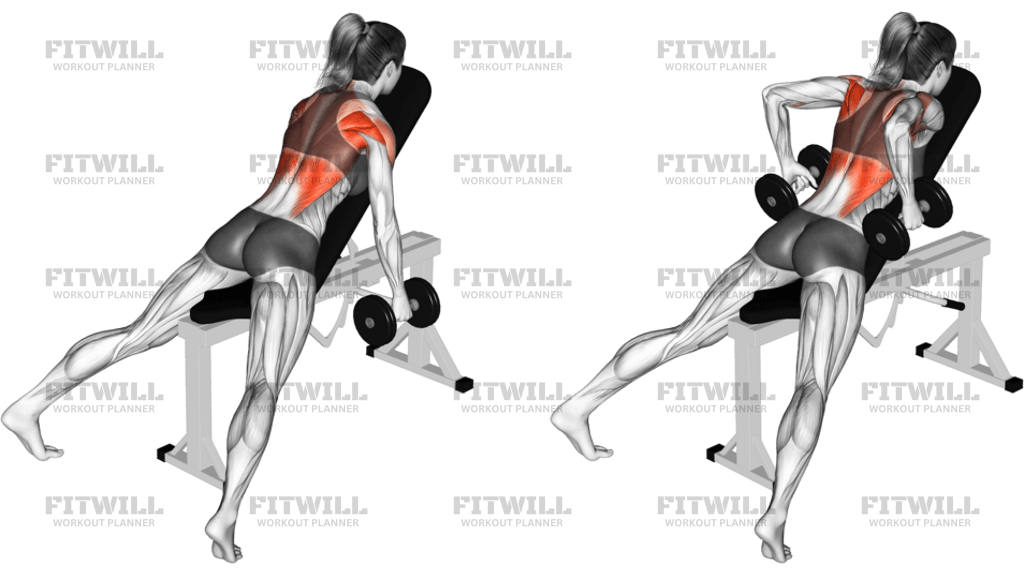
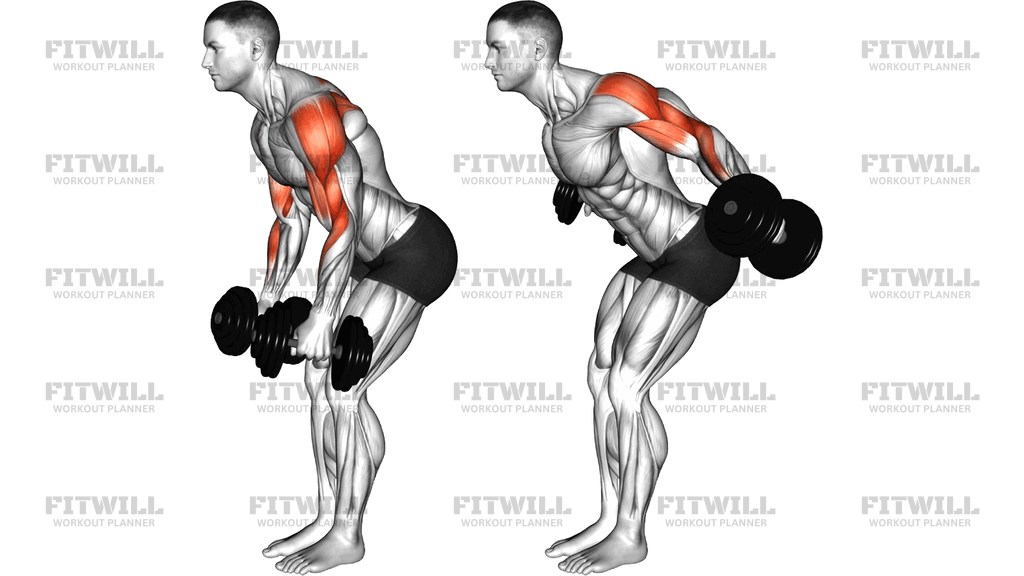
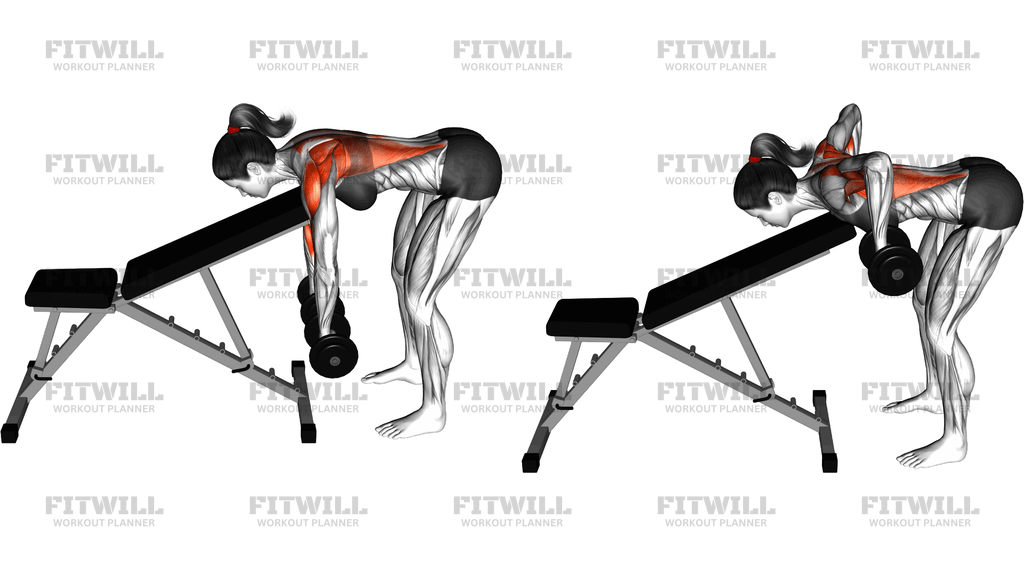
The Dumbbell Chest Supported Row is a rowing variation where you lean your chest against an incline bench while pulling a dumbbell in each hand up toward your sides. Because your torso rests on the bench, your lower back and legs are largely taken out of the equation, which means the work is concentrated on the upper back instead of being limited by how long you can hold a bent-over position.
This setup makes the exercise a great fit for lifters whose lower back fatigues before their back muscles do, people returning from back strains who want to train rows without heavy spinal loading, and anyone who tends to cheat standing bent-over rows by jerking the weight with body English. It is also a solid teaching tool for beginners, because the bench gives you constant feedback: if your chest stays glued to the pad, you cannot swing the dumbbells.
The main muscles working are the rhomboids and mid-traps between the shoulder blades, the lats down the sides of the back, and the rear delts, with the biceps and forearms assisting on every pull. Your erector spinae and legs still contribute isometrically to hold the leaned-over position against the bench, but far less than in a free-standing row.
Setup matters more here than in most rows. The bench angle controls the angle of pull: a lower incline around 30 degrees lets you row more toward your hips and emphasize the lats, while a steeper 40 to 45 degree angle shifts the pull higher and loads the mid-back and rear delts more. Whatever angle you choose, your chest needs solid contact with the pad from the first rep to the last, and your feet need a stable base on the floor.
To execute it well, let the dumbbells hang straight down from your shoulders, then pull your elbows up and back toward your ribs until your upper arms are roughly in line with your torso or slightly past it. Squeeze the shoulder blades together at the top, pause briefly, and lower the dumbbells under control until your arms are fully extended again. The stretch at the bottom and the squeeze at the top are where most of the value lives, so resist rushing either end.
You will see this movement used both as a primary back builder on upper-body days and as a higher-rep finisher, since the supported position makes it easier to keep quality reps coming when you are tired. Start with a weight you can control for 8 to 12 clean reps, and only add load once your chest stays planted through the entire set.
[ Workout Log & Planner ]
Put your next workout in Fitwill
Keep your plan and training log ready when you are.


Instructions
- Set an adjustable bench to roughly a 30 to 45 degree incline and position it so you can lean your chest against the upper part of the pad with your feet flat on the floor behind you.
- Hold a dumbbell in each hand with a neutral grip, palms facing each other, and lean forward until your chest and upper torso rest firmly on the bench pad.
- Set your feet about hip-width apart with a soft bend in the knees, and let the dumbbells hang straight down from your shoulders with your arms fully extended.
- Brace your core lightly and press your chest into the pad so your torso stays fixed before you start the first rep.
- Pull both dumbbells up by driving your elbows up and back toward your ribs, keeping them around a 45 degree angle to your torso rather than flared wide.
- Continue until your upper arms are level with or slightly behind your torso, then squeeze your shoulder blades together and hold that top position for a beat.
- Lower the dumbbells slowly and under control until your arms are fully extended and you feel a stretch across your upper back.
- Breathe in as the dumbbells lower, and exhale steadily as you pull each rep up.
- Complete all reps with your chest in contact with the pad, then set the dumbbells on the floor before standing back up.
- Reset your chest position and grip on the bench between sets if you drifted forward at all during the previous set.
Tips & Tricks
- The most common fault on this exercise is lifting the chest off the pad to help the dumbbells up. If your chest rises, the weight is too heavy; drop the load until only your arms and shoulder blades move.
- Do not shorten the bottom position by stopping halfway down. Letting the arms fully extend each rep is what gives your mid-back a loaded stretch that a standing row often cuts short.
- If you feel the pull mostly in your biceps, think about leading with your elbows rather than your hands, as if you were trying to touch your elbows to the ceiling behind you.
- Keep your neck in line with your spine by looking at a spot on the floor just in front of the bench. Craning your head up to check a mirror tends to strain the upper neck muscles.
- Experiment with bench angle: pulling toward your lower ribs favors the lats, while a slightly steeper bench and a pull higher toward the chest targets the rhomboids and rear delts more.
- A brief one-second pause at the top of each rep prevents the rebound-and-swing pattern that quietly turns rows into biceps curls.
- If the bench pad digs into your chest uncomfortably, place a folded towel on the pad rather than changing your rowing form to avoid the pressure.
- Chalk or lifting straps are reasonable here for high-rep sets, since grip often gives out before the upper back does when the dumbbells are heavy.
- Squeeze your glutes lightly to stop your hips from rising as you pull, which keeps your torso angle consistent from first rep to last.
Frequently Asked Questions
What muscles does the Dumbbell Chest Supported Row work?
The primary movers are the rhomboids and mid-traps of the upper back, with the lats and rear delts contributing heavily. The biceps, forearms, and erector spinae work as supporting muscles, though the lower back works far less than in a standing bent-over row.
Is the Dumbbell Chest Supported Row good for beginners?
Yes, it is one of the more beginner-friendly rows because the bench physically prevents swinging and teaches you where your shoulder blades should be moving. Start with light dumbbells and focus on the full range before adding weight.
What bench angle should I use for the Dumbbell Chest Supported Row?
Thirty to forty-five degrees works for most people. A lower angle shifts the pull toward the lats and hips, while a steeper angle targets the mid-back and rear delts more directly.
Why does my chest keep lifting off the bench during the row?
That usually means the dumbbells are too heavy or you are trying to row past your actual strength at the top. Reduce the weight and consciously drive your chest down into the pad as you pull.
Should my elbows stay close to my body or flare out?
Aim for elbows around 45 degrees relative to your torso, which balances lat and mid-back involvement. Flaring straight out to the sides turns the movement into more of a rear-delt raise and can pinch the shoulder.
Can I do the Dumbbell Chest Supported Row if my lower back bothers me?
The chest support removes most of the spinal loading of a standing row, which is why many lifters with cranky lower backs prefer it. That said, check with a qualified professional about your specific situation before loading any rowing pattern.
What can I substitute if I do not have an incline bench?
A regular flat bench propped securely on a low box or sturdy riser can mimic the setup, or you can use a machine chest-supported row at the gym. As a last resort, a slow-tempo standing dumbbell row with your hand braced on a rack works a similar pattern.
Why do my forearms fatigue before my back on this exercise?
Grip often gives out first during supported rows because nothing else in the body is sharing the load. Use straps for heavier or higher-rep sets so your upper back, not your grip, becomes the limiting factor.
How many sets and reps should I do of the Dumbbell Chest Supported Row?
Three to four sets of 8 to 12 reps works well as a main back exercise, while 12 to 15 reps with a lighter weight makes an effective finisher. Keep at least one or two reps in reserve until your chest-contact form is rock solid.