Suspender Incline Plank
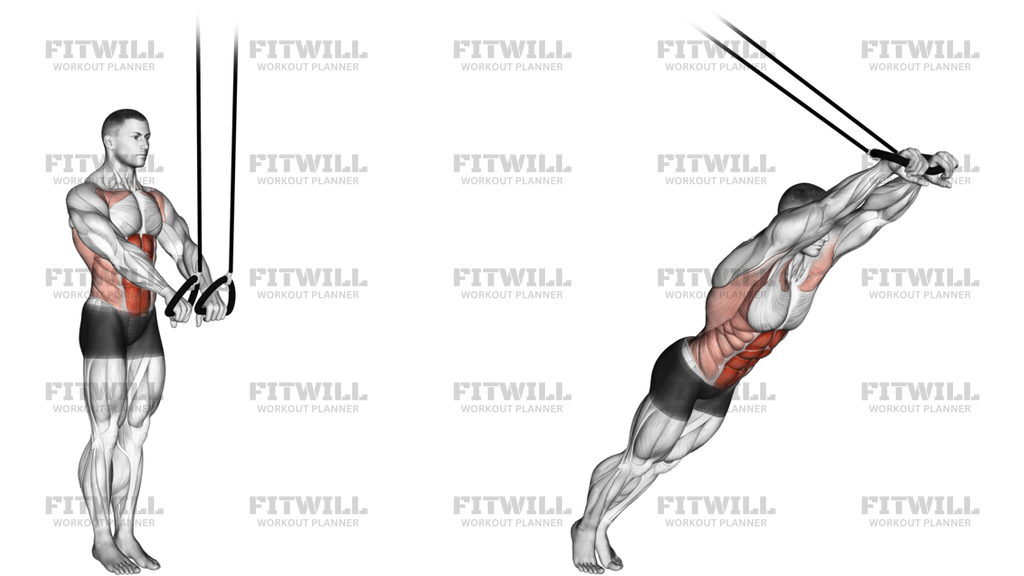
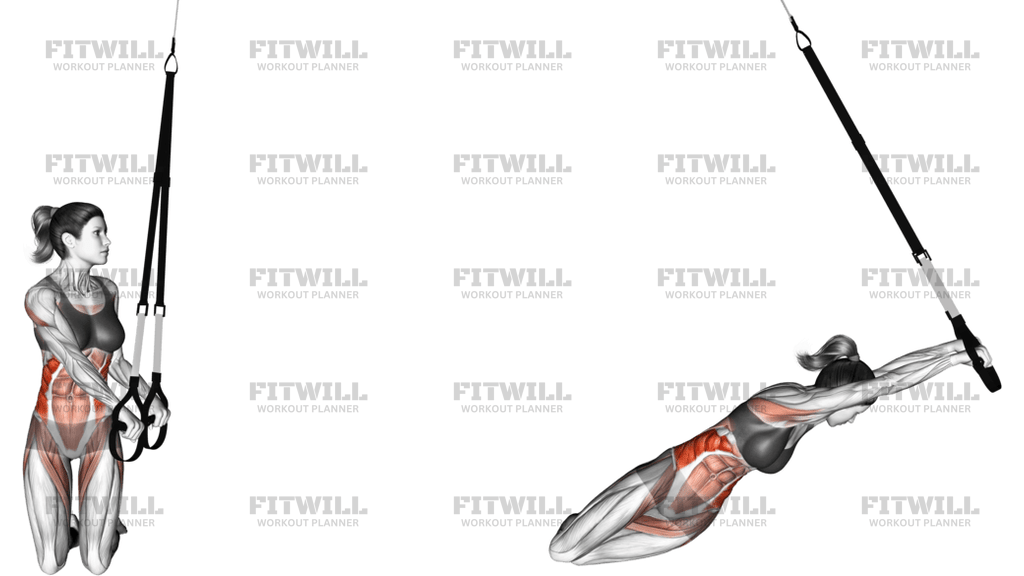
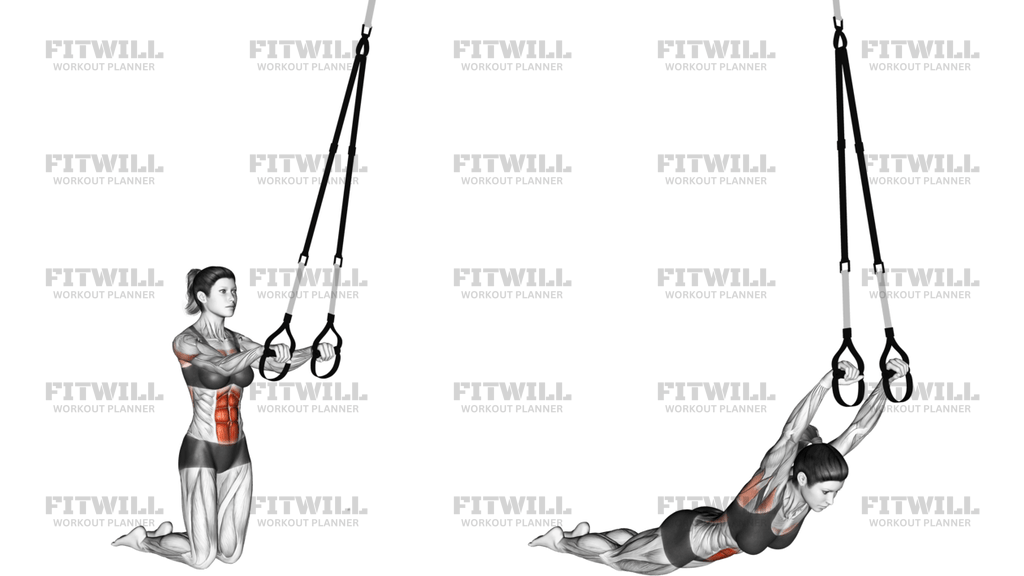
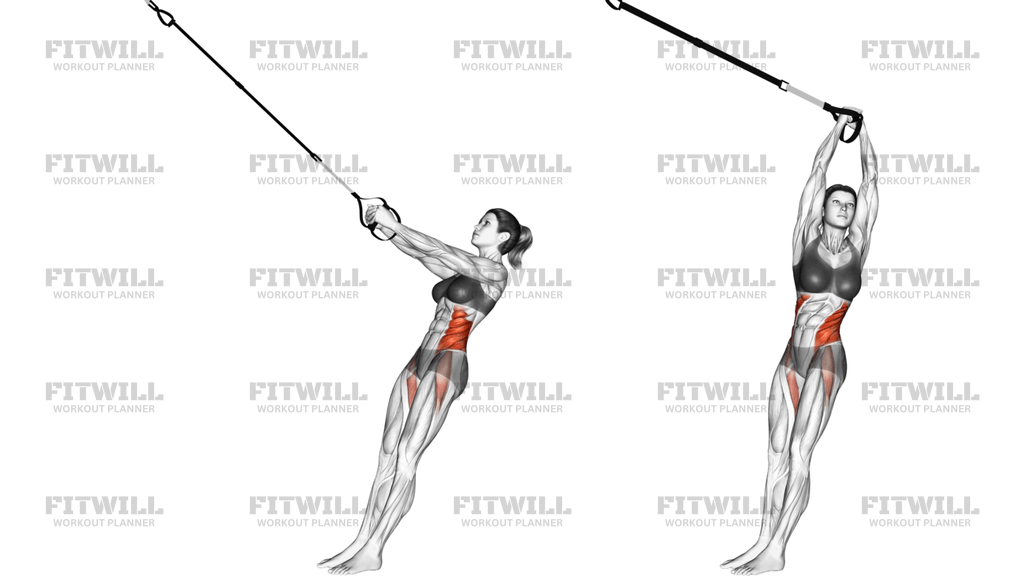
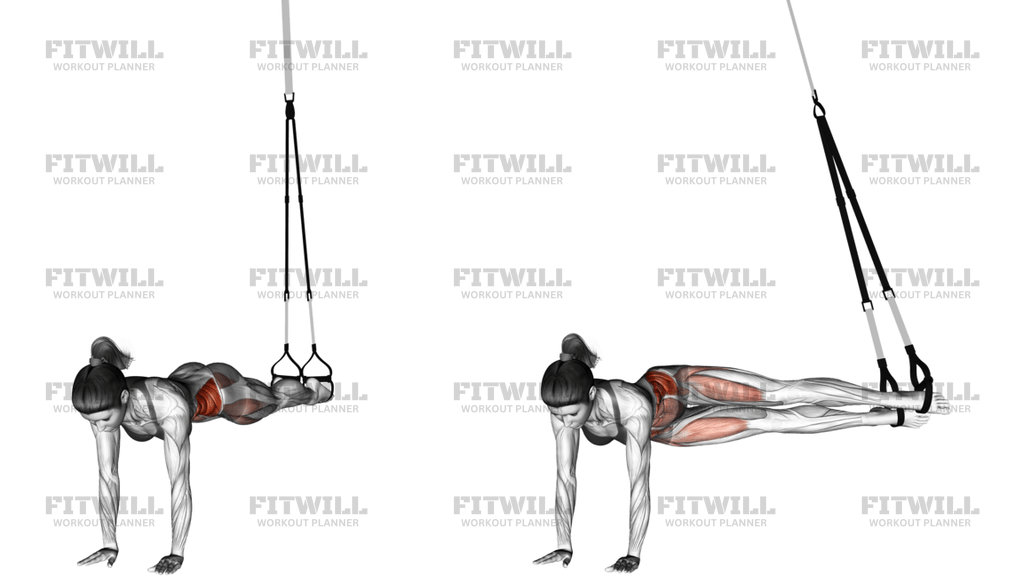
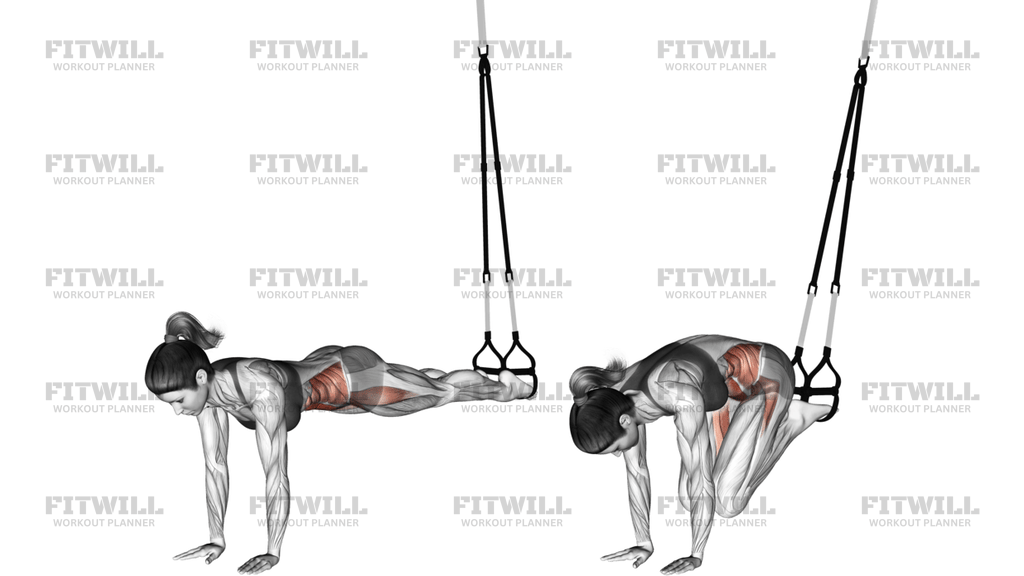
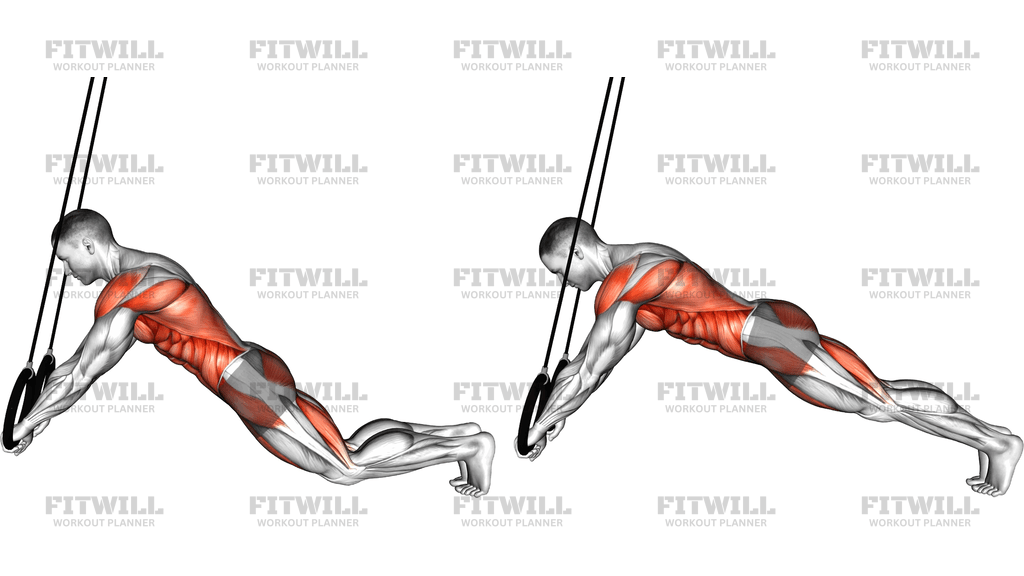
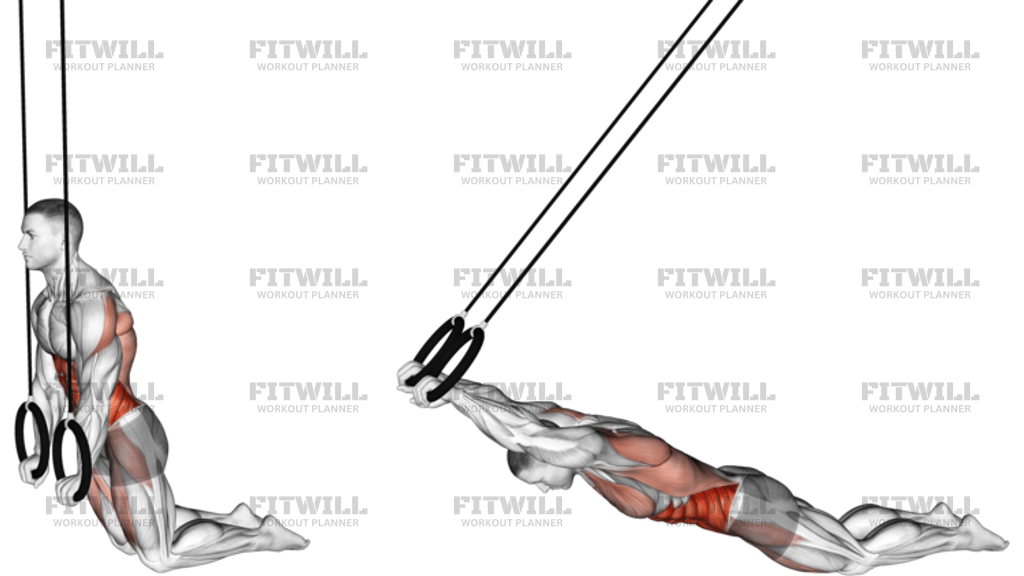
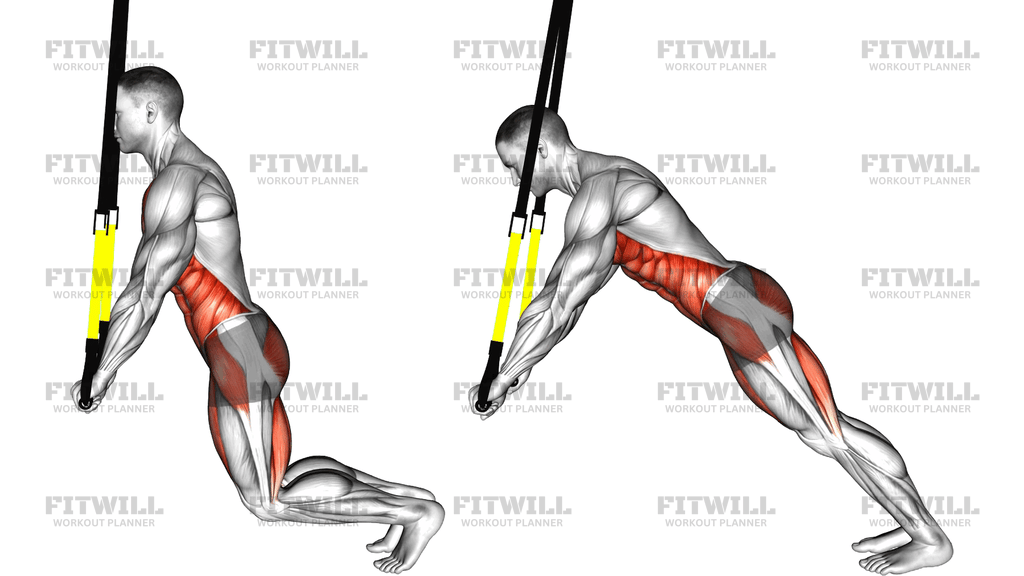
The Suspender Incline Plank is an isometric core exercise performed with suspension straps. You grip the handles, lean your weight into them, and walk your feet back until your body forms a straight, angled line from head to heels. Because your upper body is supported by the straps rather than the floor, your core, shoulders, and hips have to work together to keep you from folding or drifting out of position.
This movement suits a wide range of trainees. Beginners can set it up in a fairly upright angle to learn bracing with less load, while stronger lifters can step further back to steepen the incline and make the hold considerably harder. It is also a useful progression tool for people building toward full floor planks, push-up positions, or more advanced suspension work, since the angle lets you scale the demand precisely.
The primary work comes from the abs and deep core, which brace to hold the ribcage and pelvis in line. The glutes and hamstrings stay active to keep the hips extended, the shoulders stabilize the strap support, and the forearms and grip handle the constant tension in the straps. Unlike a floor plank, the slightly unstable handle position asks your stabilizers to make constant small corrections, which is why the hold can feel harder than the angle suggests.
Setup matters more here than in a standard plank. The anchor point must be solid and rated for body weight, and the handles should hang at roughly waist height for a standard incline. If the straps are too long or the angle too steep for your current strength, your hips will sag and your lower back will take the stress instead of your abs. Start conservative and earn the steeper angles over time.
To execute it well, grip the handles firmly, brace your abs before you step back, and squeeze your glutes to lock the pelvis. Hold a straight line with your ears, shoulders, hips, knees, and ankles stacked, and keep the straps taut the whole time. Breathe steadily rather than holding your breath, and finish the set before your hips drop or your shoulders creep up toward your ears.
Use the Suspender Incline Plank as a warm-up activation drill, a finishing core hold, or a standalone stability exercise on days you want direct trunk work without spinal loading. Because it is low-impact and self-scaling, it fits well into most programs, from general strength training to athletic conditioning.
[ Workout Log & Planner ]
Put your next workout in Fitwill
Keep your plan and training log ready when you are.


Instructions
- Anchor the suspension straps to a secure overhead point and adjust the handles so they hang around waist height.
- Stand facing the anchor, grip one handle in each hand with a firm neutral grip, and let your arms extend straight down.
- Lean your body weight into the handles and step both feet back until your arms are extended in front of you and your body angles toward the anchor.
- Set your feet about hip-width apart with your weight on the balls of your feet and heels pressing down.
- Brace your abs, squeeze your glutes, and straighten into a rigid line from head through hips to heels.
- Keep the straps taut and your shoulders pulled slightly down away from your ears as you hold the position.
- Breathe in a steady rhythm through your nose and mouth while maintaining the brace; do not hold your breath.
- Hold for your target time, typically 20 to 45 seconds, keeping the hip line constant from start to finish.
- To finish, step your feet forward one at a time, bring your torso upright, and release the handles once you are standing with your weight back over your legs.
Tips & Tricks
- If your hips sag toward the floor, the angle is too steep; step your feet forward to make the incline more upright and rebuild from there.
- If your hips pike up toward the ceiling, you are resting instead of bracing; reset by squeezing your glutes and dropping the hips back into line.
- Watch the straps, not just your body: slack in the suspension means you have drifted toward or away from the anchor and lost the intended resistance.
- Keep your neck long by looking at a point on the floor slightly ahead of your hands rather than craning your chin up or letting your head hang.
- Grip the handles fully with your fingers wrapped, but avoid squeezing so hard that your forearms fatigue before your abs do.
- Your feet placement controls the difficulty, so treat each step backward as a measurable progression rather than a guess.
- If your shoulders shrug and tire early, think about pressing the handles down and slightly apart to engage your lats and stabilize the shoulder blades.
- Avoid rounding your upper back as the set gets hard; a collapsed chest usually means the core brace has failed before the arms do.
- Start with shorter holds of 15 to 20 seconds and stop each set while your form is clean, since a sagging hold trains the wrong pattern.
Frequently Asked Questions
Which muscles does the Suspender Incline Plank work most?
The abs and deep core do the main bracing work, while the glutes and hamstrings hold the hips extended. The shoulders, forearms, and grip stabilize you against the straps throughout the hold.
Is the Suspender Incline Plank suitable for beginners?
Yes, because the angle can be scaled. A beginner should start with the handles set higher and the body more upright, then step back gradually as the hold becomes comfortable.
How is the Suspender Incline Plank different from a regular floor plank?
The straps support your upper body at an angle and add slight instability, so your shoulders and stabilizers work harder to control the handles. You can also adjust difficulty by changing your foot position, which a floor plank does not allow as easily.
How long should I hold the Suspender Incline Plank?
Aim for 20 to 45 seconds per set with clean form, and stop as soon as your hips start to sag or pike. Multiple shorter quality holds beat one long grinding set.
Why do my shoulders burn before my abs during the Suspender Incline Plank?
This usually means you are hanging passively on the straps instead of bracing and pressing the handles down. Engage your lats, pull your shoulders away from your ears, and shift some effort back into your trunk.
How do I make the Suspender Incline Plank harder?
Step your feet further back to steepen the incline, or add subtle control demands such as small hip shifts or slow leg lifts while holding the plank line. Only progress once you can hold the current angle without sagging.
What should I check before anchoring the suspension straps?
Confirm the anchor is solid, rated for your body weight, and free of sharp edges that could wear the straps. Test the setup with partial weight before committing to a full plank.
Can I do the Suspender Incline Plank without suspension straps?
You can substitute a standard incline plank with your forearms on a sturdy bench, or a regular floor plank. The straps add instability, so expect the substitutes to feel somewhat easier.
Should my lower back feel stressed during this exercise?
No, the work should stay in your abs, glutes, and shoulders. If your lower back strains, your hips are likely sagging; step forward to a shallower angle and re-brace before continuing.