Suspender Reverse Ab Rollout
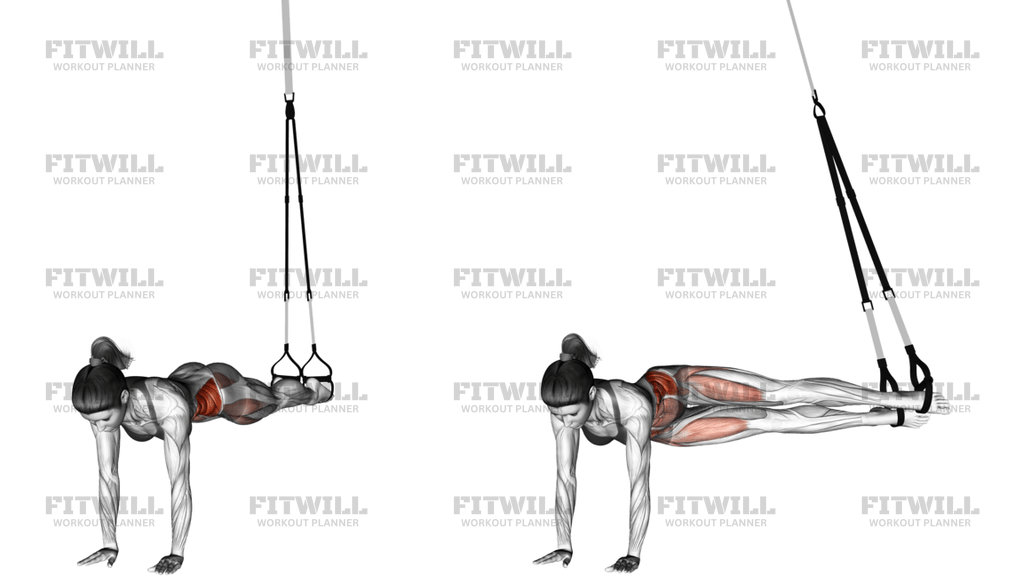
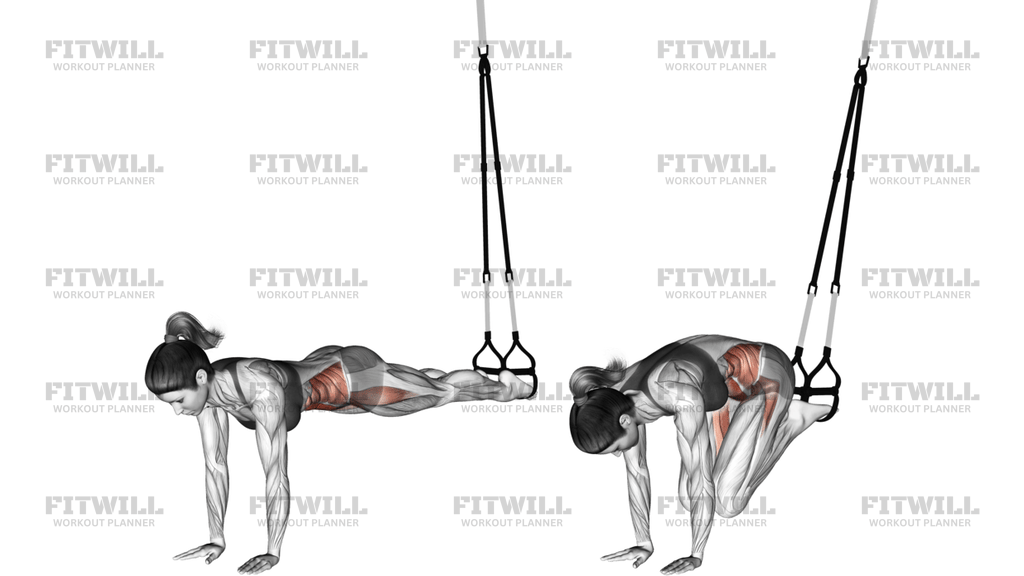
The Suspender Reverse Ab Rollout is a suspension-trainer core exercise where your feet rest in the straps while your hands stay planted on the floor. From a suspended plank, you draw your knees in toward your chest by lifting your hips, then extend everything back out to the long plank position. Instead of rolling a wheel away from your body like a traditional ab rollout, your lower body does the traveling, which is why it is called a reverse rollout.
This movement is a strong step up from floor-based knee tucks. Because your feet hang in the cradles, the straps want to drift sideways and outward, and your core has to work overtime just to hold a straight line before you even begin the tuck. That constant anti-rotation and anti-extension demand makes it especially useful for lifters who already own a solid plank and want a harder challenge, as well as for athletes who need to transfer trunk control into sprinting, kicking, and changing direction.
The primary work comes from the rectus abdominis and the deep core musculature, which must shorten hard to fold the hips and then resist gravity on the way back out. The hip flexors drive the knees toward the chest, while the shoulders, triceps, and chest stabilize the upper body as the load shifts over your hands. The glutes and quads help control the leg position as you extend back into the plank.
Setup matters more here than in most core drills. The straps should hang at roughly mid-calf to shin height with the cradles secured snugly around the top of your feet, so your legs hang clear of the floor when you set your plank. Hands go directly under the shoulders. If the anchor point is too far behind you or the straps are too slack, your legs will swing and your hips will sag, both of which dump tension off the abs and onto the lower back.
To execute it well, think of the movement as a fold and an unfold. Exhale as you pull your knees forward and let your hips rise toward the ceiling, rounding your lower back slightly at the top rather than just shooting your knees back. On the way out, move slowly and stop in a straight line from head to heels with your glutes engaged. The reps should feel slow and quiet, not rushed.
A practical safety note: keep your ribs down and avoid letting your stomach drop between reps. If your lower back arches and dips as you extend out, shorten the range by not fully straightening the knees, or elevate your hands on a low bench to reduce the load until your control improves.
[ Workout Log & Planner ]
Put your next workout in Fitwill
Keep your plan and training log ready when you are.


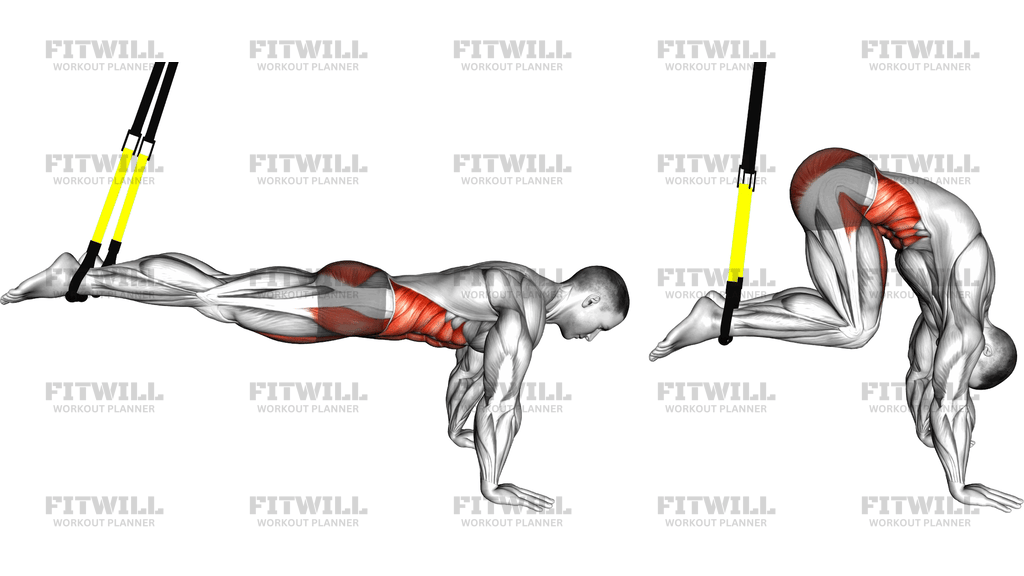
Instructions
- Anchor the suspension trainer to a secure overhead point and adjust the straps so the foot cradles hang at about mid-calf height.
- Kneel facing away from the anchor, place the tops of both feet into the cradles, then walk your hands forward until your wrists sit directly under your shoulders in a suspended plank, legs extended and body in one line.
- Squeeze your glutes, brace your abs as if bracing for a light punch, and press the floor away so your shoulder blades are not sinking toward your spine.
- Exhale and begin pulling your knees in toward your chest, letting your hips lift as the feet glide forward through the straps.
- Keep pulling until your knees are under or close to your hips and your back rounds gently upward at the top of the fold.
- Pause for a beat at the tucked position without letting your shoulders drift behind your wrists.
- Inhale and slowly extend your legs back, sliding the feet through the cradles until your body returns to the straight head-to-heels plank.
- Stop in the extended position and re-brace before starting the next rep; do not let your hips sag or your stomach drop.
- Breathe out on the tuck, in on the extension, and reset your plank posture between repetitions if the straps have drifted.
- When finished, lower your knees to the floor and take one foot out of the cradles at a time to avoid losing balance.
Tips & Tricks
- The most common mistake is sagging the hips as you extend back out, which turns the exercise into a lower-back stress test. Stop the extension one inch short of full straightness if that is where your form breaks.
- Move the tuck with your abs, not by yanking with your hip flexors. If your knees shoot back fast but your hips never lift, slow the tempo to about two seconds each way.
- Watch where your shoulders sit relative to your wrists. If they drift backward as you tuck, you are loading the arms instead of the abs; keep the pressure stacked over your palms throughout.
- Fight the straps' tendency to swing outward by squeezing your feet and ankles toward each other inside the cradles; this keeps the legs tracking in a straight line under your hips.
- Rounding the upper back slightly at the top of the tuck is a feature, not a flaw. It helps the lower abs finish the range instead of the hip flexors doing everything.
- Shorter straps make the exercise easier because they reduce leverage; if you cannot control the full plank position, start with the cradles closer to the anchor.
- Do not hold your breath. Exhaling on the tuck naturally helps your abs shorten and keeps your midsection from bulging outward.
- If your wrists ache from supporting your full weight, grip a pair of hex dumbbells or push-up handles placed under your shoulders instead of placing your palms flat.
- A set of eight clean reps beats twenty sloppy ones. Once your hips sag on the extension, end the set rather than grinding through degraded reps.
Frequently Asked Questions
Which muscles does the Suspender Reverse Ab Rollout work hardest?
The rectus abdominis and deep core do most of the work folding and controlling your hips, with the hip flexors assisting the knee tuck. Your shoulders, triceps, and glutes stabilize the plank position throughout.
How is the Suspender Reverse Ab Rollout different from a regular ab wheel rollout?
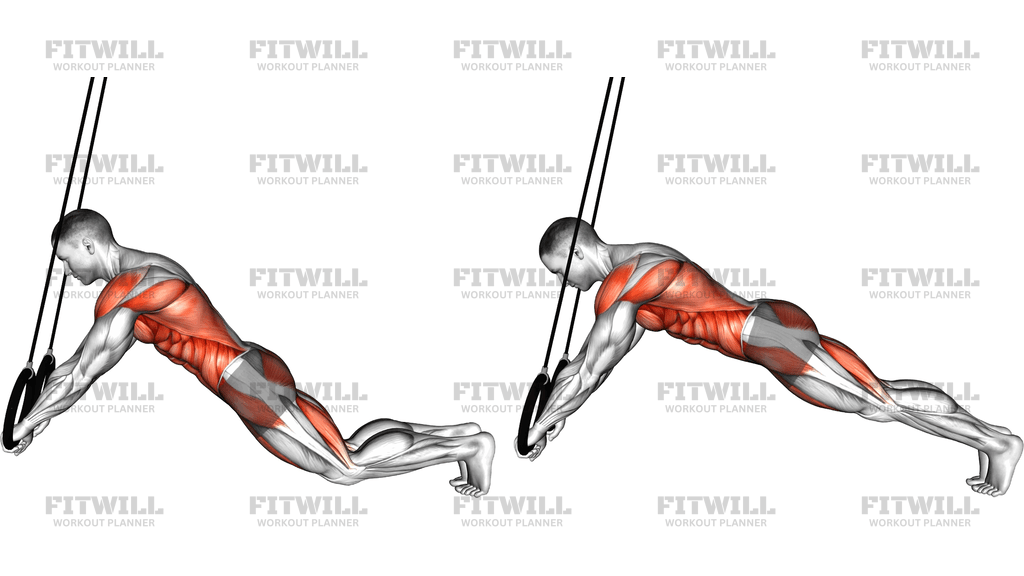
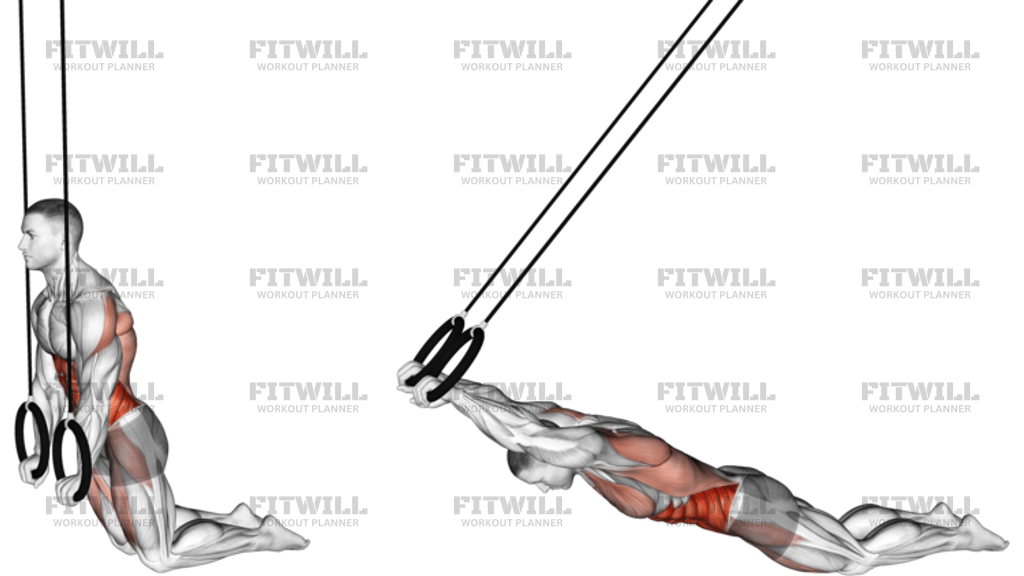
In a standard rollout your arms travel away from your body while your feet stay planted; here your feet travel in the suspension straps while your hands stay fixed. The reverse version also adds a piking, knee-tucking action that biases the lower abs more directly.
Can beginners do the Suspender Reverse Ab Rollout?
It is demanding, so beginners should first be able to hold a suspended plank for about 30 seconds with a straight line from head to heels. From there, they can shorten the range by tucking the knees only partway or placing hands on a low bench.
How high should I set the suspension straps for this exercise?
Set the cradles at roughly mid-calf to shin height so your legs hang clear of the floor in the plank. Lower straps give you more control, while longer, lower-hanging straps increase the difficulty.
Why do my hips sag when I extend back out?
That sag means your abs have stopped resisting extension and your lower back is taking the load. End the set, and on future reps stop the extension just short of full straightness while keeping the glutes squeezed.
Should my back be flat or rounded at the top of the tuck?
A gentle rounding of the lower back at the top is ideal because it lets the abs fully shorten. A flat or arched back at the top usually means the hip flexors pulled the knees without the abs finishing the fold.
What can I use instead of a suspension trainer for a similar movement?
A stability ball placed under the shins works well: start in a plank with hands on the floor and pull the ball toward you with your knees. Sliders under the feet on a smooth floor are another low-tech option.
Is it safe for people with lower back issues?
Because the exercise involves loaded spinal flexion and a strong anti-extension demand, anyone with an active or recurring lower back problem should get clearance from a qualified professional first and start with easier plank variations.
How many reps and sets of the Suspender Reverse Ab Rollout should I do?
Two to four sets of six to twelve controlled reps works well, placed after your main lifts or as part of a core circuit. Once you can perform all reps without hip sag, progress by slowing the tempo or adding a pause at the top of the tuck.