Dumbbell Sitting Good Morning
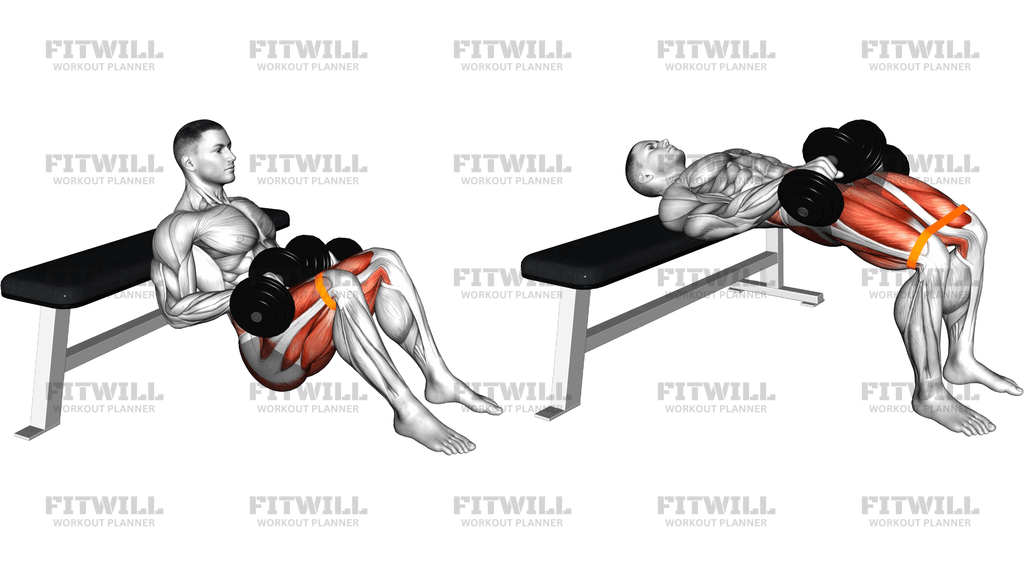
The Dumbbell Sitting Good Morning is a seated hip-hinge exercise performed on a flat bench. You sit upright with a dumbbell held vertically in both hands, letting it hang between your legs, then fold forward from the hips with a flat back and return to a tall seated position. Because your pelvis stays on the bench, the movement isolates the hinge itself: the glutes and hamstrings lengthen under load, and the lower back works hard to keep your spine neutral the whole way.
This is a useful variation for anyone who finds the standing good morning awkward or overly demanding on the lower back. Sitting removes the balance and leg-strength requirements, so you can concentrate purely on hinging at the hips instead of bending at the waist. It suits lifters learning what a proper hip hinge feels like, desk workers whose hips have gotten stiff from long sitting, and intermediate trainees who want extra posterior chain volume without heavy spinal loading.
The main targets are the glutes, with the hamstrings assisting as they stretch across the hip. The erector spinae along the lower back contract isometrically to hold your torso rigid, and your core braces to transfer the weight of the dumbbell into your pelvis. You will not build maximum strength here the way you would with a barbell hinge, but the exercise is excellent for building hip mobility, hinge awareness, and endurance in the muscles that keep your back healthy.
Setup matters more than it looks. Your feet should be flat on the floor and your sit bones planted firmly on the bench, because your position determines whether the fold comes from your hips or your lower spine. Grip the top head of the dumbbell with both hands so it hangs straight down between your legs, and keep your chest lifted before you start moving. If your back rounds before you feel a stretch in your hips, your range is too deep for the day.
To execute well, hinge forward by pushing your chest down toward your thighs rather than reaching for the floor with the dumbbell. Your arms are just straps holding the weight; they should stay relaxed and vertical. Go only as far as you can keep a flat back, pause briefly at the bottom, then drive your sit bones into the bench and bring your chest back up. Common uses include warm-ups before deadlifts, accessory work on leg or posterior chain days, and rehab-style training where light, controlled hinging is the goal.
Treat this as a precision exercise, not an ego lift. A single moderate dumbbell moved slowly with a neutral spine builds more useful capacity than a heavy one moved with a rounded back. If you feel the work shifting into your lower back or the weight pulling you forward out of position, reduce the load and shorten the range until your hinge pattern is solid.
[ Workout Log & Planner ]
Put your next workout in Fitwill
Keep your plan and training log ready when you are.


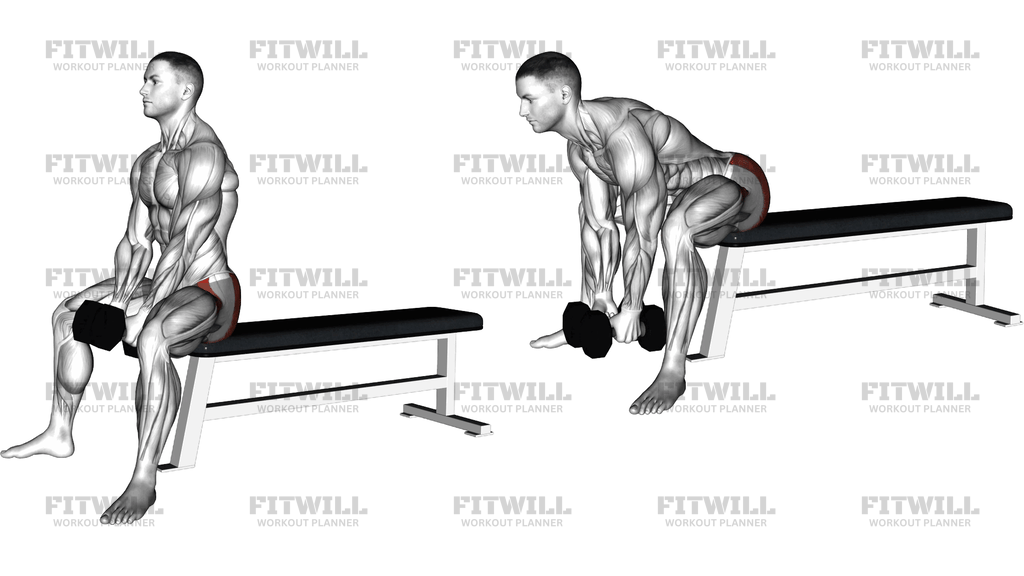
Instructions
- Sit on the front half of a flat bench with your feet flat on the floor, knees bent roughly 90 degrees, and your sit bones planted firmly on the pad.
- Place a dumbbell upright between your feet, straddle it slightly, and grip the top head with both hands, one over the other, letting your arms hang straight down.
- Sit tall with your chest lifted, shoulders back, and a slight natural arch in your lower back before any movement begins.
- Inhale and brace your core as if preparing for a light punch to the stomach, keeping the ribcage stacked over your pelvis.
- Hinge forward by rotating your pelvis and driving your chest down toward your thighs, letting the dumbbell lower between your legs as your arms stay relaxed and vertical.
- Stop at the deepest point where your back is still flat and you feel a solid stretch across your glutes and hamstrings, typically when your torso approaches your thighs.
- Pause for a beat at the bottom, then exhale and push your sit bones into the bench as you lift your chest back to the upright starting position.
- Squeeze your glutes briefly at the top to finish the hinge, reset your posture and brace, then begin the next rep.
Tips & Tricks
- If the dumbbell pulls your shoulders forward and rounds your upper back, use a lighter bell or hold it closer to your body by bending your elbows slightly as you fold.
- Rounding at the bottom is the most common fault here. When your lower back starts to curl, that depth is your current limit, not the floor.
- Keep the dumbbell hanging under your shoulders, not swung out in front. If the weight drifts forward, your chest is leading and your hips are no longer driving the hinge.
- Think about pushing your chest toward your knees rather than reaching the dumbbell toward the floor. The weight is a passenger, not the target.
- Your feet should stay flat and planted. Lifting your heels or pushing through your toes means you are trying to help with your legs instead of hinging from the hips.
- Because your pelvis is fixed on the bench, even a modest dumbbell creates a strong stretch. Start lighter than you think you need for the first few sessions.
- Keep your neck in line with your spine by looking at a spot on the floor a few feet ahead of you as you fold, rather than craning up or dropping your chin to your chest.
- If the bench pad presses uncomfortably into the back of your thighs and restricts your fold, sit slightly further forward so more of your hamstrings hang free of the bench edge.
- Move at a tempo of about two seconds down and one second up. Fast reps turn this into a lower-back swing and erase the glute and hamstring work.
Frequently Asked Questions
What muscles does the Dumbbell Sitting Good Morning work?
The glutes are the primary target, with the hamstrings assisting as they stretch over the hips. Your lower back and core work isometrically to hold your spine in a neutral position throughout the fold.
How is the Dumbbell Sitting Good Morning different from the standing version?
Sitting removes the balance and leg-strength demands, so your pelvis stays anchored on the bench and the load goes almost entirely into the hip hinge. This makes it easier to learn the pattern and gentler on the lower back, though it also means you cannot use as much weight.
Is the Dumbbell Sitting Good Morning safe for beginners?
Yes, provided you start with a light dumbbell and respect your back's neutral position. It is actually one of the better tools for teaching beginners what a hip hinge should feel like, because the bench removes most of the variables that make standing hinges hard to control.
Why does my lower back round at the bottom of the Dumbbell Sitting Good Morning?
You have likely gone past your available hip range, or the dumbbell is too heavy for your back to support in a flat position. Shorten the range and reduce the weight until you can stop the fold while your spine is still neutral.
How should I grip the dumbbell during this exercise?
Hold the top head of a vertically placed dumbbell with both hands, one stacked over the other, letting it hang between your legs. This keeps the weight balanced and under your shoulders instead of swinging in front of you.
How deep should I fold in the Dumbbell Sitting Good Morning?
Go only as far as you can keep a flat back and feel a strong stretch in your glutes and hamstrings, which for most people is when the torso nears the thighs. Depth varies with hip structure and flexibility, so there is no single correct bottom position.
Can I do the Dumbbell Sitting Good Morning if I have lower back discomfort?
The seated, light-load nature of this exercise makes it a common choice in back-friendly training, but you should clear any existing discomfort with a qualified professional first. If a neutral-spine range is pain-free, keep the weight modest and prioritize slow, controlled reps.
What can I substitute for the Dumbbell Sitting Good Morning?
A seated good morning with a barbell across your upper back is the closest replacement, while a standing dumbbell good morning or a back extension machine trains a similar pattern. Seated good morning stretches with no weight at all also work well for mobility-only sessions.
Where should the Dumbbell Sitting Good Morning fit in my workout?
It works well as a warm-up hinge before deadlifts or squats, or as an accessory at the end of a leg or posterior chain day. Because the emphasis is control and range rather than load, treat it as a volume and technique exercise rather than a main lift.
Should my knees stay bent the whole time?
Yes, keep your knees bent at roughly 90 degrees with feet flat, as the seated setup relies on that fixed position. Straightening your legs or sliding forward on the bench shifts the work away from the hips and changes what the exercise is meant to train.