Barbell Elevated Heel Clean Grip Squat
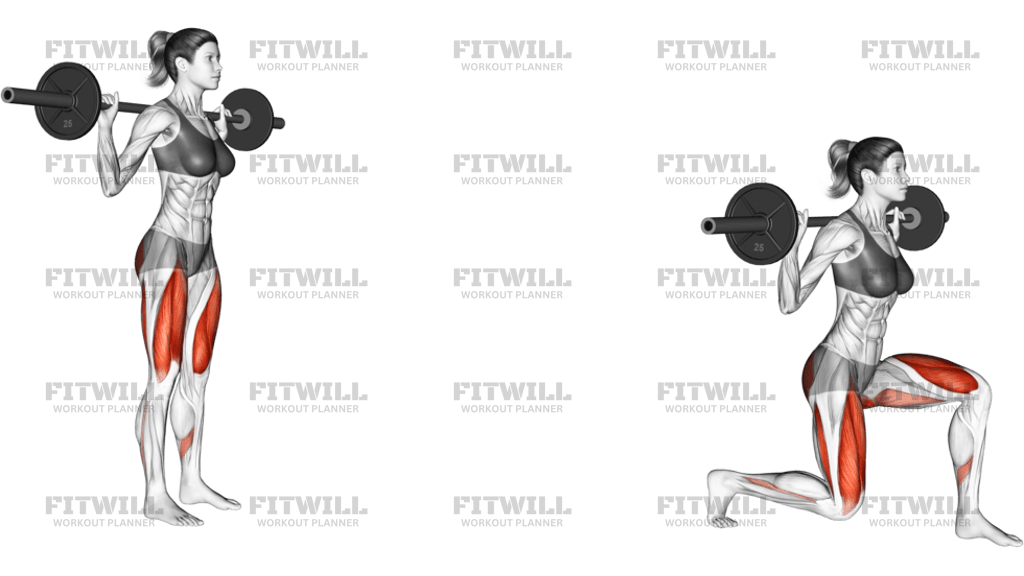
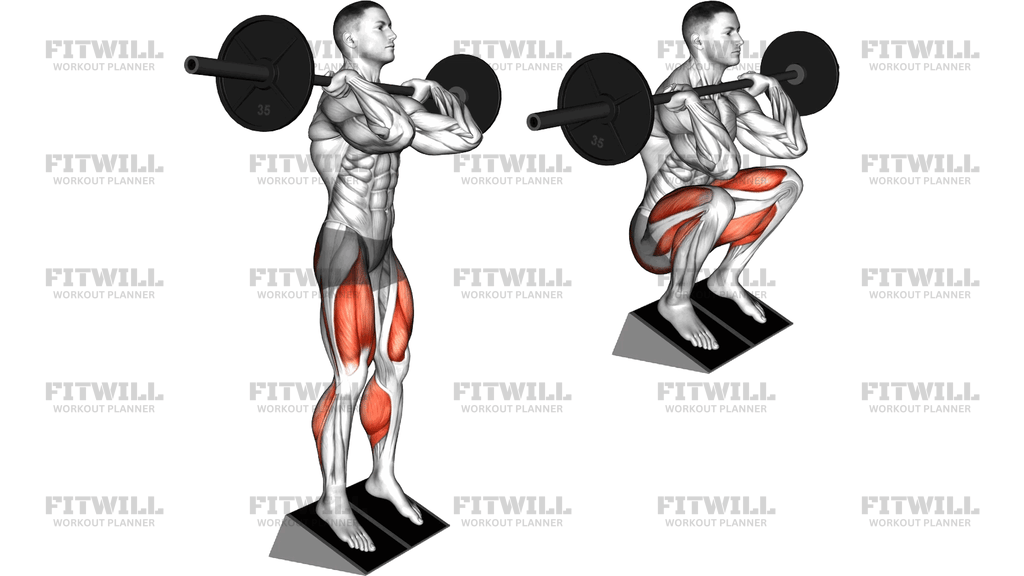
The Barbell Elevated Heel Clean Grip Squat is a front-loaded squat variation performed with the heels raised on a wedge board or slanted platform. The bar sits across the front of the shoulders in a clean grip, with the elbows driven high and the fingertips anchoring the bar in place. Elevating the heels shifts the center of mass slightly forward and allows the knees to travel further over the toes, which lets you reach a deep squat position while keeping the torso noticeably more upright than in a back squat.
This setup is especially useful for lifters who struggle with ankle mobility. If tight calves or limited dorsiflexion cause your heels to lift or your torso to pitch forward in a regular squat, raising the heels removes that restriction and lets you squat to full depth with a neutral spine. It is also a deliberate quad-building tool: the increased knee flexion and upright torso place more of the workload on the quadriceps, particularly near the bottom of the rep, which is why this movement shows up frequently in hypertrophy programs and in Olympic weightlifting preparation.
The clean grip adds its own demands. Holding the bar on the front delts with high elbows requires shoulder and wrist flexibility and forces the upper back to stay engaged, since a dropped chest or lazy elbows will cause the bar to roll forward. This front-loaded position also makes the core work hard to resist forward collapse, so you get a meaningful trunk-strengthening effect alongside the leg work.
To perform it well, set your heels firmly on the wedge with your feet about shoulder-width apart and toes turned slightly out. Brace your torso, then squat down by bending the knees and hips together, letting the knees track forward over the toes while the chest stays tall. Descend until your thighs reach at least parallel, or deeper if you can keep the bar path stable, then drive through the midfoot to stand back up. Exhale as you rise, reset your brace at the top, and keep every rep controlled rather than bouncing hard out of the bottom.
Because the front-rack position and elevated heels both demand practice, start with a lighter load than you would use for a back squat and prioritize depth and bar path. Use this exercise when your goal is quad development, improved squat depth, or building strength and confidence in the front squat and clean receiving position.
[ Workout Log & Planner ]
Put your next workout in Fitwill
Keep your plan and training log ready when you are.


Instructions
- Place a wedge board or slanted platform on the floor and position a loaded barbell in a squat rack at upper-chest height.
- Grip the bar slightly wider than shoulder-width, duck under it, and rest it across the front delts with the elbows raised high so the bar sits on the shoulders, not in the hands.
- Step back from the rack and place the balls of the feet on the wedge so the heels are clearly elevated, feet about shoulder-width apart with toes turned slightly out.
- Take a deep breath into the belly, brace the core, and pull the elbows up and slightly forward to lock the bar in place.
- Begin the descent by bending the knees and hips together, letting the knees travel forward over the toes while the chest stays tall and upright.
- Lower until the thighs reach at least parallel, keeping the heels planted on the wedge and the bar tracking over the midfoot.
- Drive through the midfoot to extend the knees and hips, standing up until the legs are fully straight.
- Exhale near the top of the rep, re-brace, and take a moment to reset the elbow position before starting the next repetition.
- After the final rep, walk the bar back into the rack, letting the rack catch the weight before you relax the arms.
Tips & Tricks
- If the bar rolls forward during the descent, your elbows have dropped. Actively drive them toward the ceiling throughout the whole rep rather than just at the start.
- Keep the heels fully in contact with the wedge at all times. If a heel lifts, the load is too heavy or your feet are positioned too narrow.
- Do not let the knees cave inward as you rise from the bottom; think about spreading the floor slightly with your feet to keep them tracking over the toes.
- Wrist discomfort in the clean grip usually comes from gripping too hard. Open the fingers and let the fingertips guide the bar while the shoulders, not the hands, support the weight.
- Start with about 60 to 70 percent of your back squat load. The front-rack position and elevated heels make this variation humbling even for experienced squatters.
- Control the eccentric for two to three seconds instead of dropping into the bottom, since the forward knee travel places extra demand on the quads and knee tendons.
- If shoulder mobility limits your clean grip, use a cross-arm hold temporarily, but keep the elbows high so the bar stays on the front delts.
- Wear flat or thin-soled shoes or squat barefoot on the wedge so the elevated-heel effect is consistent and your balance stays predictable.
- Set the rack hooks at upper-chest height so you can unrack and re-rack the bar without rising onto your toes or lowering into a partial squat.
Frequently Asked Questions
What muscles does the Barbell Elevated Heel Clean Grip Squat work?
The quadriceps are the primary movers, with strong contributions from the glutes at the bottom of the squat and on the way up. The calves, upper back, and core all work to stabilize the bar and keep the torso upright.
Why are the heels elevated on a wedge for this squat?
Raising the heels compensates for limited ankle dorsiflexion, allowing deeper knee travel and a more upright torso. This lets you squat to full depth comfortably and places more emphasis on the quadriceps.
Is the Barbell Elevated Heel Clean Grip Squat suitable for beginners?
Yes, provided you start with a light weight and learn the clean grip first. Many beginners actually find the elevated heels make squatting to depth easier, though the front-rack position may take a few sessions to feel comfortable.
My wrists hurt when I hold the bar in a clean grip. What should I do?
Widen your grip slightly, relax your hands so the bar rests on the front delts rather than being held in the fingers, and work on gradual wrist and shoulder mobility. A cross-arm grip is a reasonable substitute while mobility improves.
How is this different from a regular front squat?
The only setup difference is the elevated heels, but that changes the mechanics noticeably: your knees travel further forward, your torso stays more vertical, and the quadriceps take on a larger share of the work through a deeper range.
Can I use a weight plate instead of a wedge board under my heels?
A flat plate can work in a pinch, but it is easier to roll or shift under load. A dedicated wedge board or a stable slanted surface is safer because the heel stays in full contact throughout the set.
How deep should I squat in the Barbell Elevated Heel Clean Grip Squat?
Aim for at least thighs parallel to the floor, and go deeper if you can keep the heels planted, chest tall, and the bar tracking over the midfoot. Depth should never come at the cost of the bar rolling forward or the lower back rounding.
What is the most common mistake with this exercise?
Letting the elbows drop during the descent, which tips the bar forward and rounds the upper back. Keeping the elbows high and the chest lifted is the key cue for holding the bar path steady from start to finish.
How heavy should I go compared to my back squat?
Expect to use less weight than a back squat, typically around 60 to 75 percent, because the front-loaded position and deeper knee travel are more demanding. Build up gradually once the rack position and depth feel secure.
Is this squat safe for the knees?
For healthy knees, the forward knee travel is a normal and controlled movement, not inherently harmful. Use a moderate load, control the descent, and stop if you feel sharp pain rather than normal muscular effort.