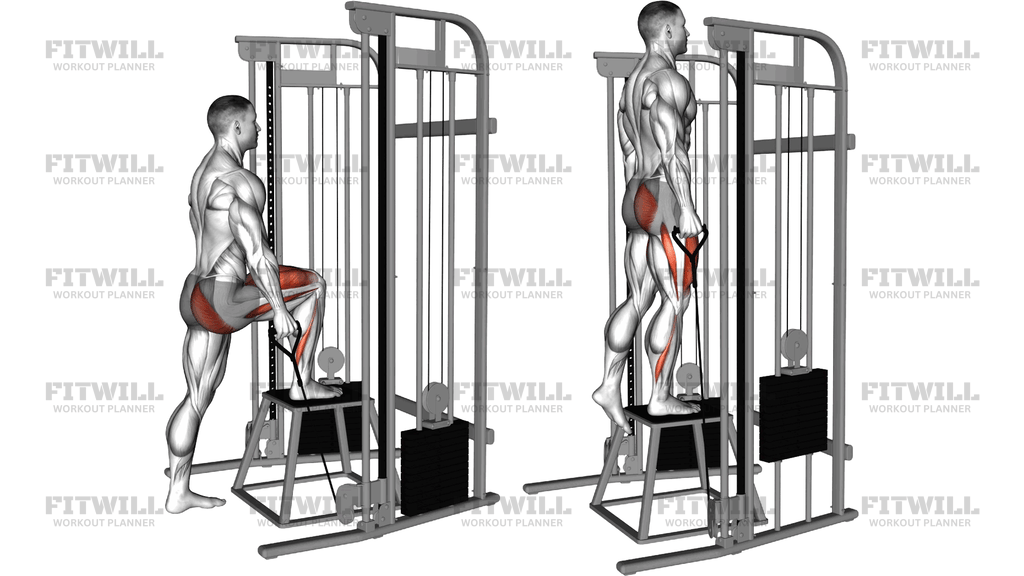
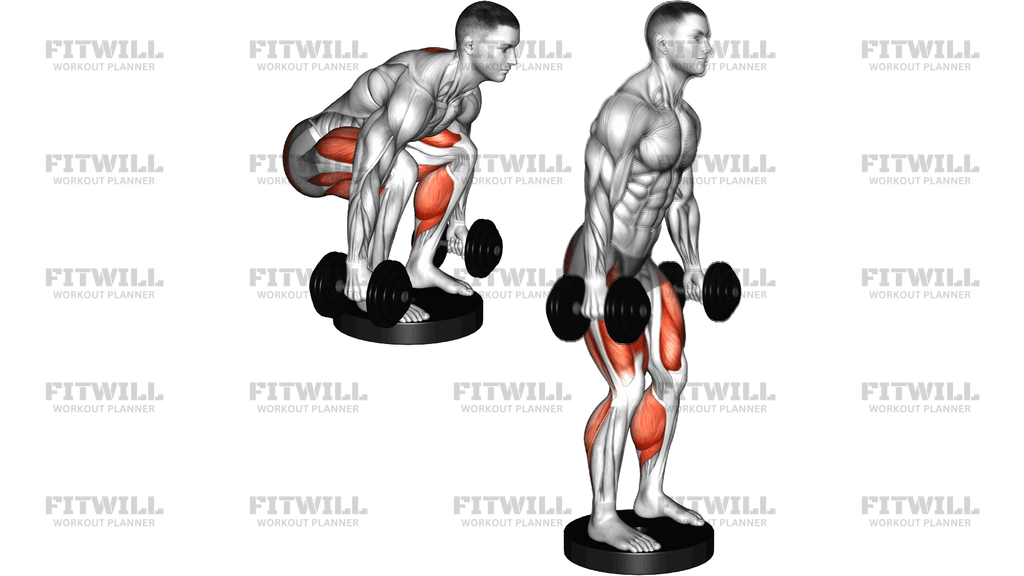
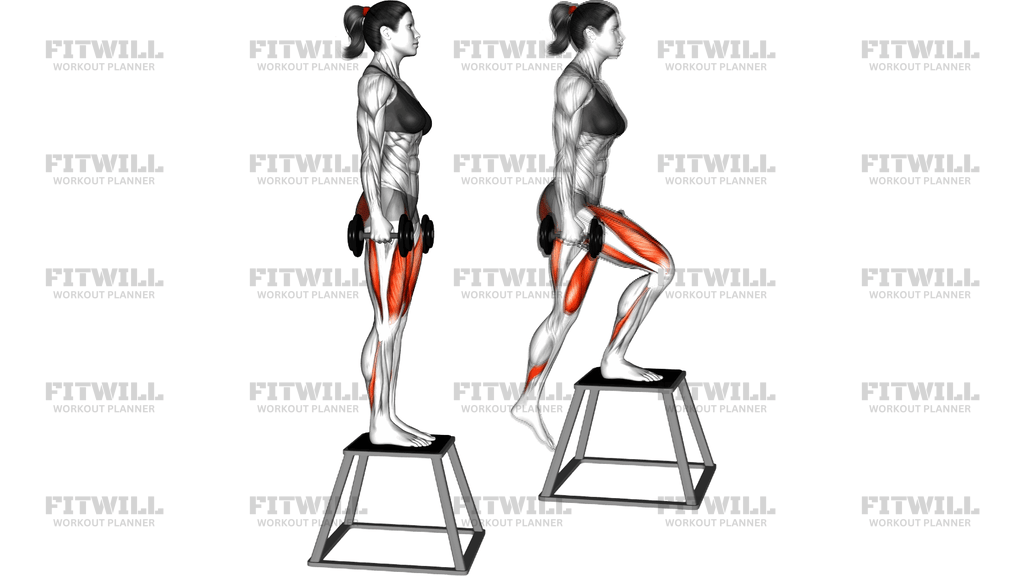
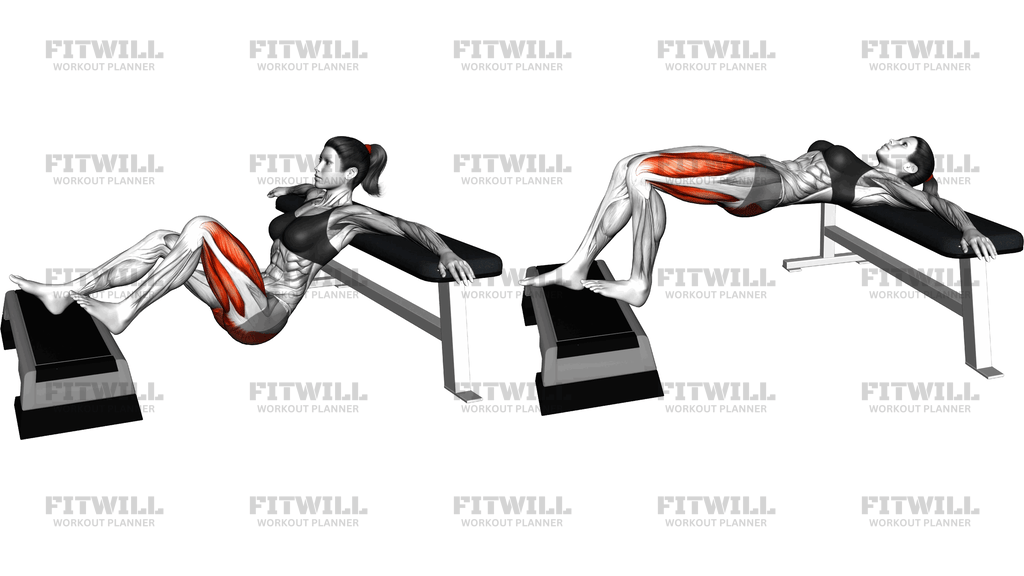
Bodyweight Patrick Step From Stepbox
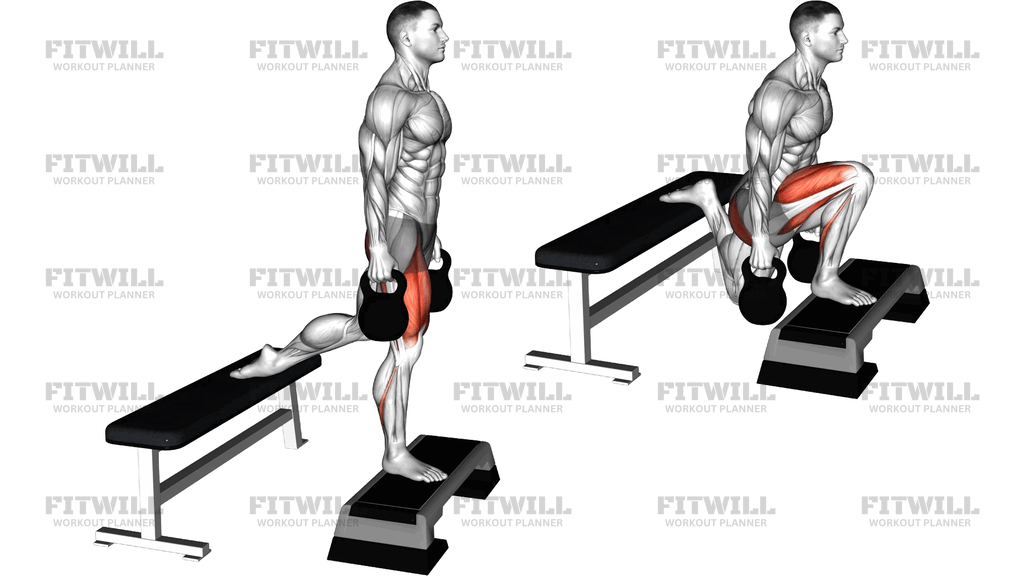
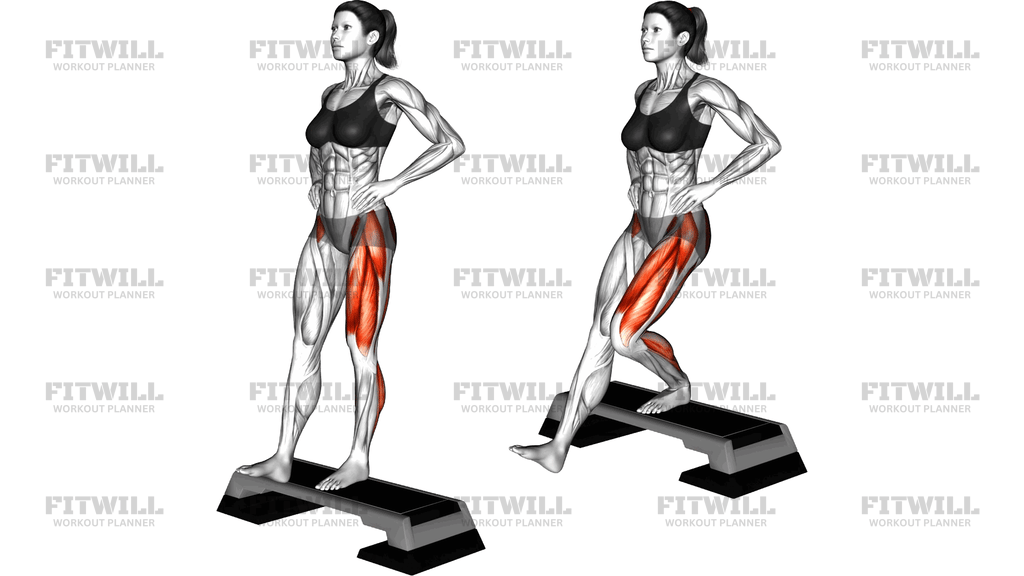
The Bodyweight Patrick Step From Stepbox is a single-leg strength exercise performed on an aerobic step platform. You stand on one leg at the edge of the box, let your other leg hang off the side, and lower it toward the floor by bending the knee of your standing leg. The trailing foot only taps the ground for a split second — all of the work of lowering and lifting your body stays with the leg on the box.
What makes this movement different from a regular step-down is the position of the free leg. Because it travels behind the box rather than in front, your shin on the working leg angles forward and your knee travels well over your toes. That deliberate forward knee travel loads the quadriceps — especially the inner quad near the knee — through a longer range than most lunge or step variations, which is exactly why this drill shows up in knee-focused strength programs.
This is a valuable exercise for runners, hikers, and anyone returning from nagging knee soreness, as well as lifters who want stronger single-leg squats and pistols. It also challenges the hip stabilizers on the standing side: if your hips are weak, your pelvis will drop or sway as you descend, so the movement quietly trains glute control at the same time as quad strength.
Setup matters more than it looks. The box height determines the difficulty — a low step around 10-15 centimeters keeps the range honest, while a taller box increases how far your free foot must reach and how deep your standing knee bends. Stand close enough to the edge that your hanging leg can reach the floor, and keep your hands on your hips or lightly on a wall for balance rather than pushing off anything.
To execute it well, think of your standing leg as the only engine. Lower your trailing foot to the floor by bending the standing knee and letting it travel forward over your toes, keeping your heel glued to the box. Tap the ground with the toes of your free leg — don't put weight down — then drive through your standing foot to pull yourself back to the top. Move slowly enough that the trailing foot never actually bears load.
A few practical points will keep this safe and productive. Start with a low box and fewer reps than you think you need, because single-leg work exposes imbalances quickly. If your knee collapses inward, drifts sharply past your toes with pain, or your heel lifts off the box, reduce the depth or the height until those faults disappear. Done consistently, this is one of the most efficient bodyweight tools for building resilient knees and honest single-leg strength.
[ Workout Log & Planner ]
Put your next workout in Fitwill
Keep your plan and training log ready when you are.


Instructions
- Place an aerobic step platform on a flat, non-slip surface and stand on it sideways so your working foot is flat on the box with the inner edge of that foot roughly level with the box edge.
- Shift your full weight onto the working leg and let your other leg hang off the side of the box, relaxed, with the knee slightly bent and the foot below the level of the platform.
- Place your hands on your hips, or rest fingertips lightly on a wall or rack nearby if you need balance support — do not push off the support.
- Brace your core, keep your chest tall, and look straight ahead so your pelvis stays level on both sides.
- Begin lowering your hanging foot toward the floor by bending the standing knee and letting that knee travel forward over your toes, keeping the entire foot of the working leg flat on the box.
- Continue down until your hanging foot lightly taps the floor beside or slightly behind the box, without transferring any weight into it.
- Pause for a beat at the bottom, feeling the tension stay in the standing leg's thigh.
- Press through the whole foot on the box — especially the heel and midfoot — to straighten the standing knee and lift the free leg back to the hanging start position.
- Exhale as you rise, inhale as you lower, and keep the tempo slow and even throughout.
- Complete all reps on one side, then reset your balance and switch to the other leg.
Tips & Tricks
- The most common mistake is sneaking weight onto the trailing foot at the bottom. Keep the tap light — if you can stand on that foot, you're stealing work from the working leg.
- Watch for the standing knee caving inward as you descend. Cue yourself to spread the floor with your foot and track the knee over your second and third toes.
- If your heel peels off the box at the bottom, the box is too high or you're going too deep. Drop to a lower step and own the full range before progressing.
- A dropping hip on the free-leg side means the standing glutes aren't holding the pelvis level. Slow the tempo and imagine keeping a glass of water balanced on each hip.
- Resist the urge to look down at your feet. Eyes forward on a fixed point makes balance noticeably easier on a narrow platform.
- Because the knee travels far over the toes by design, ease into the range over your first few sessions — mild muscle effort is fine, sharp joint discomfort is not.
- Count tempo instead of reps if you plateau: two seconds down, one-second tap, two seconds up makes a modest box height far more demanding.
- Hold onto nothing for your working sets but use a wall for one or two practice reps when learning the knee-over-toe path on each new box height.
- Do this exercise before heavier leg work as a knee-prep drill, or at the end of a session when you want focused single-leg volume without equipment load.
Frequently Asked Questions
What muscles does the Bodyweight Patrick Step From Stepbox work?
The quadriceps of the standing leg do most of the work, particularly through the deep knee-bend position. The glutes and hip stabilizers hold your pelvis level, and the calf and ankle muscles steady you on the box.
Why does my knee travel over my toes in the Patrick Step — is that safe?
Forward knee travel is intentional in this exercise and is how it loads the quads through a longer range. Keep the movement slow and controlled, keep your heel flat on the box, and stop short of any sharp knee discomfort while your tolerance builds.
How high should the stepbox be?
Start with a low platform of roughly 10-15 centimeters so your trailing foot can reach the floor without you going dangerously deep. Increase the height only when you can tap the floor smoothly without leaning or losing your heel.
Is the Bodyweight Patrick Step From Stepbox suitable for beginners?
Yes, but beginners should use a low box, hold a wall lightly for balance, and limit range at first. If a full descent is too hard, a shallow partial lowering builds the strength needed for the full version.
What's the difference between the Patrick Step and a regular step-down?
In a regular step-down the free leg reaches forward in front of the box, which shifts some load to the hips. In the Patrick Step the free leg hangs behind or beside you, keeping the knee-over-toe position and putting much more emphasis on the quads of the standing leg.
How many reps and sets should I do?
Two to three sets of 5-10 controlled reps per leg is a solid starting point. Because one side is usually stronger, match the weaker leg's rep count on both sides.
My trailing foot keeps taking weight at the bottom — how do I fix it?
Slow the descent and stop a few centimeters above the floor, hovering the free foot instead of tapping it. Once you can hover consistently, add the light toe tap without loading the leg.
What can I use if I don't have a step platform?
Any stable, low, non-slip surface works — a low stair with a railing, a sturdy bench, or a flat plyo box. Avoid anything that wobbles, since the standing leg already demands a lot of balance.
Should my hands stay on my hips the whole time?
Hands on hips is the standard position and helps you feel pelvic drop, but resting fingertips on a wall is fine when learning. Just make sure the support carries no weight, or you'll reduce the training effect.
Is this exercise hard on the knees?
It places a significant but controlled load on the knees, which is why it's often used to build knee resilience. Progress gradually with box height and depth, and consult a professional if you have an existing knee injury before adding it to your routine.