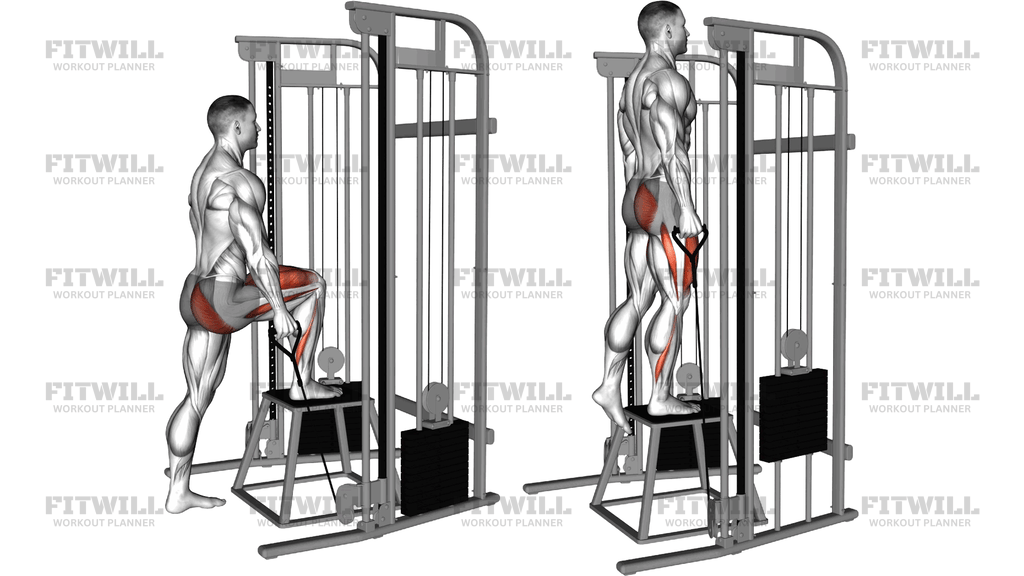
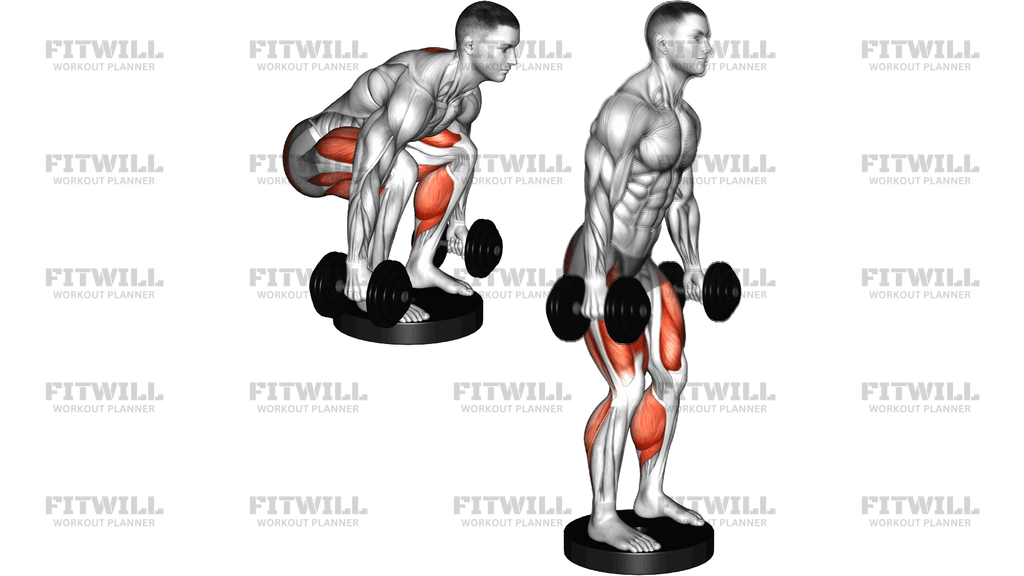
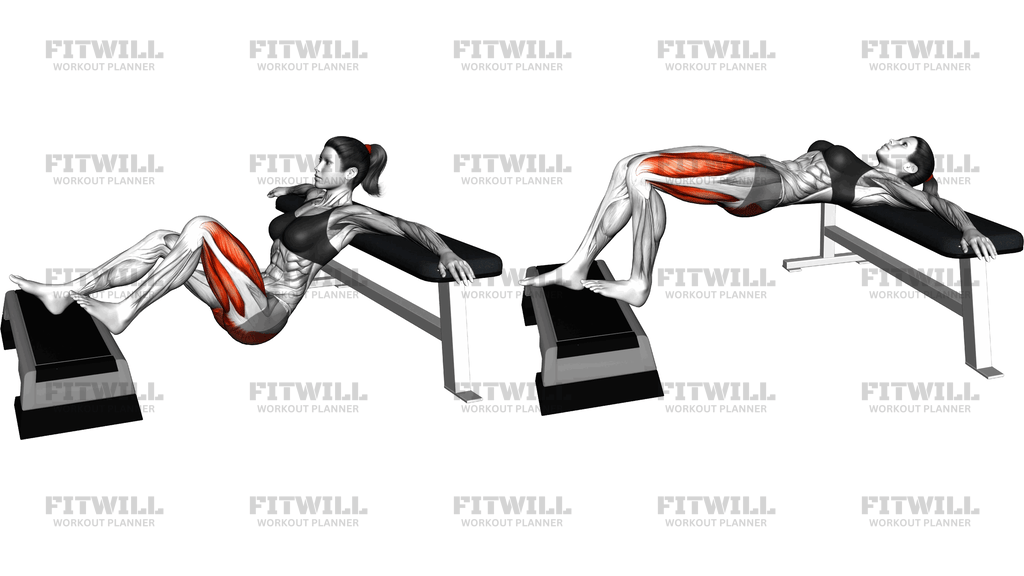
Bodyweight Peterson Step From Stepbox
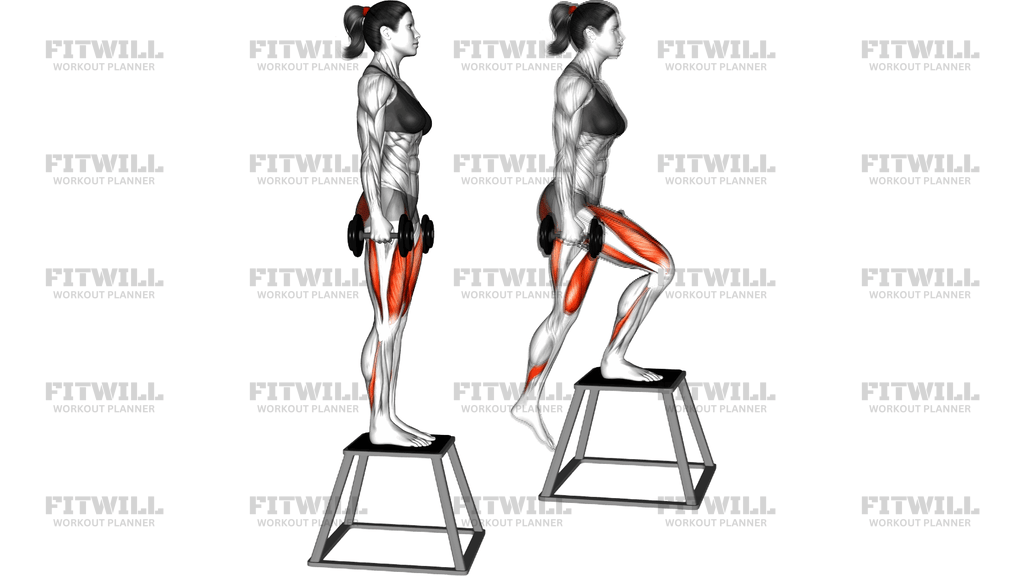
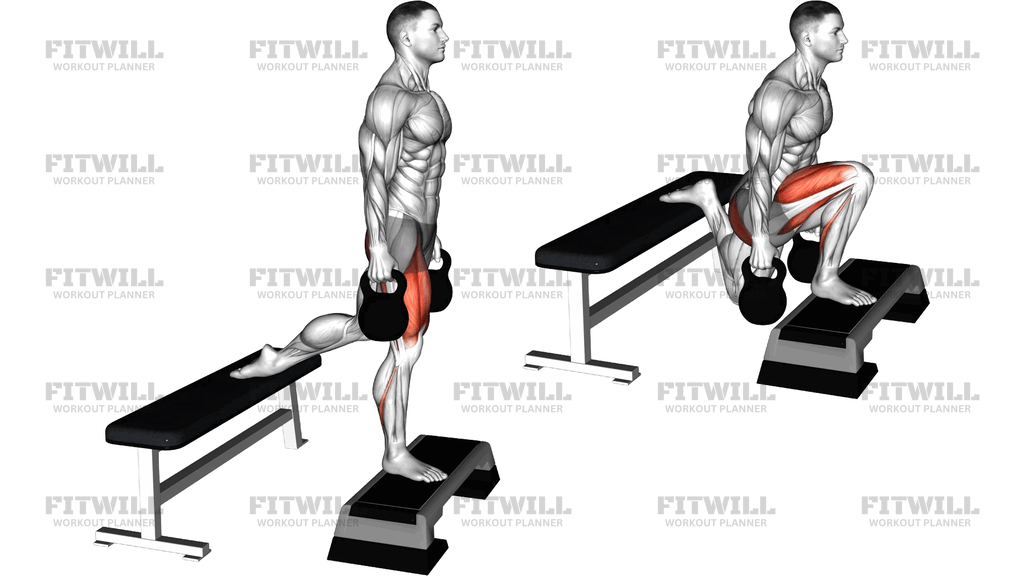
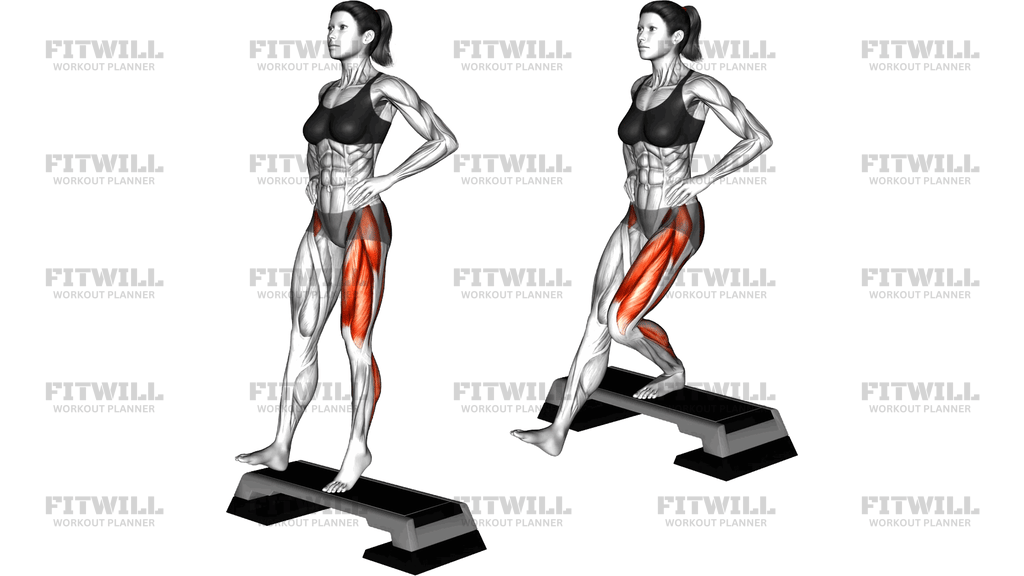
The Bodyweight Peterson Step From Stepbox is a single-leg step-down variation that challenges the quadriceps, especially around the knee, without any load other than your own body weight. You stand sideways on a low step platform with one foot fully supported and the other foot hovering in the air beside the box. From there, you slowly bend the standing knee and lower the free foot toward the floor, lightly tap it down, then drive back up to a straight leg. The highlighted musculature in the movement shows exactly where the work happens: the front of the thigh and the muscles that keep the knee tracking cleanly.
What makes this exercise different from a regular step-up is the position of the working leg. Because the free foot stays close to the box rather than reaching far back, the standing knee must bend deeply while the shin stays relatively vertical. That places a controlled, focused demand on the quadriceps and the small stabilizing muscles around the knee and ankle, which is why the Peterson step is a staple in knee-friendly strength work and return-to-training programs for people rebuilding single-leg confidence.
Setup matters more here than in most step variations. The box height should be low enough that you can lower the free foot to the floor with only a moderate knee bend; a standard step platform or a single riser is usually right. Stand tall with your hands on your hips or lightly holding a wall for balance, and keep your weight centered over the foot on the box. If the box is too high or you lean away from the working leg, the knee drifts inward or the movement turns into a hop, and you lose the precise quad and stabilizer work that makes this drill valuable.
To execute it well, think of the descent as the actual exercise. Bend the standing knee slowly, let the free foot trace straight down toward the floor, and touch it down with as little weight as possible, almost like tapping a eggshell. Your knee should travel forward over your toes without caving inward, and your hips should stay level rather than dropping to one side. Pause at the bottom for a beat, then push through the whole foot on the box to straighten the leg back to the top.
This movement fits well as a warm-up activation drill before squats or lunges, as accessory work on lower-body days, or as a standalone single-leg exercise when you want quad and knee-control work without equipment beyond a step. Beginners can start with a low platform and a hand on a wall, while more advanced lifters can slow the tempo, add a pause at the bottom, or increase box height slightly once form is solid. Keep the reps controlled and stop the set as soon as the knee starts wandering, since clean tracking is the whole point of the drill.
[ Workout Log & Planner ]
Put your next workout in Fitwill
Keep your plan and training log ready when you are.


Instructions
- Place a low step platform on a flat, non-slip surface and stand on it sideways so one foot is fully on the box and the other foot hangs in the air just off the edge.
- Position the free foot slightly behind and beside the box, toes relaxed and pointing down toward the floor, ready to tap down.
- Set your hands on your hips or rest fingertips lightly on a wall for balance, and stand tall with your weight centered over the foot on the box.
- Brace your core and keep your hips level so your pelvis stays square for the whole set.
- Slowly bend the standing knee and lower the free foot straight down toward the floor, letting the knee travel forward over your toes without collapsing inward.
- Lightly tap the free foot on the floor with almost no weight in it, and hold that bottom position for a brief pause.
- Push through the entire foot on the box to straighten the standing leg and lift the free foot back to the starting hover beside the box.
- Exhale as you press up, and inhale slowly during the descent.
- Complete all reps on one side, then switch feet so the other leg works on the box.
- Step off the box carefully between sets and reset your balance before starting the next rep if you wobble.
Tips & Tricks
- Pick a box height that lets the free foot reach the floor with a moderate knee bend; if you have to slam your heel down or hop, the platform is too high.
- The most common mistake is dumping weight into the tapping foot. Treat the floor contact as a feather-light tap, and keep almost all your load on the standing leg.
- Watch for knee valgus, where the working knee caves toward the big toe as you descend. Cue yourself to spread the floor with the foot on the box and keep the kneecap tracking over your second and third toes.
- Keep your torso upright rather than folding forward at the hips; leaning away from the working leg shifts work out of the quads and into momentum.
- If your hip drops on the free-leg side, that is a sign the hip stabilizers are tiring. Shorten the range or hold a wall until you can keep the pelvis level.
- Slow the lowering phase to two or three seconds instead of rushing it; the eccentric portion is where most of the quad and tendon conditioning happens.
- Do not fully unload and rest the free foot at the bottom. A heavy touch turns the exercise into a regular step-up and reduces the knee-focused demand.
- Place the step platform against a wall or on a mat so it cannot slide when your weight shifts during the descent.
- Start with the weaker or rehabbing leg first and match the reps with the stronger side rather than working to failure on the good leg.
Frequently Asked Questions
Which muscles does the Bodyweight Peterson Step From Stepbox work?
The quadriceps on the standing leg do most of the work, especially as the knee bends and straightens over the box. The glutes and ankle stabilizers assist by keeping your pelvis level and your balance steady throughout the descent.
How is a Peterson step different from a regular step-up?
In a regular step-up you drive up with the foot on the box and often push off the floor with the free foot. In the Peterson step the free foot only taps the floor, the shin stays near vertical, and the focus is on slowly lowering and returning with the standing leg, which targets the quads and knee stabilizers more directly.
How high should the step platform be for this exercise?
Start low, around the height of a single step or one riser, so the free foot reaches the floor with a moderate knee bend. Raise the height only when you can keep the knee tracking forward without caving in and the hips staying level.
Is the Bodyweight Peterson Step From Stepbox suitable for beginners?
Yes, as long as the box is low and you can hold a wall or railing lightly for balance. Beginners should prioritize a slow, controlled descent and a light floor tap over depth or reps.
Why does my knee cave inward during the descent?
That usually means the hip stabilizers and quads are not controlling the leg, or the box is too high for your current strength. Lower the platform, slow the tempo, and think about pressing the knee out over your little toe as you lower.
Should I put weight on the foot that taps the floor?
No, the tap should be feather-light, just enough to gauge depth. If you load that foot, the set becomes a partial step-up and you lose the single-leg quad and knee-control emphasis.
Can I do the Bodyweight Peterson Step From Stepbox if I feel knee discomfort?
Mild muscle effort is normal, but sharp or pinching knee pain is a signal to stop. Reduce the box height, shorten the range, and if discomfort persists, have a qualified professional assess the movement before continuing.
What can I use if I do not have a step platform?
A sturdy low bench, a bottom stair, or any stable platform of similar height works. Just make sure it cannot slide and allows your free foot to reach the floor without excessive knee bending.
How many reps and sets should I do?
Two to three sets of eight to twelve slow reps per leg is a solid starting point. Because quality of tracking matters more than volume, end the set when your knee starts drifting or your balance gets sloppy.