Dumbbell Step Over Box
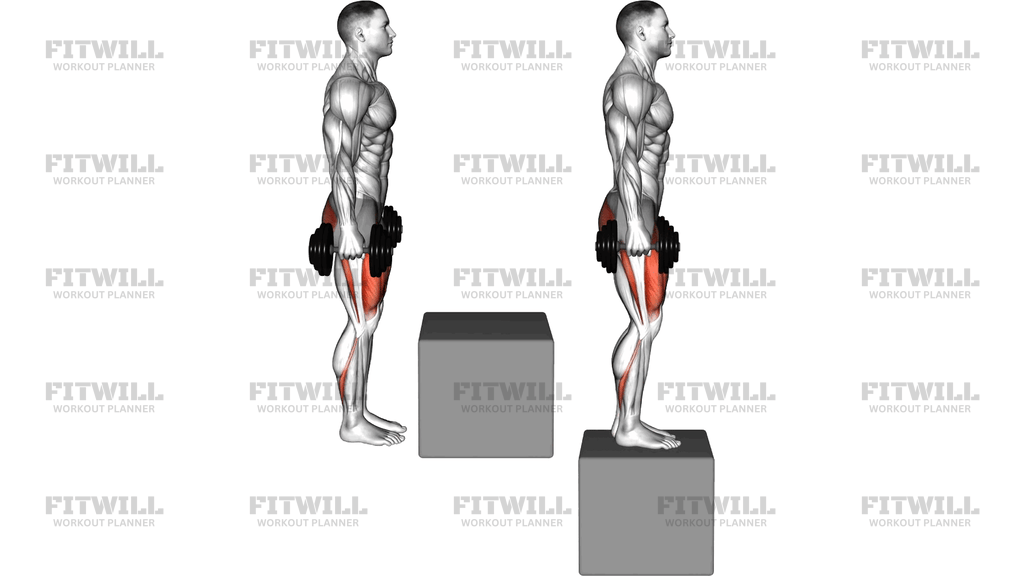
The Dumbbell Step Over Box is a loaded single-leg stepping movement where you hold a dumbbell in each hand at your sides and step up onto a box or sturdy platform, bringing the trailing foot up to stand fully on top before lowering back down. Unlike a step-up where you drive off the bottom leg every rep, the step-over pattern has you travel completely over or onto the box with both feet, which forces each leg to work independently through the full range.
This exercise is a strong choice for lifters who want to build balanced leg strength without heavy barbells. Because each leg has to handle its share of the load on its own, weaker sides get exposed and corrected over time. The quads do most of the pushing as you rise, the glutes and hamstrings contribute powerfully as you extend the hip at the top, and the calves finish the movement as you come up onto the ball of the working foot. Holding dumbbells also challenges your grip and upper-back endurance without you having to think about it.
Setup matters more here than it looks. The box height determines everything: a knee-height box keeps the emphasis on the quads and is easier to control, while a higher box shifts more work to the glutes and hamstrings but demands more mobility and balance. Stand facing the box with a dumbbell in each hand, arms hanging straight down, feet about hip-width apart. If the box wobbles or slides, move to a solid surface before adding any weight.
To execute well, place one whole foot flat on top of the box, lean slightly forward from the hips, and push through the working foot to lift yourself up. Bring the trailing foot up and stand tall on the box with both feet, hips and knees fully extended, without slamming the trailing foot down for momentum. Step back down with control, absorb the landing softly, and either alternate lead legs each rep or complete all reps on one side before switching.
Common use cases include lower-body hypertrophy work, unilateral strength development, sport conditioning for hiking, climbing, and running, and as a safer alternative to heavy bilateral squatting for people with back or shoulder limitations. Since the load stays in your hands rather than on your spine, many lifters can train their legs harder with less systemic fatigue.
Keep the weight honest. The moment you have to bounce, hop, or push off the bottom leg to reach the top, the dumbbells are too heavy. Start with a box height that lets your thigh reach roughly parallel to the floor at the planted position, and progress height and load gradually.
[ Workout Log & Planner ]
Put your next workout in Fitwill
Keep your plan and training log ready when you are.


Instructions
- Stand facing a sturdy box or step platform with a dumbbell in each hand, arms fully extended at your sides and palms facing your thighs.
- Set your feet hip-width apart a few inches back from the box, then place one foot completely on top of the box so the whole foot is flat, not just the toes.
- Brace your core and pull your shoulders back so the dumbbells hang steady instead of swinging.
- Shift your weight onto the top foot and lean your torso slightly forward from the hips.
- Drive through the entire working foot, especially the heel and midfoot, to straighten the knee and hip and rise onto the box.
- Bring the trailing foot up and place it flat next to the working foot, then stand fully upright on top with hips and knees extended.
- Pause briefly at the top before stepping back down with the trailing leg, lowering under control until the ball of the foot touches the floor.
- Exhale as you push up onto the box and inhale as you lower yourself back down.
- Complete the rep, reset your stance, and either alternate the lead leg or finish the set on one side before switching.
- Keep your eyes forward and the dumbbells tight to your body throughout the whole step-up and step-down.
Tips & Tricks
- If your heel lifts off the box as you press up, the box is too high — drop to a lower height so the whole foot stays flat and the knee tracks over the toes.
- Do not push off the trailing foot from the floor; if you catch yourself hopping or springing, the load is too heavy for clean single-leg work.
- Keep the dumbbells from drifting forward as you rise — swinging weights pull your chest down and throw off your balance on the box.
- Lower yourself on one leg during the descent rather than dropping both feet at once; the lowering phase is where a lot of the strength benefit lives.
- Alternate lead legs every rep if your goal is balanced development, or work one side fully then the other if you want to match reps precisely.
- Land quietly on the way down — a loud, stiff landing means your knee and hip are not absorbing force and the box may be too high for controlled work.
- Keep the knee of the working leg stacked over the foot; if it caves inward as you push up, slow the tempo and lighten the dumbbells.
- Start with light dumbbells or bodyweight for your first few sessions to nail the stepping pattern before adding load.
- Wear flat, stable footwear or go barefoot so you can feel the whole foot on the box surface.
Frequently Asked Questions
What muscles does the Dumbbell Step Over Box work?
The quads do the bulk of the pushing as you rise onto the box, with strong assistance from the glutes and hamstrings during hip extension. The calves help you finish tall at the top, and the core and upper back stabilize the dumbbells.
How high should the box be for the Dumbbell Step Over Box?
A height that puts your thigh roughly parallel to the floor when your foot is planted is a good starting point. Lower boxes bias the quads and are easier to control, while higher boxes shift more work to the glutes and hamstrings but require better mobility.
Is the Dumbbell Step Over Box good for beginners?
Yes, as long as you start with a low box and light or no dumbbells. The stepping pattern is something you already do in daily life, so most beginners can learn it quickly and progress the load steadily.
How heavy should the dumbbells be?
Pick a weight you can lift onto the box without pushing off the bottom leg, bouncing, or leaning heavily to one side. If your form breaks down on the step-down, the dumbbells are too heavy.
Should I alternate legs or do all reps on one side?
Alternating lead legs each rep keeps the work even and saves time. If you want to match exact reps per side or focus on a weaker leg, complete the set on one side before switching.
Why do I keep losing my balance during the Dumbbell Step Over Box?
Balance usually breaks down when the dumbbells swing away from the body, the foot is not fully planted on the box, or the box is too tall. Keep your arms locked at your sides, plant the whole foot, and reduce the height or weight until you are steady.
Can I do the Dumbbell Step Over Box every workout?
You can include it frequently because the load is relatively light compared to barbell squatting, but treat it like any strength exercise and allow normal recovery between hard sessions. Two to three times per week works well for most people.
What can I use instead of a box?
Any stable, non-slip elevated surface at the right height works — a sturdy bench, a low plyo box, or solid stair steps. Avoid anything that wobbles or slides when you put weight on it.
Is it safe for my knees?
When the box height lets your whole foot stay flat and your knee tracks over your toes, the movement is generally well tolerated. If you have a current knee issue, start with a lower box and no weight, and stop if you feel sharp pain.