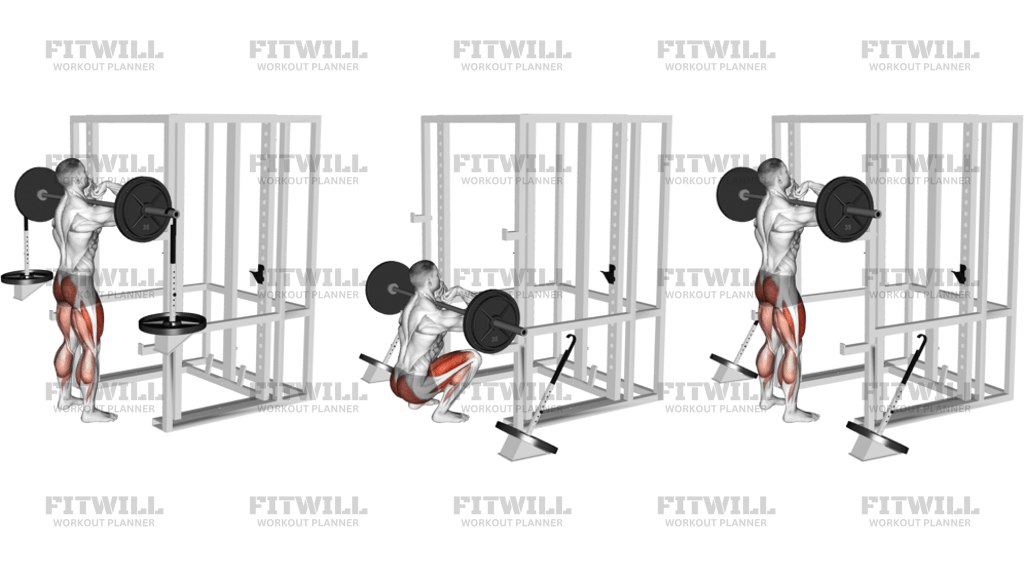
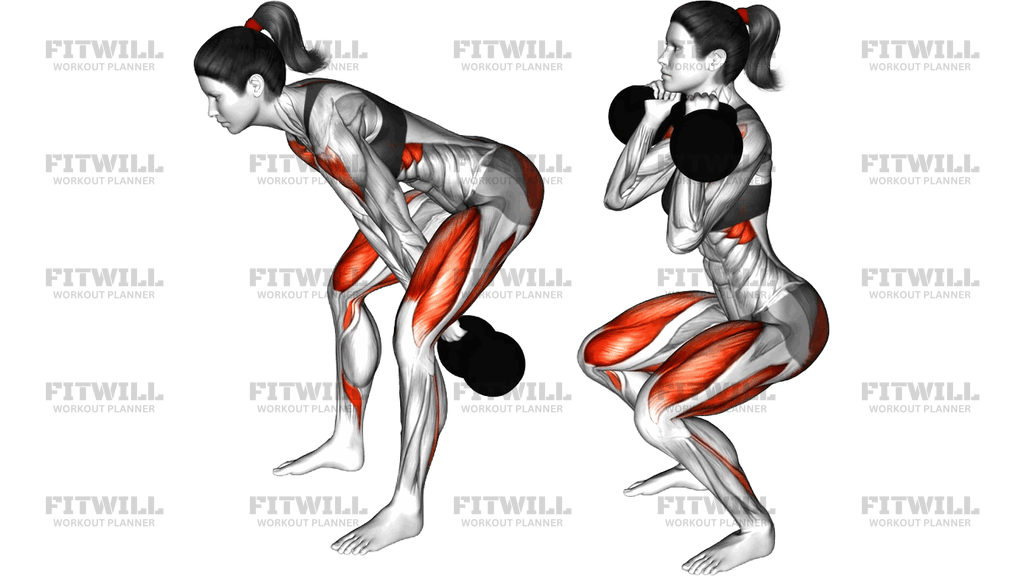
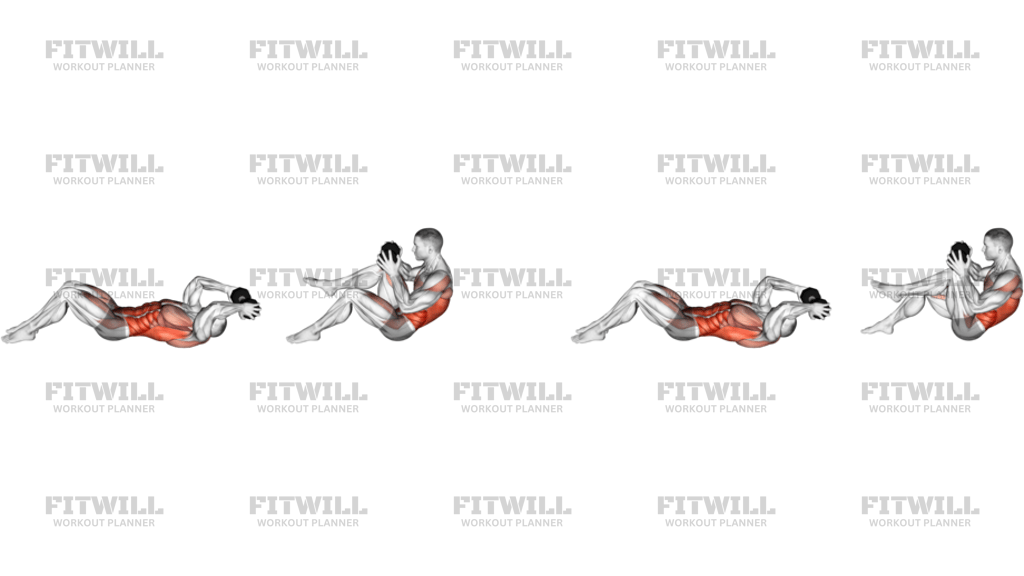
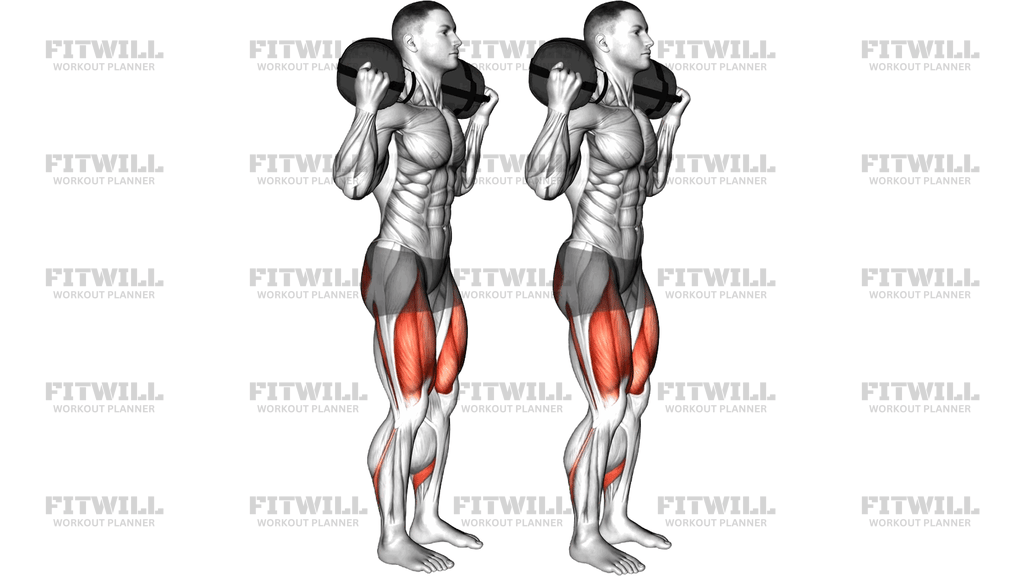
Barbell Half Kneeling Shoulders Press
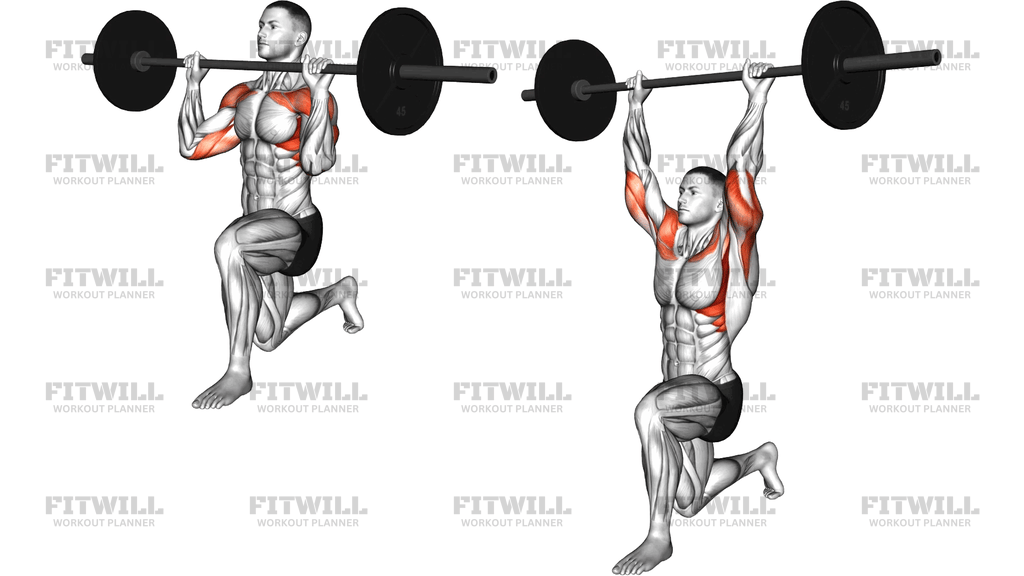
The Barbell Half Kneeling Shoulders Press is an overhead press performed from a half-kneeling stance: one knee up with the foot flat on the floor, the other knee resting on the ground beneath your hip. You clean a barbell to shoulder height, brace your torso, and press it straight overhead until your arms are locked out, then lower it back to the shoulders under control. The half-kneeling position removes the momentum and lower-body drive you can use in a standing press, forcing the shoulders and arms to do the actual work.
This setup matters more than it might seem. Kneeling narrows your base and shuts off the hip and leg contribution, which is exactly why the press becomes a stricter test of shoulder strength. At the same time, it challenges your trunk to keep the ribs stacked over the pelvis, so your core, glutes, and hip stabilizers on the kneeling side all work to stop you from swaying or arching backward as the bar travels up.
The main muscles worked are the front shoulders, with strong support from the side shoulders and triceps, which lock out the bar at the top. The upper chest assists during the drive, and the upper traps help stabilize the bar overhead. Because the load presses through one side of the body in a narrow base, the core works to prevent side bending and lower back extension, which is a large part of why lifters use this variation.
The Barbell Half Kneeling Shoulders Press is useful for lifters who have outgrown the point where they can cheat a standing press with leg drive, or who want to iron out left-to-right differences in shoulder strength and torso control. It is also a good choice when a standing press aggravates the lower back, since the kneeling position makes it easier to keep a neutral spine. Strength athletes use it as an accessory for strict press and push press; general lifters use it to build overhead stability without heavy spinal loading.
To execute it well, keep the torso tall and the front shin roughly vertical, press the bar straight up and slightly back so it finishes over the crown of your head rather than in front of your face, and pull your chin back just enough to let the bar pass. Lower the bar with the same path, reset your brace between reps, and switch the kneeling leg halfway through your sets so both sides get equal work. Start lighter than you think you need; the narrow base makes a familiar standing press weight feel very different, and the most common failure is an overarched lower back as the bar stalls in front of the body.
[ Workout Log & Planner ]
Put your next workout in Fitwill
Keep your plan and training log ready when you are.


Instructions
- Set a barbell in a rack at roughly shoulder height and load it conservatively, since the kneeling base supports far less weight than a standing press.
- Face the bar and clean it out to the front of your shoulders with an overhand grip just outside your shoulders, elbows slightly in front of the bar and wrists stacked over the elbows.
- Step back and settle into a half-kneeling stance: front foot flat on the floor with the knee stacked over the ankle, back knee resting on the ground directly under your hip, back foot relaxed behind you.
- Squeeze the glute on the kneeling side, tuck your ribs down, and brace your core so your torso is tall and stacked over your hips.
- Take a breath into your belly and hold it as you prepare to press.
- Press the bar straight up, pulling your chin back slightly so the bar clears your face, and let your head return to neutral as the bar passes.
- Finish with the bar locked out directly over the crown of your head, arms fully extended, shoulders shrugged up slightly to support the weight.
- Lower the bar along the same path back to the front of your shoulders, letting the elbows bend down and slightly forward to catch it in the rack position.
- Exhale at the top or during the descent, re-brace, and complete your reps before switching which leg is forward so both sides get equal work.
Tips & Tricks
- Keep the front shin vertical and your weight over the middle of the front foot; if your front knee drifts forward or the heel lifts, your base is unstable and the press will wobble.
- The most common error is arching the lower back to press the bar through a sticking point. Fix it by squeezing the kneeling-side glute and pulling the ribs down before each rep, not by leaning back mid-press.
- Letting the bar drift forward means the shoulders end up pressing at an angle and the lower back pays for it. Think of pushing the bar toward the back wall as it rises so it finishes over your ears.
- Use a false grip or a slightly loose thumb wrap with lighter loads only; with a heavy barbell, keep your thumbs wrapped around the bar so a mid-rep slip cannot drop the weight forward.
- Keep your elbows under or slightly in front of the bar at the bottom position. Flaring the elbows straight out to the sides turns the catch position into a passive hang on the shoulder joint.
- If you feel it more in your lower back than your shoulders, drop the weight and slow the descent. The kneeling press rewards control, and rushing the eccentric is where the torso usually breaks down.
- Do your weaker side first and match the reps with the stronger side rather than letting it do extra volume.
- A thin pad or folded mat under the kneeling knee makes longer sets far more comfortable and keeps you from favoring one side because of floor pressure.
- Press with the whole body quiet. If you feel yourself shifting side to side or rocking over the front foot, that is feedback the load is beyond what you can stabilize right now.
Frequently Asked Questions
Which muscles does the Barbell Half Kneeling Shoulders Press work?
The front shoulders are the primary mover, supported by the side shoulders, upper chest, and triceps, which handle the lockout. Your core, glutes, and hip stabilizers work isometrically to keep the torso stacked in the narrow kneeling base.
Why press from a half-kneeling position instead of standing?
Kneeling removes the leg drive and wide foot base you can use when standing, so the shoulders have to produce the force themselves. It also makes lower back arching and side bending much easier to notice and correct.
Is the Barbell Half Kneeling Shoulders Press good for beginners?
Yes, as long as the weight starts very light. The strict position actually teaches good overhead mechanics early, but the narrow base demands more stability than a seated press, so beginners should practice the movement pattern with an empty bar first.
Should I do the same number of reps on each kneeling leg?
Yes. Complete all reps with your weaker side first, then match that number on the other side. This prevents the stronger side from accumulating extra volume and helps even out side-to-side differences over time.
How is this different from a standing barbell overhead press?
The standing press allows leg drive and a wider, more stable base, so you can handle more total load. The half-kneeling press is stricter, uses less weight, and shifts a bigger share of the demand onto shoulder strength and anti-rotation core control.
Why do I feel this press in my lower back?
That usually means your torso is extending backward to help press the bar, often because the weight is too heavy or the glute on the kneeling side is not engaged. Squeeze the rear glute, tuck the ribs, reduce the load, and focus on keeping the torso stacked over the hips.
What can I use instead of a barbell for this exercise?
A pair of dumbbells works well and lets each arm move independently, which makes it easier to spot side differences. A landmine press with the bar anchored in a corner is another useful substitution if overhead shoulder comfort is limited.
How should my back foot be positioned during the press?
Let the back foot rest relaxed with the toes on the floor behind you and the knee directly under the hip. Driving the toes down too hard or letting the knee slide backward destabilizes the pelvis and turns the press into a balance exercise.
How heavy should I go on the Barbell Half Kneeling Shoulders Press?
Expect to use noticeably less than your standing press, at least for the first few sessions. Choose a weight you can press for smooth reps with no backward lean or sideways sway, and progress only when the torso stays quiet under load.