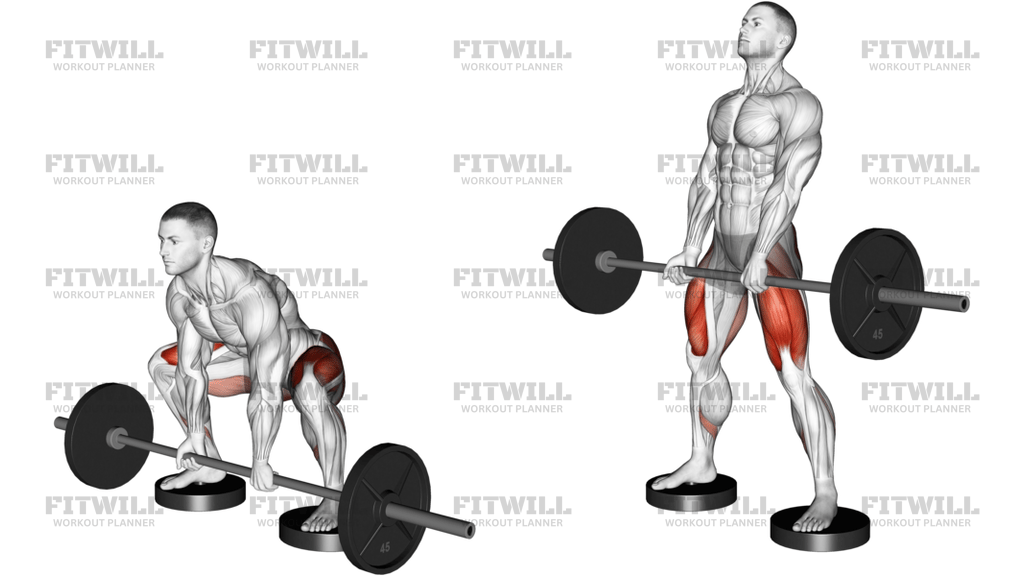
Barbell Frog Stance Deadlift
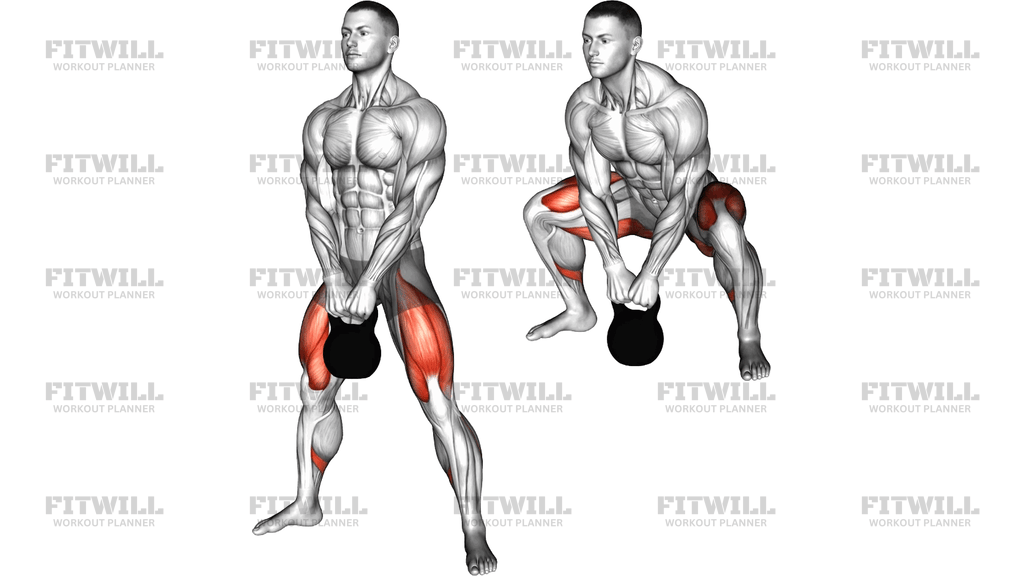
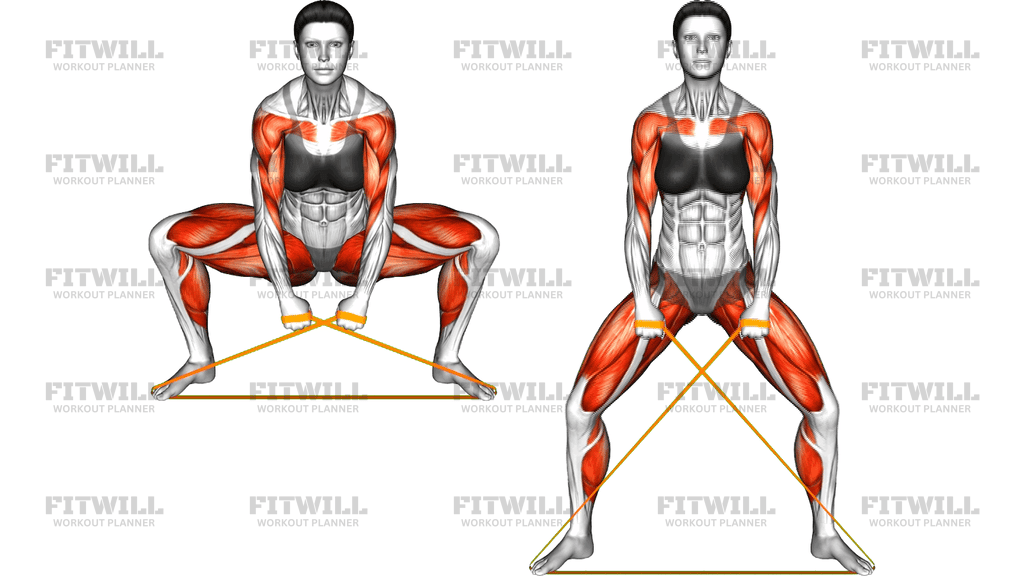
The Barbell Frog Stance Deadlift is a deadlift variation performed with the feet set wide apart and the toes turned outward, so the knees flare to the sides like a frog's legs. Instead of gripping the bar outside the legs as in a conventional deadlift, the hands stay relatively close together on the bar between the feet. This combination of a wide, externally rotated stance and a narrow grip creates a more upright torso angle and puts the quads and inner thigh muscles under considerably more work than a standard pull.
Because the knees travel outward over the toes and the torso stays tall, this variation shifts a large share of the load to the quadriceps, glutes, and adductors, while the hamstrings and lower back still contribute to locking the hips through at the top. Lifters who want to build squat-style leg strength with a barbell in hand, or who feel conventional deadlifts mostly in their lower back, often find this stance lets their legs do more of the work. It is also a useful teaching tool: the wide knee position naturally encourages you to keep the bar close and drive the floor away.
Setup matters more here than in most deadlift variations. With the feet turned out, the shins angle inward toward the bar, so the bar must sit over the middle of the foot and stay in contact with the legs through the entire pull. If the bar drifts forward, the wide stance quickly turns into a strain on the lower back instead of a leg exercise. Take the time to wedge the hips down between the knees rather than folding over the bar, and check that your weight stays spread across the whole foot, not rolled to the inside edges.
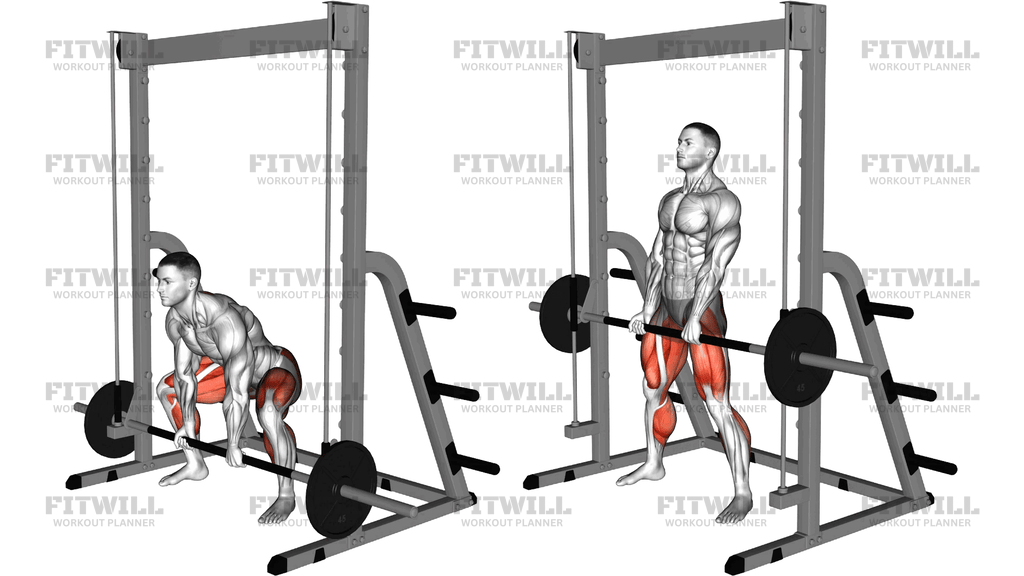
To perform it well, think of the movement as a leg press into the floor. Grip the bar with straight arms, pull the slack out, brace the trunk, and push the ground apart with the feet as the hips and shoulders rise together. At the top, stand fully tall with the glutes squeezed and the bar hanging at arm's length against the thighs, then reverse the path by pushing the hips back and letting the knees track out over the toes as the bar lowers along the legs. Keep the plates touching down lightly or hover just above the floor between reps so your position never resets sloppily.
This exercise suits intermediate lifters comfortable with a barbell, though beginners can learn it with light weight or an empty bar to groove the knee-out position. It fits well as a main leg builder on lower-body days, as an accessory after squats, or as a deadlift variation for lifters whose hip structure feels more comfortable in a wide, externally rotated stance. Work in the 5 to 10 repetition range with controlled tempo, and drop the weight if you notice the knees caving inward or the bar drifting away from the legs.
[ Workout Log & Planner ]
Put your next workout in Fitwill
Keep your plan and training log ready when you are.


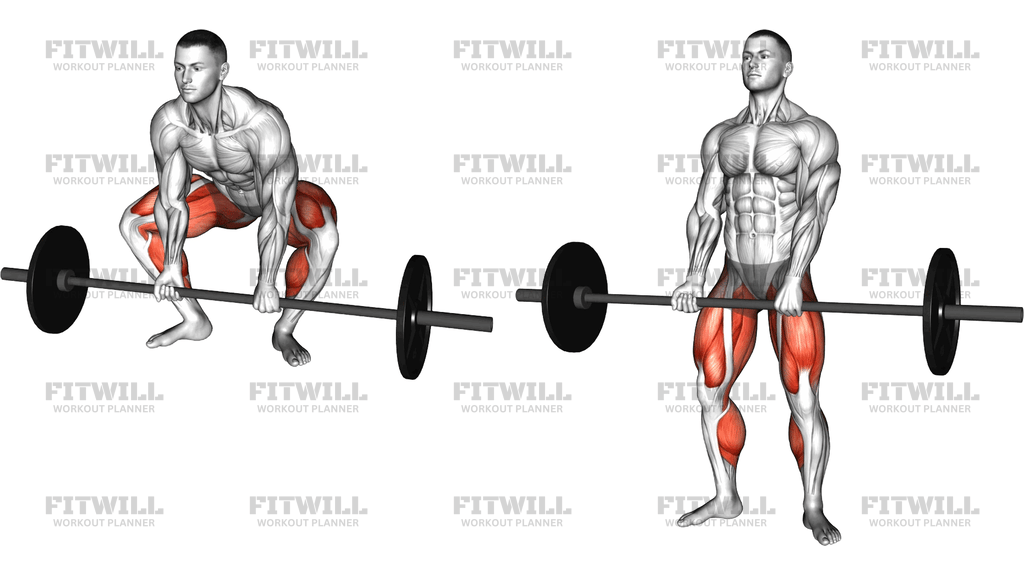
Instructions
- Set a loaded barbell on the floor over the middle of your feet, then step each foot out wide so the bar passes close to your ankles, with toes turned out roughly 30 to 45 degrees.
- Sit your hips down between your heels and push the knees out to the sides so they track over the toes, keeping the shins angled in toward the bar.
- Grip the bar with both hands just outside hip width, between your legs, using a double overhand or mixed grip, and let the shoulders sit slightly ahead of the bar.
- Pull the slack out of the bar, fill the belly with air, and brace the trunk as if bracing for a punch while keeping the chest lifted.
- Drive the feet apart and down into the floor, letting the hips and shoulders rise at the same rate while the bar drags up along the shins.
- Keep the knees pushed out and the bar in contact with the legs through the middle of the pull; do not let the bar swing forward around the knees.
- Finish standing fully upright with hips and knees locked out, glutes squeezed, and the bar hanging at arm's length against the thighs.
- Reverse the rep by pushing the hips back first, then bending the knees out over the toes as the bar slides down the legs under control.
- Exhale at the top, take a fresh breath and re-brace before the next rep, and reset your foot position and knee flare if anything drifted.
Tips & Tricks
- If your knees keep collapsing inward, deliberately spread the floor apart with your feet throughout the pull rather than just pressing straight down.
- A common mistake is gripping the bar too wide, which shortens the arms and forces you to lean further over; keep the hands between the legs at roughly hip width.
- Rounded upper back at the start usually means the hips are too high; sit down lower between the knees until the chest lifts and the shoulders stack over the bar.
- Because the toes are turned out, keep your weight balanced across the whole foot. Rolling onto the inner edges of the feet is a sign the knees are tracking too far in.
- Wear flat shoes or lift barefoot if your gym allows it, since the wide, externally rotated stance is much more stable without a compressible heel.
- If the bar scrapes forward around the knees on the way down, push the hips back further before bending the knees, letting the bar clear the kneecaps.
- Start lighter than your conventional deadlift. The upright torso and deep knee bend make this variation harder on the quads, and ego lifting shows up as a rounded back immediately.
- Use lifting straps or a mixed grip once grip strength becomes the limiting factor, so the quads and glutes get the intended work instead of the forearms.
- Film yourself from the front occasionally; the front view makes knee tracking and bar contact with the legs easy to check.
Frequently Asked Questions
What muscles does the Barbell Frog Stance Deadlift work?
The quadriceps and glutes do most of the driving, with heavy involvement from the inner thigh muscles because of the wide, turned-out stance. The hamstrings, lower back, and grip support and finish each rep.
How is the Frog Stance Deadlift different from a sumo deadlift?
The stance width and knee position are similar, but in the frog stance the hands grip the bar close together between the legs rather than outside the knees, which keeps the torso more upright and puts more demand on the quads.
Is the Barbell Frog Stance Deadlift good for beginners?
It can be, as long as the load stays light while the knee-out position and bar path are learned. Beginners with tight hips or ankles may find it easier to start with a narrower stance and widen it gradually.
Why do my knees ache when I set up in the frog stance?
Discomfort usually comes from the knees caving inward or the weight rolling onto the inner edges of the feet. Push the knees out over the toes, spread the load across the whole foot, and reduce the width of the stance if it still bothers you.
Should the bar touch my legs during the Barbell Frog Stance Deadlift?
Yes, the bar should stay in light contact with the shins and thighs both up and down. Because the shins angle inward in this stance, letting the bar drift forward is the most common way the lift breaks down.
Can I use a mixed grip for this exercise?
Absolutely. Once the weight gets heavy, a mixed grip or lifting straps are fine choices, since grip is rarely the intended limiter in a leg-focused deadlift variation.
What can I substitute if I don't have a barbell?
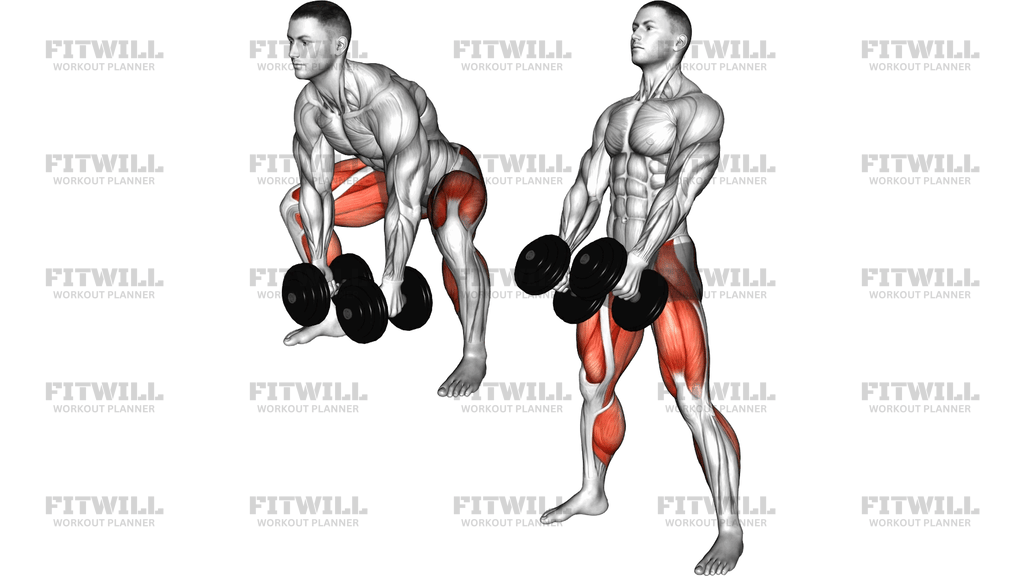
A trap bar or a pair of heavy dumbbells held between the legs in the same wide, toes-out stance reproduces the movement pattern well, though the barbell version keeps the load closer to the body.
How deep should I set my hips at the start of the lift?
Low enough that your chest stays tall and your shoulders sit just ahead of the bar, with the hips wedged down between the knees. If your hips shoot up first and your back rounds, you started too high.
Is it safe for my lower back?
When the knees stay out, the bar stays against the legs, and the trunk stays braced, the stress is distributed across the legs and hips like any other deadlift. Problems arise when the weight is too heavy and the torso collapses, so progress load gradually.