Tilt And Extend
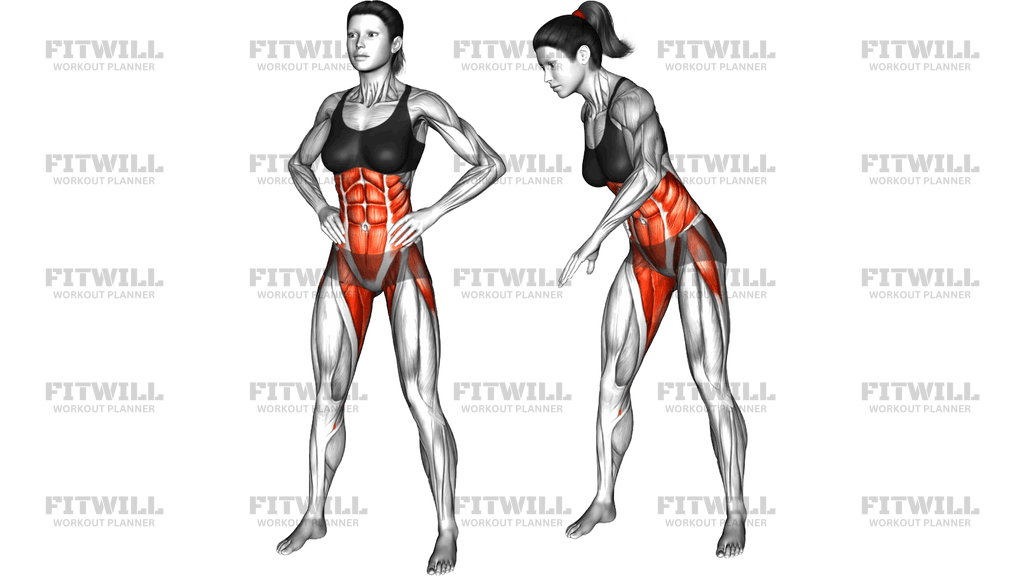
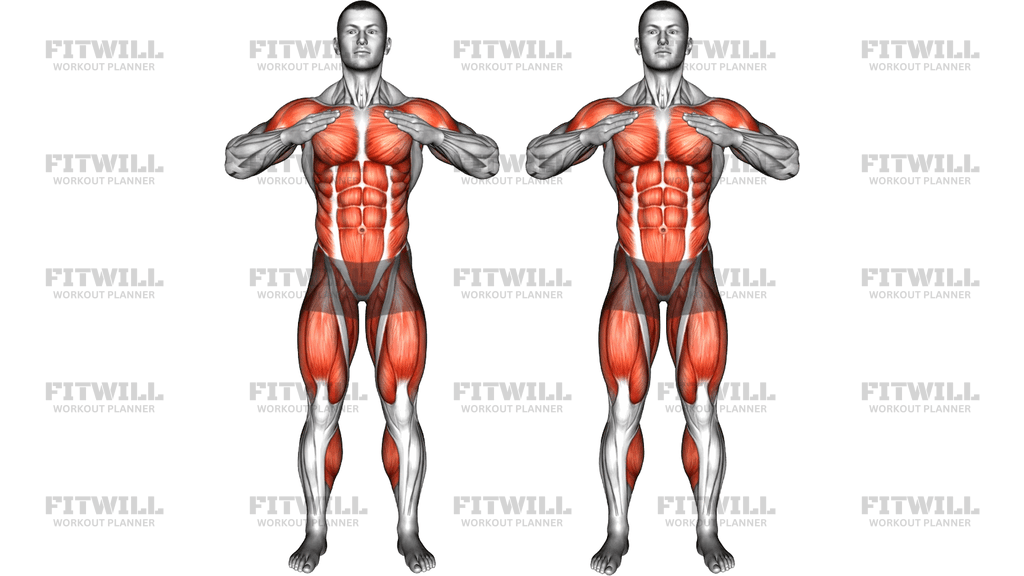
Tilt And Extend is a standing bodyweight drill that targets the obliques through lateral flexion of the spine. You start with both arms lifted in front of your chest, elbows bent so the forearms sit horizontally at shoulder height. From there, you tilt your torso sideways, letting one arm reach up and over your head while the other stays close to the chest as it drifts toward the opposite hip. The lengthening side and the shortening side of your waist both get worked, which is what makes the position useful rather than just a casual stretch.
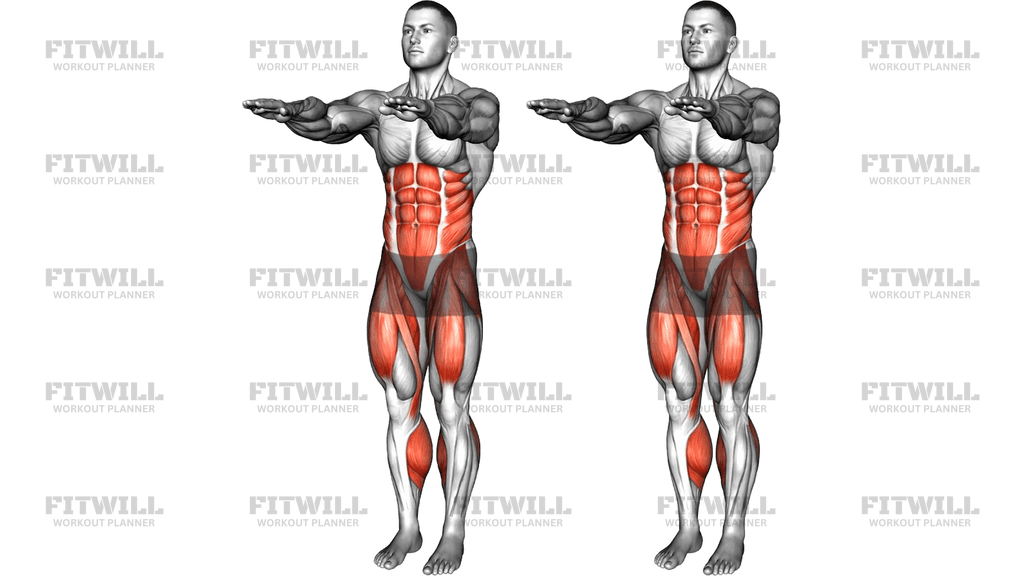
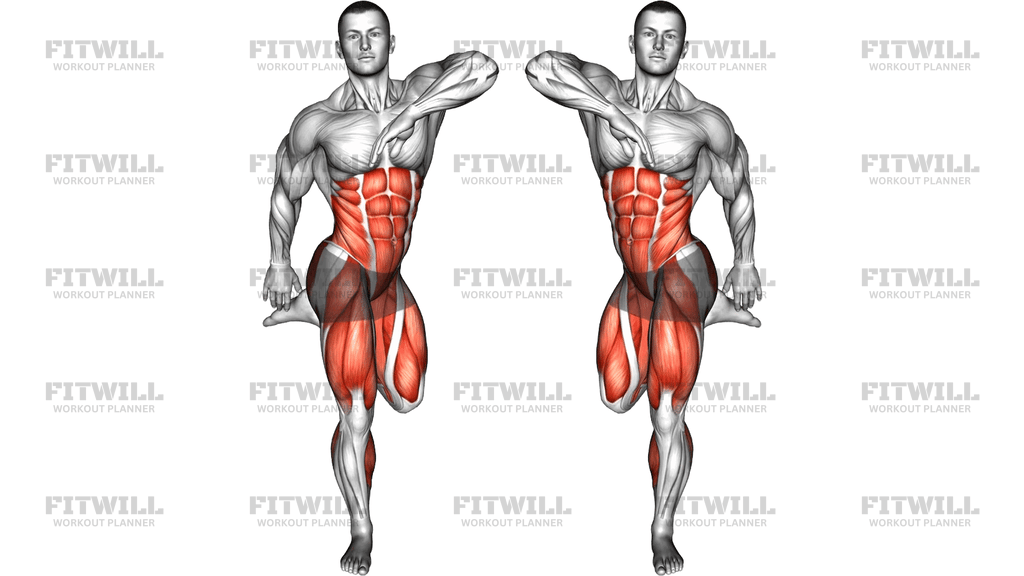
The main muscles at work are the obliques on the side you are bending toward, which contract to pull your ribcage down toward your hip. At the same time, the obliques and quadratus lumborum on the opposite side are loaded eccentrically as they lengthen under control. The rectus abdominis assists with spinal flexion, and the shoulders and upper back work to keep the arms in position throughout. Because you are standing, your hips, glutes, and deep core also have to stabilize the legs and pelvis so the movement comes from your waist instead of your whole body swaying.
Setup matters more than most people expect with this one. Feet planted about hip-width apart, knees soft but not bent deeply, and the arms held deliberately in front of the chest create a fixed frame. If the arms swing freely or the elbows drop, the tilt loses its focus and the waist stops being the driver. Keeping the frame intact forces the ribs to travel through a true side-to-side arc rather than a loose collapse.
Execution should feel like your ribcage is sliding down the side of your thigh. Bend sideways with control, reach the top arm over in the same direction as the tilt, hold the end range briefly, then return to vertical before switching sides. The movement stays in the frontal plane, meaning you lean sideways rather than twisting forward or backward. This makes Tilt And Extend a solid choice for warming up before more demanding core work, for training rotation-resisting trunk control in athletes, or for anyone who spends long hours seated and wants to open up the sides of the waist.
A few practical points keep it safe and effective. Keep the range within what you can control without your hips jutting out to one side, and avoid letting your lower back round forward as you tilt. If you feel the movement in your hip rather than your waist, your pelvis is probably dropping instead of your spine bending, so shorten the range and slow the tempo down.
[ Workout Log & Planner ]
Put your next workout in Fitwill
Keep your plan and training log ready when you are.


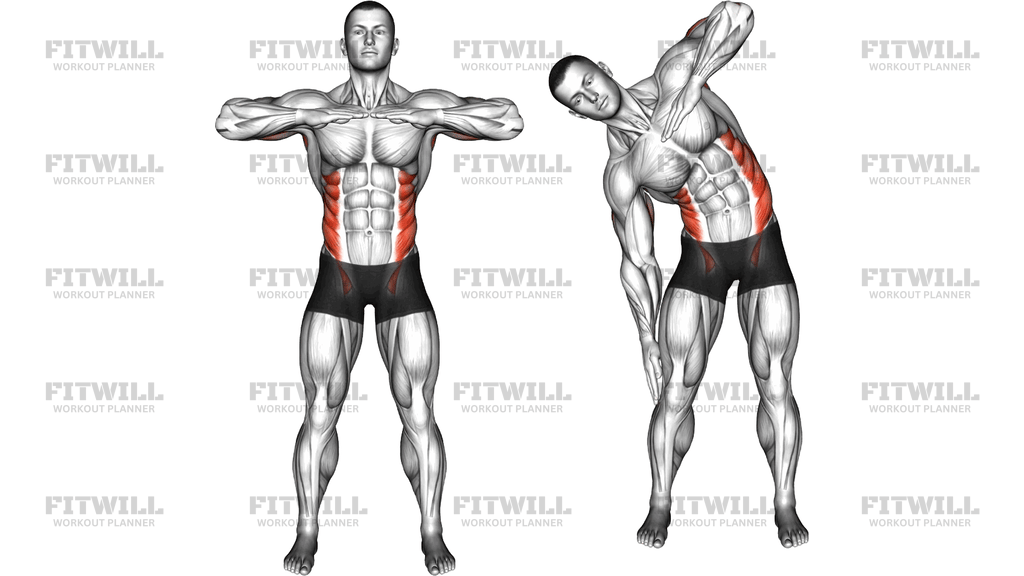
Instructions
- Stand upright with your feet about hip-width apart, weight spread evenly across both feet, and knees slightly soft.
- Raise both arms in front of your chest and bend the elbows so your forearms sit horizontally at shoulder height, fingertips nearly touching in the middle.
- Brace your core lightly and keep your shoulders down and back, avoiding any shrug toward your ears.
- Tilt your whole torso directly sideways to the right, keeping your hips level and both feet flat on the floor.
- As you tilt, extend your right arm up and over your head in a smooth arc while your left forearm stays near your chest and drifts down toward your left hip.
- Pause at your end range for one to two seconds, feeling the stretch along the left side of your waist and the contraction on the right.
- Return to the tall starting position under control, re-establishing the arm frame before moving again.
- Exhale as you tilt into the side bend and inhale as you come back to center.
- Repeat for the desired number of reps on the right, then switch to tilting left with the left arm reaching overhead.
- Reset your stance and arm position between sets if your elbows have dropped or your feet have shifted.
Tips & Tricks
- If your hips push sideways as you tilt, imagine your pelvis is set in wet concrete; only the spine above it should move.
- Common mistake: turning the tilt into a forward crunch. Keep your chest facing forward the whole time so the bend stays purely lateral.
- Reach the overhead arm long through the fingertips rather than just flopping the hand over; a longer reach means a better stretch on the opposite side.
- If you feel it in your hip instead of your waist, shorten the range slightly and slow down, since that usually means the pelvis is dropping instead of the spine flexing.
- Keep the elbow of the non-reaching arm pinned close to chest height; letting it fall turns the movement into an arm swing.
- Go slower than feels necessary. The control on the way back to center is where the obliques work hardest.
- Do not force a big range on your first few reps; build up to your full side bend over the first set as the tissue warms up.
- If one side tilts noticeably further than the other, spend an extra set on the stiffer side rather than matching reps on the loose side.
- Breathe steadily rather than holding your breath at the top; holding tension in the ribs defeats the purpose of the side flexion.
Frequently Asked Questions
What muscles does Tilt And Extend work?
The primary muscles are the obliques, which contract on the side you tilt toward and lengthen on the opposite side. The rectus abdominis assists, and the quadratus lumborum and lower back muscles help control the return to center.
Is Tilt And Extend good for beginners?
Yes. It is a low-load bodyweight movement, so beginners can learn it safely by keeping the range small and focusing on moving from the waist rather than swinging the arms. It works well as the first core drill in a session.
Why are my arms raised in front of my chest during this exercise?
Holding the forearms horizontal in front of the chest creates a fixed frame that makes your waist do the work. If the arms hang or swing, your torso simply leans and you lose the targeted side-bend effect on the obliques.
Should I feel Tilt And Extend on both sides of my body?
Yes, but in different ways. The side you bend toward should feel like it is contracting, while the opposite side of your waist feels a lengthening stretch. Both sensations are normal parts of the same rep.
How many reps and sets should I do?
Two to three sets of eight to twelve controlled tilts per side is a solid starting point. For a warm-up, drop to six to eight reps per side at a relaxed tempo.
My lower back aches when I tilt sideways. What should I change?
You are likely bending too far or letting your pelvis drop toward the floor. Reduce the range, keep both feet flat and hips level, and stop the tilt at the point where you still feel it in the waist rather than the spine itself.
Can I do Tilt And Extend with a weight?
You can progress it by holding a light plate or dumbbell at your chest once the bodyweight version feels easy, but master the unweighted frame first. Adding load too early encourages leaning and momentum instead of true lateral flexion.
How is Tilt And Extend different from a standing dumbbell side bend?
In the side bend you typically hold weight on one side and bend away from it, which loads one side heavily. Tilt And Extend uses the raised-arm frame to train both sides of the waist in a single rep and demands more balance and trunk control.
When is the best time to include this exercise in my routine?
It fits well at the start of a workout as a core warm-up, or as active recovery between heavier lifts. Doing it before squats or deadlifts can help you feel your lateral trunk muscles engaged before loading the spine.