Standing Tibialis Raise Wall Supported
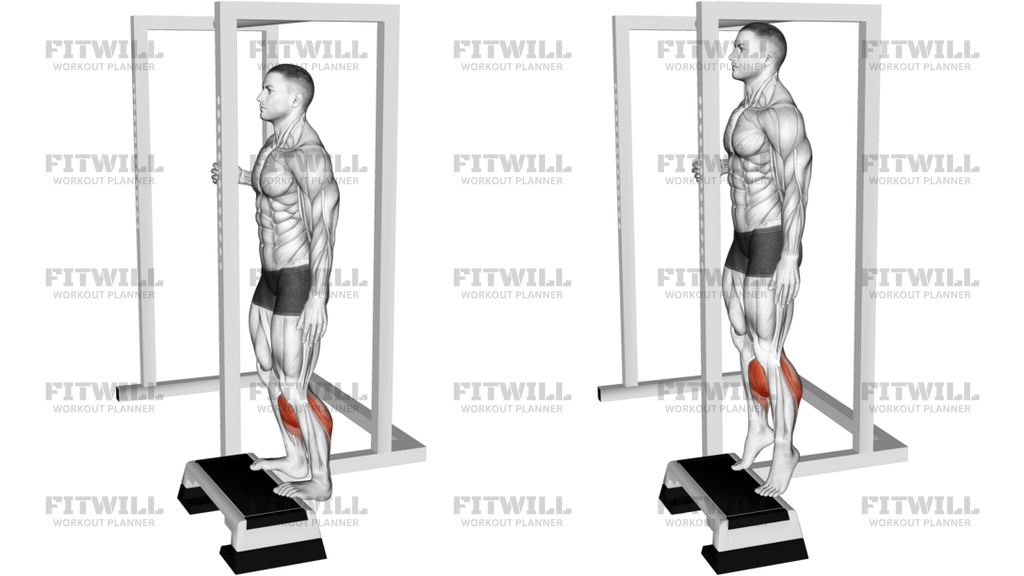
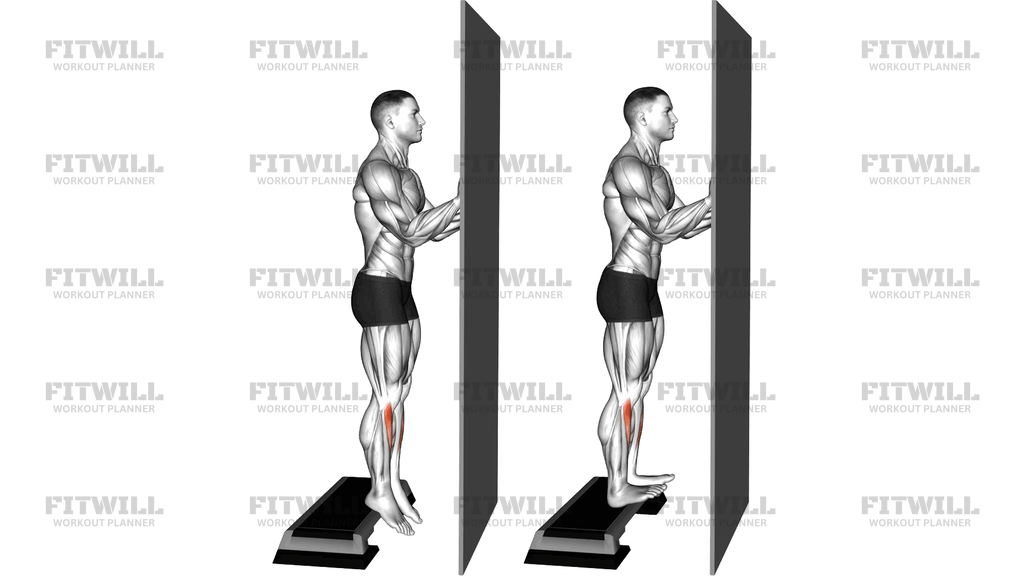
The Standing Tibialis Raise Wall Supported is a simple body weight movement that targets the tibialis anterior, the muscle running along the front of your shin. You stand facing a wall with your hands placed on it for balance, position your heels on the edge of a step platform, and let your forefoot hang off the edge. From there, you pull your toes up toward your shins and lower them back down under control. Because the muscle works mostly against gravity in this position, no added load is needed at first.
This exercise fills a gap in most training programs. Calves get plenty of attention through plantarflexion work like calf raises, but the muscles on the front of the lower leg are rarely trained directly. That imbalance can show up as weak dorsiflexion, reduced ankle stability, and discomfort during running, hiking, jumping, or squatting. People who spend long hours in shoes with a slight heel drop, or who are returning from ankle issues, often find this movement especially useful for rebuilding strength in the front of the shin.
The setup matters more than it looks. Placing your heels on the edge of the step platform with the forefoot hanging free gives your toes room to travel through a full arc of motion, from a relaxed hang all the way up to a strong pull toward the shin. The wall support takes care of balance so you can focus entirely on the movement at the ankle instead of fighting to stay upright. Keep your knees nearly straight but not locked, since a soft knee keeps the emphasis on the ankle rather than letting other structures take over.
To execute it well, move slowly and deliberately. Let your toes drop toward the floor until you feel a mild stretch across the front of the ankle, then pull them up as high as you can without leaning back or shifting your weight. The lifting phase should feel like the muscle on the outside of your shin is doing the work, not like you are flicking your feet. Pause briefly at the top, then lower with control rather than letting gravity drop your toes.
Common use cases include prehab and warm-up routines for runners, cooldown work after lower body sessions, and higher-rep strength circuits for the lower legs. Because the resistance is light, most people do best with slow tempo and moderately high repetitions, in the range of fifteen to twenty-five per set. If you want more challenge later, you can shift to single-leg versions or hold a light weight, but earn that progression through clean reps first.
From a safety standpoint, keep the stretch at the bottom comfortable rather than aggressive, and stay balanced against the wall throughout the set. If you feel sharp pain at the front of the shin or in the ankle joint, shorten the range or stop and reassess. The movement should feel like a working muscle and a gentle stretch, never a pinch.
[ Workout Log & Planner ]
Put your next workout in Fitwill
Keep your plan and training log ready when you are.


Instructions
- Stand facing a wall at about arm's length and place both palms flat against it at chest height for support.
- Position a step platform in front of you and step up so both heels are on the edge of the platform, with your forefoot and toes hanging off the edge into open space.
- Set your feet about hip-width apart and keep your knees soft and nearly straight, with your weight settled through your heels.
- Brace your core lightly and keep your torso tall, resisting the urge to lean your hips back toward the wall.
- Starting with your toes hanging down in a relaxed position, pull them up toward your shins as high as you can, hinging only at the ankle.
- Squeeze briefly at the top, when your toes are lifted as far toward your shins as they will go.
- Lower your toes back down in a slow, controlled manner until your forefoot hangs fully relaxed below the edge of the platform.
- Breathe steadily throughout, exhaling as you lift your toes and inhaling as you lower them.
- Complete your target repetitions, then step down carefully off the platform one foot at a time while still facing the wall.
Tips & Tricks
- Keep your hips stacked over your heels. If your hips drift back toward the wall, the pull becomes easier and the tibialis anterior stops doing the work.
- A common mistake is flicking the toes quickly using the foot itself instead of moving from the ankle. Slow the tempo down until the muscle on the front of your shin clearly fatigues.
- Do not lock your knees hard. A slight bend keeps tension comfortable at the back of the knee and lets the ankle move freely.
- If your calves feel tight and pull your toes down too aggressively at the bottom, reduce the range slightly and progress the stretch over several sessions.
- Hold a genuine pause at the top of each rep. Letting the reps blend together turns the exercise into momentum-driven ankle bouncing.
- If the edge of the step platform digs into your heels, shift your heels a small amount so the pressure sits on the fleshy part rather than directly on the bone.
- Start with both legs before trying single-leg versions. The single-leg variation doubles the load on the working muscle and demands more from your balance against the wall.
- Keep your grip on the wall light. Pressing hard into the wall and leaning on your arms reduces the balance demand and makes the set feel easier than it should.
- Higher reps with slow tempo work better here than trying to add weight early. Aim for a strong burn in the front of the shins rather than heavy resistance.
Frequently Asked Questions
What muscles does the Standing Tibialis Raise Wall Supported work?
The main muscle is the tibialis anterior on the front of your shin, which pulls your toes up toward your knee. Smaller stabilizers around the ankle and foot assist, and your calves work passively as they lengthen at the bottom of each rep.
Why do I need to stand on a step platform for this exercise?
With your heels on the edge and your forefoot hanging off, your toes can travel through a full arc from a hanging position up to your shins. On flat ground the floor would block the bottom half of the range.
Is the Standing Tibialis Raise Wall Supported good for beginners?
Yes, it is one of the most beginner-friendly lower leg exercises because the load is your own foot and the wall removes the balance challenge. Beginners should start with two or three sets of fifteen slow reps on both legs.
Should my knees be straight or bent during the Standing Tibialis Raise Wall Supported?
Keep them nearly straight with a slight, comfortable bend. Locking the knees hard can feel unpleasant behind the joint, while bending them deeply shifts tension away from the ankle movement this exercise is built around.
Why do I feel this more in a stretch than in the muscle?
The bottom position lengthens the calves and the front-of-shin tissue at the same time, which is normal. If the stretch overwhelms the work, shorten the range so your toes only drop halfway, and gradually go lower as tolerance improves.
How many reps should I do for the Standing Tibialis Raise Wall Supported?
Because the resistance is light, use higher repetitions with a slow tempo, typically fifteen to twenty-five reps per set. Stop the set when the front of your shin fatigues rather than when your form starts to slip.
What can I use if I do not have a step platform?
Any stable elevated edge of similar height works, such as a low box, a sturdy stair, or a weight plate stacked securely. Just make sure the surface will not tip and that you can face a wall or railing for support.
Can the Standing Tibialis Raise Wall Supported help with shin discomfort from running?
Strengthening the tibialis anterior is a common strategy for managing load on the front of the shin from running and jumping. Ease in gradually, keep the movement pain-free, and consult a professional if discomfort persists or worsens.
How close should I stand to the wall?
Stand close enough that your arms are slightly bent and your palms rest on the wall at chest height without you leaning into it. If you are too far away, you will tip forward; if you are leaning on the wall, the set becomes too easy.
When should I do this exercise in my workout?
It works well as a warm-up before running or lower body lifting, or as a finishing movement after calf work. Since it is low load and low fatigue, doing it more than once per week is reasonable.