Squat With Ball Behind Back
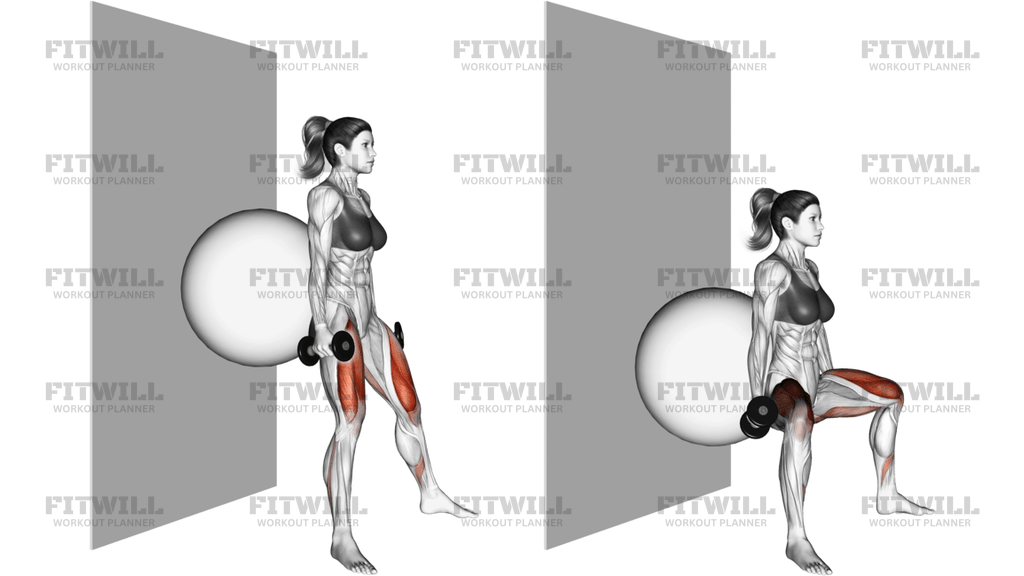
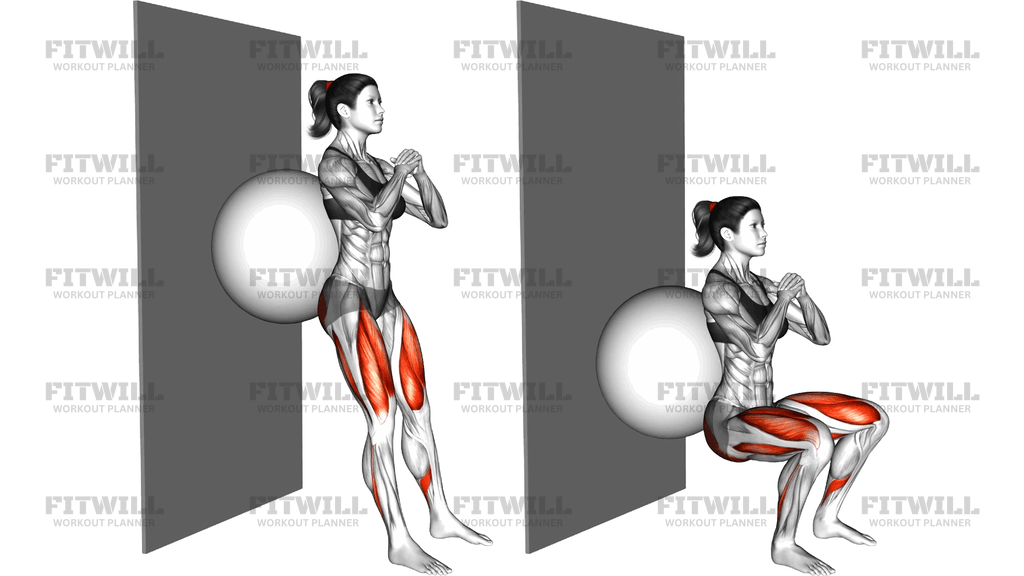
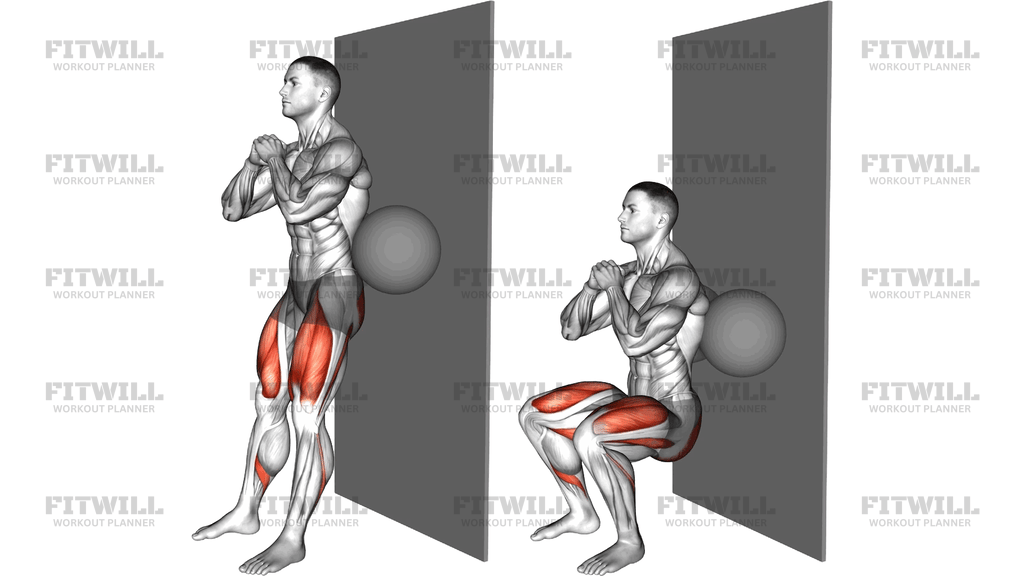
The Squat With Ball Behind Back is a wall-supported squat where a stability ball is trapped between your lower back and a wall. As you descend, the ball rolls up the wall with your spine, and as you stand, it rolls back down. This setup gives your back a smooth, guided track, which removes much of the balance demand of a free-standing squat and makes it easier to focus on knee and hip position.
This is one of the best introductory squat variations. It suits beginners learning what a proper squat feels like, older adults or anyone returning from a layoff who wants extra support, and lifters using it as a warm-up or activation drill before heavier leg work. Because the ball keeps your torso upright and against the wall, it also discourages the forward lean and heel lift that commonly show up in early squatting attempts.
The main muscles worked are the quadriceps, which extend the knees as you rise. The glutes and hamstrings assist on the way up, especially as you approach standing, and the core works lightly to hold your ribcage and pelvis steady against the moving ball. The highlighted areas in the movement are the front of the thighs and the hip region, which matches how the effort feels when performed correctly.
Setup matters more than it looks. Your feet need to be far enough forward that your knees stay over or slightly behind your toes at the bottom, and the ball must sit in the curve of your lower back rather than against your shoulder blades. If your feet are too close to the wall, your knees will drift past your toes and your heels will want to lift; too far away and the ball will want to slip. Take a moment to find that foot placement before your first rep.
To execute the movement, press your back gently into the ball, brace your trunk, and sit down and slightly back as the ball rolls up your spine. Lower until your thighs are parallel to the floor or as deep as your hips and knees allow while keeping your heels down, then drive through the floor to return. Move slowly enough that you could pause at any point in the descent; the ball should follow you, not carry you.
In practice, this exercise shows up in beginner programs, physical-therapy-style strength routines, bodyweight leg circuits, and warm-ups for barbell or goblet squat days. It needs only a stability ball and a clear wall, so it works well at home. Keep the reps smooth, respect your knee depth, and treat it as a movement-quality drill as much as a strength exercise.
[ Workout Log & Planner ]
Put your next workout in Fitwill
Keep your plan and training log ready when you are.


Instructions
- Place a stability ball between a flat wall and your lower back, then walk your feet forward about one to two feet so that when you squat, your knees stay roughly over your ankles.
- Set your feet hip-width to shoulder-width apart with toes turned out slightly, and shift your weight so your heels stay loaded.
- Lightly press your back into the ball to hold it in place, and clasp your hands in front of your chest for balance.
- Brace your abdominal muscles and keep your chest tall before starting the descent.
- Bend your hips and knees together to lower straight down, letting the ball roll up your spine as you descend.
- Continue until your thighs are parallel to the floor, or to the deepest point where your heels stay flat and your knees track over your toes.
- Pause briefly at the bottom, then push through your whole foot to stand, keeping the pressure into the ball as it rolls back down.
- Exhale as you rise and inhale as you lower, keeping the breath steady rather than holding it.
- Finish each rep with your hips and knees fully extended, then reset your foot position if you felt any heel lift or knee drift before the next rep.
Tips & Tricks
- If your heels lift at the bottom, your feet are too close to the wall; step them out an inch or two and try again.
- If the ball starts to slip toward your shoulders, you are leaning back into it instead of squatting down—keep your torso tall and let the ball travel with your spine, not support your weight.
- The ball should stay in contact with the curve of your lower back throughout; if it pops away from the wall at the bottom, your descent was too fast.
- Keep the pressure into the ball light and constant. Pushing hard backward turns this into a lean-back drill and takes load off your legs.
- Watch your knee tracking: if your knees cave inward on the way up, think about spreading the floor gently with your feet.
- Descend over two to three seconds. The ball lets you cheat by dropping quickly, and speed hides weak positions.
- If your knees ache in deep flexion, cut the depth to a partial squat where you still feel your thighs working without discomfort, and build range gradually.
- Choose a ball sized so that when you stand against it, it sits at waist to lower-rib height; a ball that is too large forces you too far from the wall.
- Warm up with a few shallow reps before going parallel, especially on cold knees or first thing in the morning.
Frequently Asked Questions
What muscles does the Squat With Ball Behind Back work?
The quadriceps on the front of the thighs do most of the work. The glutes and hamstrings assist as you stand, and the core stabilizes your trunk against the ball.
Is the Squat With Ball Behind Back good for beginners?
Yes, it is one of the best beginner squat progressions. The ball and wall guide your torso along a fixed path, so you can learn squat depth and knee tracking without worrying about balance.
How far should my feet be from the wall during the Squat With Ball Behind Back?
Roughly one to two feet forward, enough that your knees stay over or slightly behind your toes at the bottom and your heels remain flat. Adjust in small steps until that position feels stable.
Why does the ball need to stay against my lower back instead of my shoulders?
The ball is meant to follow the natural curve of your lumbar spine as it rolls up the wall. Placing it at shoulder height pushes your torso into an awkward leaned-back position and reduces the work on your legs.
How deep should I squat with the ball behind my back?
Aim for thighs parallel to the floor, but only as deep as you can go with your heels down and knees tracking over your toes. Depth can be built up gradually over weeks.
Can I add weight to the Squat With Ball Behind Back?
Yes, holding a dumbbell or kettlebell at chest height works well once the bodyweight version feels easy, though it slightly raises the center of gravity and demands more core control.
What can I use if I don't have a stability ball?
A wall squat without the ball is the closest substitute, though it offers less lower back cushioning and less rolling feedback. A medicine ball is usually too small and hard to work well in this position.
How is this different from a regular free-standing squat?
The wall and ball fix your torso path, so your balance muscles do less work and your quads and glutes get a cleaner, more isolated stimulus. It is typically loaded lighter and performed more slowly than a free squat.
Is it safe for my knees if they pass my toes?
Some forward knee travel is normal in squatting, but on this exercise excessive travel usually means your feet are too close to the wall and your heels are lifting. Fix the foot position first, and stay in a depth range that feels comfortable for your knees.