Standing Single Arm Figure 8 With Torso Twist
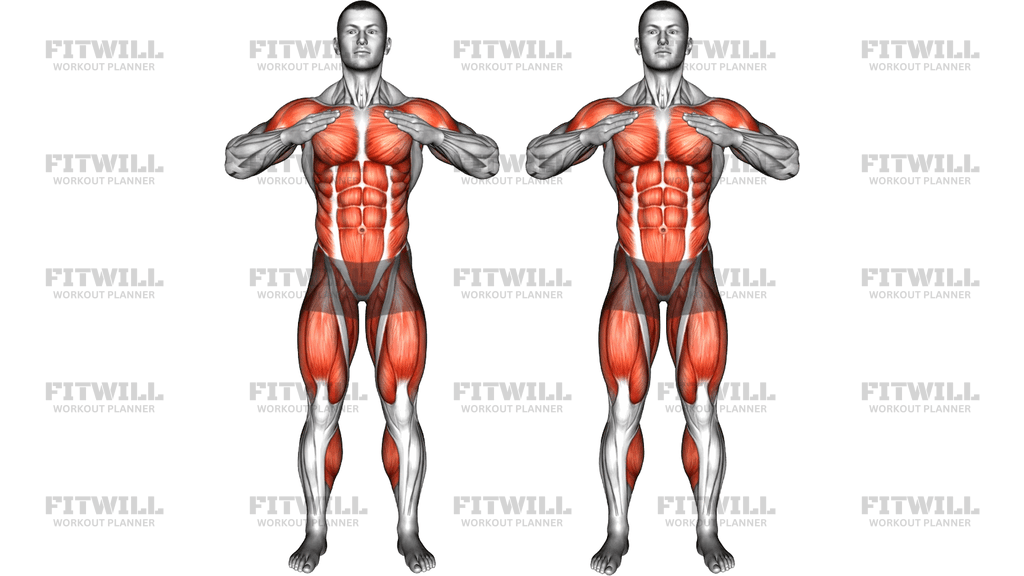
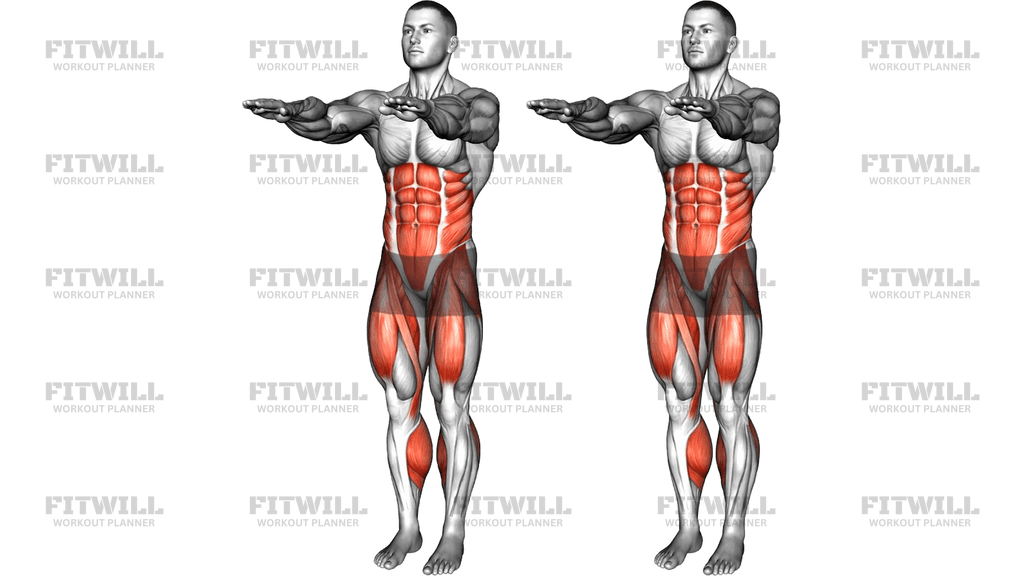
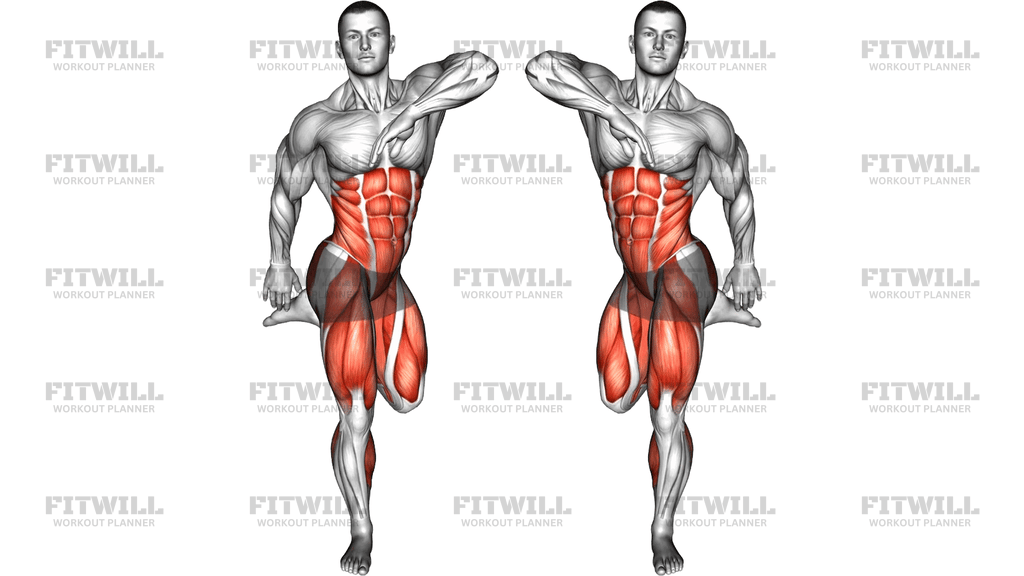
The Standing Single Arm Figure 8 With Torso Twist is a bodyweight rotational movement where one hand rests on your abdomen while the opposite arm sweeps a figure 8 path across the front of your body. As the swinging arm crosses from one side to the other, your trunk rotates with it, so the twist comes from your waist rather than from your shoulders alone. It is a smooth, continuous pattern that blends arm mobility with trunk rotation in one flowing action.
This movement earns its place in warm-ups and movement preparation routines because it raises temperature through the trunk and shoulders while rehearsing rotation, which many people rarely train in daily life. It is useful before sports that involve swinging, throwing, or changing direction, and it also works well as a gentle mobility drill for anyone who spends long hours sitting and feels stiff through the midsection.
The primary work happens in the obliques, which drive the twist on each pass, while the chest and front of the shoulder guide the arm across the body and back out. The hand pressed against your abdomen is not just a placeholder; it gives you a physical reference point so you can feel your core stay engaged and notice if your hips start swaying instead of your torso turning. The lower back and hip stabilizers work quietly to keep your base steady while everything above the waist moves.
Setup matters more than it looks. Stand tall with feet about hip to shoulder-width and knees soft, and anchor the non-working hand firmly against your belly. If your stance is too narrow you will wobble, and if you let the free arm flail without intent, the twist loses its purpose and becomes an uncontrolled swing.
To execute it well, lead the arm across your body toward the opposite side, let your torso follow, then sweep the arm up and out to the same side before tracing the second loop of the figure 8 at a lower angle. The path should feel like a smooth infinity symbol in front of your chest and hips. Keep the movement rhythmic and controlled rather than fast, and complete all repetitions on one side before switching hands and directions.
Common use cases include pre-training warm-ups, rehabilitation-style mobility circuits, and active recovery days. Because the drill is low load, the main safety concern is uncontrolled twisting at speed; keep the motion deliberate, breathe steadily throughout, and stay within a rotation range that feels comfortable through your spine.
[ Workout Log & Planner ]
Put your next workout in Fitwill
Keep your plan and training log ready when you are.


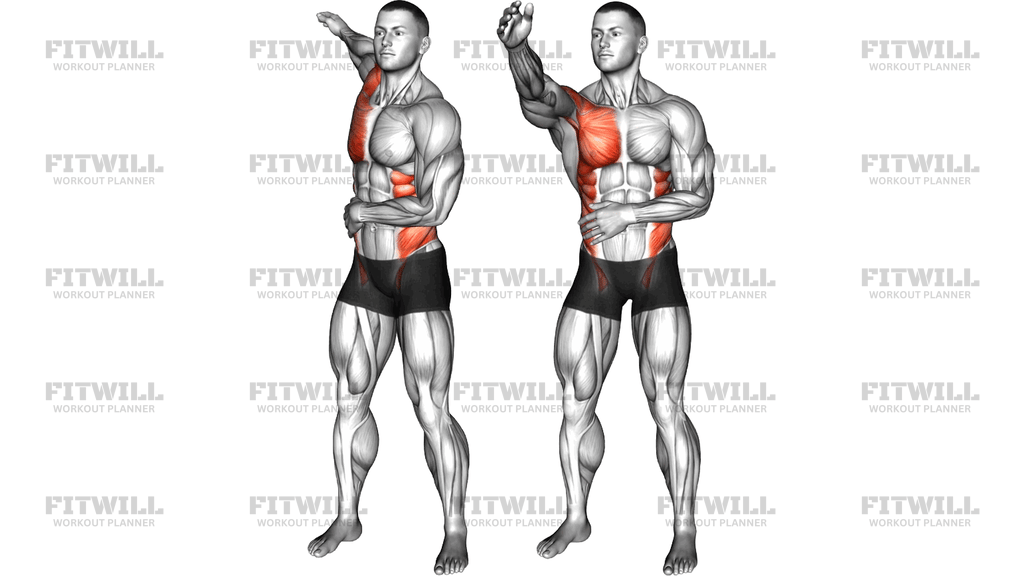
Instructions
- Stand with your feet hip to shoulder-width apart, weight spread evenly across both feet, and knees slightly bent.
- Place one hand flat against your abdomen, covering your navel, and keep it pressed there for the entire set.
- Extend your free arm out in front of you at roughly chest height with a relaxed hand.
- Brace your midsection lightly and pull your ribs down so the upcoming twist comes from your waist, not from arching your lower back.
- Sweep the free arm down and across the front of your body toward the opposite hip, allowing your torso to rotate in the same direction.
- Continue the arc upward and out to the side at shoulder height, letting the trunk rotate back toward center as the arm opens.
- Trace the second loop of the figure 8 by bringing the arm down across your body again at a slightly lower angle, keeping the path smooth and connected.
- Exhale as the arm crosses your midline and inhale as it opens out to the side, keeping the breathing continuous with the rhythm of the swing.
- Complete all repetitions on one side, then switch so the other hand rests on your abdomen and swing the figure 8 with the opposite arm in the mirrored direction.
- Reset your stance between sides, checking that your hips stayed square to the floor and your knees stayed soft throughout.
Tips & Tricks
- A frequent mistake is letting the arm do all the work while the torso stays frozen; if you cannot see your chest turning, deliberately rotate your ribs with each cross-body pass.
- Do not let the hand on your abdomen slide around or press loosely, because that contact is your feedback for keeping the core braced during the twist.
- If your hips swing side to side with the arm, narrow your focus: imagine your pelvis sits inside a bucket that cannot tip, and rotate only above the belt line.
- Keep the figure 8 loops wide enough that the arm travels outside your shoulder line on each open phase; tight, cramped loops usually mean the shoulders are shrugged up by your ears.
- Speed is the most common failure point with this drill; when the arm whips, the lower back absorbs the deceleration, so slow down until every pass feels owned from start to finish.
- Keep your neck relaxed and your gaze fixed on one spot ahead of you, because chasing the moving hand with your eyes adds unnecessary head rotation.
- If you feel pinching at the front of the swinging shoulder, lower the top of the arc slightly and keep a small bend in the elbow instead of locking the arm straight.
- Match your breathing to the crossing phases rather than holding your breath; holding it tends to spike tension through the neck and traps mid-set.
Frequently Asked Questions
Which muscles does the Standing Single Arm Figure 8 With Torso Twist work?
The obliques drive the torso rotation on every pass, while the chest and front delts guide the arm across the body. The abs and lower back stabilize the trunk and keep the pelvis steady as everything above the waist turns.
Why does one hand stay on my abdomen during this exercise?
The grounded hand gives you constant tactile feedback that your core stays braced and helps you detect unwanted hip sway. It also mildly anchors the trunk so the rotation stays concentrated in your waist rather than spreading into a whole-body lean.
Is the Standing Single Arm Figure 8 With Torso Twist suitable for beginners?
Yes, it is a low-load bodyweight drill that most people can learn quickly. Beginners should simply keep the arcs smaller and the pace slower until the figure 8 path feels natural.
How big should the figure 8 be in front of my body?
Aim for loops that span from about hip height on the low cross to shoulder height on the open phase. If your shoulder pinches at the top, shrink the upper loop rather than forcing the range.
Should my hips rotate along with my torso?
Some natural follow-through at the hips is fine, but the primary twist should come from your waist. If your pelvis is swinging noticeably side to side, brace your glutes lightly and refocus the rotation in your ribcage.
Can I add weight to this movement?
It is best learned and most often used unweighted, since the value lies in smooth rotation and coordination. If you want more challenge, slow the tempo or add more repetitions before considering any external load.
When is the best time to use this drill in a workout?
It works well near the start of a session as movement preparation for rotational sports or upper body training. It also fits into active recovery days as gentle mobility work for the trunk and shoulders.
How do I know if I am doing the figure 8 path correctly?
The arm should cross your midline twice per cycle, once at a lower angle and once higher, with no stop at the crossover points. If the path looks like two disconnected circles or a choppy X, slow down and smooth the transitions.
Is this exercise safe for people with lower back sensitivity?
The controlled, unloaded rotation is generally gentle, but anyone with a sensitive back should keep the range moderate and avoid speeding up the swing. Stop if the twisting produces discomfort rather than simple muscular work.