Standing Spinal Rotation Stretch Against Wall
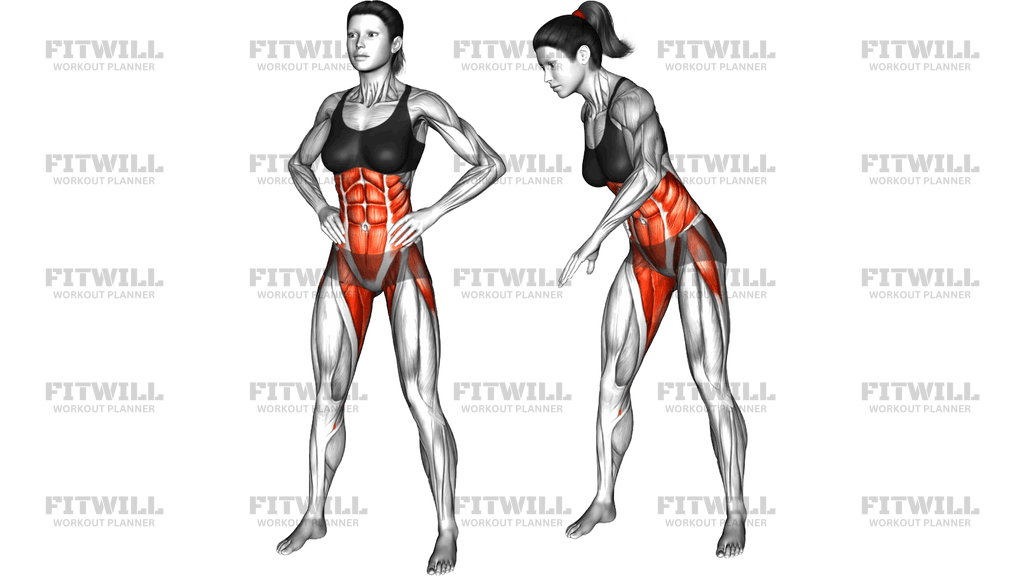
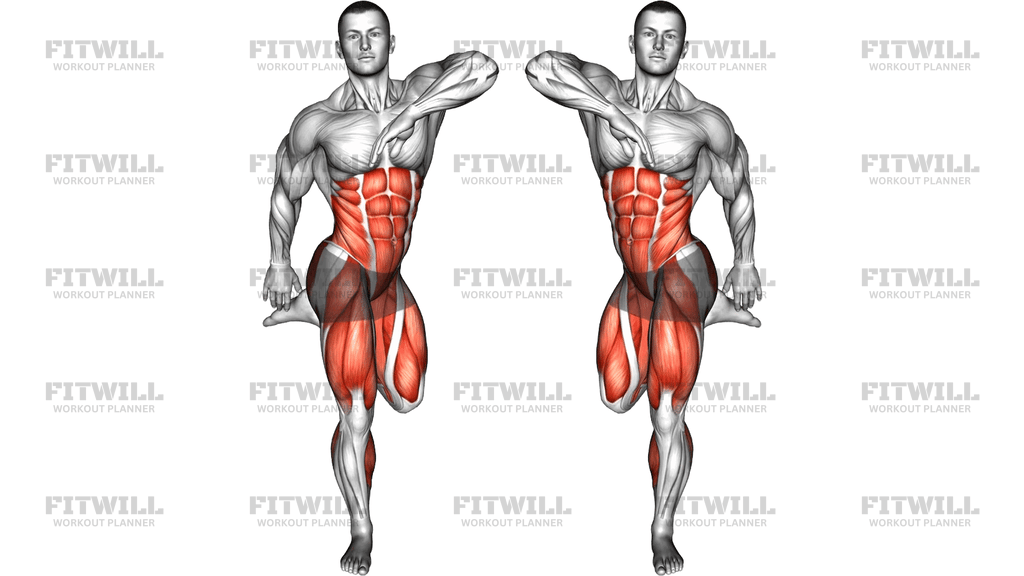
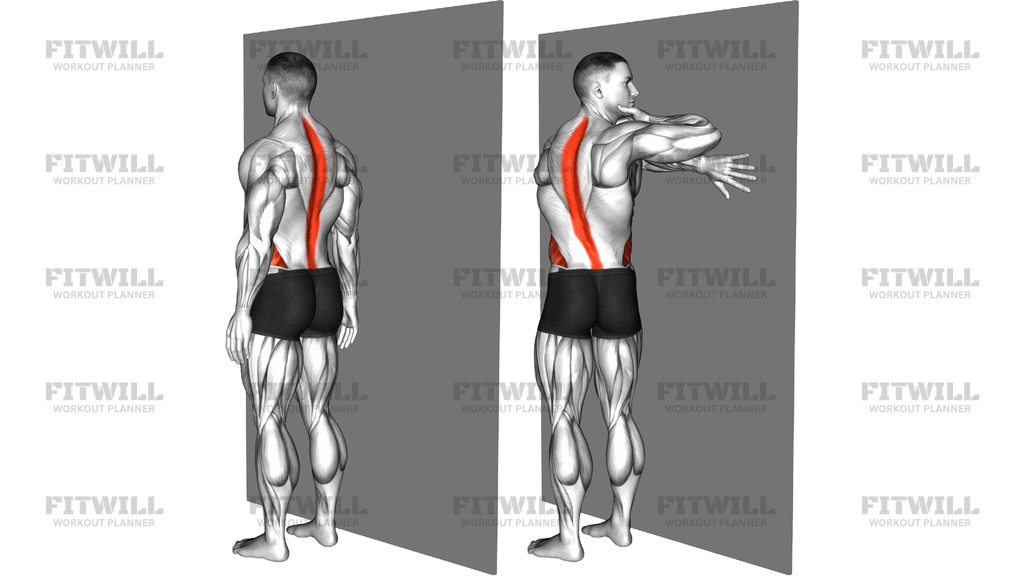
The Standing Spinal Rotation Stretch Against Wall is a simple rotational stretch performed with your back close to a wall, which acts as a fixed reference point for your pelvis and spine. From a tall standing position, you rotate your upper body to one side, lifting one bent arm with the hand near your chin while the other arm swings across your body. The wall keeps your lower body honest: because your back and hips stay close to it, the rotation has to come from your thoracic spine and waist rather than from your whole body swiveling around.
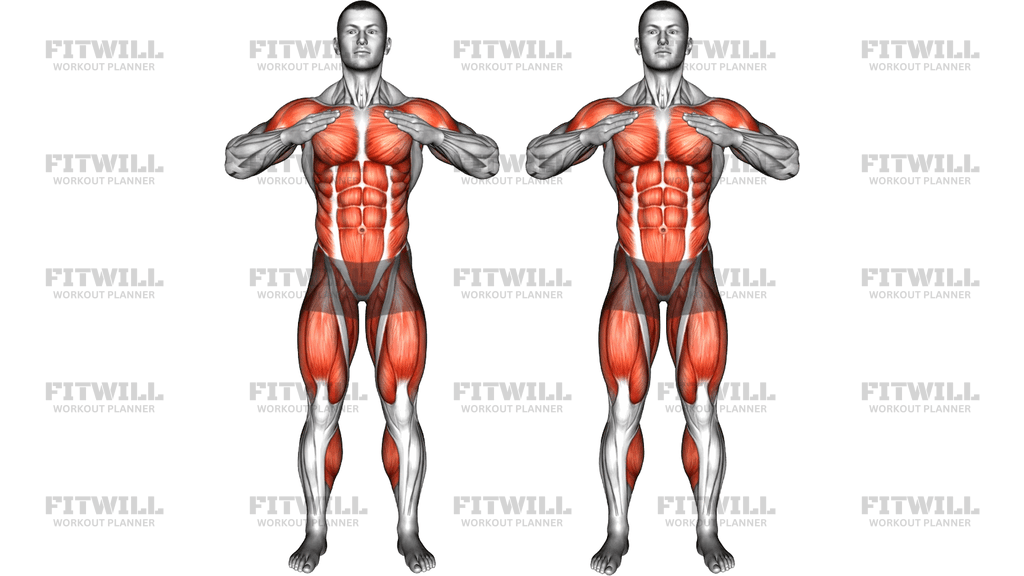
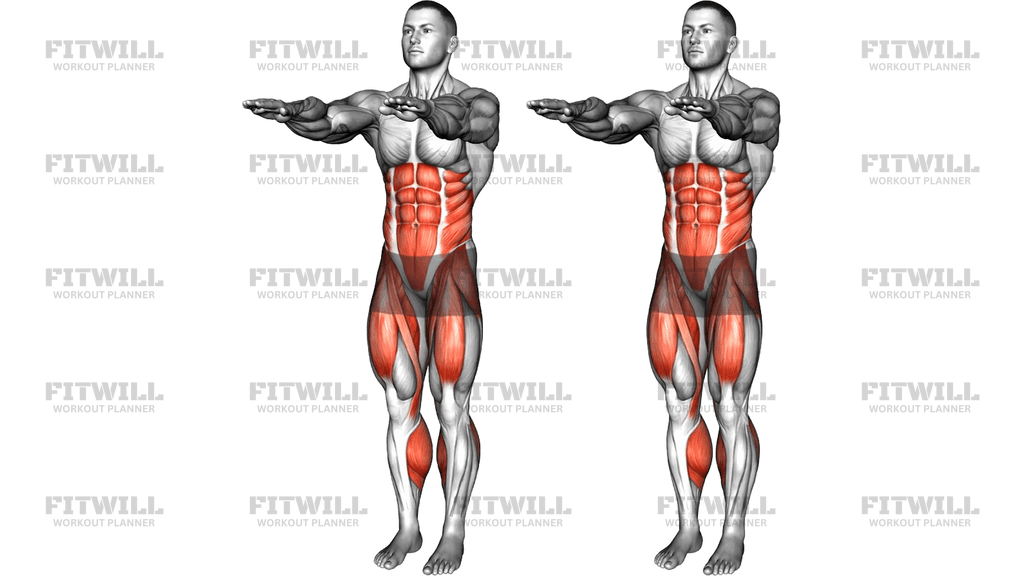
This stretch targets the obliques along the sides of your waist, the deep spinal rotators, and the erector spinae that run up the back, which is why these areas light up so visibly during the movement. It also gives a gentle opening through the chest and front of the shoulder on the rotating side. People who sit for long hours, lift weights, play rotational sports like golf or tennis, or simply feel stiff through the mid-back after waking up will get the most out of it.
The wall setup is what makes this version worth doing. With nothing behind you, it is easy to cheat by letting the hips turn with the shoulders, which turns a spinal rotation into a full-body turn and takes the stretch away from the waist. Standing with your back and glutes near the wall limits that drift, so the twist stays in the thoracic spine where mobility is usually needed most.
To execute it well, keep the rotation slow and deliberate, exhaling as you turn and pausing where you feel a comfortable stretch along the side of your waist and mid-back. Your head can follow the rotation slightly, guided by the hand near your chin, but avoid yanking your neck around. Keep both feet flat, knees soft but not bent deeply, and hips squared toward the wall as much as you can.
Use this stretch as part of a warm-up before training, between sets of heavy lower body or core work, or as a standalone mobility break during the day. One to two rounds of five to eight slow rotations per side is plenty for most people. Because it is done standing with no equipment, it is also an easy option for hotel rooms, offices, or anywhere you have a clear patch of wall.
[ Workout Log & Planner ]
Put your next workout in Fitwill
Keep your plan and training log ready when you are.


Instructions
- Stand with your back a few inches from a clear wall, feet about hip-width apart and pointing straight ahead.
- Let your arms hang relaxed at your sides, then raise one arm and bend the elbow so your hand rests lightly near your chin.
- Soften your knees slightly, brace your core gently, and take a tall posture with your glutes and shoulders close to the wall.
- Exhale and rotate your upper body to the side of the raised arm, letting the elbow travel back and around while your other arm swings across the front of your chest.
- Keep your hips and feet facing the wall so the twist comes from your waist and mid-back, not from your pelvis turning.
- At the end of the rotation, pause for two to three seconds and breathe steadily, feeling the stretch along the side of your waist and through the spine.
- Inhale and rotate back to the center under control, lowering the arm briefly before repeating.
- Complete five to eight slow rotations, then switch sides, placing the opposite hand near your chin and rotating the other way.
- Between repetitions, reset your stance and check that your back is still near the wall and your knees stay soft.
Tips & Tricks
- The most common mistake is letting the whole body pivot like a revolving door, with the feet and hips turning along with the shoulders. Glance down at your feet and hold them planted if the stretch feels like it is escaping.
- Do not pull on your neck with the hand at your chin. The hand is a guide for the rotation, not a lever; if your neck feels strained, lower the elbow slightly.
- If your lower back pinches instead of your waist stretching, reduce the range. The twist should be felt mostly between the shoulder blades and along the sides of the trunk, not as a deep lumbar crank.
- Exhaling into the rotation genuinely helps here. Trying to rotate with a full breath of air braces the trunk and shortens the movement.
- Keep the knees soft but avoid dropping into a deep squat, which changes the angle and lets the hips rotate instead of the spine.
- Move slower than feels necessary. Rushing the arm across the chest turns this into a momentum drill and you lose the pause where the stretch actually happens.
- If one side rotates noticeably further than the other, that is normal. Spend an extra repetition or two on the stiffer side rather than forcing it to match.
- Stand far enough from the wall that your swinging arm and elbow have room to pass, but close enough that your glutes almost brush it. Too far away and the wall stops doing its job.
Frequently Asked Questions
Which muscles does the Standing Spinal Rotation Stretch Against Wall target?
It primarily stretches the obliques along the sides of the waist, along with the deep spinal rotators and erector spinae of the mid and lower back. The chest and front shoulder on the rotating side also get a mild opening.
Why is the wall part of the setup?
The wall keeps your back and hips from drifting, which forces the rotation to come from the thoracic spine and waist instead of your whole body pivoting. Without it, most people unknowingly cheat the stretch by turning at the feet and pelvis.
Why does one hand rest near the chin during the rotation?
The raised bent elbow with the hand near the chin lengthens the side of the trunk as you turn, which increases the rotational range and gives the shoulder and chest a gentle stretch. It also acts as a guide so the head follows the rotation naturally.
Is this stretch suitable for beginners?
Yes, it is low-load, requires no equipment, and the range is easy to regulate. Beginners should simply rotate less far, keep the movement slow, and stop at the first point of a comfortable stretch rather than pushing for range.
Should my hips stay still during the rotation?
Mostly, yes. Your feet stay planted and hips stay oriented toward the wall so the twist concentrates in the spine and waist. A small amount of pelvic give at the end range is fine, but if the hips dominate the turn, the stretch is being wasted.
How many repetitions should I do per side?
Five to eight slow rotations per side, each with a two to three second pause at the end range, works well. You can repeat for a second round if you are using it as a warm-up before training.
What should I do if my lower back hurts during the stretch?
Reduce how far you rotate and focus on feeling the stretch between the shoulder blades and along the sides of the waist. If discomfort persists even at a small range, stop and choose a gentler rotation such as a seated or lying twist.
Can I substitute this with a floor-based spinal rotation?
Yes, a lying knee-across twist or a seated chair rotation covers similar ground. The wall version is unique because standing posture makes it easy to do anywhere and the wall actively blocks hip rotation.
When is the best time to use the Standing Spinal Rotation Stretch Against Wall?
It works well before workouts involving rotation or heavy lifting, and as a mobility break during long sitting periods. Keep the movements slow and controlled whether you are warming up or unwinding.