Bodyweight Balance Squat With Pillow
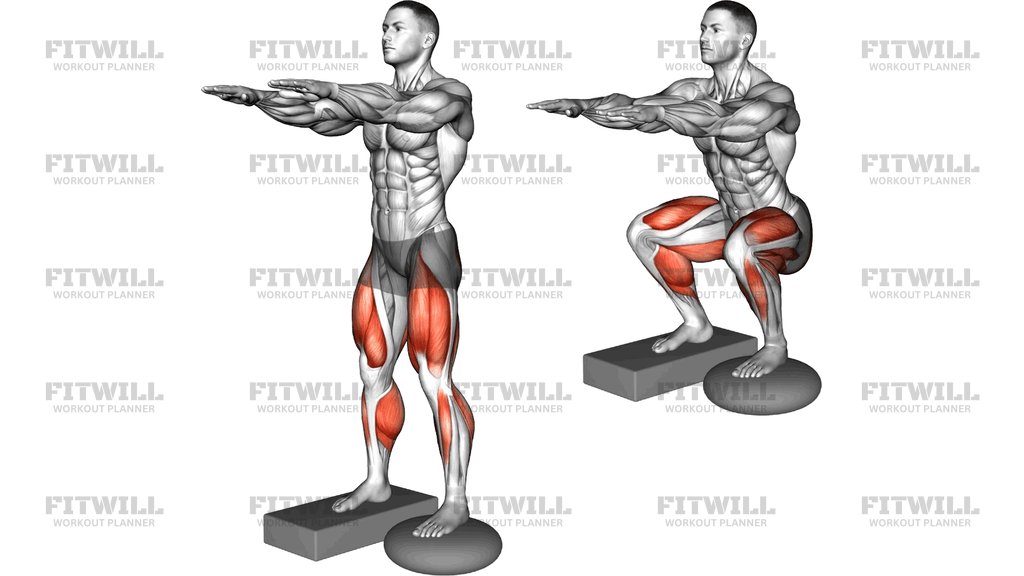
The Bodyweight Balance Squat With Pillow is a split-stance squat performed with one foot planted on a firm, elevated surface such as a low step or block, and the other foot resting on a soft pillow or balance pad. Your arms reach straight out in front of you for counterbalance, and you lower into a squat with both knees bending together before driving back up. The uneven footing is the whole point: one side of your body works from solid ground while the other side has to constantly correct itself on the unstable cushion.
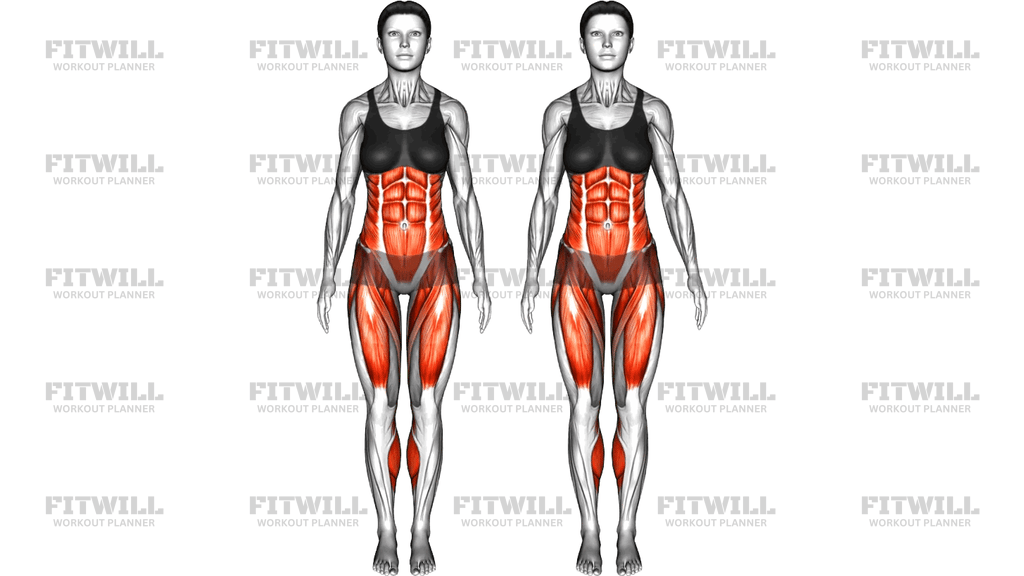
This setup shifts the exercise beyond a plain bodyweight squat. Your quadriceps and glutes still do the main lifting work, but the foot on the pillow forces the calves, ankle stabilizers, and the small muscles around the hip to work overtime just to keep you level. Your core stays engaged the entire time to hold your torso upright while the two halves of your body receive different feedback from the ground.
The setup matters more than it looks. Placing the front foot on the firm block and the rear foot on the pillow creates a staggered base, so each leg contributes differently to the squat. If the pillow is too soft or too high, or the block is too tall, the movement turns into a balancing act instead of a squat. Aim for a setup where the pillow is roughly the same height as the block so your pelvis stays reasonably level at the top.
To execute it well, keep your chest tall, arms extended forward at shoulder height, and push your hips back and down as both knees bend in the same direction. The heel on the block and the whole foot on the pillow should stay in contact with their surfaces throughout. Descend only as deep as you can while keeping the pillow foot from rolling outward or inward, then press evenly through both feet to stand back up.
This exercise suits lifters rehabbing ankle stiffness, beginners building confidence for single-leg work, and anyone who wants to expose left-right differences in stability. Because there is no external load, the main risks are wobbling off the pillow or letting the front knee collapse inward, both of which are solved by slowing down and reducing depth. Keep a wall or sturdy chair within reach when you first try it.
Use the Bodyweight Balance Squat With Pillow as a warm-up primer, a stability accessory on leg days, or a standalone challenge when you have no equipment beyond a cushion and a step. Two to three sets of eight to twelve controlled reps per side is a sensible starting point, with the pillow switching sides each set.
[ Workout Log & Planner ]
Put your next workout in Fitwill
Keep your plan and training log ready when you are.


Instructions
- Place a low block or step on the floor and set a firm pillow or balance pad on the ground beside it, close enough that both feet can rest on their surfaces at the same time.
- Stand facing forward with one foot fully on the block and the other foot centered on the pillow, feet about hip-width apart so your stance feels staggered but stable.
- Extend both arms straight out in front of your chest at shoulder height, palms facing down, to serve as a counterbalance.
- Brace your core, lift your chest, and look straight ahead rather than down at your feet.
- Push your hips back and bend both knees together, letting the block-side knee travel forward over the block while the pillow-side hip stays level.
- Lower until your thighs reach a comfortable squat depth, keeping the entire pillow foot flat and the block heel down.
- Pause briefly at the bottom and make small corrections through the pillow foot to stop any wobbling.
- Press through the whole front foot and the mid-foot on the pillow to drive back up to a full stand.
- Exhale as you rise and inhale as you lower, keeping the breathing steady throughout the set.
- Finish all reps, step off carefully, switch the pillow to the other foot, and repeat on the second side.
Tips & Tricks
- If the pillow foot keeps rolling to the outside edge, spread your toes inside the pillow and imagine gripping it lightly rather than just resting on it.
- A pillow that is too soft turns this into a wobble drill; a firmer cushion or folded yoga mat keeps the squat as the main event.
- Keep both knees pointing in the same direction as their toes; the most common breakdown is the pillow-side knee caving inward as you fatigue.
- Do not let the block-side heel lift. If it does, the block is too high or you are shifting your weight away from the pillow too aggressively.
- Hold a wall or doorframe with one hand for the first set if the wobble is overwhelming, then progress to arms-only balance.
- Keep your hips square to the front. Many people rotate the pillow-side hip back to gain balance, which shortchanges the glutes on that side.
- Slow the lowering phase to a two- or three-count; the unstable surface rewards controlled tempo far more than speed.
- If your arms drop as you fatigue, balance gets dramatically harder, so treat the forward reach as part of the exercise, not a formality.
- Do this drill barefoot or in flat shoes so you can feel pressure shifts through the pillow foot and respond quickly.
Frequently Asked Questions
What muscles does the Bodyweight Balance Squat With Pillow work?
The quadriceps and glutes do the primary squatting work, while the calves and ankle stabilizers on the pillow side work hard to keep you level. The core stays active to hold your torso upright on the uneven footing.
Why is one foot on a pillow instead of both feet on the floor?
The pillow creates uneven ground that forces the stabilizing muscles of the ankle and hip to constantly correct your balance. One foot stays on a firm block so the movement still resembles a real squat rather than pure balancing.
Can beginners do the Bodyweight Balance Squat With Pillow?
Yes, as long as they reduce the depth and keep a wall or chair nearby for the first sessions. Beginners often benefit most from this drill because it builds the ankle and hip stability needed for later single-leg exercises.
How deep should I squat with my foot on the pillow?
Descend only to the depth where the pillow foot stays flat and your hips remain level. Even a partial squat performed with steady balance is more productive here than a deep squat where the cushion foot rolls or the knee collapses.
What can I use if I do not have a pillow and a block?
A folded yoga mat, folded towel, or balance pad works in place of the pillow, and any stable low step, sturdy book stack, or curb-height platform works for the firm side. Just keep both surfaces close to the same height.
Why do my arms need to stay extended forward?
The forward reach shifts your center of mass slightly forward and gives you a counterbalance, which makes it easier to sit the hips back while your base is unstable. Dropping the arms usually coincides with losing balance on the pillow.
Is it a problem if one side wobbles much more than the other?
That asymmetry is common and is exactly what this exercise exposes. Spend an extra set on the weaker side, but if one side feels unstable along with pain or numbness rather than simple wobble, regress to both feet on flat ground.
Should my knees travel forward over the block and pillow?
Some forward knee travel is normal, especially on the block side, as long as the knee keeps tracking over the toes. Avoid forcing extra depth by shoving the knees forward; let the hips lead the descent instead.
How does this compare to a regular bodyweight squat?
The pillow setup trades some load potential for much greater balance and ankle-stability demand. It is best used alongside normal squats as a stability accessory, not as your only leg exercise.
Is the Bodyweight Balance Squat With Pillow safe for the knees?
With no external load and a controllable depth, it is generally knee-friendly, but keep the pillow-side knee from caving inward and stop if you feel sharp joint pain. Standing near a support removes most of the fall risk while you learn the movement.