Elastic Bed Jumping
Elastic Bed Jumping is a rebounding exercise performed on a small trampoline, often called a mini trampoline or rebounder. You stand centered on the elastic mat with your feet about hip-width apart and bounce by pushing through the balls of your feet, letting the bed absorb your landing and spring you back up. The movement looks simple, but it asks your legs to produce force and absorb it over and over, which is exactly what makes it an effective conditioning tool.
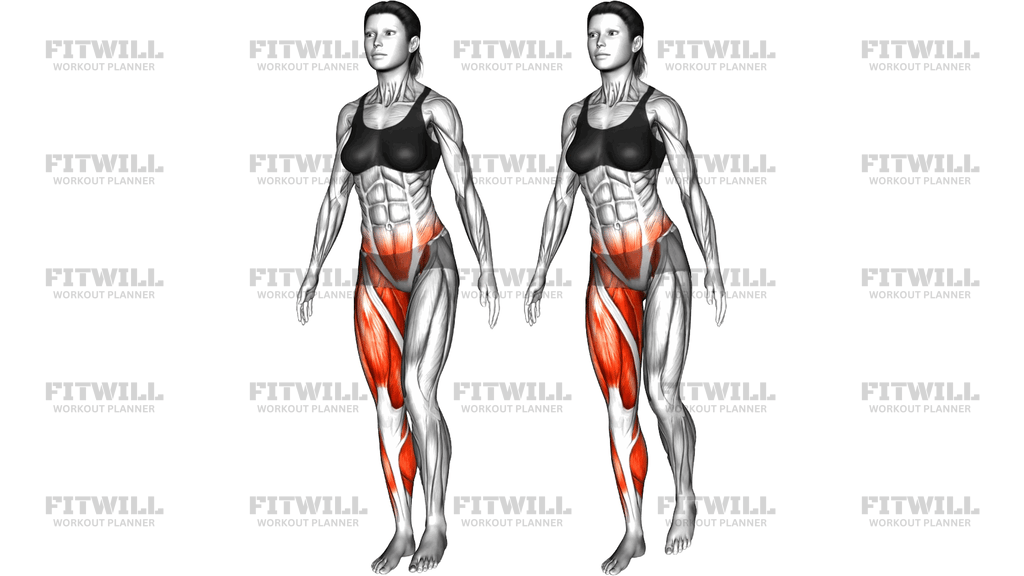
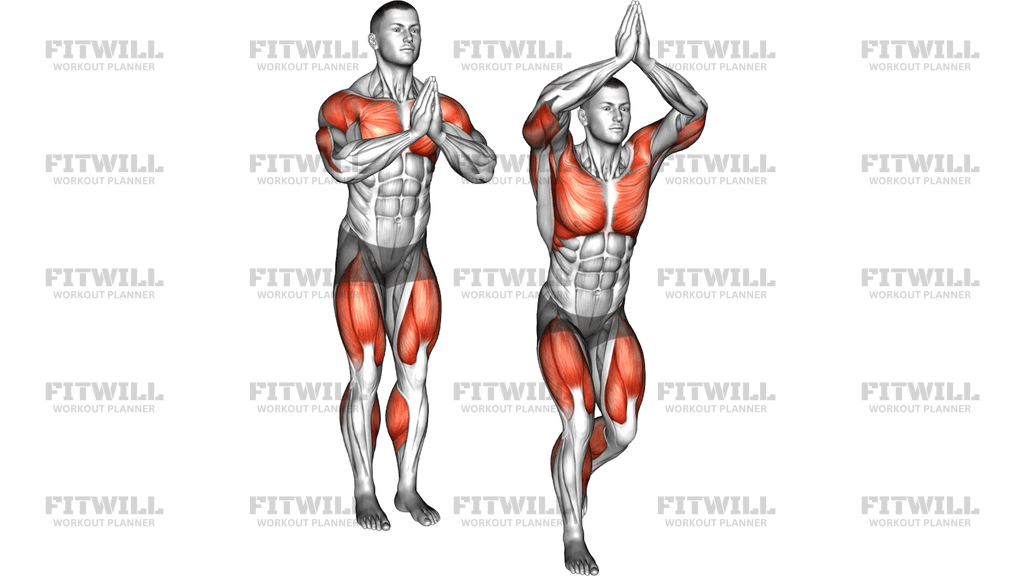
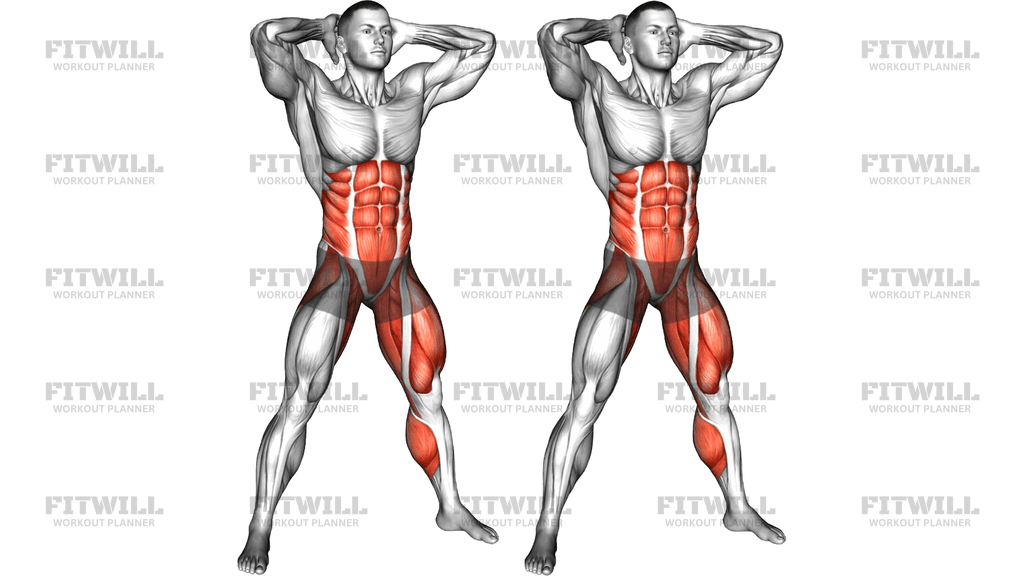
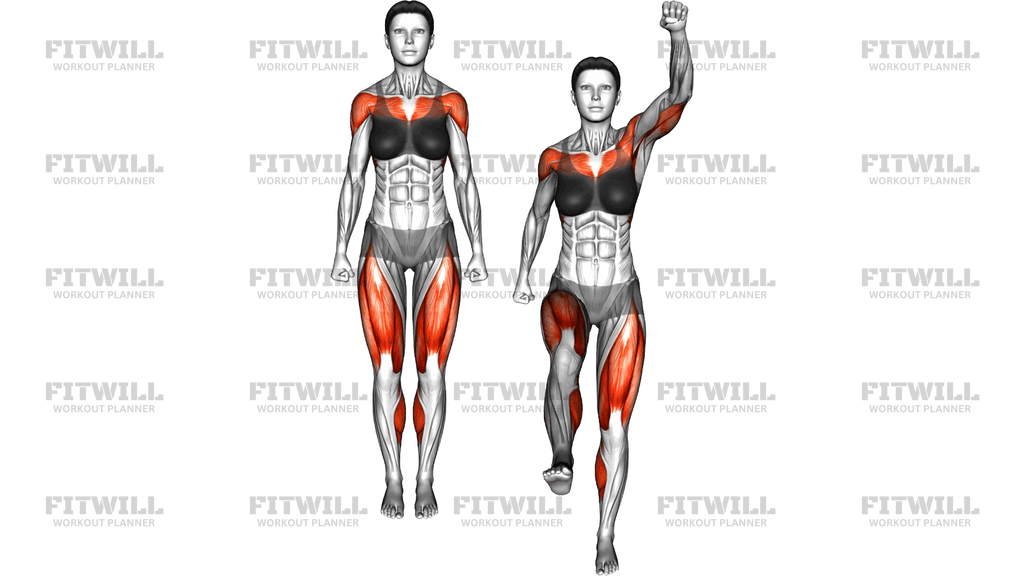
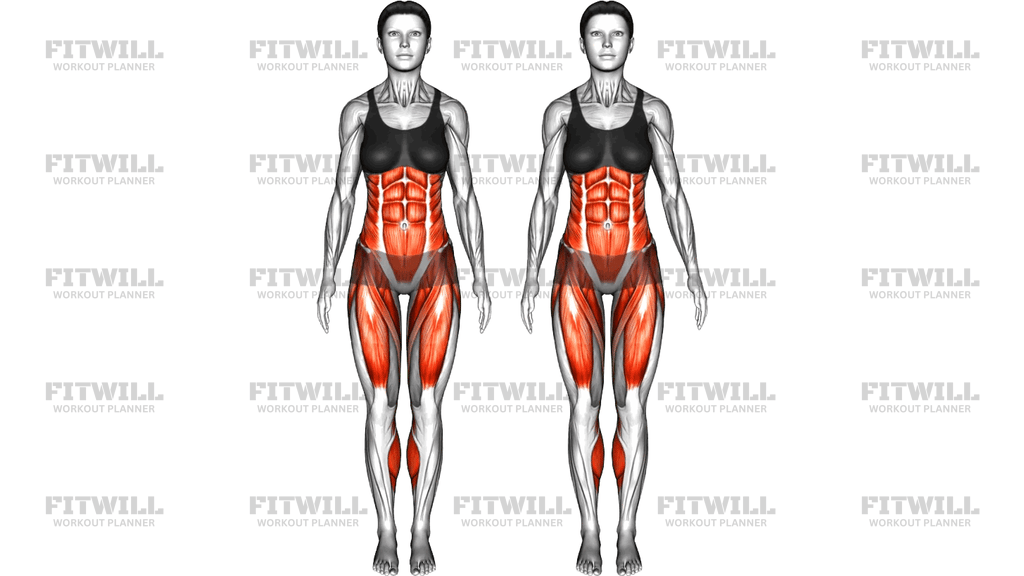
The highlighted muscles in this movement are the quads and calves, with the glutes and hamstrings assisting on each push and the core working quietly to keep your torso upright and balanced on an unstable surface. Because the mat cushions each landing, the impact on your knees, hips, and ankles is much lower than jumping on hard ground, so you can accumulate a lot of repetitions without the same joint stress.
This exercise suits a wide range of people. Beginners can use small, gentle bounces to build ankle stability and cardiovascular fitness, while more advanced trainees can raise the intensity with higher jumps or continuous intervals. It is especially useful for anyone who wants cardio that is easier on the joints, for athletes building landing mechanics, and for people returning to impact activity who need a gradual bridge back to harder surfaces.
Setup matters more than it appears. Stand in the middle of the mat, not near the edge, so the bed gives even resistance under both feet. Keep your knees slightly bent, torso tall, and eyes forward. The bounce should come from an ankle and knee push, not from collapsing and letting the mat toss you around. If your knees lock out or your heels slam down, the cushioning benefit disappears quickly.
To execute well, press evenly through both feet, extend your legs into the bounce, and land softly on the balls of your feet with your knees tracking over your toes. Your heels may kiss the mat lightly, but your weight should stay forward. Let your arms hang relaxed or swing naturally with the rhythm. Keep each rebound controlled rather than chasing height, especially in your first few sessions.
A typical use case is five to fifteen minutes of continuous bouncing, either as a warm-up, a standalone cardio block, or intervals mixed with strength work. If you feel unsteady at first, keep the bounces small or hold a stable support nearby until your balance adapts. Wear supportive footwear or go barefoot on a quality rebounder, and stop if the frame wobbles or the surface feels uneven.
[ Workout Log & Planner ]
Put your next workout in Fitwill
Keep your plan and training log ready when you are.


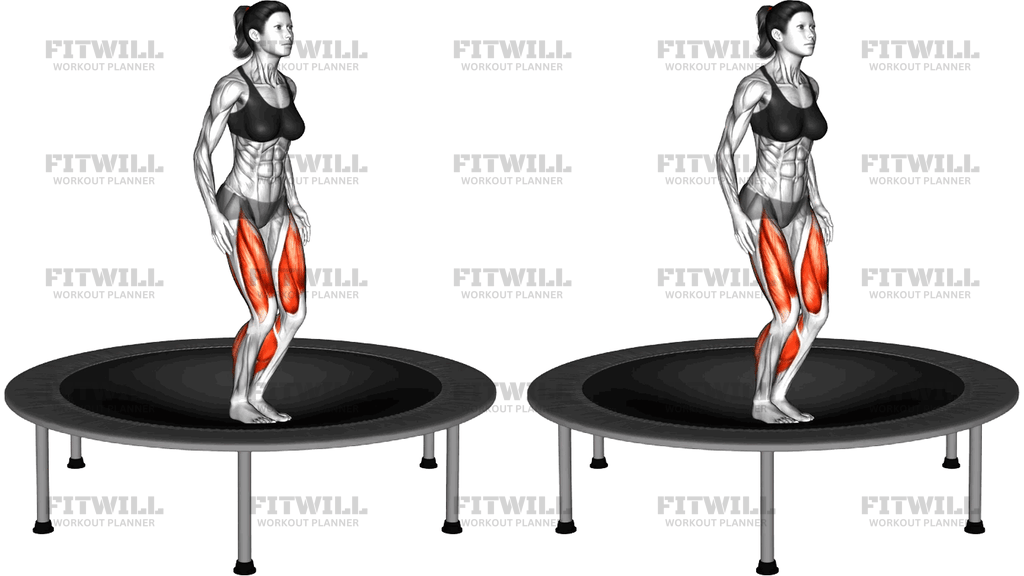
Instructions
- Place the mini trampoline on a flat, stable floor and stand in the center of the elastic mat with your feet hip-width apart.
- Let your arms hang relaxed at your sides, pull your shoulders back, and look straight ahead at a fixed point to help your balance.
- Soften your knees to about a quarter bend and shift your weight onto the balls of your feet.
- Brace your core lightly, as if preparing for a gentle nudge to the waist, and keep your ribcage stacked over your hips.
- Push evenly through both feet to extend your ankles and knees, bouncing upward a few centimeters to start.
- Land on the balls of your feet with knees softly bent, letting the elastic mat absorb the impact and rebound you back up.
- Find a steady rhythm, keeping your heels light on the mat and your knees tracking in line with your toes on every landing.
- Breathe steadily throughout, exhaling on the upward push and inhaling as you descend into each landing.
- When you finish, slow the bounce down over several repetitions until you come to a full stop, then step off the trampoline sideways rather than jumping off.
Tips & Tricks
- The most common mistake is bouncing from the knees alone and letting the upper body pitch forward; drive the bounce from your ankles while keeping your torso tall.
- If your heels slam into the mat, the bounces are too high for your control level — reduce the height until you can land quietly every time.
- Avoid locking your knees at the top of the bounce; keep a small bend so the quads and calves keep working and the landing stays absorbable.
- Staring down at your feet throws off your balance on the unstable mat; fix your gaze on a point at eye level in front of you.
- Do not drift toward the edge of the trampoline, where the elastic response is uneven; re-center your feet whenever you feel the mat tilt.
- If your calves cramp in the first sessions, that is normal adaptation to the constant ankle work — shorten the set length and stretch them between rounds.
- Use your arms deliberately once you are steady: a light natural swing with the bounce adds rhythm and a small amount of extra demand.
- Bouncing with a fully straight, rigid spine turns the rebound into jolts through your joints; keep a soft, springy posture from ankles to shoulders.
- Stop the set with controlled, smaller bounces instead of jumping off mid-bounce, which is when most ankle rolls and missteps happen.
Frequently Asked Questions
What muscles does Elastic Bed Jumping work?
The quads and calves do most of the pushing and shock absorption on every bounce, while the glutes and hamstrings assist the drive. Your core also stays engaged the whole time to keep you balanced on the moving mat.
Is Elastic Bed Jumping suitable for beginners?
Yes, it is one of the more beginner-friendly cardio options because the elastic mat cushions the landings. Start with low, slow bounces for a few minutes and only increase height or duration once you feel stable.
Should I wear shoes or go barefoot on the trampoline?
Both work. Athletic shoes with a flat sole give extra stability, while barefoot bouncing strengthens the small muscles of the feet — just make sure the mat surface is clean and intact.
Why do I land on the balls of my feet instead of flat-footed?
Landing on the balls of your feet lets your calves and ankles absorb and reuse the rebound, and it keeps the mat from bottoming out under your heels. Flat, heel-heavy landings defeat the cushioning and can feel jarring.
How is Elastic Bed Jumping different from jumping rope?
Jumping rope demands repeated hard landings on a hard surface, while the rebounder returns energy through the elastic bed and reduces impact. The trampoline version also adds a balance challenge because the surface moves under you.
How long should a session last?
Five to fifteen minutes of continuous bouncing is a solid block for most people, and intervals of 30 to 60 seconds of faster bouncing work well inside a circuit. Build duration gradually as your calves and balance adapt.
What should I do if I feel wobbly or off balance?
Shrink the bounce height immediately, re-center your feet in the middle of the mat, and fix your eyes on a point ahead of you. If instability continues, place the trampoline near a wall or sturdy rail you can touch for support.
Can I substitute Elastic Bed Jumping if I do not have a trampoline?
Low vertical hops on a rubberized floor or a folded exercise mat are the closest substitute, though the impact will be higher. Keep the jumps small and land softly on the balls of your feet to protect your joints.
Is it safe for people with knee problems?
The reduced landing impact often makes rebounding easier on the knees than ground-based jumping, but knee comfort varies from person to person. Keep bounces shallow, avoid locking the knees, and check with a professional if you have a current injury.