Dumbbell Isometric Wrist Flexion Over Bench
Dumbbell Isometric Wrist Flexion Over Bench is a forearm isolation exercise performed in a kneeling position with your forearm supported along a flat bench. Instead of curling the weight through repeated repetitions, you hold the dumbbell with an underhand grip and maintain a fixed, contracted wrist position against gravity for a set period of time. That sustained hold is what separates this from a standard wrist curl, shifting the emphasis toward continuous tension and endurance in the wrist flexor muscles on the inside of the forearm.
This movement is a solid choice for anyone whose grip gives out before their larger muscles do. Climbers, tennis and golf players, martial artists, and lifters who struggle to hold heavy bars during deadlifts or rows all benefit from dedicated flexor work. It is also commonly used in rehab-style settings because the fixed position removes the repetitive motion that can aggravate irritated wrists, letting you load the tissue steadily instead.
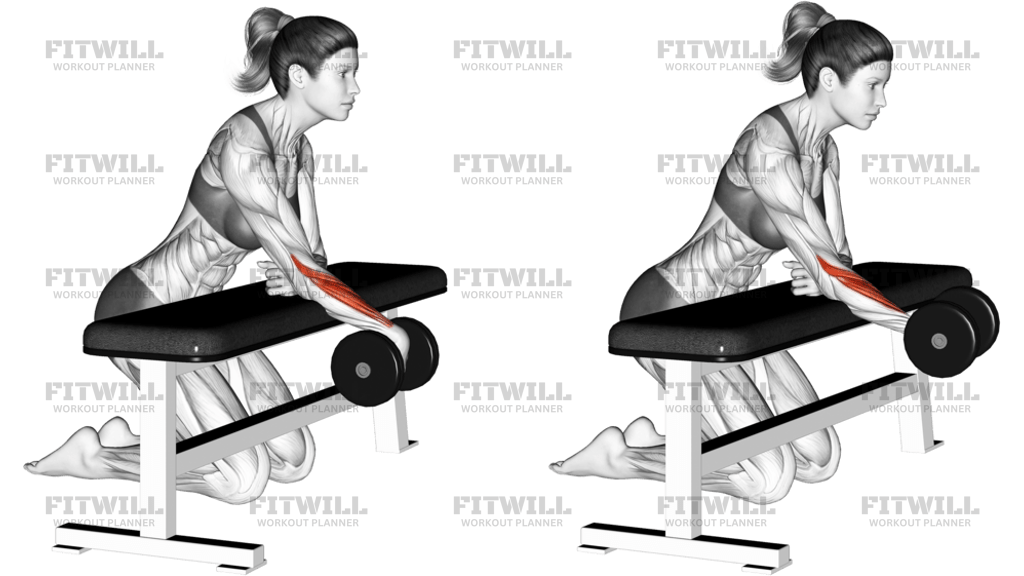
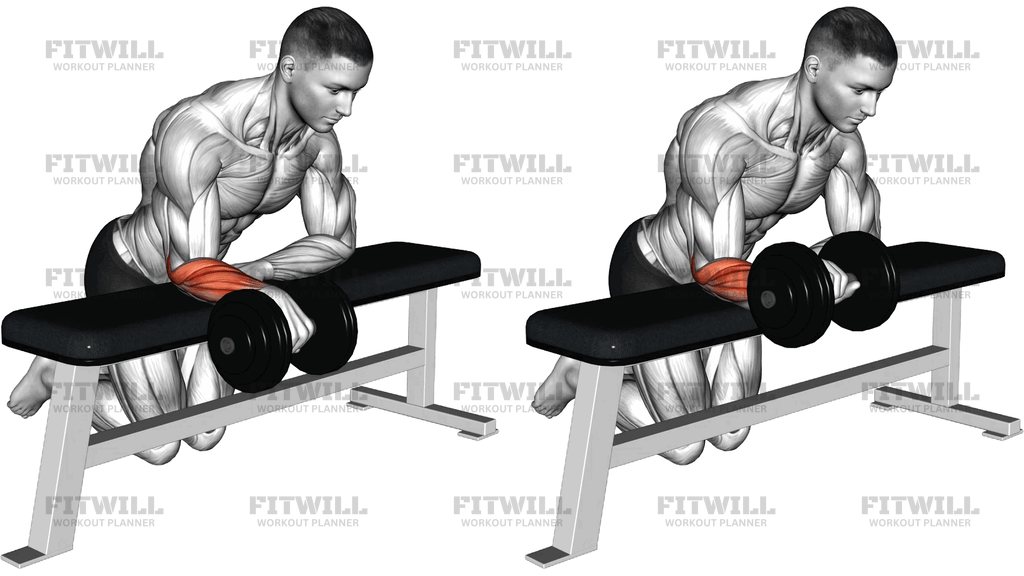
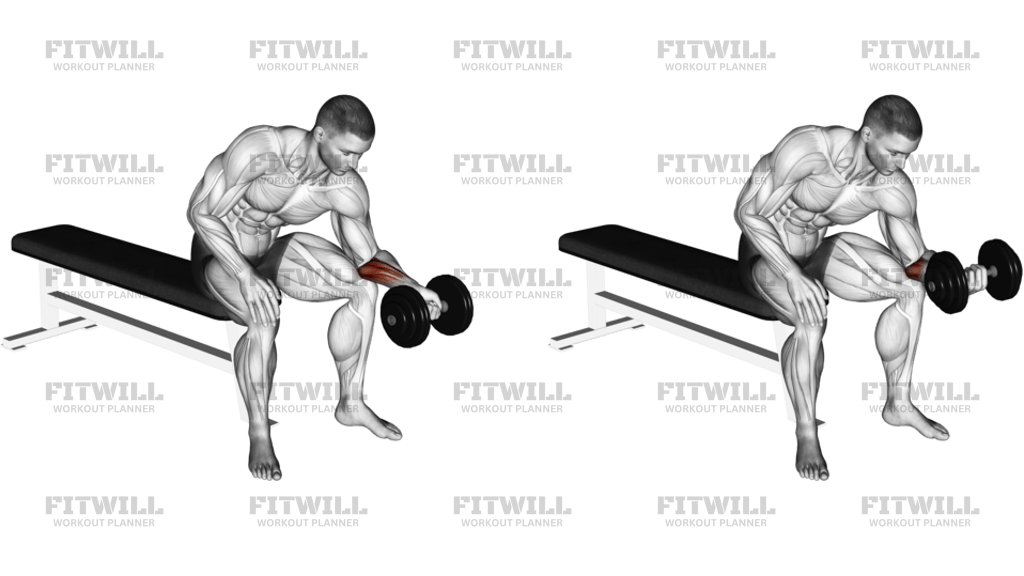
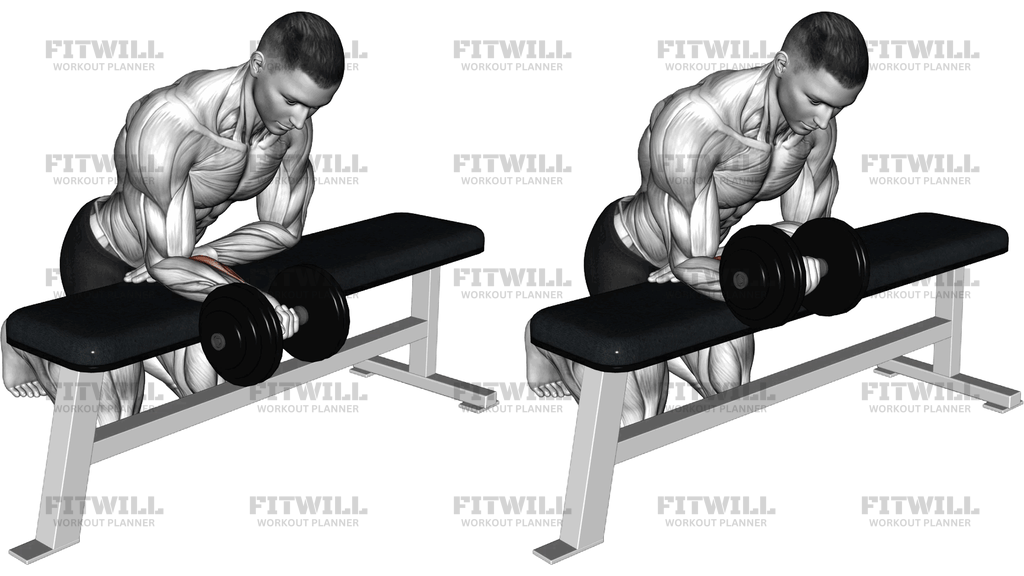
The kneeling setup matters more than it looks. Resting your forearm flat on the bench with your hand hanging just past the edge pins the elbow in place, so the effort comes purely from the wrist joint rather than from swinging the arm or cheating with the shoulder. In the demonstrated position, the lifter kneels beside the bench, drapes the working forearm along the pad, and holds the dumbbell so the knuckles face up in a supinated grip.
To execute it well, curl the wrist upward so the hand rises toward the ceiling, then freeze that top position and hold it without letting the dumbbell drift backward toward your fingers or sink toward the floor. Your forearm should stay glued to the bench the entire time, and your breathing should stay calm and steady rather than held. The burn builds quickly in isometric holds, so pick a weight you can sustain for the full duration with clean positioning.
A few practical points keep this exercise safe and productive. Start light, since isometric wrist work feels far harder than the number on the dumbbell suggests. Keep the wrist straight in line with the forearm rather than bent sideways, and stop the set if you feel sharp pain rather than muscular fatigue. Because the hold is static, rest briefly between sides and use these holds as a finisher after main lifts or as targeted forearm work on grip-focused days.
[ Workout Log & Planner ]
Put your next workout in Fitwill
Keep your plan and training log ready when you are.


Instructions
- Kneel on the floor beside a flat bench and rest your working forearm along the bench pad, running from elbow to just before the wrist.
- Hold a dumbbell in that hand with an underhand, supinated grip so your palm faces the ceiling, and let the hand hang slightly past the edge of the bench.
- Place your opposite hand on the bench or on your forearm to keep the working arm from shifting during the hold.
- Set your shoulders down and back, brace your trunk lightly, and keep your neck relaxed as you look down at the bench.
- Curl your wrist upward by pulling your knuckles toward the ceiling until your hand is fully flexed and the dumbbell sits at the top of the range.
- Hold that top position isometrically, keeping the dumbbell stacked over the dumbbell head and preventing it from rolling back into your fingers.
- Keep your forearm pressed flat against the bench for the entire hold; do not let the elbow lift or the shoulder round forward.
- Breathe steadily throughout the hold, inhaling and exhaling through the nose rather than holding your breath.
- When the hold time is up, slowly lower the wrist back to a neutral position, switch hands, and rest before repeating on the other side.
Tips & Tricks
- Choose a lighter dumbbell than you would use for dynamic wrist curls; a static hold at the top is much harder than the same weight moved for reps.
- The most common mistake is letting the dumbbell roll back into the fingertips, which turns the hold into a finger exercise; keep the handle seated firmly in your palm.
- If your elbow lifts off the bench as fatigue sets in, end the set rather than compensating with the upper arm.
- Keep the wrist stacked directly over the forearm; letting it bend sideways toward the thumb or pinky shifts stress onto the joint instead of the flexors.
- Grip the handle with moderate pressure; squeezing the dumbbell to death shifts tension away from the wrist flexors and into the hands prematurely.
- Count the hold in seconds and progress by adding time before adding weight, since isometric strength adapts well to longer durations.
- If the bench edge digs into your forearm, slide slightly back so more of the forearm rests on the pad, but keep the wrist free to move.
- Warm the wrists up with a few slow dynamic curls before your first hold to reduce the shock of going straight into a static contraction.
Frequently Asked Questions
Which muscles does Dumbbell Isometric Wrist Flexion Over Bench work?
It primarily targets the wrist flexors on the inside of the forearm, including the flexor carpi radialis and flexor carpi ulnaris. The grip muscles and surrounding forearm stabilizers also work to hold the dumbbell steady throughout the isometric hold.
Why is this exercise isometric instead of using wrist curl repetitions?
Holding the top position keeps the wrist flexors under continuous tension without repeated joint movement. This builds time-under-tension endurance and is often easier on irritated wrists than high-repetition curling.
Is Dumbbell Isometric Wrist Flexion Over Bench suitable for beginners?
Yes, as long as a light dumbbell is used and the hold time starts short, around 15 to 20 seconds per side. The bench support makes it easy to learn because the arm position is fixed and hard to get wrong.
Why do I kneel next to the bench instead of sitting for this exercise?
Kneeling lets you position the bench at a height where your forearm rests flat with the shoulder relaxed and the elbow pinned. This removes momentum and keeps all the effort at the wrist joint.
How long should I hold the dumbbell at the top position?
Start with 15 to 30 seconds per side and build toward 45 to 60 seconds as your forearm endurance improves. Once you can hold cleanly for a long duration, increase the weight slightly instead of extending the time indefinitely.
My dumbbell keeps rolling toward my fingers during the hold. What am I doing wrong?
The handle is drifting out of your palm, usually because the wrist angle is dropping or your grip pressure is fading. Reset the handle deep in your palm, re-curl the wrist to the top, and if it keeps happening, use a lighter dumbbell.
Can I do this exercise if I don't have a bench?
Yes, you can rest your forearm across your thigh while seated, or use a sturdy box or padded table. The key requirement is a stable surface that supports the forearm while the hand hangs free.
Should I feel this in my wrist joint?
You should feel muscular work in the forearm, not pinching or sharp pain in the wrist itself. If joint discomfort appears, reduce the weight, check that the wrist is not bending sideways, and shorten the hold.
Where does Dumbbell Isometric Wrist Flexion Over Bench fit into a workout?
It works best as a finisher after pulling or grip-heavy sessions, or as focused forearm work on dedicated grip days. Because it is fatiguing to the flexors, avoid placing it right before lifts that require a strong grip.
How do I progress this exercise over time?
Extend the hold duration first, then increase the dumbbell weight in small increments. You can also add a second set per side once you can complete the first with the forearm staying flat on the bench the whole time.