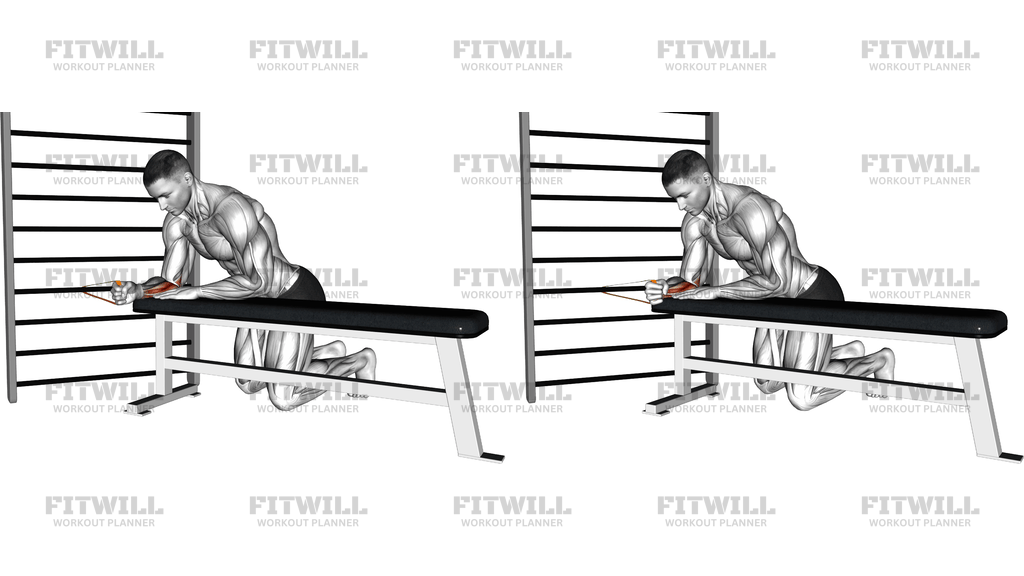
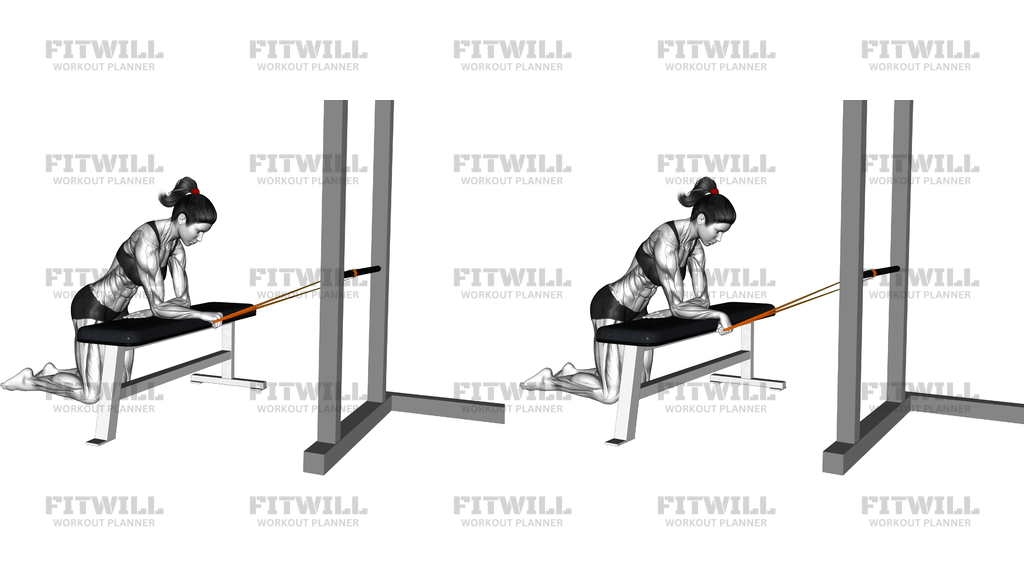
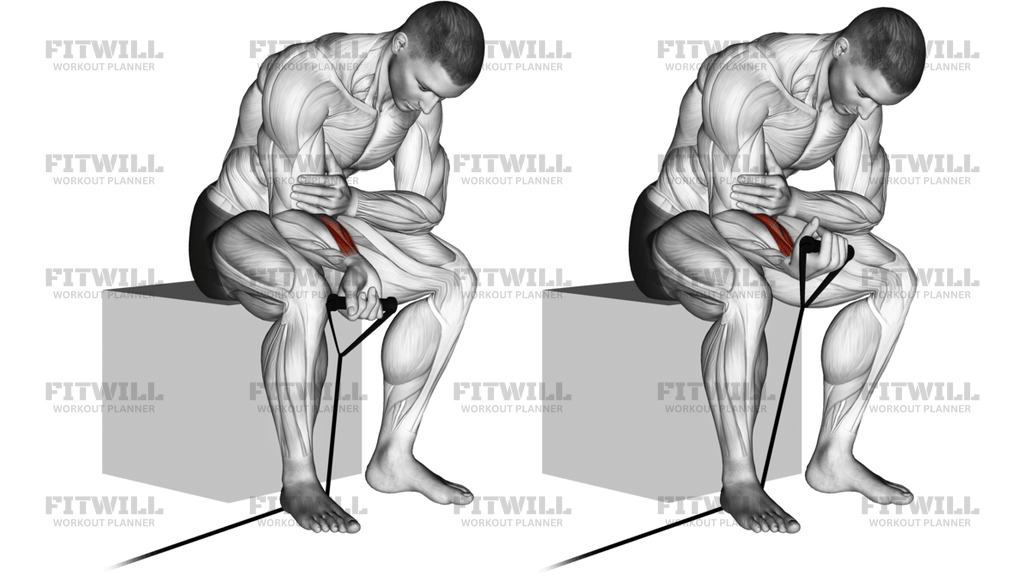
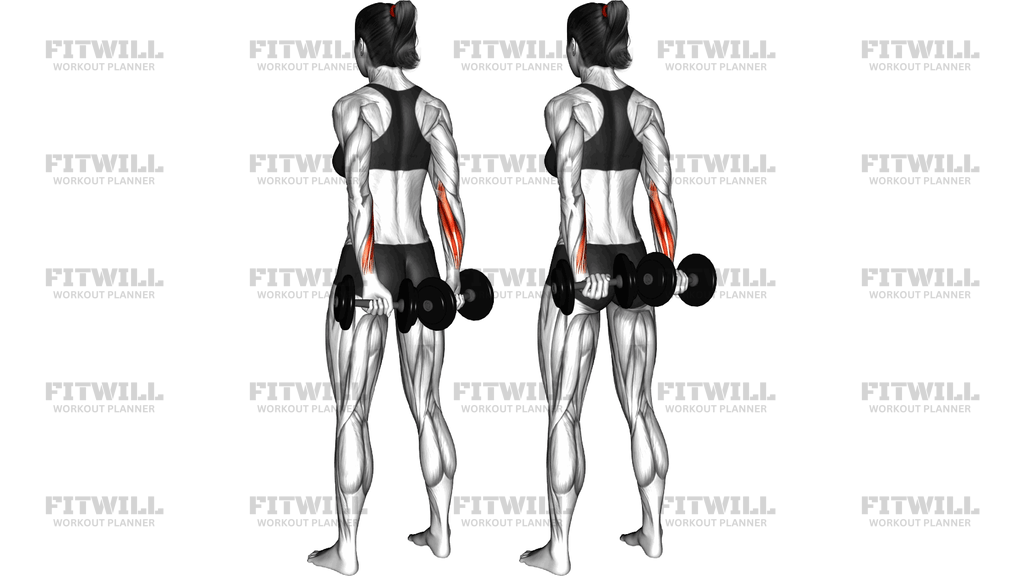
Resistance Band Weighted Standing Pronation Twist
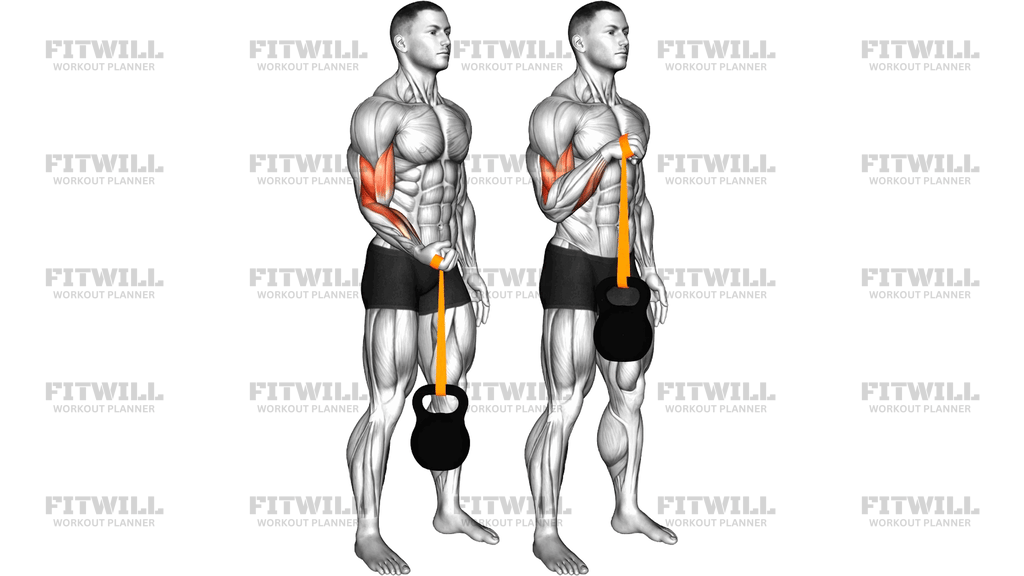
The Resistance Band Weighted Standing Pronation Twist is a forearm rotation exercise that combines a resistance band with a suspended kettlebell. The band is looped through the kettlebell handle and held in one hand so the weight hangs below your fist. From there, you rotate your forearm into pronation—turning the palm down and inward—so the band winds around your hand and shortens, lifting the kettlebell off the ground. You then reverse the rotation slowly to unwind the band and lower the weight under control.
This movement puts the focus squarely on the muscles that rotate and support the forearm. The pronators and wrist flexors do most of the twisting work, while the grip has to stay locked around the band the entire time, and the biceps work isometrically to hold the elbow position against the pull of the load. Because the resistance comes from a hanging weight rather than a fixed cable, the tension shifts slightly with every degree of rotation, which forces the smaller stabilizing muscles around the wrist and elbow to stay engaged.
This is a useful exercise for anyone who wants stronger, more resilient forearms: climbers who need rotational wrist strength, golfers and tennis players whose sports demand controlled pronation, combat athletes gripping and turning under load, or lifters whose grip is the weak link in pulling movements. It is also a practical accessory for rehab-style training after wrist or elbow irritation, provided the load is kept light and pain-free.
Setup matters more here than in most wrist work. The band must be anchored securely through the kettlebell handle, and the loop around your hand should sit across the palm so rotation winds it cleanly rather than slipping toward the fingers. Standing tall with the working elbow bent at your side and pinned close to the ribs keeps the rotation happening at the forearm, not the shoulder or torso.
To execute well, keep the movement slow and deliberate. Twist the wrist so the palm rotates down and across, winding the band one smooth layer at a time until the kettlebell rises near your waist or hip. Pause briefly at the fully wound position, then rotate back the other way just as slowly, resisting the weight's pull on the way down. The eccentric portion is where much of the strength benefit lives, so avoid letting the kettlebell drop or the band spin out unchecked.
Start with a light kettlebell and a band you can fully control for eight to twelve controlled twists per side. If your wrist aches, the band slips, or your form breaks down and the elbow drifts away from your body, the load is too heavy. This is a small-muscle exercise, and it rewards patience and precision far more than max weight.
[ Workout Log & Planner ]
Put your next workout in Fitwill
Keep your plan and training log ready when you are.


Instructions
- Stand with your feet about hip-width apart, knees soft, and posture tall with your shoulders relaxed.
- Loop one end of the resistance band through the kettlebell handle and secure it so the kettlebell hangs freely from the band.
- Grip the free end of the band in your working hand with a firm fist, letting the band hang down so the kettlebell dangles just above the floor with your arm extended.
- Bend your elbow to roughly 90 degrees and pin it against your side, keeping the forearm angled across your body and the wrist neutral to start.
- Brace your core and squeeze your shoulder blades down so your torso stays still throughout the set.
- Rotate your forearm into pronation, turning your palm down and inward so the band winds around your hand and lifts the kettlebell upward.
- Keep winding until the band is wrapped snugly and the kettlebell hangs at roughly waist height, then hold the top position for a beat.
- Slowly rotate your forearm back the other way, unwinding the band in a controlled fashion and lowering the kettlebell until your arm returns to the extended starting position.
- Exhale as you twist and lift the weight, and inhale as you unwind and lower it.
- Complete all repetitions on one side, reset your grip, then switch hands and repeat on the other arm.
Tips & Tricks
- Wind the band across the meat of your palm, not just the fingers—if it rides toward your fingertips, the kettlebell will tug the band loose mid-set.
- Keep your working elbow glued to your ribs; if it flares forward or drifts out, the rotation is coming from the shoulder instead of the forearm.
- Do not let the kettlebell free-fall on the way down. The controlled unwind is the hardest and most valuable part of the movement.
- If your wrist collapses inward or aches during the twist, drop to a lighter kettlebell before changing anything else.
- Stand far enough from the kettlebell's resting spot that it cannot swing into your legs when you unwind.
- Keep your grip firm but not strangled—over-squeezing the band fatigues the forearm flexors before the rotation muscles get their work.
- Avoid shrugging the working shoulder as the tension builds; think of keeping the shoulder blade pinned down and back.
- Slow the tempo down rather than adding weight if you want more challenge—this movement responds better to control than to load.
- Chalk or a dry towel on your hand helps if sweat makes the band slippery during longer sets.
- Do this exercise early in your forearm work, before grip-heavy pulling, so fatigue does not wreck your rotation quality.
Frequently Asked Questions
What muscles does the Resistance Band Weighted Standing Pronation Twist work?
The main work comes from the forearm pronators and wrist flexors that drive the twisting motion. Your grip holds the band throughout, and the biceps work isometrically to keep the elbow position stable against the hanging load.
Why is the band wound around my hand instead of attached to a fixed anchor?
Winding the band around your hand is what makes this a pronation exercise—as you rotate your forearm, the wrap shortens and lifts the kettlebell. It also trains grip and rotation together in one continuous motion.
Is the Resistance Band Weighted Standing Pronation Twist suitable for beginners?
Yes, as long as the kettlebell is light enough to control through a full, slow twist and unwind. Beginners should master the movement with no weight or a very light load before adding meaningful resistance.
Should my elbow stay bent or straight during the twist?
Start with the arm extended as the kettlebell hangs, then bend the elbow to about 90 degrees and pin it to your side before twisting. The elbow position should stay fixed; only the forearm rotates.
How heavy should the kettlebell be for this exercise?
Choose a weight you can lift through the full wind and lower over three to four seconds without the band slipping or your form breaking down. Most people need far less weight here than they expect.
What is the most common mistake in this movement?
Letting the kettlebell unwind too fast so the band spins out of the hand. If you cannot reverse the rotation slowly, the load is too heavy or your grip is fatigued.
Can I use a dumbbell or plate instead of a kettlebell?
Any object with a secure handle or attachment point works, such as a dumbbell with a loop strap or a loaded plate with a handle. The kettlebell handle is simply the easiest and safest way to hang the band.
How many reps and sets should I do?
Two to three sets of eight to twelve slow twists per side is a solid starting point. Because the eccentric lowering is demanding, prioritize tempo over adding reps quickly.
Is this exercise safe if I have wrist or elbow discomfort?
If you currently have pain in the wrist, forearm, or elbow, check with a qualified professional before loading rotation. Even without an issue, keep the range pain-free and stop if you feel sharp or pinching sensations.
How is the Resistance Band Weighted Standing Pronation Twist different from a regular wrist curl?
A wrist curl moves the wrist up and down, while this exercise rotates the forearm through pronation against a load. It targets the rotational muscles of the forearm that curls largely miss.