Resistance Band Kneeling Wrist Flexion Curl
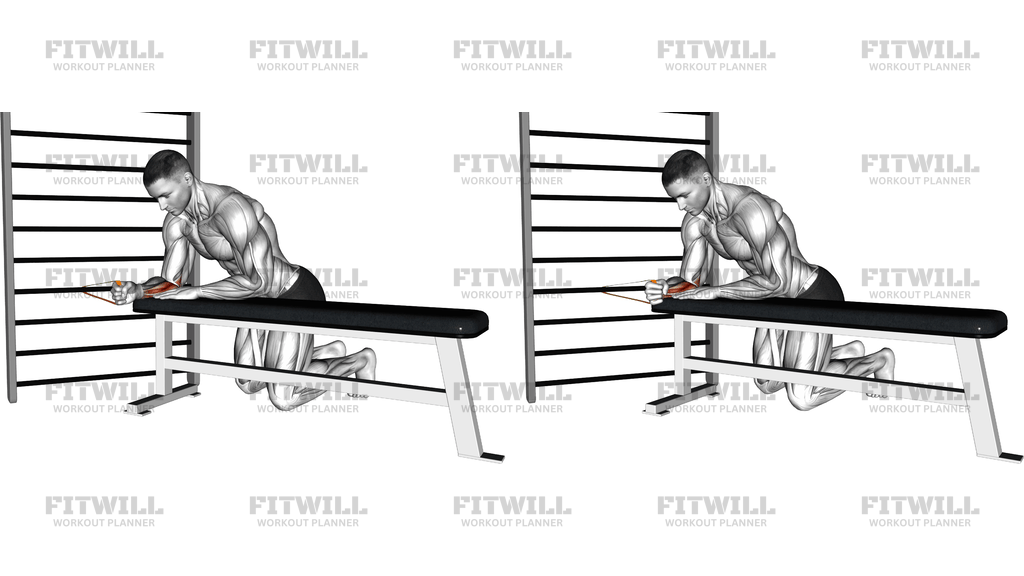
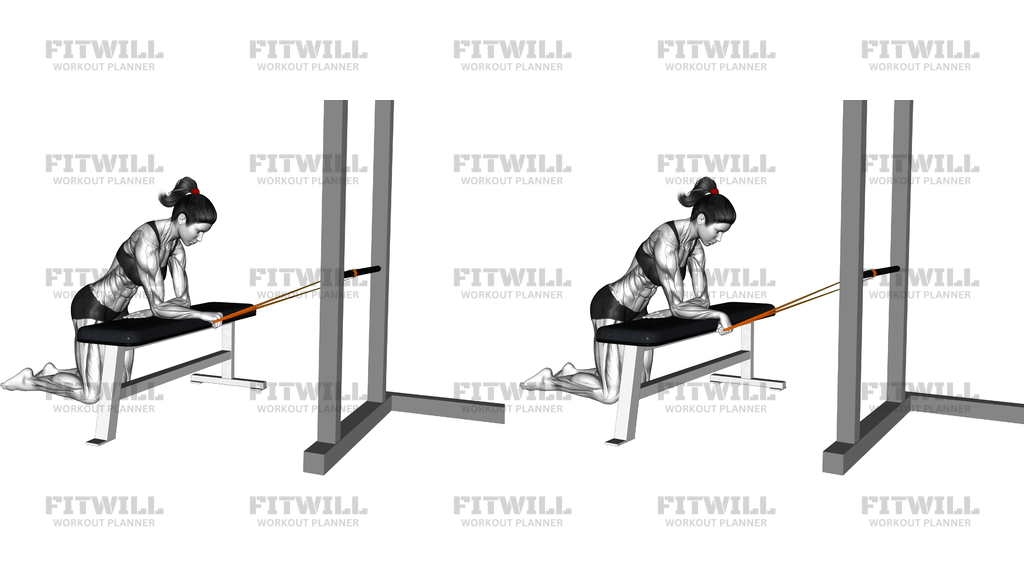
Resistance Band Kneeling Wrist Flexion Curl is a focused forearm exercise that trains the wrist flexors against the constant, smooth tension of a band. You kneel beside a flat bench, lay one forearm along the padded surface with your hand hanging over the edge, and curl your wrist upward as the band pulls your hand back toward the anchor point. Because the band is attached to a rack or similar stable structure, the resistance pulls away from you throughout the entire range, which keeps the flexors under tension even when the wrist is extended.
This setup is especially useful for lifters who want more forearm and grip work without adding heavy loads to the elbow joint. Climbers, golfers, tennis players, and martial artists all rely heavily on wrist flexion strength, and office workers who type for long hours often benefit from strengthening the front of the forearm to balance out the wrist extensors. Because the band offers light, scalable resistance, the movement also suits anyone rehabbing gradually after a wrist strain or simply easing into direct forearm training for the first time.
The kneeling position with the forearm supported on the bench is what makes this exercise work. With the forearm fixed flat against the pad, the elbow and shoulder cannot help, so the only moving joint is the wrist. That isolation lets you feel the flexor muscles on the palm side of the forearm contracting on every rep, and it removes the momentum and elbow drift that often sneak into standing wrist curls with dumbbells.
To execute it well, keep the movement small and deliberate. Let the band draw your hand down into a comfortable extension, then curl the wrist up by pulling your knuckles toward the inside of your forearm, squeezing at the top before lowering under control. The band should be taut at the start of each rep, so adjust your distance from the anchor point rather than letting slack build up.
A few practical points keep this exercise safe and productive. Choose a band tension you can move through a full, smooth arc for higher repetitions, since forearm flexors respond well to volume. Keep your grip relaxed enough that your fingers are not doing all the work, and stop if you feel sharp pain in the wrist or elbow rather than muscle effort in the forearm.
[ Workout Log & Planner ]
Put your next workout in Fitwill
Keep your plan and training log ready when you are.


Instructions
- Anchor a resistance band securely at low to mid height on a rack upright, and position a flat bench a step or two in front of the anchor so the band runs toward you at a slight downward angle.
- Kneel on the floor beside the bench and lay one forearm along the pad with your palm facing up and your hand extending past the edge of the bench.
- Grip the free end of the band in that hand and slide back until the band is taut with your wrist hanging in a neutral or slightly extended position.
- Rest your other hand on the bench or across your forearm to keep it still, and brace your torso so your shoulders stay level.
- Exhale and curl your wrist upward, bending at the wrist only and pulling your palm back toward the front of your forearm against the band's pull.
- Pause for a moment at the top of the curl and squeeze the muscles along the palm side of your forearm.
- Inhale and lower your hand back down slowly, letting the band draw the wrist into extension without letting it snap back.
- Keep your elbow and shoulder pinned in place on the bench for the whole set so only the wrist joint moves.
- Complete all repetitions on one side, then switch arms and repeat with the band gripped in the other hand.
- When finished, release the band carefully and stand up slowly, since the anchor side may still be under tension.
Tips & Tricks
- If your fingers tire before your wrist does, you are squeezing the band too hard; hook it more loosely in your palm so the curl comes from the wrist joint.
- Watch for the elbow sliding forward as you curl, which turns the movement into a partial arm pull; press the back of your forearm lightly into the bench to lock it down.
- Do not let the band yank your hand into a hard stretch at the bottom; control the last few degrees of extension so the flexors lengthen under tension instead of being snapped.
- A band that is too strong forces a short, jerky range; drop to a lighter band and aim for a full, smooth curl from extended to fully flexed.
- Keep your shoulders square over the bench; shrugging or twisting toward the working arm shifts tension away from the forearm.
- Because band resistance is heaviest at the end range, the top of each curl is where the wrist flexors work hardest, so avoid rushing through that part.
- If your kneeling knee is uncomfortable, pad it with a folded towel rather than changing your arm position on the bench.
- Higher reps in the 15 to 25 range usually feel better on this exercise than heavy, low-rep sets, since the wrist joints are small and the band gives plenty of resistance already.
Frequently Asked Questions
Which muscles does the Resistance Band Kneeling Wrist Flexion Curl work?
The primary muscles are the wrist flexors on the palm side of the forearm, including the flexor carpi radialis and flexor carpi ulnaris. Your grip muscles assist by holding the band under tension throughout each rep.
Why kneel next to a bench instead of standing for this wrist curl?
Kneeling with your forearm flat on the bench fixes the elbow and shoulder so the wrist is the only moving joint. In a standing version the arm tends to drift and other muscles take over.
How high should I anchor the resistance band?
Anchor it at roughly low to mid height on a rack upright so the band pulls your hand down and slightly away from you. The exact height matters less than keeping the band taut through the whole range of motion.
Is this exercise suitable for beginners?
Yes, it is a good first forearm exercise because a light band provides gentle resistance and the bench support makes the form easy to learn. Start with one or two sets of 15 to 20 controlled reps per side.
What is the most common mistake in the Resistance Band Kneeling Flexion Curl?
The most common error is lifting the forearm off the bench so the elbow starts moving, turning the exercise into an arm curl. Another frequent issue is gripping the band so tightly that the fingers fatigue before the wrist flexors do.
Can I use a dumbbell instead of a band for this movement?
You can perform a similar wrist curl holding a dumbbell over the bench edge, but the band pulls continuously away from your hand, which keeps tension on the flexors even in the extended position. That constant tension is harder to replicate with a free weight.
How many sets and reps should I do?
Two to four sets of 15 to 25 reps per side works well for most people. The wrist flexors are small muscles that respond better to moderate tension and higher repetitions than to maximal effort.
My wrist clicks or aches when I curl it. Should I keep going?
Mild muscle effort is normal, but sharp pain, clicking with discomfort, or aching in the wrist joint itself is a signal to stop. Reduce the band tension, shorten the range slightly, and if the discomfort continues, have it assessed before loading the wrist further.
Should I work both wrists in the same session?
Yes, complete the same number of sets and reps on each side, even if one wrist feels stronger. Matching the weaker side prevents imbalances from growing between your forearms.