Cradle
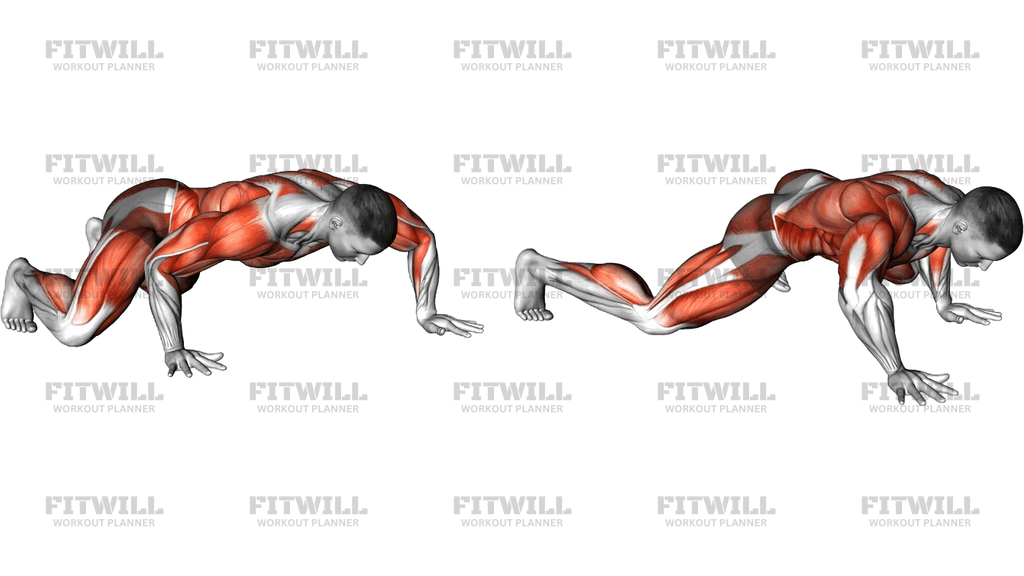
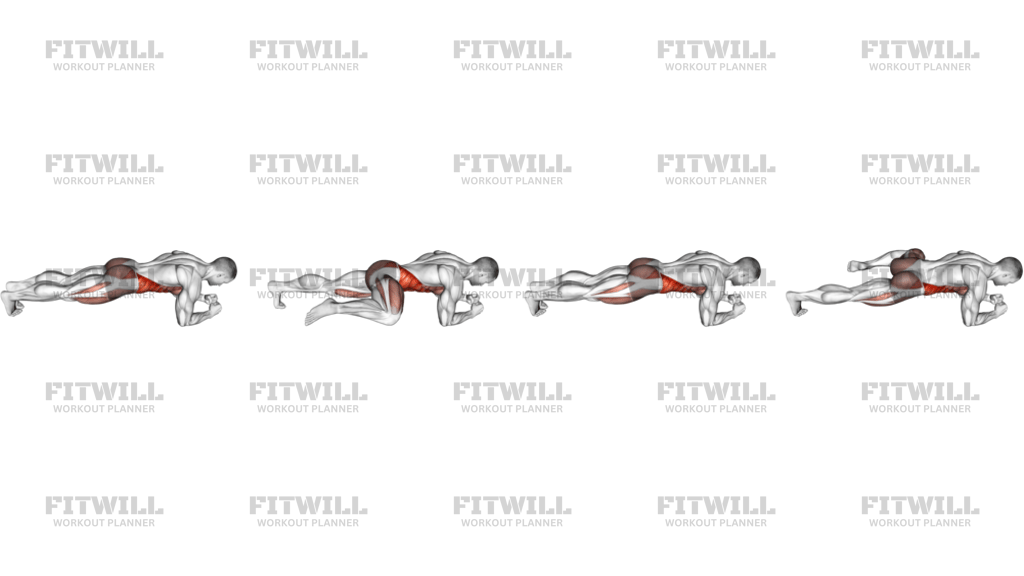
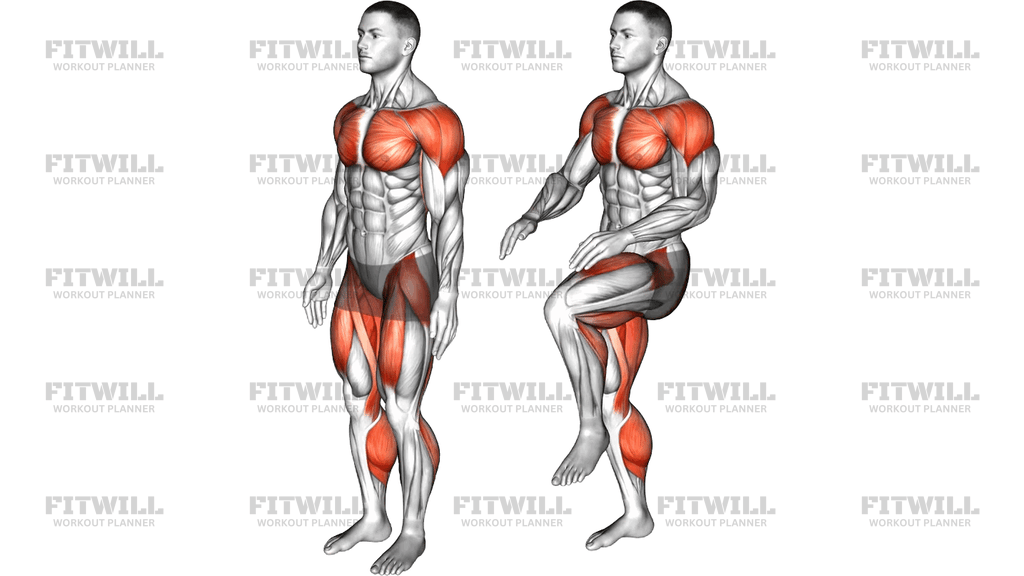
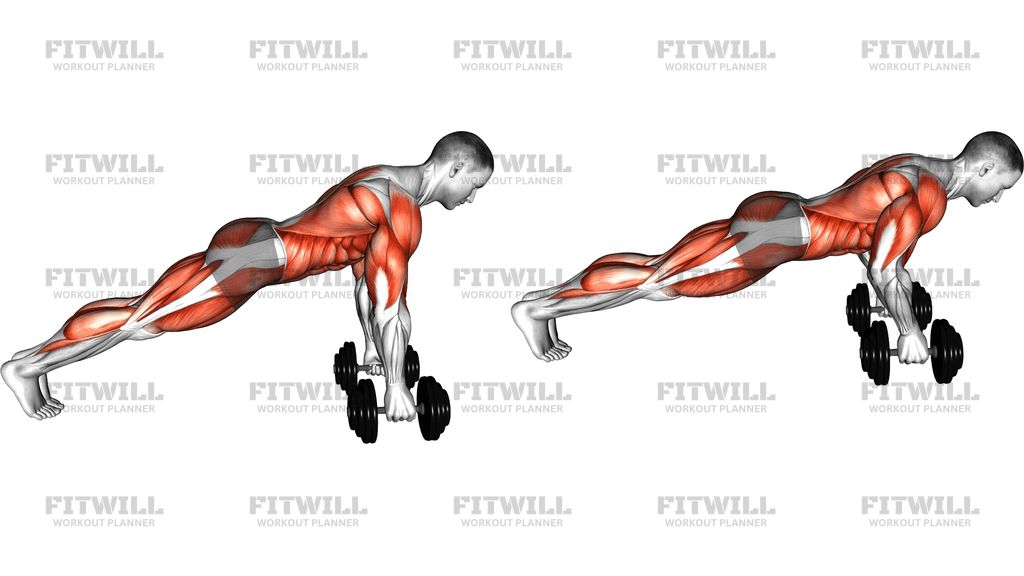
The Cradle is a bodyweight floor support exercise that starts from a seated position with your legs extended straight in front and your palms planted on the ground beside your hips. From there you press down through your hands to lift your hips and thighs completely off the floor, hold the support with your knees locked, and then lean your torso forward so your hips travel past your hands before pushing back to the upright position. It looks simple, but holding your entire lower body in the air on straight arms demands a lot from the front of your hips and your midsection.
The main work comes from the hip flexors, which have to hold your extended legs up against gravity for the whole set, and from the lower abs and obliques, which control the forward and backward rocking of the pelvis. Your triceps, front delts, and the stabilizers around the shoulder blade handle the support side of the movement, so your arms get meaningful isometric work even though they never bend.
Setup matters more than people expect. Because your hands are your only contact point once you lift off, their position relative to your hips determines whether you can lean forward cleanly or keep tipping back onto your glutes. Plant your palms just outside your hips with fingers spread forward, and keep the weight toward the heel of your hand rather than hanging on the wrist joint. A firm mat helps on hard floors and gives your wrists a slightly more forgiving surface.
To execute it well, think of the movement as a slow pendulum on straight arms. Lift into the support first and settle there before you lean. As you shift your shoulders over your wrists, keep your knees straight and your legs engaged instead of letting them drift or bend, and round your lower body slightly toward your chest at the far end of the lean, which is where the exercise gets its name. Push the floor away to travel back rather than dropping your hips.
The Cradle fits well into calisthenics and core-focused sessions, particularly for people building toward L-sits, planche leans, and other straight-arm support skills. Start with short holds and a modest forward lean, and keep your sets well short of failure, because sloppy reps tend to end with a hard landing on the tailbone or an overstretched wrist.
[ Workout Log & Planner ]
Put your next workout in Fitwill
Keep your plan and training log ready when you are.


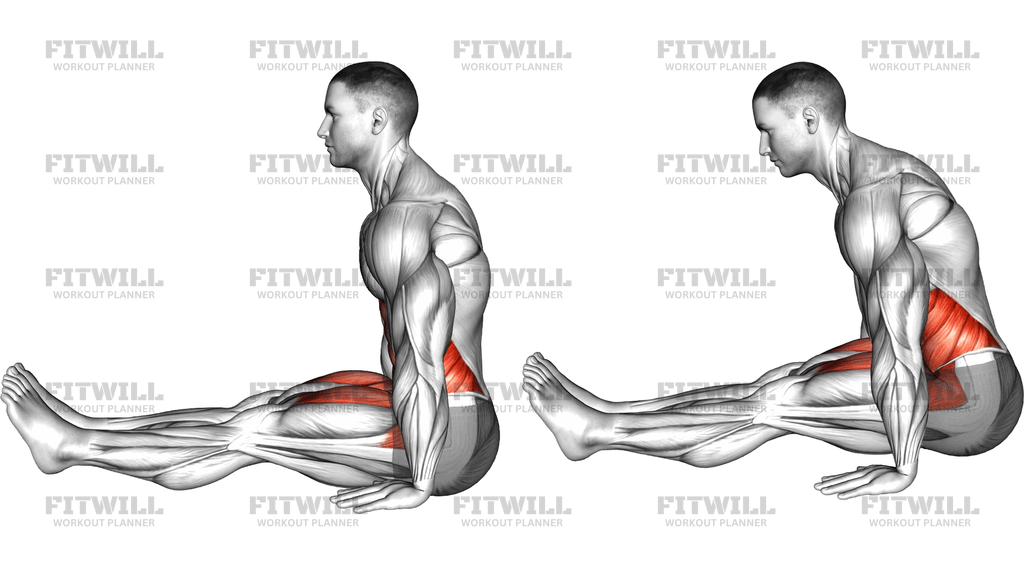
Instructions
- Sit on the floor or a mat with your legs extended straight in front of you, knees locked, feet together, and toes pulled back toward your shins.
- Place your palms flat on the floor just outside your hips, fingers spread and pointing forward, with your arms fully straight.
- Squeeze your legs together, brace your abs, and press down hard through your palms to lift your hips and thighs off the floor so your whole body weight rests on your hands.
- Settle into the upright support with your torso tall and your pelvis tucked slightly so your lower back is not arching.
- Keeping your knees straight and feet lifted, lean your shoulders forward over your wrists and let your hips travel forward past your hands.
- At the end of the lean, curl your lower body gently toward your chest so your thighs and hips sit as close to your torso as your mobility allows.
- Push the floor away through your palms to travel back to the upright support without letting your feet or hips touch down.
- Exhale as you lean forward into the cradle position and inhale as you push back to the start of each rep.
- Finish your reps by lowering your hips and feet to the floor under control, then shake out your wrists before the next set.
Tips & Tricks
- If your wrists ache during the lean, warm them up first with circles and extensions, or perform the Cradle on parallettes or the edge of a low box so your wrist stays neutral instead of extending under load.
- Shrugging into your shoulders is the most common fault once fatigue sets in. Keep pressing the floor away so there is space around your neck throughout the support.
- Bent knees cut the leverage on your hip flexors and turn the movement into a much easier tuck. If you catch yourself bending them, slow down and hold the straight-leg support for shorter intervals instead.
- Leaning forward before you have fully lifted off is a frequent mistake that makes you rock onto your glutes. Get into the support first, stabilize, and only then start the forward shift.
- Letting your hips sag at the start of the lean loads your lower back instead of your abs. Reset the pelvic tuck each rep before your shoulders pass your wrists.
- Aim your chest slightly ahead of your hands at the deepest point. Stopping the lean with your shoulders behind your wrists removes most of the challenge from the core.
- Keep your toes pointed actively toward your shins and your quads tight. Inactive legs make the whole lower body feel heavier and harder to control.
- On a slippery floor, place your hands on a mat or use a surface with grip, because your palms sliding forward mid-lean is one of the faster ways to fall out of position.
- Rest enough between sets that you can keep your arms straight. Once your elbows start bending, the movement changes and the straight-arm strength benefit disappears.
Frequently Asked Questions
Which muscles does the Cradle work the most?
The hip flexors do the heaviest work holding your extended legs off the floor, supported by the lower abs and obliques as you rock the pelvis forward and back. Your triceps, front delts, and shoulder stabilizers work isometrically to keep you elevated on straight arms.
Can beginners do the Cradle?
Yes, but scale it down. Start with your heels resting lightly on the floor and lift only your hips, or practice short straight-leg holds without the forward lean, then add the cradle motion once you can support your body weight steadily for ten to fifteen seconds.
Why do my wrists hurt during the Cradle?
The position loads the wrists in deep extension while your full body weight presses through your palms. Shift your weight toward the heel of each hand, warm the wrists up thoroughly, or use parallettes to keep them in a neutral position.
How is the Cradle different from a floor L-sit?
An L-sit is a static hold in one position, while the Cradle adds a forward-and-back rocking phase in which your hips travel past your hands. That lean places more demand on the abs and obliques and on shoulder stability over the wrists.
Should my knees stay straight the whole time?
Yes, keeping the knees locked is what makes the legs long and heavy, which is the point of the exercise. Bending them shortens the lever and shifts work away from the hip flexors.
What is the most common mistake in the Cradle?
Collapsing into the shoulders or sagging the lower back as the hips move forward. Both faults dump load onto passive structures instead of the muscles the exercise is meant to train, so reset your posture between reps rather than grinding out sloppy ones.
What can I use instead of the Cradle if I lack wrist or shoulder strength?
A supported L-sit on parallettes or a bench, a seated leg lift with hands on the floor for balance, or a plank-based core progression all train similar areas with far less demand on the wrists and straight arms.
How many reps and sets should I do?
Because it is a demanding isometric-heavy skill, keep sets in the range of five to ten controlled repetitions or short timed holds, for two to four sets. Stop the set as soon as your knees bend or your shoulders shrug, since that is where form breaks down.
Is the Cradle safe for the lower back?
It is generally well tolerated when you keep the pelvis tucked and move with control, because the abs support the spine through the lean. If you feel strain or pinching in the lower back or hips, reduce the depth of the lean and rebuild from the basic support hold.