Gates Close
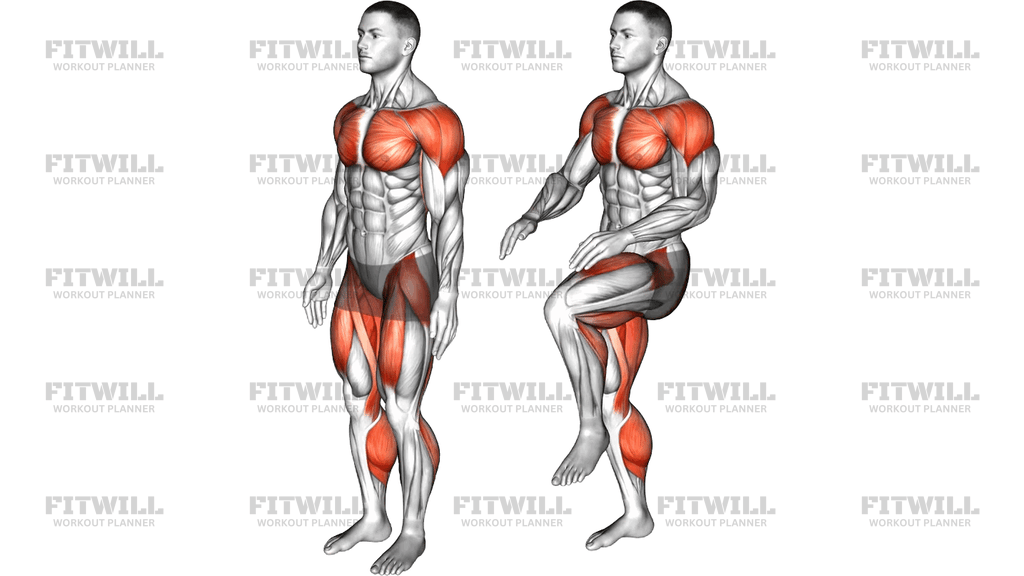
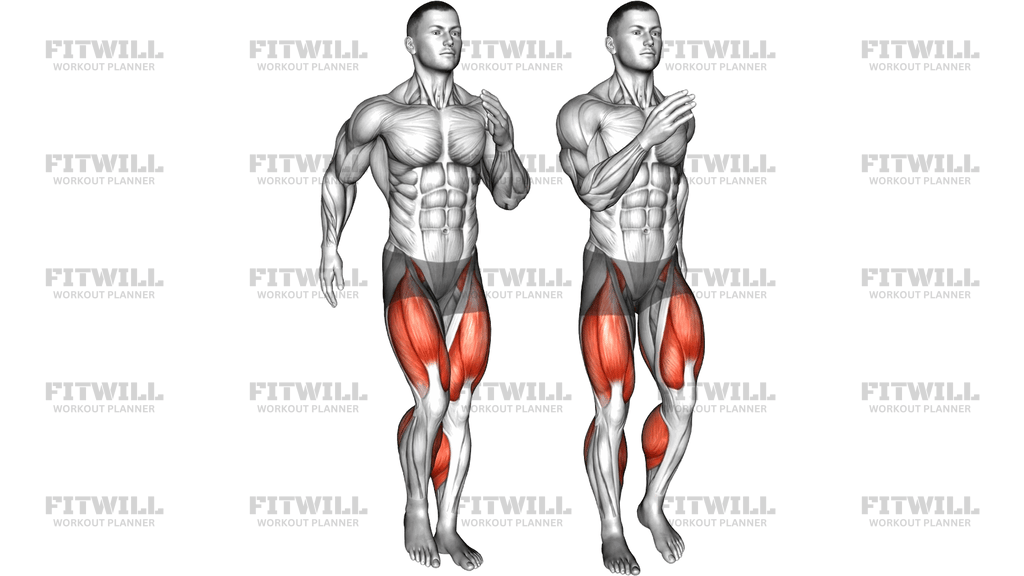
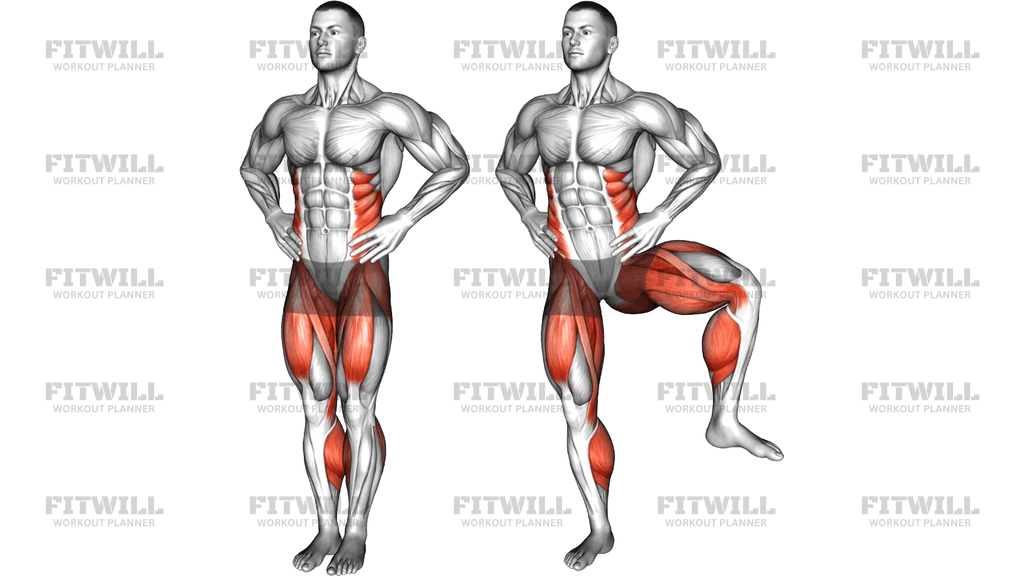
Gates Close is a standing, body-weight hip rotation drill in which you lift one knee up and out to the side, then actively sweep it down and across the front of your body, mimicking the motion of a gate swinging shut. It is the reverse partner of the more familiar gate-opening drill, and it trains the hip through a full arc of flexion, external rotation, and horizontal adduction in one fluid rep. Because you balance on one leg the entire time, the standing hip, ankle, and trunk have to stabilize while the moving leg works through its range.
This movement is popular in warm-ups for sprinting, cutting sports, martial arts, and any lifting session with heavy squatting or lunging, because it takes the hip through positions that straight-ahead leg swings and knee hugs miss. It is equally useful as a standalone mobility drill for people who sit a lot and have stiff hips. The muscles doing the visible work are the hip flexors as they lift the thigh, the adductors and inner-thigh group as the knee crosses the midline, and the obliques as they control the slight rotation of the trunk.
Setup matters more than it looks. Stand tall with your hands resting lightly on your hips, feet together, and weight distributed over a stable, grounded foot. If your standing knee caves inward or your torso leans hard to one side, the arc of the moving leg loses quality and the drill turns into a balance scramble rather than a controlled hip sweep. Keep the ribcage stacked over the pelvis so the obliques rotate instead of the lower back cranking sideways.
To execute well, raise one knee up and out to the side to roughly hip height, letting the hip open naturally. From there, rotate the femur in the socket and sweep the knee down and across the front of your body toward the opposite hip, keeping the torso mostly square. Lower the foot under control, reset your stance, and repeat for the desired reps before switching sides. The path should feel like a smooth arc, not a jerky swing.
Because no equipment is needed, Gates Close fits easily into almost any context: a hotel-room routine, a field warm-up, or the first five minutes of a lower-body session. Move at a deliberate tempo, aim for two to three sets of five to eight controlled reps per side, and prioritize a clean arc over height. If balance is limiting you, a light touch on a wall or rack is a fair trade that still lets the hip do the work.
[ Workout Log & Planner ]
Put your next workout in Fitwill
Keep your plan and training log ready when you are.


Instructions
- Stand tall with your feet together and your hands resting lightly on your hips, eyes forward.
- Shift your weight onto one leg and press it into the floor to create a stable base.
- Lift your opposite knee up and out to the side to about hip height, opening the hip so the thigh travels away from your midline.
- Brace your trunk lightly and keep your ribcage stacked over your pelvis before you start the sweep.
- From the open position, rotate the hip and sweep the knee down and across the front of your body toward the opposite hip, as if closing a gate.
- Keep the movement in the hip joint; avoid twisting your shoulders or diving your torso toward the moving knee.
- Continue the arc until the knee finishes near your midline, then lower the foot to the floor with control.
- Exhale as the knee sweeps across, and inhale as you reset for the next rep.
- Complete all reps on one side, then switch legs, or alternate sides if that helps you keep your balance.
- Reset your stance between reps so the standing foot stays planted and pointed straight ahead.
Tips & Tricks
- A common mistake is turning this into a fast leg swing; slow the sweep down so the adductors and hip rotators actually move the leg instead of momentum.
- If your standing knee collapses inward during the sweep, think about spreading the floor with that foot to keep the arch engaged.
- Leaning the trunk far sideways steals work from the hip and dumps stress into the lower back; only allow a small, natural lean.
- Lift the knee as high as hip mobility allows rather than forcing height — a clean arc at hip height beats a wobbly one near your chest.
- Keep the hands on the hips as a reference point; if you feel a hand being pushed around, your pelvis is rotating too much.
- Point the toe of the moving leg slightly downward as the knee crosses the body to help the thigh clear smoothly.
- If balance fails early, hold a wall or rack with one hand and put the free hand on your hip; progress to hands-only once you are steady.
- Warm the hips first with a few forward leg swings or easy knee hugs before attempting the full rotation arc.
- Stop and shorten the range if you feel any pinching at the front or inner hip — the sweep should feel like stretching and working, not grinding.
Frequently Asked Questions
What muscles does Gates Close work?
The hip flexors lift the thigh, the adductors bring the knee across the midline, and the obliques stabilize and slightly rotate the trunk. The standing leg's glutes and calf also work continuously to keep you balanced.
Is Gates Close a strength exercise or a mobility drill?
It functions as both: it builds active control through the hip's rotational range while also improving mobility. Most people use it as a dynamic warm-up before squats, sprints, or martial arts training.
How is Gates Close different from gate openers?
Gate openers take the knee from the front of the body out to the side, while Gates Close reverses that arc, starting with the knee lifted out to the side and sweeping it down and across the midline. Performing both gives the hip a complete rotational circuit.
I lose my balance on every rep — what should I change?
Hold a wall or squat rack lightly with one hand and slow the tempo down. Balance usually improves within a few sessions as the standing hip and ankle stabilizers adapt.
Should my knee reach a certain height during the sweep?
Hip height is a reasonable target, but the quality of the arc matters more than the height. Work within a range where your torso stays quiet and the knee sweeps smoothly across.
Can beginners do Gates Close?
Yes, it is beginner-friendly because it uses body weight and requires no equipment. Beginners should start with a reduced arc and a support nearby, focusing on a stable standing leg.
Why do I feel a pinch at the front of my hip during the sweep?
A pinch at end range is usually a sign the thigh is being driven into positions the hip is not ready for, or that the pelvis is tilting. Reduce the height, keep the pelvis level, and rebuild the range gradually.
How many reps and sets of Gates Close should I do?
Two to three sets of five to eight controlled reps per side works well as a warm-up. If you are using it as a standalone hip-control drill, the same dose is a good starting point.
Can I substitute anything if the rotation bothers my knees?
Standing hip circles, knee hugs, or side leg raises without rotation train similar areas with less rotational demand. Keep the knee tracking comfortably and avoid forcing the cross-body sweep if it causes discomfort.
Should I do Gates Close before or after my workout?
It works best before training, when you want the hips moving well for squats, lunges, or running. After training it can still serve as light active mobility, just at an easier pace.