Seated Single Leg Hugging Knee Flexion
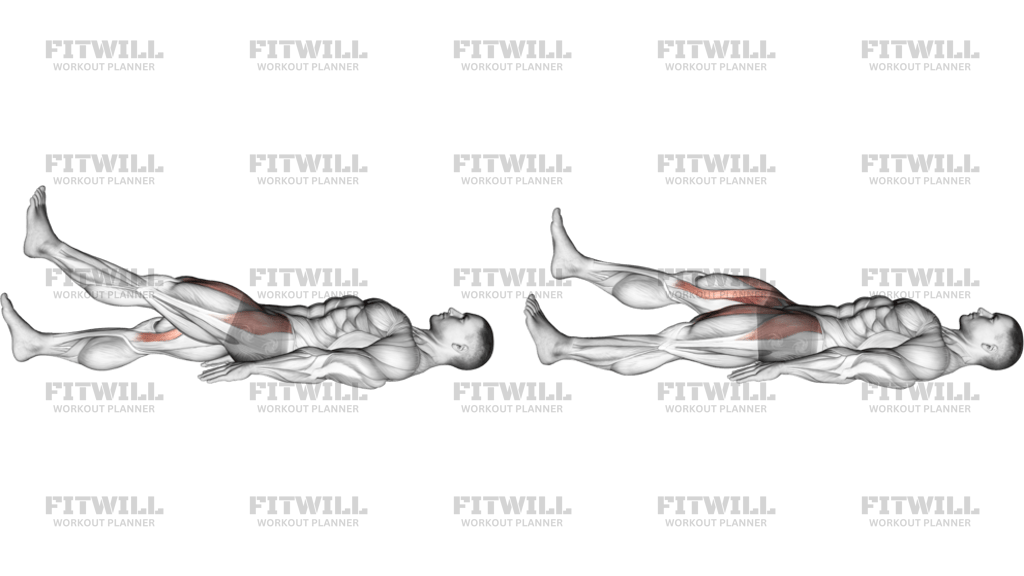
Seated Single Leg Hugging Knee Flexion is a bodyweight mobility drill performed on the floor. You sit with one leg extended flat in front of you, bend the other knee, clasp your hands around it, and draw it in toward your chest. The movement takes the hip of the bent leg through a full, supported flexion while the opposite leg stays anchored to the floor, which makes it a simple but effective way to work on hip range of motion and lumbopelvic control.
This drill is useful for a wide range of people: desk workers whose hips feel locked up from long hours of sitting, runners and cyclists who spend their training days in a limited hip flexion-extension cycle, and lifters who want to restore hip mobility before squats or deadlifts. Because it is done seated with the hands providing the force, the intensity is completely self-regulated, which makes it approachable for beginners and gentle enough for warm-ups or cooldowns.
The primary action is deep hip flexion of the hugging leg, driven by the hands and supported by the hip flexors, with the quadriceps on the front of the thigh clearly involved as the knee is drawn up. At the same time, the extended leg must actively stay heavy on the floor, which lengthens the front of that hip and teaches the pelvis to stay level rather than tilting and rotating as one knee rises. The trunk works quietly throughout to keep you tall instead of collapsing into a rounded slump.
Setup matters more than it looks. If you start slouched, with your sit bones rolled underneath you, the knee will come up easily but the movement will come from your lower back curling rather than the hip truly flexing. Sitting tall on both sit bones, bracing lightly through the trunk, and keeping the extended leg flat and turned forward forces the hip joint itself to do the work. That distinction is the difference between a genuine hip mobility drill and a lower-back rounding exercise.
To execute it well, pull the knee steadily toward the chest or slightly across toward the opposite shoulder, pause briefly near the top, and lower it back down under control rather than letting it drop. Move smoothly for repetitions, or hold the top position for longer static stretches if that suits your goal. Either way, the extended leg and the torso position are your quality checks from rep to rep.
Common use cases include general hip mobility routines, lower-body warm-ups, post-workout cooldowns, and gentle movement breaks during the day. Keep the effort moderate: you should feel the hip working and the front of the extended hip lengthening, not a sharp pinch deep in the hip or any discomfort in the knee. If the knee or lower back complains, reduce how far you pull the knee in and rebuild from a smaller, well-controlled range.
[ Workout Log & Planner ]
Put your next workout in Fitwill
Keep your plan and training log ready when you are.


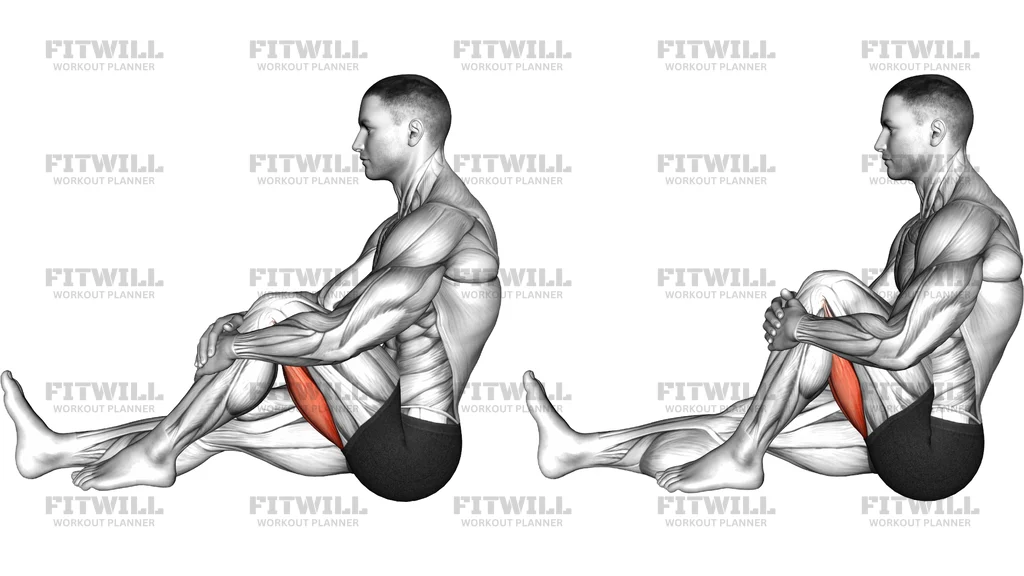
Instructions
- Sit on the floor or on an exercise mat with your torso tall and your weight balanced over both sit bones.
- Extend your right leg straight along the floor in front of you, foot relaxed and toes pointing up, and bend your left knee so your left foot rests on the floor.
- Clasp both hands around the front of your left knee or just below it, with your arms relaxed and your shoulders down away from your ears.
- Brace your trunk lightly and keep your back straight; do not let your chest sink into a rounded slump before the movement starts.
- Exhale and use your hands to guide your left knee up and in toward your chest, letting the hip flex fully while the foot lifts away from the floor.
- Keep the extended right leg heavy on the floor throughout the pull; if it lifts, you are rotating the pelvis and losing the stretch on the front of that hip.
- Pause for a moment near the top with the knee drawn close to the chest, keeping the shoulders relaxed rather than shrugging around the pull.
- Inhale and lower the left foot back to the floor under control, resisting the urge to let the leg drop.
- Complete your repetitions on the left side, then switch legs, extend the left leg, and perform the same knee-hugging flexion with the right leg.
Tips & Tricks
- If your lower back rounds as the knee comes up, reduce the range and focus on keeping the chest tall; the hip should do the flexing, not the spine the curling.
- To bias the stretch toward the glutes of the hugging leg, guide the knee slightly across toward the opposite shoulder instead of straight up the midline.
- A common mistake is letting the extended leg bend or drift outward as the other knee rises; press the back of that thigh and heel into the floor for the whole set.
- Keep the pull coming from your hands and arms; yanking with a jerk, or swinging the leg up with momentum, defeats the controlled hip flexion the drill is built around.
- If sitting tall feels difficult because your hamstrings pull you backward, elevate your hips slightly on a folded mat or firm cushion so your pelvis can sit upright.
- Breathe steadily at the top position instead of holding your breath; a slow exhale as you pull in usually lets the hip settle a little deeper.
- Watch for a pinching sensation at the front of the hugging hip; if it appears, back off the range slightly rather than forcing the knee closer to the chest.
- Keep both shoulders square to the extended leg; twisting the torso to chase a higher knee turns the drill into a spinal rotation exercise.
- If your goal is mobility before training, use smooth repetitions of about 5-8 per side; for a cooldown stretch, hold the top position for 20-30 seconds per side instead.
Frequently Asked Questions
What does Seated Single Leg Hugging Knee Flexion train?
It primarily works deep hip flexion of the hugging leg, with the hip flexors and quadriceps driving the knee up while the front of the extended hip lengthens. The trunk also works to keep you upright instead of rounding.
Is Seated Single Leg Hugging Knee Flexion a stretch or a strengthening exercise?
It is mainly a mobility and flexibility drill, though the hip flexors and trunk muscles work isometrically to control the position. Most people use it in warm-ups, cooldowns, or general hip mobility routines.
Why should the opposite leg stay flat on the floor?
Keeping the extended leg heavy anchors the pelvis so the moving hip has to go through its full range instead of the pelvis tipping and rotating. It also places a gentle lengthening demand on the front of that extended hip.
Can beginners do the Seated Single Leg Hugging Knee Flexion?
Yes, and it is a good early mobility drill because your hands control the intensity and range. Beginners should start by pulling the knee only partway in and prioritizing a tall, unrounded torso.
What is the most common mistake in this exercise?
Rounding the lower back to bring the knee closer to the chest. The knee travels further, but the hip no longer works through its own range, and the spine does the moving instead.
Should I pull the knee straight up or across toward the opposite shoulder?
Straight up keeps the emphasis on general hip flexion, while guiding the knee slightly across biases the glutes of the hugging leg. Both are valid, so choose based on which area you want to target.
What can I use instead of the Seated Single Leg Hugging Knee Flexion if sitting on the floor is uncomfortable?
You can sit on a firm cushion or folded mat to raise your hips and make an upright torso easier, or perform a supine knee-to-chest stretch lying on your back, which removes the postural demand on the trunk.
How many repetitions or holds should I use?
For mobility work, 5-8 controlled repetitions per side is a solid dose. For a static stretch, hold the knee near your chest for 20-30 seconds per side and repeat once or twice.
Is it safe if I feel a pinch at the front of my hip?
A mild stretch is expected, but a sharp pinch is a signal to back off. Reduce how far you pull the knee in, keep the torso tall, and if the pinching persists, skip the drill and consult a qualified professional.