90 To 90 Press Stretch
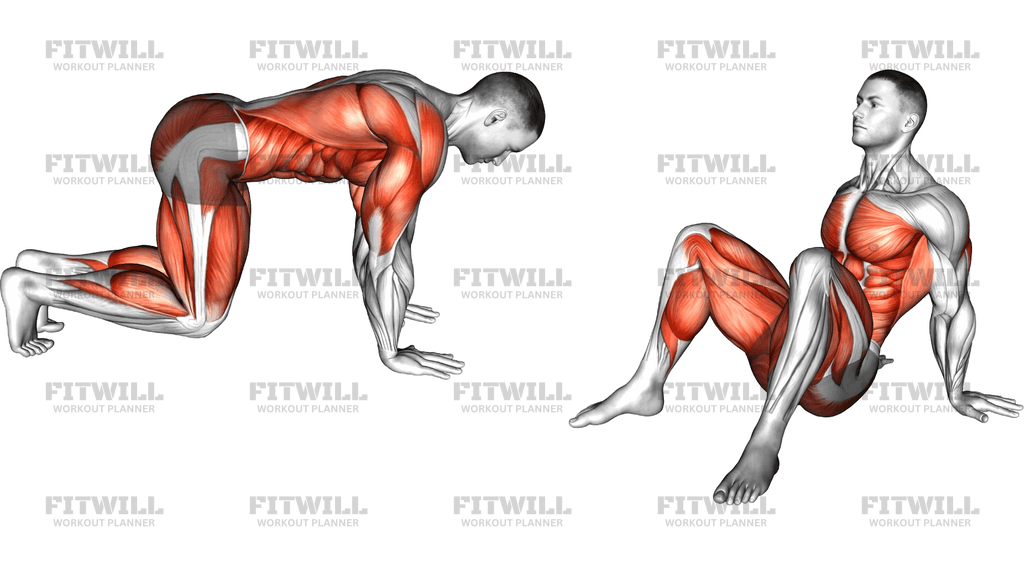
The 90 To 90 Press Stretch is a seated hip mobility drill that places both legs at right angles — one shin folded in front of you, the other shin bent out to the side — so you can work both hips at the same time from opposite directions. The front hip moves into deep external rotation while the back hip moves into internal rotation, which is exactly the combination most people are missing after years of sitting, running, or lifting without dedicated hip work. Because both positions are trained simultaneously, this stretch is one of the most time-efficient ways to address overall hip rotation.
The setup is what makes this drill effective. Sit on the floor or a mat with your front leg bent to roughly 90 degrees, shin crossing in front of your torso, and your back leg bent to roughly 90 degrees with the shin lying parallel behind you. Both sit bones should stay as close to the floor as your current mobility allows. From there, you press gently downward and slightly forward through your torso, using your hands on the floor for balance and light support, letting gravity — not force — open the hips.
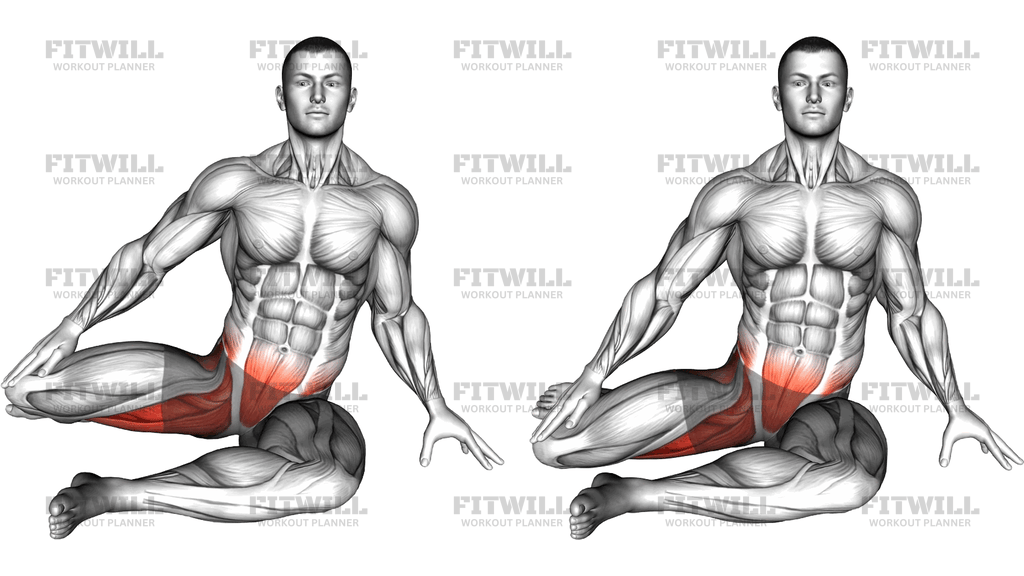
You will feel this primarily in the outer hip and glute of the front leg and through the front of the hip and inner thigh of the back leg. The image highlights these areas clearly: the front-hip rotators and the hip flexor region of the trailing leg take most of the load. People with tight hips from desk work, squat and deadlift athletes who want deeper bottom positions, and runners or martial artists who need rotational hip range all benefit from spending time here.
Execution should be slow and patient. Ease into the press, keep your spine long rather than rounding forward, and hold the end range while breathing steadily. The goal is a firm but tolerable stretch sensation — never sharp pain in the groin, knee, or low back. If your hips cannot reach the floor, that is normal at first; prop the unsupported side on a folded towel or low cushion until your range improves.
Use the 90 To 90 Press Stretch as part of a warm-up for lower-body training, or hold longer holds after training and on rest days to build lasting hip rotation. Spend 30 to 90 seconds per side, and consider switching which leg is in front between sessions so both hips develop evenly. Consistency matters far more than intensity with this one — small, regular doses produce better hip mobility than occasional aggressive sessions.
[ Workout Log & Planner ]
Put your next workout in Fitwill
Keep your plan and training log ready when you are.


Instructions
- Sit on a mat or the floor with your front leg bent to about 90 degrees, shin lying horizontally across the front of your body, knee pointing out to the side.
- Place your back leg bent to about 90 degrees behind you, shin on the floor and pointing away from your body, so both legs form right angles.
- Sit up tall with both sit bones reaching toward the floor; place your palms on the floor slightly outside your hips for balance and light support.
- Brace your trunk lightly and keep your spine long — avoid rounding your lower back as you lean.
- Press your torso slowly forward and slightly down toward the front shin, letting the front hip sink into external rotation while the back hip rotates internally.
- Stop at the point where you feel a firm stretch through the front hip and glute, and through the front of the trailing hip; do not force the knee toward the floor.
- Hold the end position for 30 to 90 seconds, breathing slowly and letting each exhale soften the hips a little deeper.
- Press through your hands to lift your torso back upright with control, then carefully unfold both legs.
- Reset your position and switch sides so the opposite leg is in front, matching the hold time on each side.
Tips & Tricks
- If one side cannot reach the floor, place a folded towel or yoga block under the unsupported hip rather than collapsing your spine to compensate.
- A common mistake is driving the front knee down with your hand; press with your torso and let the hip open passively instead.
- Watch the back knee — if it lifts off the floor and the hip hikes up, you are losing the internal rotation; lower the torso less and keep both sit bones even.
- Keep your front foot relaxed and the ankle neutral; clawing the toes often signals tension bleeding into the knee.
- If you feel a pinching sensation at the front of the back hip, back off the press slightly and try tilting your pelvis back a few degrees before leaning again.
- Any pulling behind the front knee means the hip is not accepting the rotation — reduce the angle of the front shin slightly and rebuild from there.
- Do this stretch after your warm-up muscles are warm, or after training; cold, aggressive hip stretching tends to produce guarding rather than range.
- Alternate which leg is in front from session to session — most people have a strongly preferred side, and always leading with the same leg deepens the imbalance.
- Slow exhales during the hold do more than extra downward pressure; forcing range with your arms usually just loads the knee joint.
Frequently Asked Questions
Which muscles does the 90 To 90 Press Stretch target?
It targets the hip rotators — the glutes and deep external rotators of the front leg — along with the hip flexors and inner thigh muscles of the back leg. Both hips work in opposite directions at the same time.
Why are both legs bent to 90 degrees in the 90 To 90 Press Stretch?
The two right angles place the front hip in external rotation and the back hip in internal rotation simultaneously. This trains both rotational directions in one hold instead of needing two separate drills.
Is the 90 To 90 Press Stretch safe for beginners?
Yes, as long as you start with a shallow lean and support the hips with a cushion if they cannot reach the floor. Beginners should hold shorter holds, around 20 to 30 seconds, and never push into groin or knee pain.
How long should I hold the 90 To 90 Press Stretch?
Hold 30 to 90 seconds per side. Shorter holds before training keep the hips responsive, while longer holds after training or on rest days help build lasting rotational range.
My front knee does not touch the floor — is that a problem?
No, the knee does not need to reach the floor. Support the front thigh with a block or towel and work gradually; forcing the knee down usually just stresses the knee joint instead of opening the hip.
What is the most common mistake in the 90 To 90 Press Stretch?
Rounding the lower back to lean further forward. This fakes extra range while the hips stay static — keep your spine long and let the stretch come from the hip joints themselves.
Can I use the 90 To 90 Press Stretch before squatting or deadlifting?
Yes, it works well as a warm-up drill with moderate holds of 20 to 30 seconds per side. Longer, deeper holds are better saved for after training when the goal is gaining range.
What can I substitute if the 90 To 90 Press Stretch bothers my knees?
Try a seated pigeon stretch or a lying figure-four stretch, which train similar external rotation without loading the knee. For the internal rotation side, a seated internal rotation drill against a wall is a gentler option.
How often should I do the 90 To 90 Press Stretch?
Daily or near-daily practice gives the best results, since hip rotation responds to frequent, low-intensity exposure. Even five minutes spread across the day is more effective than one long weekly session.