High Knee Walk
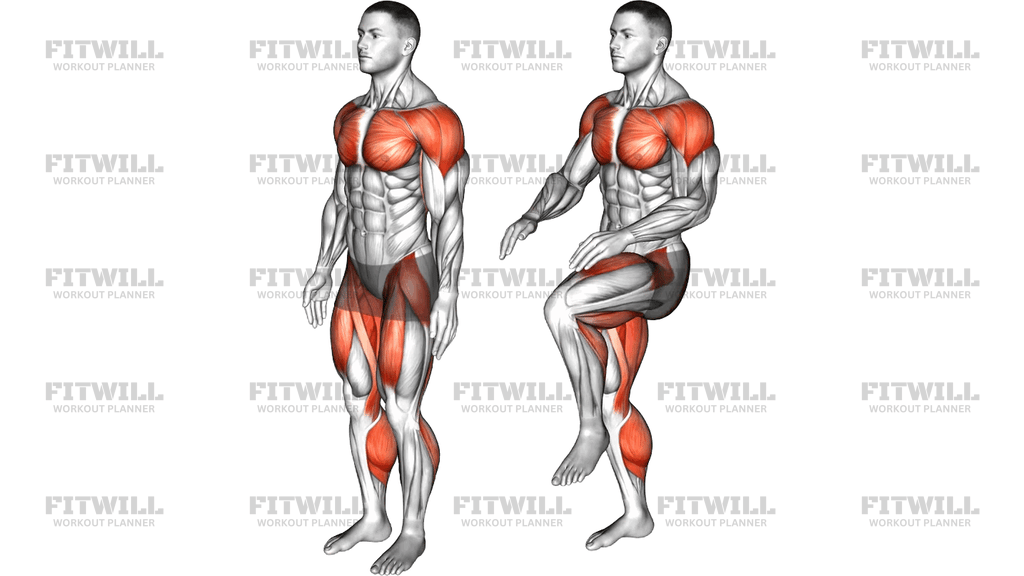
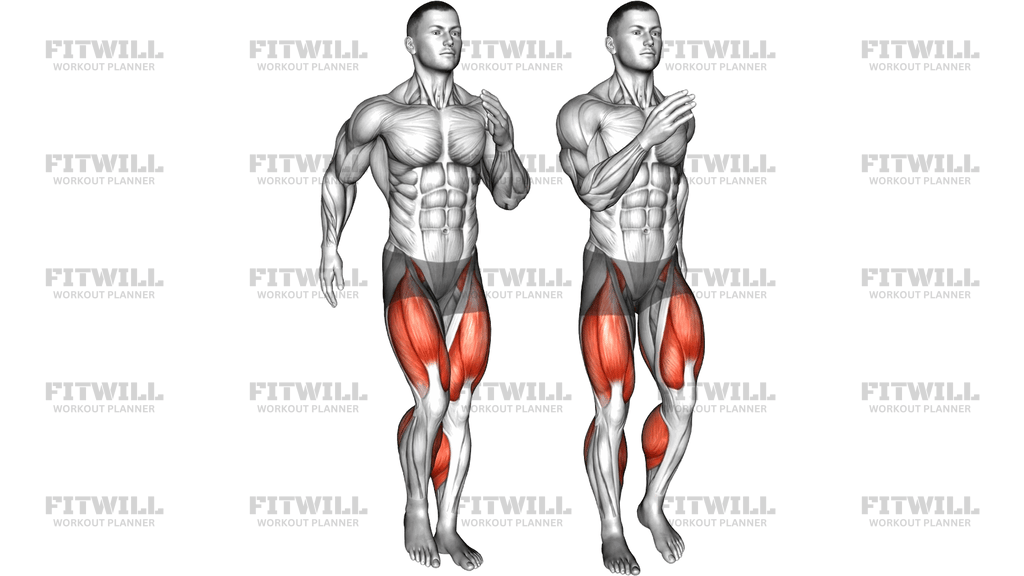
The High Knee Walk is a slow, deliberate marching drill where you lift each knee to roughly hip height with every step while staying tall and controlled. Unlike the fast-paced high knee run, this version is performed at walking speed, which makes it a go-to warm-up for opening up the hips, waking up the hip flexors, and rehearsing clean single-leg balance before running, lifting, or sprinting. No equipment is needed beyond a few meters of open floor space.
The main value of the High Knee Walk comes from how it trains the hip to flex actively through a full range. As you pull each knee up, the hip flexors work concentrically, while the glutes and core stabilize your torso so you do not lean back or twist. The standing leg has to stay strong and quiet on the ground, which challenges the calf, ankle, and hip stabilizers far more than a normal walk does. That combination of mobility and stability on both sides of the hip is exactly what most people are missing after long hours of sitting.
Setup matters more than it looks. Walk with your spine tall, ribs stacked over your pelvis, and your eyes on a point ahead of you rather than down at your knees. Bend your elbows to about ninety degrees and let your arms swing in rhythm with your legs, opposite arm to opposite knee, just like an exaggerated walking gait. If you start leaning back or rocking side to side, the drill loses its purpose, so it is worth slowing down before adding height to the knee lift.
To execute it well, pause for a split second at the top of each knee lift, feeling the thigh come level with or slightly above hip height, then place the foot back down under your hips rather than far in front of you. Each step should land softly with the foot flat or heel first, not slapping down. Keep the movement smooth and continuous from one side to the other, covering about ten to twenty meters per set, and turn around to walk back if you want more distance.
This drill fits naturally at the start of a workout. Runners use it to groove an efficient stride and activate the hip flexors before speed work, lifters use it to prepare the hips for squats and lunges, and field sport athletes use it as part of an dynamic warm-up routine. Because it is low impact and easy to scale, it also works well as a gentle cardio option for beginners or anyone returning to training who wants to raise the heart rate without jumping.
From a safety standpoint, the main thing to watch is your lower back. If you arch and lean backward to chase a higher knee, the spine takes stress the hip should be handling, so keep the lift to a height you can reach with a neutral torso. Move at a pace where you stay balanced, and if single-leg standing feels wobbly at first, shorten your stride and lightly brush your hand against a wall or rack for balance until your stability improves.
[ Workout Log & Planner ]
Put your next workout in Fitwill
Keep your plan and training log ready when you are.


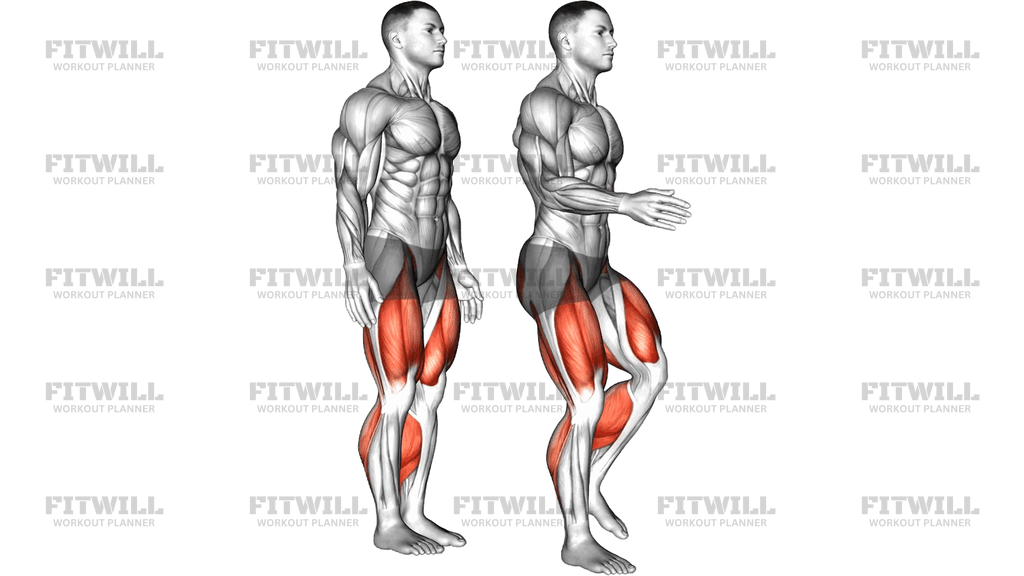
Instructions
- Stand tall with your feet hip-width apart, arms relaxed at your sides, and your gaze fixed on a point straight ahead.
- Bend your elbows to about ninety degrees so your hands hang loosely at hip height, ready to swing with your steps.
- Brace your core lightly and pull your ribs down over your pelvis so your lower back stays neutral before you take the first step.
- Lift your right knee up until your thigh is roughly level with your hip, keeping your torso upright and your shoulders stacked over your hips.
- Pause briefly at the top of the lift, then lower your right foot and place it flat on the ground directly under your body.
- Immediately lift your left knee to the same height as you step forward, letting your opposite arm swing naturally with each leg.
- Continue alternating knees at a slow walking pace, covering about ten to twenty meters per set.
- Breathe steadily throughout, inhaling through the nose and exhaling as each knee drives up.
- Land softly on each step, rolling from heel to toe, and avoid letting your foot slap the floor.
- Reset your posture between sets if you feel yourself leaning back or drifting side to side, and shorten the knee lift until your form is clean.
Tips & Tricks
- If your torso leans back as each knee comes up, you are probably chasing height with your spine instead of your hip. Reduce the lift until your thigh reaches just below hip level and rebuild from there.
- Keep the working knee and foot tracking straight ahead. Knees that drift outward usually point to tight hips or simply moving too fast for the drill.
- Place each foot under your hips, not out in front. Overstriding turns the drill into an awkward lunge walk and kills the balance benefit.
- Think about pulling your knee up with the front of your hip rather than swinging the leg. Active hip flexion is the whole point of the exercise.
- Stay tall through the crown of your head. Imagine a string lifting you upward so the extra knee height comes from hip range, not from compressing your lower back.
- Your arms should swing in rhythm, opposite hand to opposite knee. Stiff, motionless arms are a sign you are moving too slowly through your shoulders, so loosen the elbows.
- If you wobble on the standing leg, slow the cadence down and spread your toes against the floor. Balance usually improves within a few sessions of focused practice.
- Keep the pause at the top of each lift short, about one second. Lingering too long turns the drill into a static hold and disrupts the walking rhythm.
- For a harder version, pause two to three seconds at the top of each lift or perform the drill on your toes to add calf and ankle demand.
Frequently Asked Questions
What muscles does the High Knee Walk work?
The primary movers are the hip flexors, which lift each knee, supported by the quads and calves on the working and standing legs. The glutes and core work continuously to keep your torso upright and your hips level as you shift from one leg to the other.
Is the High Knee Walk good for beginners?
Yes, it is one of the most beginner-friendly hip drills because it is low impact and self-paced. If your balance or hip mobility is limited, start with a lower knee lift and shorter sets, then progress the height as control improves.
How high should I lift my knee during the High Knee Walk?
Aim for your thigh to reach roughly hip height, which means your knee is bent to about ninety degrees. If you have to lean back or arch your lower back to get there, lower the lift until your torso stays neutral.
What is the difference between the High Knee Walk and High Knees running?
The walk version is slow and controlled, emphasizing hip range, balance, and deliberate muscle activation, while the running version is a fast cardio drill. The walk is better as a warm-up or mobility tool; the run version is better for conditioning and speed mechanics.
Why do I keep losing my balance on the standing leg?
Most often the foot is placed too far forward, which shifts your weight outside your base. Set each foot down directly under your hips, keep your eyes on a fixed point ahead, and slow the pace until each step feels stable.
Can I use the High Knee Walk as a warm-up before squats or running?
Absolutely. It activates the hip flexors, glutes, and calves and rehearses single-leg control, which carries directly into squats, lunges, and running stride mechanics. Two or three walks of ten to twenty meters is usually enough before training.
Should my arms move during the High Knee Walk?
Yes, let your arms swing with bent elbows, opposite hand to opposite knee, as in a natural walking gait. Arm drive helps coordinate the drill and keeps your torso from twisting as each knee comes up.
Is it a mistake to hold onto a wall or rack for balance?
Using light fingertip support is a reasonable modification if your balance is genuinely shaky, but try to wean off it quickly. The standing-leg stability challenge is a large part of the exercise's value.
How many sets of the High Knee Walk should I do?
Two to three walks of ten to twenty meters works well as a warm-up. If you are using it as light standalone cardio, extend to four or five sets and keep the pace continuous so your breathing stays elevated.
My lower back feels strained when I lift my knees high. What should I change?
You are most likely arching backward to gain knee height instead of flexing at the hip. Keep your ribs pulled down over your pelvis, reduce the lift to a pain-free height, and focus on driving the knee up with the front of the hip rather than leaning away from it.