Wall Walks To Handstand Push Up 3 Times
Wall Walks To Handstand Push Up 3 Times is an advanced bodyweight movement that combines two skills into one rep: you climb your feet up a wall into a handstand, then perform a handstand push-up against that wall before walking back down. The wall replaces the balance demand of a freestanding handstand with a fixed reference point, so you can load your shoulders and triceps heavily while keeping your body in a straight, supported line. The triple format means you cycle through the climb-and-press pattern three times in each set, which adds conditioning on top of the strength work.
This movement is aimed at intermediate and advanced trainees who already own a solid push-up, a strong plank, and ideally some time spent holding a wall handstand. Calisthenics athletes, CrossFitters, and anyone chasing pressing strength without equipment will get the most out of it. It is equally useful as a skill drill for people working toward freestanding handstand push-ups, because the wall lets you practice the vertical pressing path safely while your overhead strength catches up.
The primary load lands on the shoulders and triceps, with the upper traps and serratus anterior working hard to keep the shoulder girdle stable overhead. Your core does constant work throughout: the walk-up itself demands control of the pelvis and ribs as your hips travel overhead, and the push-up phase requires you to hold a rigid line from hands to heels so the press stays efficient. Grip and wrist strength round out the picture, since your hands support your entire bodyweight through every phase.
Setup matters more here than in most pressing exercises. Place your hands roughly a foot from the wall and start from a kneeling position facing away from it, then walk your feet up the wall as your hands step backward toward it. Where you finish the walk determines your pressing angle: the closer your hands are to the wall, the more vertical your torso becomes and the harder the press. Too far from the wall and you end up in a shallow angle that turns the movement into a heavy push-up instead of a true handstand press.
To execute it well, climb until your hips sit almost directly over your shoulders, brace your midsection, and press through the floor to full elbow lockout. From there, bend your elbows and lower the crown of your head toward the floor in a controlled descent, keeping your ribs stacked over your hips, then drive back up until your arms are straight again. Complete three push-ups at the top, then walk your hands away from the wall and step your feet down one at a time. Controlled descents and clean body lines are what separate productive reps from sloppy ones.
Because the descent under load is the riskiest part, treat your first reps as practice rather than performance. Start with a partial range, lower only a few inches, and build depth over weeks. If you feel your lower back arching or your elbows flaring wide, come down from the wall and reset rather than grinding through a compromised position.
[ Workout Log & Planner ]
Put your next workout in Fitwill
Keep your plan and training log ready when you are.


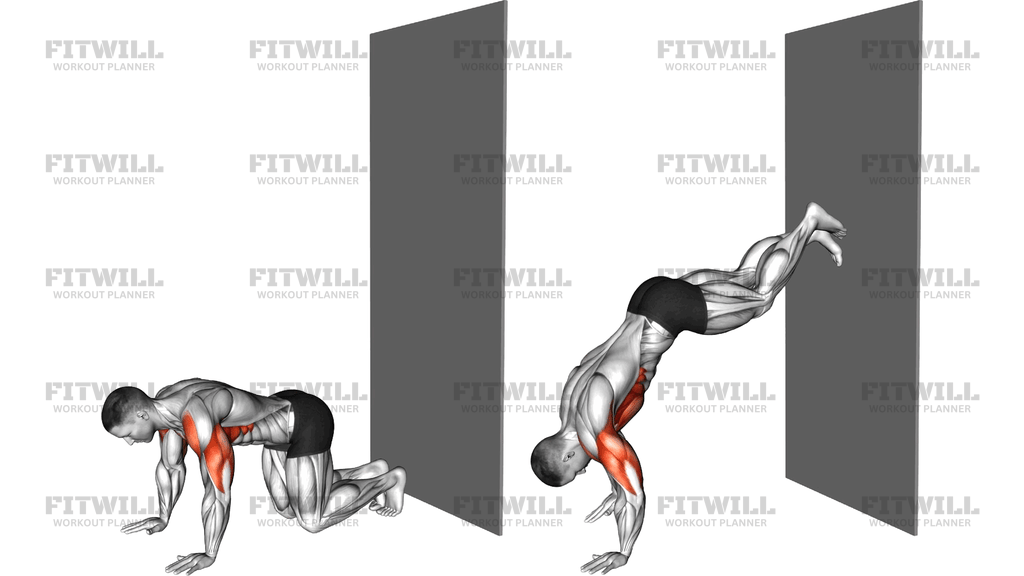
Instructions
- Kneel on the floor with your back to a clear wall, place both palms flat on the floor about a foot in front of the wall, fingers spread and pointing forward.
- Place the balls of one foot against the wall behind you, then step the other foot up so both feet are in contact with the wall at roughly hip height.
- Walk your feet up the wall while stepping your hands backward toward it, keeping your arms straight, until your hips stack close to directly over your shoulders.
- Squeeze your glutes, brace your abs, and push the floor away so your shoulders stay elevated and your body forms one straight line from wrists to ankles.
- Exhale, bend your elbows, and lower the top of your head toward the floor, keeping your elbows tracking roughly forward over your wrists rather than flaring wide.
- Pause briefly at your lowest controlled depth, then press forcefully through your palms until your elbows lock out overhead again.
- Complete three handstand push-ups at the top of the wall before descending, breathing out on each press and in on each descent.
- After the third rep, walk your hands away from the wall in small steps while walking your feet down until one foot reaches the floor, then step the other down.
- Stand up, reset your position, and repeat the full sequence for the prescribed number of sets, resting fully between efforts.
Tips & Tricks
- If you exhaust yourself on the climb and then fail mid-descent, you climbed too fast or started too tired; treat the walk-up as its own controlled skill and save strength for the press.
- The most common mistake is stopping the climb with the hips far in front of the shoulders, which turns the press into an incline push-up; keep stepping your hands back until your stack is nearly vertical.
- Keep your elbows inside the width of your wrists during the press. Letting them flare out to the sides shifts stress onto the shoulder capsule and shortens your triceps contribution.
- Look at a spot on the floor between your hands rather than tucking your chin to your chest or craning your neck back; a neutral head position protects your neck under load.
- If your wrists ache from the backward steps, shift your weight slightly to your fingertips as each hand moves, and consider using parallettes to give your wrists a straighter line.
- Partial-depth reps with a two-second pause at the bottom build the press more safely than bouncing your head off the floor for full depth.
- If your lower back sags or arches at the top of the handstand, actively squeeze your glutes and pull your ribs down before starting each rep.
- Stop the set if you cannot control the lowering phase; lowering fast and pressing out of a bounce is the main way people get hurt on this movement.
- When three full push-ups are out of reach, perform two, or cut the descent depth in half while keeping the walk-up identical.
Frequently Asked Questions
Which muscles do Wall Walks To Handstand Push Up 3 Times work the most?
The front and side shoulders and triceps do the bulk of the pressing, with the upper traps and serratus anterior stabilizing the shoulder blades overhead. The core and hip flexors work continuously to hold a straight line during the walk-up and the press.
Can beginners do Wall Walks To Handstand Push Up 3 Times?
Not usually as written. Beginners should first master wall walks without the push-up, then add partial-depth presses of a few inches before attempting three full-range reps.
How far from the wall should my hands be at the top of the walk?
Close enough that your hips stack nearly over your shoulders, usually with your chest within a few inches of the wall. The further your hands are from the wall, the more the movement becomes an incline push-up and the less it trains the vertical press.
Why does the exercise specify three push-ups instead of one?
The triple format increases time under tension for the shoulders and triceps and adds a conditioning element, since you must manage fatigue through three presses while still controlling a clean walk-down afterward.
My head touches the floor before my elbows reach 90 degrees. Is that a problem?
No, that is normal anatomy for most people; the crown of your head meeting the floor often marks your bottom position. Just lower gently rather than bouncing, and add depth over time as your press control improves.
What should I do if I cannot press back up from the bottom?
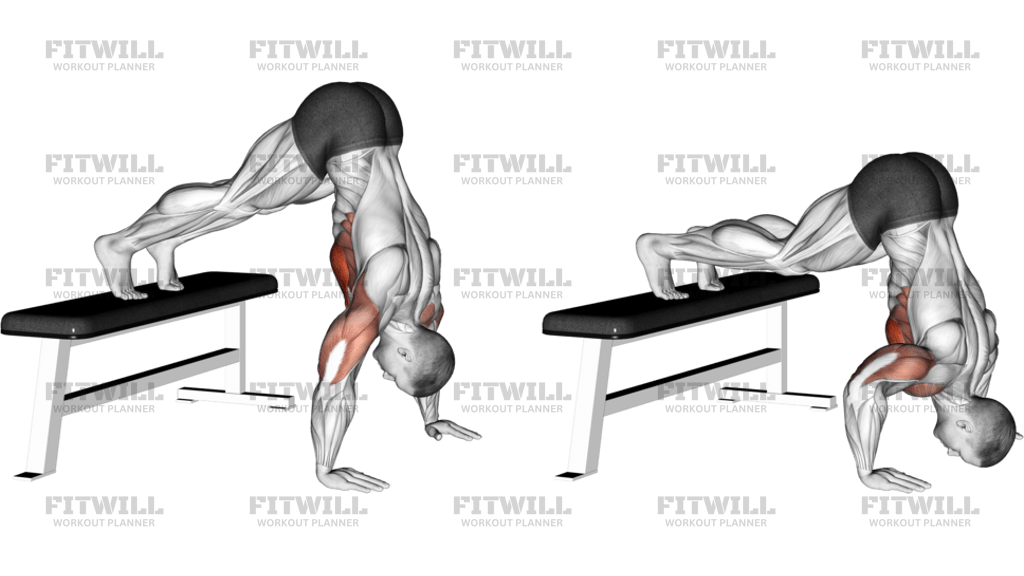
Reduce your depth first, and practice negatives where you only lower as far as you can press out of. You can also build overhead strength with pike push-ups and wall handstand holds before returning to full reps.
How do I come down safely if my arms give out during a rep?
Turn slightly and step one foot off the wall toward the floor while keeping the other foot in contact, then walk your hands away and bring the second foot down. Never jump down with straight arms; land with soft, bent elbows.
Are Wall Walks To Handstand Push Up 3 Times a good substitute for barbell overhead pressing?
They train a similar vertical pressing pattern with your own bodyweight and build shoulder and triceps strength effectively, but they demand much more wrist, shoulder, and core stability. They complement overhead pressing well and can replace it when no equipment is available.
How should I breathe during the movement?
Inhale on the way down and exhale as you press up, and avoid holding your breath through the walk-up. Keep your breathing rhythmic enough that you do not feel lightheaded while inverted.
What floor and wall surface works best for this exercise?
Use a non-slip floor, ideally over a mat or rubber surface, against a smooth flat wall free of sockets, trim, or decorations. Clear several feet around the setup so you have room for the walk-in and a safe exit path.