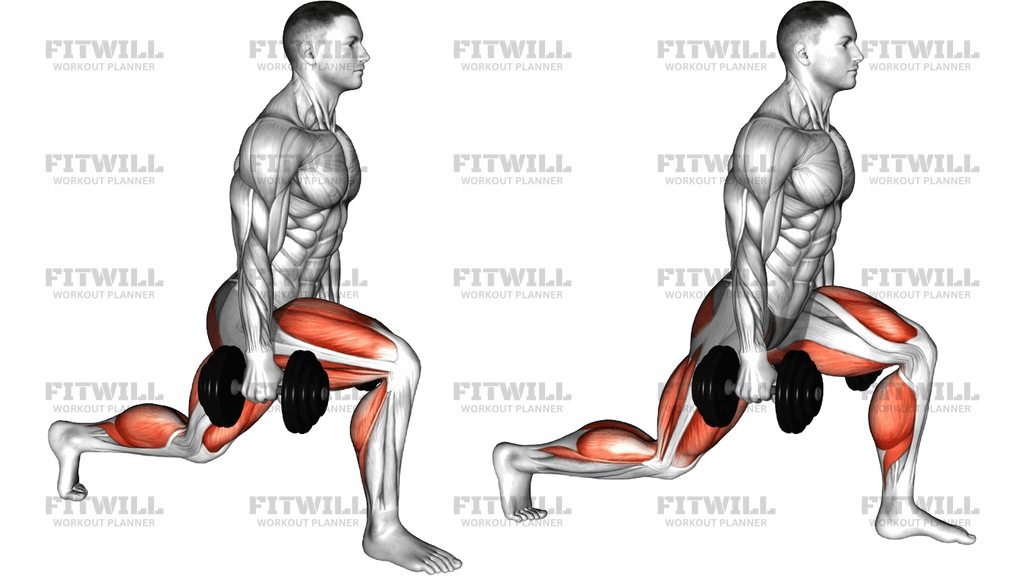
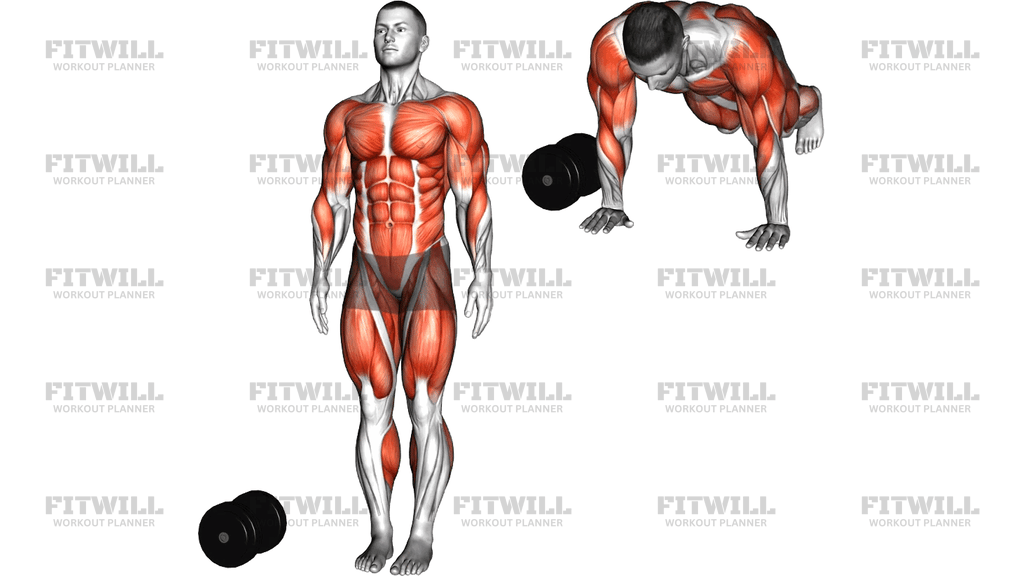
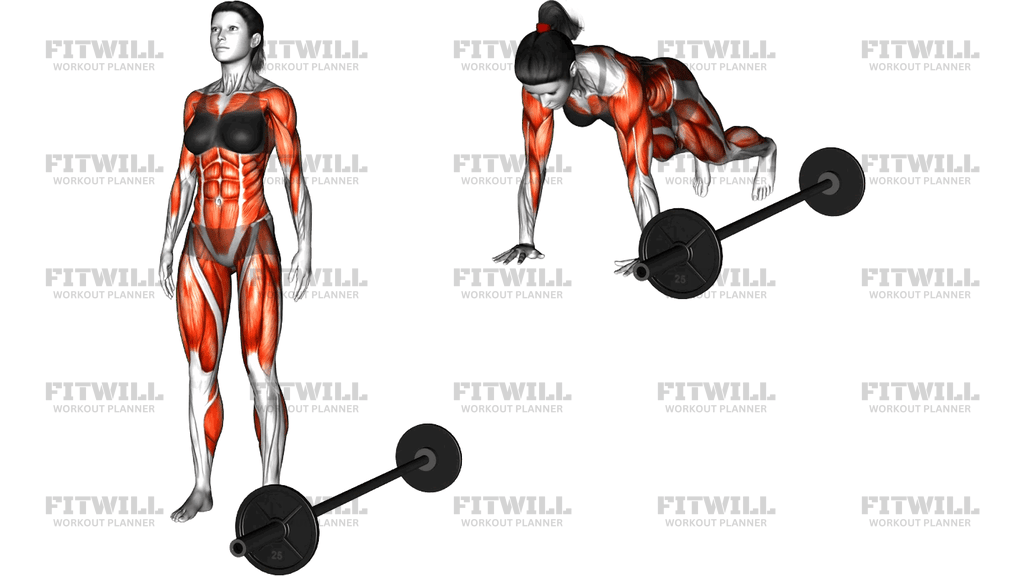
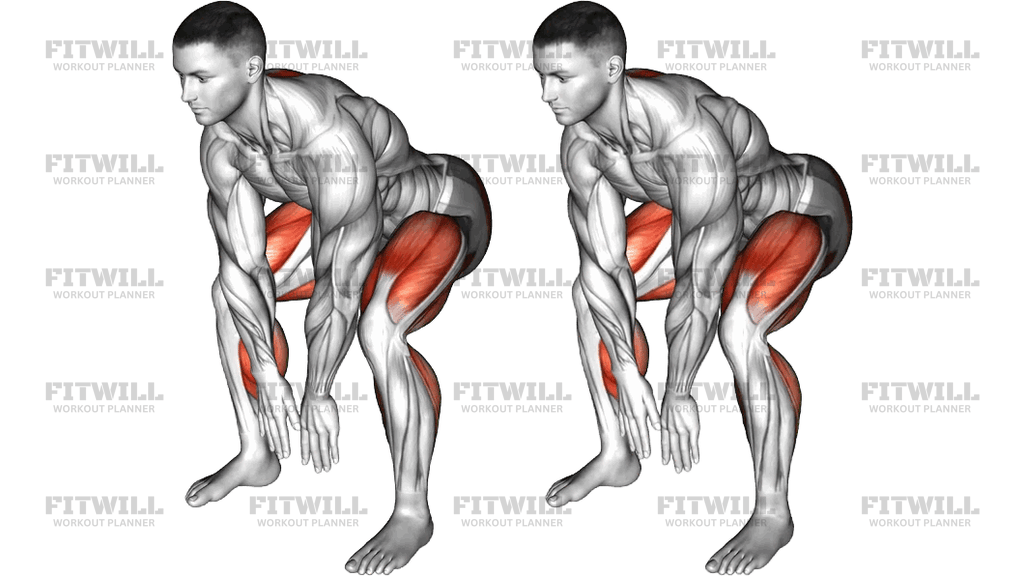
Dumbbell Kneeling To Jump Box
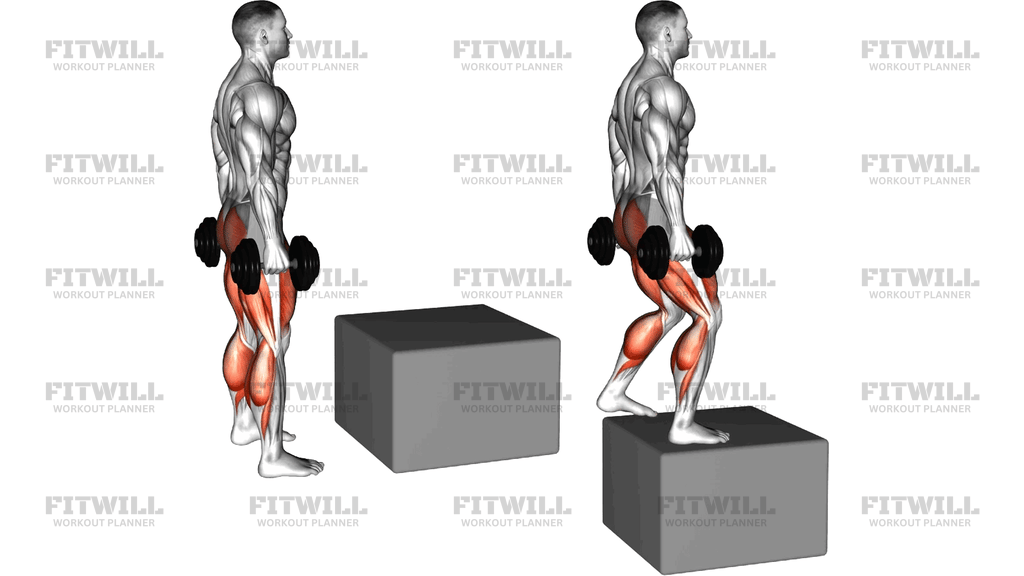
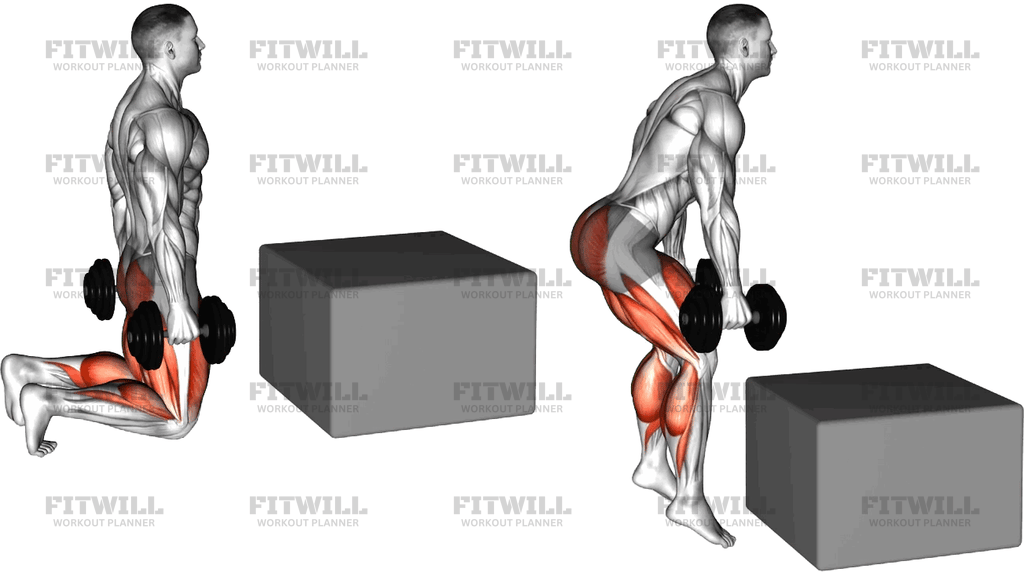
The Dumbbell Kneeling To Jump Box is a demanding plyometric drill that starts from a tall kneeling position with a dumbbell in each hand and finishes with an explosive jump onto a box. You begin resting on both knees, drive your hips and quads hard enough to lift your whole body off the floor, snap your feet under you to land in a quarter squat, and then immediately rebound onto the box in front of you. It is one of the few exercises that teaches the hips to generate force from a completely flexed knee position, which makes it unusually hard and unusually effective.
This movement is best suited to intermediate and advanced lifters or athletes who already have solid squatting strength and experience with basic box jumps. Sprinters, jumpers, and fighters use kneeling jumps to improve hip extension power and rate of force development, and the dumbbells add a loading element that forces the legs to work harder through the initial drive. Because you finish on a box, the landing impact on the second phase is reduced, so most of the stress lands on the effort side rather than the deceleration side.
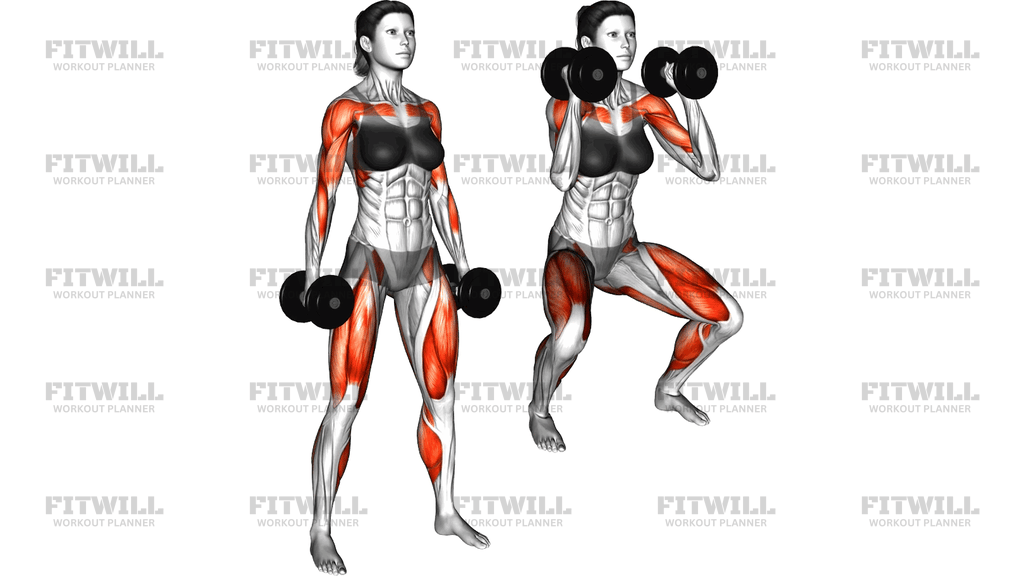
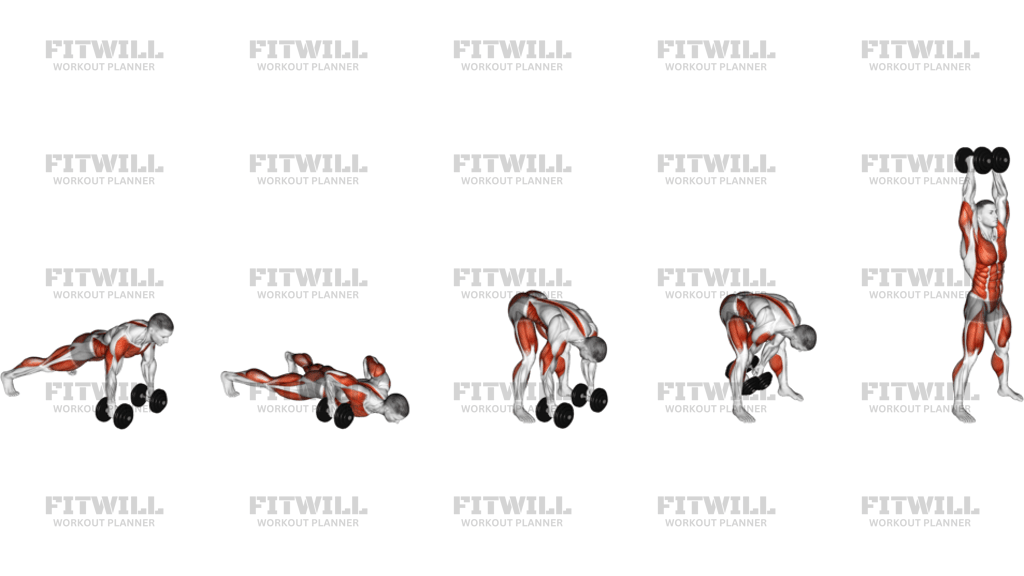
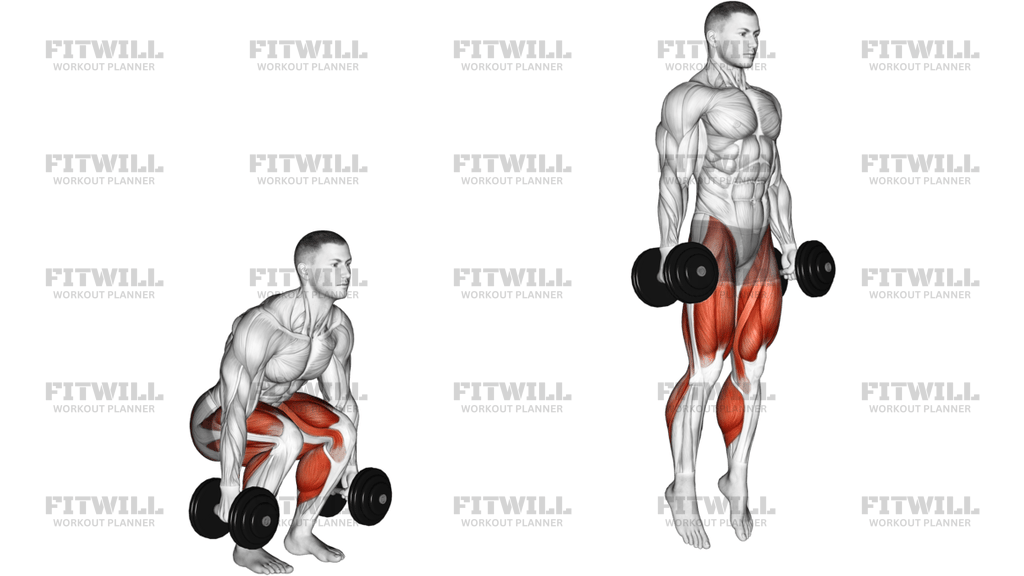
The main muscles working are the quadriceps and glutes, which extend the hips and knees to launch you from the floor, with strong assistance from the hamstrings, calves, and core. Holding the dumbbells also challenges grip and upper body control, since the arms swing naturally during the jump and the shoulders need to stay stable while the lower body explodes. The calf complex fires hard when you snap onto the balls of your feet and extend through the ankle to reach the box.
Setup matters a lot here. The box height should be conservative, since you are jumping from a compromised starting position rather than a standing one. Keep the dumbbells light at first, even if your legs feel capable of more, because the extra load changes your timing and makes the knee-to-feet transition far less forgiving. Your kneeling position should be tall, with a straight line from knee through hip to shoulder, before every attempt.
To execute it well, think of the jump as one continuous chain rather than two separate efforts. Rock slightly back to load the glutes, then drive the hips forward and up while swinging the dumbbells to assist momentum. As your knees clear the floor, pull your feet underneath you and land softly, then ride that landing straight into the box jump without pausing. Landing with quiet, bent knees and keeping your chest tall on both phases are the details that separate a crisp rep from a sloppy one.
Use this exercise early in a training session, when you are fresh, as a power primer or a main explosive movement for 3 to 5 sets of 2 to 5 quality reps. It pairs well with squats or hip thrusts on lower body power days, and it should be dropped in favor of unloaded kneeling jumps if your form breaks down or the box feels too tall on any given day.
[ Workout Log & Planner ]
Put your next workout in Fitwill
Keep your plan and training log ready when you are.


Instructions
- Place a plyo box a comfortable jumping distance in front of you and choose a height you could clear easily from a standing two-foot jump.
- Hold a dumbbell in each hand with a firm neutral grip and kneel tall on both knees, torso upright, arms hanging at your sides, and knees roughly hip-width apart.
- Brace your core and set a straight line from your knees through your hips to your shoulders before you move.
- Rock your hips slightly back to load the glutes, then drive them forward and explode up, swinging the dumbbells upward to help generate momentum.
- As your knees leave the floor, pull your feet quickly underneath you and land on both feet at the same time in a quarter squat with a tall chest.
- Without pausing, bend the hips and knees slightly and jump straight up onto the box, driving through the balls of your feet and extending the hips fully.
- Land on top of the box with both feet flat, knees softly bent, and stand up tall with the dumbbells at your sides.
- Breathe in as you set up kneeling, then exhale forcefully during the explosive drive; keep breathing normally as you step back down.
- Step down one foot at a time, reset to the tall kneeling position, and take a moment between reps so every attempt is done at full effort.
Tips & Tricks
- Start with very light dumbbells or no weight at all; if the knee-to-feet transition feels slow, the load is too heavy before the box is too high.
- The most common mistake is rounding forward and dumping the chest toward the floor during the drive, which turns the rep into a face plant risk; keep the ribcage stacked over the hips.
- Do not let the dumbbells swing behind you on the drive, because they will pull your torso backward in mid-air; aim the swing up and slightly forward.
- If you land from the kneeling jump with one foot noticeably ahead of the other, slow the transition and focus on pulling both feet up at the same speed.
- The second jump onto the box should flow out of the landing; a long pause between the two phases removes the reactive benefit and makes the box jump harder.
- Keep the box lower than you would use for a standing box jump, since starting from the knees costs you your countermovement and shortens the force production window.
- Pad the floor under your knees or use a mat if your kneecaps are sore, but avoid cushions thick enough to destabilize your base.
- Stop the set the moment a rep feels sluggish; this is a power exercise and grinding through fatigued reps trains slow landings.
- Land on top of the box quietly, not with a heavy slap of the feet; loud landings usually mean stiff knees and a collapsed arch position.
Frequently Asked Questions
What muscles does the Dumbbell Kneeling To Jump Box work?
The quadriceps and glutes do most of the work driving you from the knees into the air, with strong support from the hamstrings, calves, and core. The dumbbells also challenge grip and shoulder stability through the swing.
Is the Dumbbell Kneeling To Jump Box suitable for beginners?
It is a demanding movement, so beginners should master unloaded kneeling jumps and standard box jumps first. Once both feel controlled, add light dumbbells before progressing the load or box height.
How high should the box be for the Dumbbell Kneeling To Jump Box?
Use a box noticeably lower than your normal standing box jump height, since you lose your countermovement by starting from the knees. If you hesitate or clip the edge, drop the height immediately.
Why hold dumbbells during a kneeling jump instead of doing it with body weight?
The dumbbells force the hips and quads to produce more force from the kneeling position and add a coordination element through the arm swing. This raises the power demand without needing a taller box.
Why do I keep falling forward when I jump from my knees?
Falling forward usually means the chest is dropping during the drive or the hips are not extending hard enough. Keep the torso upright, swing the dumbbells up and forward rather than pulling them down, and drive the hips explosively toward the ceiling.
Can I substitute the box jump portion of the Dumbbell Kneeling To Jump Box?
Yes, you can perform the kneeling-to-standing jump alone and land on the floor, which is a great progression step before adding the box. Soft landing surfaces like rubber flooring make that version kinder to the joints.
How many sets and reps should I do for the Dumbbell Kneeling To Jump Box?
Keep the volume low and the quality high: 3 to 5 sets of 2 to 5 reps with full rest between sets. This is a power exercise, and fatigue quickly degrades the explosive knee-to-feet transition.
Where in my workout should the Dumbbell Kneeling To Jump Box go?
Place it near the start of a lower body or power session after a thorough warm-up, when your nervous system is fresh. Doing it after heavy squats or at the end of a long session increases the risk of a sloppy landing.
Is it safe to do the Dumbbell Kneeling To Jump Box with knee issues?
The deep kneeling start places significant load on the knees at extreme flexion, so anyone with irritated knees should avoid it and choose standing box jumps or hip thrusts instead. Clear any plyometric work with a professional if you have a history of knee problems.